- English
- French
- German
- Portuguese
- Spanish
- Russian
- Japanese
- Korean
- Arabic
- Greek
- German
- Turkish
- Italian
- Danish
- Romanian
- Indonesian
- Czech
- Afrikaans
- Swedish
- Polish
- Basque
- Catalan
- Esperanto
- Hindi
- Lao
- Albanian
- Amharic
- Armenian
- Azerbaijani
- Belarusian
- Bengali
- Bosnian
- Bulgarian
- Cebuano
- Chichewa
- Corsican
- Croatian
- Dutch
- Estonian
- Filipino
- Finnish
- Frisian
- Galician
- Georgian
- Gujarati
- Haitian
- Hausa
- Hawaiian
- Hebrew
- Hmong
- Hungarian
- Icelandic
- Igbo
- Javanese
- Kannada
- Kazakh
- Khmer
- Kurdish
- Kyrgyz
- Latin
- Latvian
- Lithuanian
- Luxembou..
- Macedonian
- Malagasy
- Malay
- Malayalam
- Maltese
- Maori
- Marathi
- Mongolian
- Burmese
- Nepali
- Norwegian
- Pashto
- Persian
- Punjabi
- Serbian
- Sesotho
- Sinhala
- Slovak
- Slovenian
- Somali
- Samoan
- Scots Gaelic
- Shona
- Sindhi
- Sundanese
- Swahili
- Tajik
- Tamil
- Telugu
- Thai
- Ukrainian
- Urdu
- Uzbek
- Vietnamese
- Welsh
- Xhosa
- Yiddish
- Yoruba
- Zulu
How Titanium Alloy Rods Contribute to Sustainable Manufacturing?
Making things out of titanium alloy rods is a brand-new method that is better for the environment because the things last a long time and are strong for their weight. The earth benefits from these designed materials, which are made of titanium mixed with aluminum and vanadium. This is because they cut down on the number of times parts need to be changed and the amount of waste that is created. Titanium metals help businesses reach their environmental goals and keep up with high standards in the military, medical fields, and businesses. They do this by keeping things from rusting, which makes them last for decades longer.
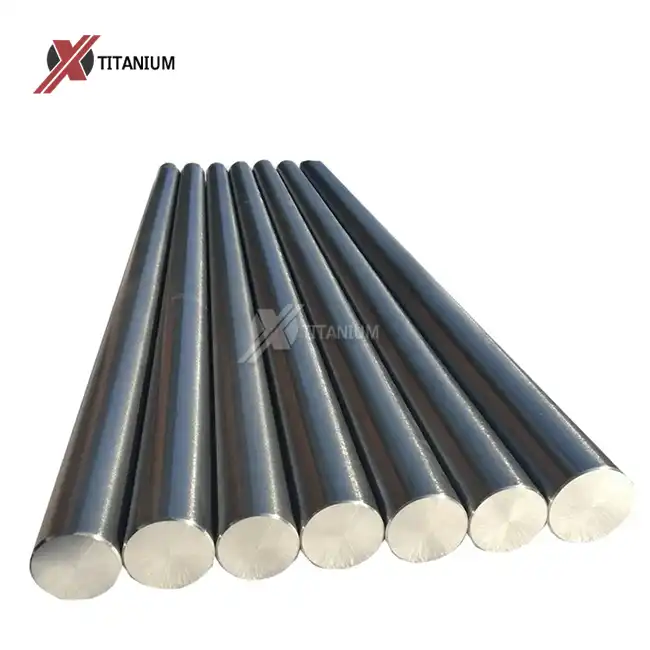
Understanding Titanium Alloy Rods in Sustainable Manufacturing
Titanium alloy bars are useful industrial products that are made of pure titanium mixed with specific alloying elements such as vanadium, molybdenum, and aluminum. This mix of metals makes things that are stronger and more durable than regular metals. It also helps meet goals for protecting the environment.
What Makes Titanium Alloys Unique?
A lot of people use grade 5, which is made up of 6% aluminum and 4% vanadium. There is a titanium alloy rod that can be pulled apart up to 1100 MPa and then pulled back together again up to 700 MPa. With these guidelines, manufacturers can make parts that are lighter without losing their strength. This makes transportation and space use less energy immediately.
Cold rolling, hot rolling, and annealing are some of the steps that are used to make titanium bars. Annealing improves the grain structure and mechanical properties. When you choose a way to clean the surface, such as sanding, pickling, or sandblasting, make sure it meets the needs of the job and doesn't harm the material's natural environmental benefits.
Environmental Impact Through Durability
It is directly linked to the fact that titanium metal parts last a very long time that they are good for the earth. Titanium doesn't rust or wear down easily, so it lasts 300–400% longer in harsh conditions than other materials that need to be changed more often. That makes the item last longer, which means less need for production, energy use, and trash creation over its whole life.
Quality tests, like hardness tests (35–40 HRC), bending tests, and hydraulic pressure checks, make sure that goods always work the same way. This is important for long-term planning by the people who make things. Parts don't break down too quickly and hurt the environment, which costs a lot of money, because of these strict rules.
Advantages of Titanium Alloy Rods Over Traditional Materials
When it comes to important things, using titanium metals instead of other materials has been shown to be much better for the earth. There are environmental and economic benefits that go beyond the original performance measures. These benefits cover the whole lifetime.
Superior Strength-to-Weight Performance
Titanium metals are just as strong as steel, but they weigh about 45% less. This makes them better for the environment right away when used in shipping. When people lose weight, they use less fuel and put out less carbon dioxide into the air. For every kilogram of weight lost in the air, an airplane can save three to five thousand liters of fuel each year.
They can make parts that work at temperatures from -54°C to 400°C by combining the low density (4.43 g/cm³) property with the high thermal stability property. There is no need for extra safety steps or cooling systems because it is so stable. The method is easier to use and needs less power.
Corrosion Resistance and Longevity
Most materials don't break down easily in salt water or chemicals, but titanium alloy rod materials don't rust at all. Titanium surfaces naturally make a thick oxide film that keeps chloride, hydrogen sulfide, and other harsh chemicals that are used in industry from attacking them.
Because it doesn't rust, it doesn't need any coats, replacements, or long-term maintenance plans. Companies that use titanium parts say that they need to do 60% to 80% less maintenance than companies that use stainless steel parts. It's better for the earth, though, to replace titanium parts less often and throw them away less often.
Procurement Insights for Titanium Alloy Rods
Strategic procurement of titanium materials requires understanding how the market works, what your sellers can do, and the quality standards you need to meet to help you reach your goals for environmentally friendly manufacturing.
Supplier Selection and Certification
The first step to smart shopping is to find sources that have full quality control systems, like ISO 9001, AS9100, and medical device certifications. That's why these documents are important for long-term plans for sustainability. They make sure that materials can be tracked and that performance stays the same.
Suppliers you can trust will give you detailed material approvals that describe the material's chemistry make-up, strength, and handling history. Teams in charge of buying things can use this paperwork to make sure that performance standards are met for each application and that all production runs are the same.
Customization and Inventory Management
These days, titanium suppliers let you change a lot of things, like the diameter (between 5mm and 200mm) or the length (to cut down on waste). This way, producers can buy the exact amount they need to make their products. Stock prices and loss go down because of this.
You don't have to do any extra work on the surface because you can treat it with finishes like bright, shined, pickled, and scraped. By setting the right surface conditions before buy, manufacturers can cut down on the time they spend working, the energy they use, and the waste they make in their facilities.
Cost Optimization Strategies
When you add up all the money you'll save over time, titanium alloy rod materials are more expensive to buy at first. Strategic buying includes keeping in touch with sellers for a long time, making shipping plans that work for everyone, and finding deals to buy in bulk. These steps lower the cost per unit and make sure there is a steady supply.
Procurement managers say that costs have gone down by 15 to 25 percent thanks to smart buying relationships that rely on quality, on-time delivery, and on expert support rather than the lowest unit price. These deals make it possible for people to use titanium materials in projects that are good for the environment and keep costs low.
Real-World Case Studies Illustrating Sustainability Benefits
The real environmental benefits that can come from using titanium alloys carefully can be seen in a number of different businesses.
Aerospace Industry Applications
Adding titanium parts to business planes has made a huge difference in how eco-friendly they are. Titanium metal is used to make the frames of Boeing's 787 Dreamliner. This makes the plane 20% lighter than regular materials. This cuts down on pollution by the same amount as the fuel saved, or 25%.
Engine builders use titanium alloy rod stock to machine parts like compressor blades and structural pieces that can handle temperatures above 400°C. These components maintain dimensional stability and performance throughout 30,000-hour service intervals, eliminating premature replacement and reducing maintenance-related emissions.
Medical Device Manufacturing
Titanium is used to make prosthetic implants that are biocompatible and strong. These implants are meant to last 40 years. Implants made of stainless steel may need to be changed after a certain amount of time due to rust or wear. Implants made of titanium, on the other hand, don't need to be replaced, which would be bad for both the environment and healthcare.
Ti metals are very flexible, with a stiffness that is very close to that of bone. In other words, they don't protect against stress in a way that opens implants and means they need to be changed. With this physical fit, implants last longer and cause less damage to the environment than making new ones and medical waste.
Chemical Processing Industry
Chemical businesses that work in very dangerous environments say that adding titanium equipment has made a huge difference in how long they can stay in business. Dow Chemical makes chlorine with process tools and heat exchanges made of titanium. Normal things only last 3 to 5 years, but these last 25 to 30 years.
This extended service life means that 5 to 10 times less raw materials, energy, and trash are needed when compared to regular materials. Not having to fix things breaks down also cuts down on the lost energy and useless work that come with having to buy new things.
Future Trends and Innovations in Titanium Alloy Rods for Sustainable Manufacturing
Titanium is becoming more eco-friendly thanks to new technologies that make it easier to recover, use less energy during production, and make metal formulas that work better.
Advanced Recycling Technologies
The main goal of research projects is to come up with closed-loop ways to recycle titanium alloy rod materials that still work well after being used a lot of times. At the moment, recycling methods can get back 95% of the titanium that is in old parts. With the new ways, the goal is to get 99% of the metal back while keeping its properties. The new ways of recycling make it possible for the circle economy to work. In these models, titanium parts are recovered and used again as high-quality raw materials. People who make things this way say they need 40–60% less raw materials to meet end performance standards.
Energy-Efficient Production Methods
With the help of powder metallurgy and additive production, it is now easy and takes less energy to make titanium parts. These ways of making things use 30–50% less energy and waste less material because they don't use normal casting and machining. This is called near-net-shape production. Electron beam melting and selective laser sintering make it possible to directly make complicated forms, which makes materials work better and be used in more ways. These changes to production help reach sustainability goals and give engineers more design choices for making solutions that are both light and effective.
Alloy Development for Sustainability
New titanium alloys are being made by scientists who study materials. These metals can be recovered better and help the earth less. Industrial uses need materials that are strong and don't rust. These mixes keep those qualities while adding things that make processes more efficient and make recycling easier when the material is no longer useful.
Beta titanium alloys have a lot of potential for uses that need the most strength for their weight. Even more weight can be lost in cars and planes thanks to these materials. This makes the benefits of better gas mileage and lower emissions last longer over the life of the car.
Conclusion
Titanium alloy rod materials are a big part of making things in many fields that are good for the earth. Because they are strong for their weight, don't rust, and last a long time, these materials are better for the earth because they use less material, save energy, and make less trash. Manufacturers can reach their big sustainability goals while still running a great business and staying ahead of the competition in tough uses if they buy these high-tech materials in a planned way.
FAQ
What certifications should I look for when procuring titanium alloy rods?
Essential certifications include ISO 9001 for quality management, ASTM B348 for material standards, and AS9100 for aerospace applications. Medical applications require ISO 13485 certification and FDA compliance documentation. These certifications ensure material traceability, consistent performance, and regulatory compliance across different industries and applications.
How do titanium alloy rods compare to stainless steel in corrosion resistance?
Titanium alloys demonstrate superior corrosion resistance in most environments, particularly marine and chemical applications. While stainless steel may suffer pitting and crevice corrosion in chloride environments, titanium maintains integrity through its stable oxide film. This advantage translates to 5-10 times longer service life in aggressive environments, significantly reducing replacement frequency and associated environmental impact.
What customization options are available for titanium alloy rod procurement?
Manufacturers offer extensive customization including diameter ranges from 5mm to 200mm, custom lengths, and various surface finishes. Processing options include cold rolling, hot rolling, and annealing treatments tailored to specific applications. Surface treatments such as polishing, pickling, and sandblasting can be specified to eliminate secondary processing requirements and reduce overall manufacturing environmental impact.
Partner with Chuanglian for Sustainable Titanium Solutions
Baoji Chuanglian New Metal Material Co., Ltd. stands ready to support your sustainable manufacturing objectives through premium titanium alloy rod solutions. Our comprehensive quality management system, extensive processing capabilities, and commitment to environmental responsibility make us the ideal titanium alloy rod supplier for forward-thinking manufacturers. Contact our technical team at info@cltifastener.com or djy6580@aliyun.com to discuss how our certified materials can enhance your sustainability initiatives while delivering the performance your applications demand.
References
1. American Society for Testing and Materials. "Standard Specification for Titanium and Titanium Alloy Bars and Billets." ASTM B348-19. West Conshohocken: ASTM International, 2019.
2. Boyer, Rodney, Gerhard Welsch, and E.W. Collings. "Materials Properties Handbook: Titanium Alloys." Materials Park: ASM International, 1994.
3. Froes, Francis H. "Titanium: Physical Metallurgy, Processing, and Applications." Materials Park: ASM International, 2015.
4. International Organization for Standardization. "Aerospace Series - Titanium and Titanium Alloys - Technical Specification." ISO 9583:2019. Geneva: ISO, 2019.
5. Lutjering, Gerd and James C. Williams. "Titanium: Engineering Materials and Processes." Manchester: Manchester University Press, 2007.
6. Peters, Manfred, et al. "Titanium Alloys for Aerospace Applications." Advanced Engineering Materials, vol. 5, no. 6, 2003, pp. 419-427.
Learn about our latest products and discounts through SMS or email