- English
- French
- German
- Portuguese
- Spanish
- Russian
- Japanese
- Korean
- Arabic
- Greek
- German
- Turkish
- Italian
- Danish
- Romanian
- Indonesian
- Czech
- Afrikaans
- Swedish
- Polish
- Basque
- Catalan
- Esperanto
- Hindi
- Lao
- Albanian
- Amharic
- Armenian
- Azerbaijani
- Belarusian
- Bengali
- Bosnian
- Bulgarian
- Cebuano
- Chichewa
- Corsican
- Croatian
- Dutch
- Estonian
- Filipino
- Finnish
- Frisian
- Galician
- Georgian
- Gujarati
- Haitian
- Hausa
- Hawaiian
- Hebrew
- Hmong
- Hungarian
- Icelandic
- Igbo
- Javanese
- Kannada
- Kazakh
- Khmer
- Kurdish
- Kyrgyz
- Latin
- Latvian
- Lithuanian
- Luxembou..
- Macedonian
- Malagasy
- Malay
- Malayalam
- Maltese
- Maori
- Marathi
- Mongolian
- Burmese
- Nepali
- Norwegian
- Pashto
- Persian
- Punjabi
- Serbian
- Sesotho
- Sinhala
- Slovak
- Slovenian
- Somali
- Samoan
- Scots Gaelic
- Shona
- Sindhi
- Sundanese
- Swahili
- Tajik
- Tamil
- Telugu
- Thai
- Ukrainian
- Urdu
- Uzbek
- Vietnamese
- Welsh
- Xhosa
- Yiddish
- Yoruba
- Zulu
How to choose the right titanium anode basket for your plating tank
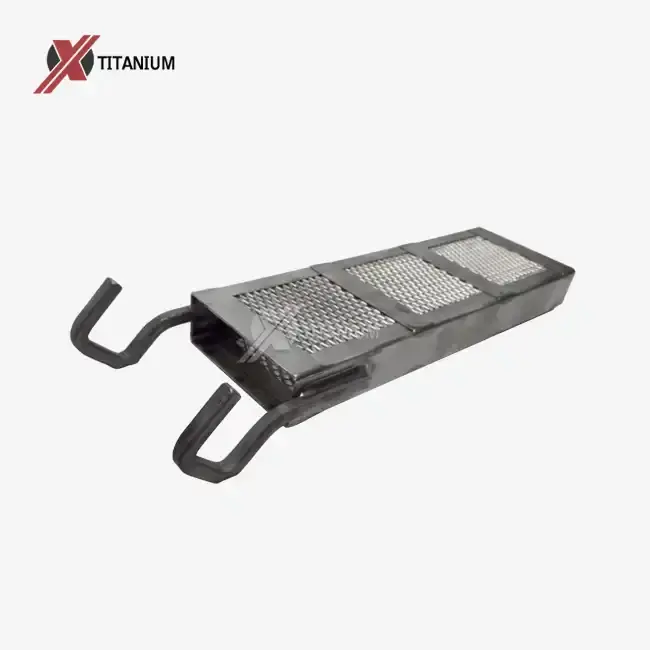
There's more to picking the right titanium anode baskets for your electroplating job than just making sure the sizes fit your tank. It's important to know how the design of the basket, the type of material used, the arrangement of the mesh, and the treatment of the surface all affect the flow of current, the even breakdown of the anode, and finally, the consistency of your plating results. Whether you're making a lot of PCBs or small amounts of decorative chrome, choosing baskets that are made for your specific chemistry, current density, and anode material will cut down on unplanned downtime, increase the service life of the baskets, and give your customers the consistent deposit quality they want.
Understanding Titanium Anode Baskets: Function and Benefits
Titanium anode baskets are special electrochemical fittings made to hold soluble anode materials like copper balls, nickel rounds, or tin bits while metal is being electroplated or finished. These baskets let you keep the anode surface area constant, unlike regular solid anode bars that break down randomly and need to be replaced often. The titanium structure creates an inactive oxide layer when the anode conditions are right. This keeps the basket from melting and effectively transfers current to the anode material inside through contact points.
Why Titanium Outperforms Other Materials?
Titanium is very resistant to rust because it can form a steady, self-repairing titanium dioxide film in places where oxygen is present. Because of this, it works great with harsh plating chemicals like sulfuric acid copper baths, Watts nickel solutions, and acidic zinc electrolytes. The low density and high mechanical strength of the material make it easy to handle during repair cycles because it has a good strength-to-weight ratio. The structure of these baskets stays the same at temperatures ranging from room temperature to 60°C, which is common for hot plating baths. They don't break down or add metal to your process solution.
The practical benefits help your bottom line right away. When copper plating, facilities that use titanium anode baskets say that repair processes last longer than three years, compared to six months for steel baskets. The stable anode shape gets rid of the voltage changes and uneven plating layers that come with solid anodes that are losing their strength. This lowers the number of rejects and the cost of repairs.
Core Criteria to Consider When Selecting Titanium Anode Baskets
To find the best design for your titanium anode baskets, you have to look at a number of technical factors that affect both the short-term performance and the long-term dependability.
Material Grade and Purity Standards
Grades 1 and 2 of commercially pure titanium are the standard for making anode baskets and meet the requirements of ASTM B265. Grade 1 is better for low-temperature uses because it is easier to shape and doesn't rust, while Grade 2 is better for heavy-duty systems because it is stronger. The difference in oxygen content between these grades—0.18% maximum for Grade 1 and 0.25% for Grade 2—has a direct effect on how well they join and how resistant they are to cracking during fabrication. When you buy baskets, make sure that the company that makes them gives you material test results that show the chemical makeup of the baskets, especially the content of intermediate elements, which affects how the baskets react to electricity in your specific bath chemistry.
Geometric Compatibility and Current Distribution
The shape of the tank determines how the baskets need to be set up. In order to keep the distance between the anode and cathode the same, vertical continuous plating lines usually need rectangular baskets. Barrel plating systems, on the other hand, usually use circular designs. The size of the basket should let enough electrolytes flow while also making the most of the anode's surface area. Hook placement and busbar connection design are important but often forgotten factors. If your electrical link isn't good enough, resistance will show up as localized heating, unstable voltage, and uneven current flow across the cathode surface.
Mesh Specifications and Anode Retention
The size of the mesh hole has to meet two different needs: it has to have enough space for electrolyte flow and ionic transport, and it has to be strong enough to hold your specific anode material in place. The expanded mesh titanium design is more rigid for heavy copper balls or nickel rounds, and the hole sizes are usually between 10mm and 25mm. Woven mesh patterns can hold smaller anode materials, but they aren't as strong when they're loaded. The thickness of the mesh affects how long the basket lasts. A thicker gauge construction can handle mechanical stress during anode refilling and keeps the basket from deforming under extended current loads.
Surface Treatment and Electrochemical Activation
Preparing the surface has a big effect on how well the basket works at first and how it breaks in. Acid pickling gets rid of mill scale and other surface impurities, leaving a clean titanium surface that quickly forms an oxide layer to protect it. Sandblasting makes the surface rougher, which increases the area of mechanical touch with anode materials and could lower contact resistance. Polished surfaces have fewer cracks that could start localized rusting in pools that are dirty.
The surface treatment you choose should match the chemistry of your bath. For example, halide-containing liquids may need a rougher initial passivation than sulfate-based electrolytes. When you fully evaluate these factors, you should think about how they work together in your unique working conditions. For example, a basket made for acid copper plating at room temperature needs different specs than one made for nickel sulfamate uses that need high temperatures and a lot of movement.
Comparing Titanium Anode Baskets with Alternative Materials
Figuring out how titanium anode baskets stack up against other materials helps to support the investment choice and establish reasonable performance goals.
Titanium Versus Graphite Construction
Although graphite baskets are cheaper to buy at first, they have a lot of practical limits. Due to its brittleness, the material can break when it is handled or loaded onto an anode, especially in places with a lot of work going on at once. Graphite has a higher electrical resistance than titanium, so more voltage is needed to get the current levels that are wanted. Because of this resistance, energy is wasted as heat is made. Because graphite is porous, it can trap anode fines and bath contaminants, which can make cleaning procedures harder and possibly contaminate later plating runs.
Titanium Versus Steel Alternatives
In coating settings, steel baskets don't work well with electricity and chemicals. Anodic polarization speeds up rust in even stainless steel grades. It introduces iron pollution that makes electrodeposits brittle and uses up brightener additives in ornamental plating baths. Because they keep breaking down, they need to be replaced often, which costs a lot and causes problems with operations. Steel's higher mass also makes it harder to work with during upkeep.
Titanium Versus Platinum-Clad Options
Platinum-coated titanium surfaces work really well with electricity in certain processes, like hard chrome plating or certain types of anodizing. In these special chemicals, the valuable metal layer keeps the catalytic activity and doesn't let it go away. However, because it costs five to ten times more than bare titanium, it can only be used in situations where normal titanium's passive oxide formation causes problems with the process. When nickel, copper, zinc, and tin polishing is done the usual way, bare high-purity titanium gives the best cost-to-performance ratio.
How to Procure the Best Titanium Anode Basket for Your Business Needs?
When you do strategic buying for titanium anode baskets, you have to look at providers' professional skills, quality control methods, and business dependability.
Supplier Technical Competencies and Certifications
Manufacturers who have worked in the electroplating business know the specific needs that general metal manufacturers often miss. Look for sellers who have quality management certifications that are useful to your business. ISO 9001 is a basic level of guarantee, while AS9100 for aircraft or ISO 13485 for medical uses show more advanced quality systems. The process of making something should be looked at closely: accurate measurements can be made with precise cutting and shaping, and strong, clean joins can be made with advanced TIG welding methods. If your application needs to deal with high current levels or water chemicals that are toxic, ask for sample welds to be analyzed by metallurgists.
Customization Capabilities and Engineering Support
Standard basket setups work well for many uses, but custom-engineered solutions work best for tanks with specific shapes or for special processes. Check to see if potential sellers offer engineering help to turn your business needs into the best basket specs. Can they change the designs of the mesh to fit their own anode materials? Do they offer up-to-date distribution models to confirm the placement of the basket? The best industrial partners are more than just order fills; they are also expert tools.
Commercial Terms and Supply Chain Reliability
Budgeting is easier when prices are clear and take into account things like the cost of materials, how hard the design is to make, and the number of orders. Titanium prices change based on changes in the global supply chain, so make sure that quotes include price security periods. When a basket failure threatens production plans, lead times mean a lot. Know the normal production cycles and how to speed up capabilities. Logistics for delivery should work with where you are, and sellers who have experience with foreign shipping should be able to help you with export paperwork and make sure the right packing is used to avoid damage.
Support after the sale is what sets transactional sellers apart from strategic partners. Help with technical issues related to installation, fixing basket issues that don't make sense, and warranties that cover problems caused by manufacturing flaws are all great ways to lower the risk. Some providers offer services for inspecting and fixing up baskets. By replacing hooks or fixing mesh, these services can extend the life of assets.
Best Practices for Titanium Anode Basket Maintenance and Longevity
By extending service life and keeping electrical performance stable, organized upkeep routines help you get the most out of your titanium anode baskets investment.
Routine Cleaning and Inspection Protocols
Set up cleaning cycles that work with the chemicals and strength of your bath. Baskets that work in sulfuric acid copper tubs usually need to be rinsed once a week to get rid of the copper fines and anode bag debris that build up. Nickel plating jobs may need more frequent attention because brighteners that contain sulfur can break down and leave behind products that can stick to mesh surfaces. When cleaning, you shouldn't use rough mechanical scrubbing because it could damage the passive oxide layer. Instead, use pressure washing with deionized water to get rid of small contaminants while keeping the surface's structure.
By checking visually during cleaning processes, problems can be found early on. Look for spots of darkening that show where there is bad electrical contact, which can lead to hotspots. Check welds for cracks that are starting to form, especially in high-stress areas like hook attaches. Check for warping or sliding in the mesh that could mean mechanical overload or bad anode loading methods. Write down what you see to set a standard and see how things are getting worse over time.
Contact Resistance Management
To keep low-resistance electrical paths, you need to pay attention to both the links between the basket and the busbar and the contacts between the anode material and the mesh. Over time, busbar hooks build up shielding oxide films and plating solution leftovers that make the resistance higher. Conductivity can be restored by cleaning it every so often with rough pads or weak acid. As the anode material settles in the basket, it forms new contact points. To keep the best electrical connection, operators should shake or bump the baskets every so often.
Failure Mode Recognition and Replacement Criteria
Knowing how common failures happen helps you tell the difference between damage that can be fixed and damage that needs to be replaced. Localized mesh puncture from long-term arcing or production flaws may allow operation to continue, but with less capacity. Hooks that break from mechanical stress are safety risks that need to be replaced right away. Widespread mesh loss from unexpected rust points to bath contamination problems that need more than just replacing the basket. Setting clear criteria for deciding whether to repair or replace something makes the best use of assets and protects the quality of the metal.
Conclusion
To choose the right titanium anode baskets, you have to weigh the material standards, physical fit, and source skills against your specific electroplating needs and operating limitations. Commercially pure titanium construction of Grade 1 or Grade 2 gives current plating processes in fields like PCB production and car finishing the rust resistance and dynamic qualities they need. The service life and even spread of electricity in a basket are directly affected by the mesh structure, surface treatment, and accuracy of the dimensions. Titanium's value for most common finishing tasks becomes clearer when compared to other materials like graphite, steel, or platinum-clad choices.
Instead of just looking at the original price, strategic buying looks at the professional skills of the seller, their ability to make changes, and the full range of business terms. Structured repair procedures that make baskets last longer protect your investment in capital while keeping the process consistent. This article gives buying workers, process engineers, and plant managers the detailed information they need to choose, get, and keep up anode baskets that work best for electroplating.
FAQ
How often should titanium anode baskets be cleaned to maintain optimal efficiency?
How often you clean relies mostly on the chemistry of the bath and the working current density. Rinsing copper coating processes once a week is usually a good idea to get rid of metallic fines and stop buildup that makes contact resistance higher. Nickel coating jobs might need more regular attention—every three to five days—especially if they use brighteners with sulfur that make breakdown products that aren't soluble. For decorative chrome methods with lower current levels, the time between cycles is often stretched out to every two weeks.
Can titanium anode baskets withstand highly acidic plating environments without degradation?
Titanium anode baskets that are very pure are very stable in most acidic plating chemicals, such as sulfuric acid, chromic acid, and organic acid systems. The material's inactive oxide film stays whole and fixes itself when the pH level changes from 3 to 10. However, liquids that contain fluoride are very different. Ions of fluoride attack the protected oxide layer and speed up rusting. If your process chemicals have hydrofluoric acid or fluoride salts in them, zirconium baskets will protect your equipment from the chemicals.
What factors most significantly influence titanium anode basket lifespan in industrial applications?
The main thing that determines how long a basket lasts is the current density. Higher current loads make electrical and heat stress happen faster. Service life is also greatly affected by mechanical factors, such as how the anode is loaded and how it is handled during maintenance. For example, filling baskets beyond the weight limits permanently deforms the mesh. If chlorides or other active species get into the bath, they can damage the protective oxide layer and start localized rusting.
Partner with Chuanglian for Superior Titanium Anode Basket Solutions
The aerospace, automobile, electronics, and chemical processing businesses around the world depend on Chuanglian to provide them with precision-engineered titanium anode baskets made from Grade 1 and Grade 2 economically pure titanium. In Baoji, China, which is known as the "Titanium City," our factory uses advanced CNC cutting and TIG welding skills to make baskets that are very accurate in size and structurally sound. Before it is shipped, every basket goes through a strict quality check that includes hardness testing, hydraulic pressure verification, and measurement validation. This makes sure that it meets international standards and your process requirements.
We make these baskets and have been in the electroplating business for more than ten years. We offer full expert support to make sure that the basket specs are best for your specific tank setup, bath chemistry, and current density. For the toughest jobs, custom mesh patterns, hook shapes that are stronger, and special surface treatments are available. Our global transport network makes sure that goods get to North American sites safely, with all the necessary export paperwork and protected packing.
Get in touch with our expert team to talk about your anode basket needs and get thorough specs that are made to fit your operations. Get quick technical help, competitive quotes, and details on bulk prices for setups with multiple tanks by emailing info@cltifastener.com or djy6580@aliyun.com.
References
1. American Society for Testing and Materials. (2021). ASTM B265-20: Standard Specification for Titanium and Titanium Alloy Strip, Sheet, and Plate. West Conshohocken, PA: ASTM International.
2. Schlesinger, M., & Paunovic, M. (2019). Modern Electroplating (5th ed.). Hoboken, NJ: John Wiley & Sons, Inc.
3. Schutz, R. W., & Thomas, D. E. (2018). "Corrosion of Titanium and Titanium Alloys." In ASM Handbook Volume 13B: Corrosion: Materials (pp. 252-299). Materials Park, OH: ASM International.
4. Dini, J. W., & Snyder, D. D. (2020). Electrodeposition of Nickel. In Modern Electroplating (pp. 79-114). Hoboken, NJ: John Wiley & Sons.
5. Kanani, N. (2022). Electroplating: Basic Principles, Processes and Practice (2nd ed.). Oxford, UK: Elsevier Science Ltd.
6. Titanium Information Group. (2020). Titanium for Chemical Plant and Process Equipment Design. London, UK: International Titanium Association Technical Publications.
Learn about our latest products and discounts through SMS or email