- English
- French
- German
- Portuguese
- Spanish
- Russian
- Japanese
- Korean
- Arabic
- Greek
- German
- Turkish
- Italian
- Danish
- Romanian
- Indonesian
- Czech
- Afrikaans
- Swedish
- Polish
- Basque
- Catalan
- Esperanto
- Hindi
- Lao
- Albanian
- Amharic
- Armenian
- Azerbaijani
- Belarusian
- Bengali
- Bosnian
- Bulgarian
- Cebuano
- Chichewa
- Corsican
- Croatian
- Dutch
- Estonian
- Filipino
- Finnish
- Frisian
- Galician
- Georgian
- Gujarati
- Haitian
- Hausa
- Hawaiian
- Hebrew
- Hmong
- Hungarian
- Icelandic
- Igbo
- Javanese
- Kannada
- Kazakh
- Khmer
- Kurdish
- Kyrgyz
- Latin
- Latvian
- Lithuanian
- Luxembou..
- Macedonian
- Malagasy
- Malay
- Malayalam
- Maltese
- Maori
- Marathi
- Mongolian
- Burmese
- Nepali
- Norwegian
- Pashto
- Persian
- Punjabi
- Serbian
- Sesotho
- Sinhala
- Slovak
- Slovenian
- Somali
- Samoan
- Scots Gaelic
- Shona
- Sindhi
- Sundanese
- Swahili
- Tajik
- Tamil
- Telugu
- Thai
- Ukrainian
- Urdu
- Uzbek
- Vietnamese
- Welsh
- Xhosa
- Yiddish
- Yoruba
- Zulu
How to Install a Titanium Nylock Nut for a Secure Fit
If you install a Titanium Nylock Nut the right way, the connection will be strong and not shake, even in harsh environments like aircraft, marine, and high-performance uses. The nylon part rubs against the bolt threads, keeping them from coming loose during use. The titanium material has a very high strength-to-weight ratio and doesn't rust. To install something correctly, you need to check the threads, line up the parts correctly, use the torque values recommended by the maker, and make sure the lock engages by checking it after installation. This easy process keeps important parts from breaking mechanically and makes the most of the performance benefits that titanium screws offer in harsh settings.
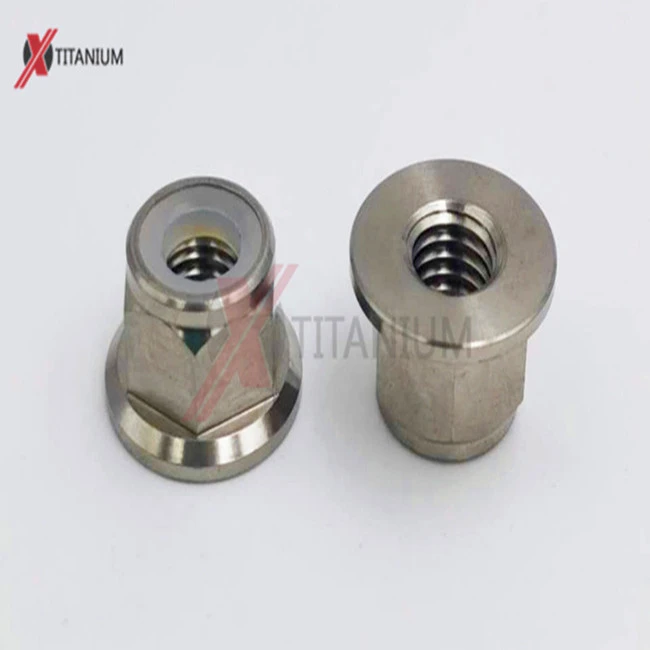
Understanding Titanium Nylock Nuts: Features and Benefits
Titanium Nylock Nuts are a complex mix of advances in material science and mechanical engineering. These special fasteners have a nylon plug inside the nut body that grips the bolt threads. This keeps the nut from rotating loose due to shaking, temperature changes, or dynamic loads.
Material Properties That Matter
The titanium design has clear benefits over other types of fasteners. Titanium fasteners are about 60% as dense as steel, so they help decrease the total weight of an assembly without affecting its strength. This quality is very useful in aircraft uses where every gram affects how much fuel is used and how much weight can be carried. The substance is also very resistant to rust. When exposed to oxygen, it forms a protective oxide layer that keeps saltwater, chemicals, and air damage from breaking it down.
Another thing that sets it apart is its temperature flexibility. Titanium keeps its mechanical qualities from very cold temperatures to about 600°F. This means that these nuts can be used in exhaust systems, engine parts, and thermal control assemblies. The low thermal expansion rate of the material keeps stress levels low when temperatures change, which lowers the risk of joint failure.
The Locking Mechanism Explained
When the nut is put onto the bolts, the nylon piece inside the nut makes an interference fit. As the fastener gets tighter, the nylon slightly deforms around the thread peaks. This creates constant friction that stops the threads from turning by accident. Unlike mechanical closing methods like lock wire or castle nuts, this design doesn't need any extra parts or steps for fitting besides standard threading.
Using different insert setups for different tasks is possible. All-metal dominant torque nuts use deformed threads instead of nylon, which keeps them closing in places where the temperature is higher than 250°F, which is the point at which nylon starts to break down. Engineers can choose the right fasteners for different working situations when they understand these differences.
Corrosion Resistance in Harsh Environments
Titanium is resistant to galvanic rusting, which is very useful in the marine and chemical processing businesses. When paired with stainless steel or carbon fiber parts, titanium screws avoid the electrochemical reactions that cause mixed-material systems to seize up and lose their structural integrity. This compatibility makes offshore platforms, desalination equipment, and underwater sensors last longer and need less upkeep.
Because the material is biocompatible, Titanium Nylock Nuts can be used to attach medical devices where implant-grade fasteners need to be able to handle body fluids without causing any problems. Surgical tool makers depend on these qualities to make sure that their products will last through many sterilization rounds and years of clinical use.
Step-by-Step Installation Process for a Secure Fit
To get the best performance from fasteners, they need to be installed in a way that takes into account the material's properties and the needs of the application. When you rush through assembly or forget to do the preparation steps, you weaken the joints and speed up the wear on the parts.
Pre-Installation Inspection and Preparation
First, check the bolt holes for damage, contamination, or differences in size. Even small flaws can stop a nylon insert from engaging properly or cause cross-threading while it is being installed. Use the right chemicals to clean the threads and get rid of any oils, dirt, or rust that could mess up the torque numbers or the locking function.
Make sure that the bolt grade, thread pitch, and nut size all fit the requirements. Titanium fasteners usually have to meet strict tolerances set by aircraft standards like AS568 or MS series specs. When parts don't fit together properly, they cause stress concentrations that cause them to fail early, especially in settings with a lot of shaking.
Check the fitting areas that the nut will touch when the parts are put together. Uneven load distribution can be caused by burrs, rough surfaces, or deformed materials. This can lead to isolated stress spots. Flat nuts might be needed to spread the clamping force over metal or alloy structures that aren't as strong.
Proper Threading Technique
Before adding twisting force, make sure the Titanium Nylock Nut is perfectly lined up with the bolt threads. By cross-threading, you hurt both parts and make it impossible for the nylon insert to lock. By hand, thread the nut until you run into resistance from the nylon insert. This usually happens in the last few turns before you hit the bearing surface.
When you feel the insert engage, the locking device is working because of the added resistance. If you force the nut or use power tools too soon, you could tear the nylon or strip the threads. When hand threading, the response you feel tells you a lot about the state of the part and how well it fits.
Torque Application Guidelines
Once you're done hand-tightening, switch to measured torque tools. The torque numbers given by the manufacturer depend on the width of the bolt, the thread pitch, and the grade of the material. Under-torquing doesn't provide enough clamping force, and over-torquing can damage the threads, bend the nylon insert, or cause bolt shanks to give.
Instead of quick, jerky moves, apply force in a smooth, continuous way. This method makes sure that the results are correct and stops false torque values that are caused by friction spikes or tools bending. Keep a close eye on the wrench as you get closer to the goal number. As soon as you reach it, stop.
Titanium has a lower amount of elasticity than steel, which means that when fastened, titanium will stretch a little more. Because this trait changes the relationship between torque and tension, it is very important to follow the stated specs. You should never use generic torque numbers made for steel screws on titanium parts without first making sure they work.
Post-Installation Verification
A visual check shows that the nut is properly set against the bearing surfaces, with no cocking or misalignment. The nylon patch should stay in place and be able to be seen inside the nut. Any signs of material coming out of the threads or staining mean there were problems with the fitting that need to be fixed.
Once the torque has been reached, do mechanical proof by turning the part a little with hand tools. If the lock works, the nut should not move, showing that it is engaged. In some situations, the positions of fasteners need to be marked with paint or a torque seal so that they can be seen during repair times.
For important parts, write down the force values, installation dates, and component lot numbers. This makes it easier to do quality checks and find trends if something goes wrong in the field. For high-stakes situations where joint health directly affects safety, photographic records can be used as an extra check.
Comparing Titanium Nylock Nuts with Alternative Locking Nuts
Knowing how different types of Titanium Nylock Nuts work differently helps you make smart purchasing choices that balance cost with operational needs. Depending on the environment, the type of load, and the ease of upkeep, each locking system has its own benefits.
Material Performance Comparison
Stainless steel Nylock Nuts are less expensive than titanium options and are good enough against rust for many uses. However, composite materials can't be used in aircraft or high-performance uses because they are heavier and might not work with galvanic materials. Steel bolts also expand and contract more quickly when the temperature changes, which can put stress on systems that are exposed to temperature changes.
All-metal lock nuts with twisted threads or spring elements can keep working at temperatures where nylon inserts break down. These styles work for exhaust pipes, turbine systems, and parts for industrial furnaces. The trade-off is that they need more force to be installed and might not be able to be used as many times as nylon insert designs.
Vibration Resistance Characteristics
Test results show that Titanium Nylock Nuts keep their pressure even when they are loaded and unloaded over and over again, which makes regular nuts free. Vibrational energy that would otherwise turn screws around is absorbed by the constant friction that nylon inserts create. This feature is very important in places where part durability rests on fasteners staying in place, like in racing suspensions, UAV power systems, and reciprocating machinery.
Other options include spring lock nuts and wedge-locking systems, but they make assembly more difficult and increase the number of parts needed. Split nuts can get stuck in softer materials, which makes upkeep more difficult. Titanium Nylock Nuts make fitting easier and work just as well or better than steel nuts when it comes to locking.
Long-Term Cost Considerations
Titanium screws are more expensive to buy at first than steel or aluminum options, which makes buyers unwilling to buy them because of the higher unit costs. When replacement frequency, assembly labor, and failure effects are taken into account, lifecycle analysis shows different economics. Titanium doesn't rust or react with chemicals, so it doesn't need to be replaced as often. This saves money on supplies and cuts down on repair downtime.
Titanium Nylock Nuts that are kept in good shape can be used more than once, which adds to their value. While nylon plugs wear out after a few installations, titanium threads can be put together over and over again without galling or deforming, which can happen with aluminum bolts. Total cost of ownership-based procurement methods often choose titanium standards, even though they cost more to buy.
Procurement Insights: Sourcing High-Quality Titanium Nylock Nuts
The choice of supplier has a big effect on the consistency of the Titanium Nylock Nut, the dependability of delivery, and the availability of expert help. The titanium processing industry has high hurdles to entry because of the high cost of materials, the need for processing knowledge, and the need for certification. This means that suitable producers are mostly established experts.
Certification and Quality Standards
For aerospace uses, AS9100 quality control systems are required, which are more stringent than ISO9001 standards. These licenses show that the provider can keep track of things, use statistical process controls, and handle special processes that change the properties of materials. In the same way, companies that make medical devices need providers that have ISO13485 approval for medical product quality systems.
Every shipment should come with a material test record that lists the chemical make-up, mechanical properties, and heat treatment factors. These documents show that the product meets certain standards, like ASTM B348 for titanium bars or AMS standards for aircraft fasteners. Lot traceability lets you connect performance data to individual production runs in case problems happen in the field.
Evaluating Supplier Technical Capabilities
Reputable companies that make Titanium Nylock Nuts have their own testing labs that can check dimensions, test strength, and do mechanical analysis. This technology makes it possible to quickly answer questions about quality and improve processes based on what customers say. Suppliers who don't have these skills usually work as wholesalers instead of makers, which makes it harder for them to deal with technical problems or meet specific needs.
Premium suppliers are different from commodity providers because they offer engineering help. Having access to application experts who know about joint design, material compatibility, and the best ways to put things adds value beyond just getting the product to the customer. This knowledge is especially helpful when choosing fasteners for new designs or figuring out problems with how they work in the field.
Supply Chain Stability Considerations
Titanium material supply changes based on how much is mined, how much is needed in aerospace, and the political situations in the main producing areas. Suppliers who keep buffer stocks of raw materials and use a variety of buying networks can protect against supply outages. When you ask possible vendors about their inventory management and ties with other suppliers, you can find out if they can keep their shipping promises when the market is unstable.
Lead times for regular catalog items and special specs are very different from one another. Off-the-shelf fasteners with standard measurements may be sent out within days. However, it may take weeks or months for custom alloy grades or special certificates to be sent out. When you plan your purchases in line with your realistic production schedules, you can avoid project delays and the need for fast packages that cost more.
Troubleshooting and Best Practices for Long-Term Performance
To keep Titanium Nylock Nuts working well after they are installed, you need to know how they can fail and plan ahead for care. Service life is affected by the environment, operating pressure, and the way things are put together.
Common Installation Errors to Avoid
Cross-threading is the most common installation mistake. It happens when nuts that aren't lined up right force their way onto bolt threads. The damage that happens weakens both the locking mechanism and the joint itself. Before using tools, always make sure the original threading is smooth. If resistance shows up too soon, back off and adjust the threads.
If you don't lubricate properly, it can be hard to figure out how much force to use. Thread lubricants make the mating surfaces less scratchy, which changes the relationship between force and strain. Using oils without changing the torque specs can put too much stress on bolts, and using dry torque specs on threads that have been oiled can make joints too loose. Follow the manufacturer's instructions on how to lubricate, or select dry torque installation if the instructions are still not clear.
Impact tools are tempting for techs who want to get things done quickly, but they can damage nylon inserts by creating too much heat and shock loading them. The fast hammering motion can cut through inserts or make tiny cracks in threads. Use powered installation only for the initial thread contact. Use calibrated torque tools for the final tightening.
Environmental Factors Affecting Service Life
When used outside, ultraviolet light breaks down nylon dividers, making closing less effective over time. Protective coats or regular inspections that find insert wear before they break are helpful for assemblies that are in full sunlight. When UV exposure can't be avoided, all-metal dominant torque nuts take away this weakness.
Chemical compatibility goes beyond the titanium clip and includes materials like nylon inserts. Strong oxidizers, chemical solvents, and some hydraulic fluids can damage nylon, which can make locks less secure. Reviewing data on chemical resistance during design keeps things from breaking down too soon in harsh settings.
Inspection and Maintenance Protocols
Setting up torque verification plans that are right for the application's level of seriousness stops failures caused by loosening. High-vibration equipment may need to be checked after the first few hours of use and then at regular repair times. When you record torque values during checks, you can find patterns that point to problems like thread wear or gasket stress that are about to happen.
Visual checking methods pick up on early warning signs like bolt rust, nylon insert expansion, or deformation of the bearing surface. Using paint to mark installed places makes it easy to find rotations during regular walkthroughs. This easy method allows for constant tracking in between official inspections.
Both obvious damage and limits on reuse should be taken into account in replacement criteria. Titanium threads can be put together more than once, but nylon plugs break down after a while. Setting maximum reuse numbers based on how important they are keeps you from having to rely on screws that can't lock properly.
Conclusion
Titanium Nylock Nuts are a strong way to fasten things together that can withstand vibrations. They are used in high-performance aircraft and naval uses. The right way to install something starts with carefully checking each part, then carefully aligning it and applying the right amount of force, and finally making sure that the closing mechanism works. Understanding the benefits of different materials, comparing different designs, and choosing trusted sources are all important steps in making sure that a joint works well. Maintaining the quality of fasteners over their service life through regular checks and being aware of environmental factors is important. All of these steps make sure that investments in titanium fasteners reach their full potential in terms of strength, resistance to rust, and dependability in harsh industrial settings.
FAQ
After being taken off, can Titanium Nylock Nuts be used again?
Reuse depends on the state of the nylon core and how important the application is. Visual inspection shows that the inserts are complete and have not been deformed, which suggests that they could be used again for less important projects. Reuse is usually not allowed in aerospace and medical settings because it could be dangerous. With each installation cycle, the nylon wears down a little more, making the closing less effective even when there doesn't seem to be any damage.
At what temperatures do nylon insert lock nuts not work?
Standard nylon plugs keep their closing function up to about 250°F, after which they start to break down more quickly. For uses at higher temperatures, all-metal dominant torque designs or other locking ways are needed. Titanium and nylon both keep their qualities at very low temperatures, so they can be used in cryogenic settings.
How does titanium compare to stainless steel for marine fasteners?
Titanium is much more resistant to rust in saltwater than stainless steel, so it doesn't get pitting or pocket corrosion. The advantage in weight also helps performance vessels, since lowering the mass on top makes them more stable. Because it is cheaper and easier to get, stainless steel is sometimes better for less important uses where regular repair is fine.
Building Reliable Supplier Relationships
Chuanglian is a good example of the all-around method that B-side buyers need to find important titanium parts. We are based in Baoji City, which is known around the world as the center of titanium production. For more than a decade, we have been helping the aerospace, medical, and marine industries with our advanced CNC cutting skills and knowledge of materials. Our quality control systems keep track of every fastener from the time the raw materials are certified until they are inspected for quality. This makes sure that all of our products are the same, which is important for sourcing teams that need to choose parts for important projects.
If you email our technical sales team at info@cltifastener.com or djy6580@aliyun.com, you'll be put in touch with experts who know how hard it can be for people to buy titanium fasteners. We keep a lot of paperwork, like certifications for materials, data from mechanical tests, and safety records that meet audit standards. As a company that makes Titanium Nylock Nuts and is dedicated to open and honest relationships, we offer the technical depth and supply chain dependability that procurement professionals who care about quality need.
References
1. ASM International. (2015). Titanium: A Technical Guide (2nd Edition). ASM International Publishing.
2. Bickford, J.H. (2008). Introduction to the Design and Behavior of Bolted Joints: Non-Gasketed Joints (4th Edition). CRC Press.
3. Boyer, R., Welsch, G., & Collings, E.W. (1994). Materials Properties Handbook: Titanium Alloys. ASM International.
4. Federal Aviation Administration. (2019). Advisory Circular AC 43.13-1B: Acceptable Methods, Techniques, and Practices - Aircraft Inspection and Repair. U.S. Department of Transportation.
5. Lütjering, G., & Williams, J.C. (2007). Engineering Materials and Processes: Titanium (2nd Edition). Springer-Verlag Berlin Heidelberg.
6. Society of Automotive Engineers. (2018). Aerospace Standard AS568: Aerospace Self-Locking Nuts - Procurement Specification. SAE International Technical Standards.
Learn about our latest products and discounts through SMS or email