- English
- French
- German
- Portuguese
- Spanish
- Russian
- Japanese
- Korean
- Arabic
- Greek
- German
- Turkish
- Italian
- Danish
- Romanian
- Indonesian
- Czech
- Afrikaans
- Swedish
- Polish
- Basque
- Catalan
- Esperanto
- Hindi
- Lao
- Albanian
- Amharic
- Armenian
- Azerbaijani
- Belarusian
- Bengali
- Bosnian
- Bulgarian
- Cebuano
- Chichewa
- Corsican
- Croatian
- Dutch
- Estonian
- Filipino
- Finnish
- Frisian
- Galician
- Georgian
- Gujarati
- Haitian
- Hausa
- Hawaiian
- Hebrew
- Hmong
- Hungarian
- Icelandic
- Igbo
- Javanese
- Kannada
- Kazakh
- Khmer
- Kurdish
- Kyrgyz
- Latin
- Latvian
- Lithuanian
- Luxembou..
- Macedonian
- Malagasy
- Malay
- Malayalam
- Maltese
- Maori
- Marathi
- Mongolian
- Burmese
- Nepali
- Norwegian
- Pashto
- Persian
- Punjabi
- Serbian
- Sesotho
- Sinhala
- Slovak
- Slovenian
- Somali
- Samoan
- Scots Gaelic
- Shona
- Sindhi
- Sundanese
- Swahili
- Tajik
- Tamil
- Telugu
- Thai
- Ukrainian
- Urdu
- Uzbek
- Vietnamese
- Welsh
- Xhosa
- Yiddish
- Yoruba
- Zulu
What is the long - term stability of Titanium Clad Copper Wire?
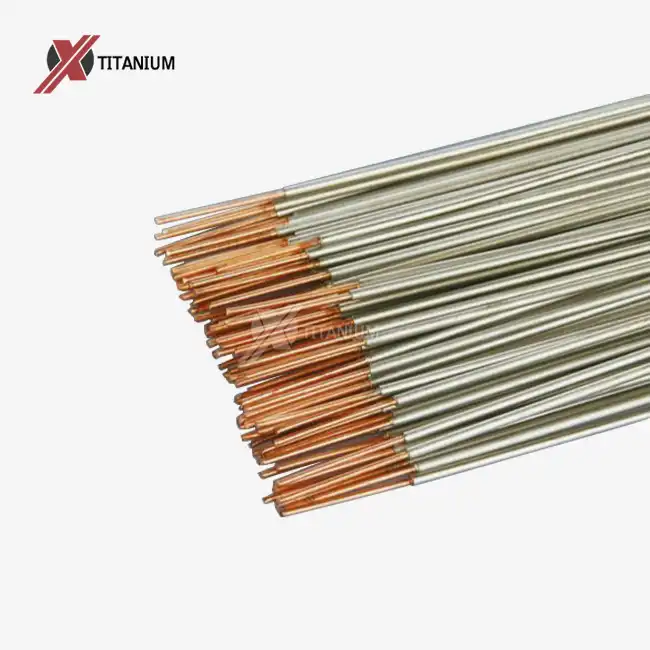
In the most challenging industrial settings, titanium-clad copper wire is a high-tech bimetallic composite option that is built to last for decades. Its long-lasting stability comes from the fact that it is made of a high-purity copper core that conducts electricity very well and a titanium top layer that is resistant to rust, oxidation, and chemical attack. This hybrid structure keeps its electrical integrity and mechanical strength even after being exposed to acidic baths, saltwater, changing temperatures, and mechanical stress for a long time. These are all things that would quickly break down copper wires.
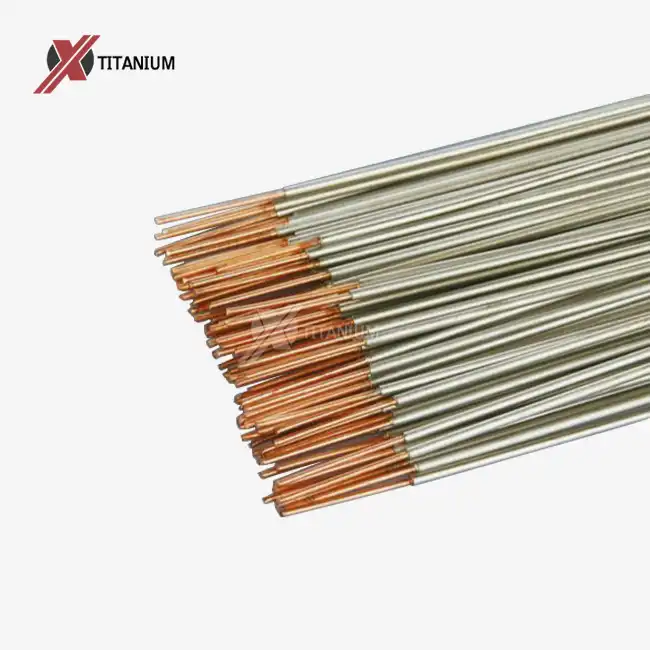
Understanding Titanium Clad Copper Wire and Its Foundational Stability
Understanding how two different metals work together as a single system is the first step to making this combination material stable. The production process makes a real atomic-level bond between the copper core and titanium-clad copper wire cladding, not just a mechanical covering or electroplating. This mechanical stability stops delamination, which is a major way that poor composite wires fail.
Material Composition and Bonding Technology
Our titanium-clad copper wire is made with oxygen-free high-conductivity (OFHC) copper bases that are usually C11000 or T2 grades, and either Grade 1 or Grade 2 commercially pure titanium cladding. Modern methods, such as explosive coating followed by hot rolling and cold drawing, are used to bond the materials together. These ways produce enough energy to make an interdiffusion zone where copper and titanium atoms mix at the contact. This forms a lasting molecular bond that can withstand differences in temperature and mechanical bending for the life of the wire.
The copper core diameter can be anywhere from 0.5 mm to 25 mm, so it can meet the needs of different businesses for carrying different amounts of power. The titanium cladding's thickness is adjusted from 0.1 mm to 2 mm based on how toxic the climate is and how much mechanical protection is needed. Engineers can find the best mix between cost, conductivity, and rust resistance with this flexible layout.
Manufacturing Process and Quality Assurance
The first step in making something is carefully choosing the raw materials. Before any work is done, Baoji Chuanglian New Metal Material Co., Ltd. gets high-quality titanium and copper that meets international standards. To keep things clean, the cladding process uses precise gluing methods in controlled atmospheric circumstances. After being bonded, the composite is cold rolled to get the right dimensions and then annealed to get rid of any interior stresses that might make it less stable in the long run.
Surface treatments are very important for making things last longer. You can choose from treatments like bright, polished, pickled, acid-cleaned, and sandblasted. Each way of preparing a surface is best for a certain type of application. For example, polished surfaces reduce friction in moving applications, while pickled surfaces improve bonding for later finishing processes. Quality testing includes hardness tests to make sure the right amount of heat treatment was done, bending tests to make sure the bond is strong, and pressure tests for uses where fluid control is important.
Key Performance Characteristics
The wire has a minimum tensile strength of 500 MPa, which means it is strong enough for structure uses and won't bend when it's loaded. The electrical conductivity hits 65% IACS (International Annealed Copper Standard), which is very good given the titanium covering. This amount of conductivity makes sure that current flows efficiently, and the titanium layer forms a protective passive oxide film (TiO₂) that can fix itself when it gets scratched, keeping its rust resistance for decades of use.
Titanium's low density (4.5 g/cm³) and copper's high conductivity make a mix that is both light and highly conductive. This edge in weight is especially useful in aircraft, where every gram counts, and in marine settings, where supporting structures need to take on as little extra weight as possible.
Analysis of Long-Term Stability Challenges and Causes
In industrial settings, electrical wires are constantly being broken down. When buying teams understand these processes, they can better understand why titanium-clad copper wire technology gives better returns on investment, even though it costs more at first.
Common Degradation Mechanisms in Industrial Settings
When pure copper wires are put in acidic media, they have problems right away. When electroplating, sulfuric, chromic, or hydrochloric acid baths dissolve copper surfaces that are visible. This contaminates the electrolyte and lowers the quality of the plating. As the temperature rises, the rate of dissolution speeds up, which makes things worse in hot process pools. Copper clips and bus bars that aren't covered need to be replaced every few months, which slows down production and causes quality to vary.
Marine settings have different problems that are just as harmful. Ions of chlorine get through protected layers and start pitting rust, which spreads quickly below the surface. Oxygen difference cells grow in cracks, which speeds up attack in a specific area. Copper wires in offshore platforms and desalination plants often break down early, which makes servicing much more expensive. This is because of mechanical vibration from waves and thermal cycles from changes in temperature between day and night.
Thermal cycling adds to the risks to stability. Heating and cooling metal over and over again makes it expand and contract, which eventually makes the metal harder to bend. Copper breaks easily and forms tiny cracks that spread when it is loaded and unloaded over and over again. These cracks make the electrical resistance higher, which causes localized burning that speeds up the failure chain.
How Titanium Cladding Provides Barrier Protection
Titanium has a very high resistance to rust because it forms a dense, stick-on layer of titanium dioxide that is only a few nanometers thick and can't be broken down by most chemicals. This passive layer stays stable in pH levels from 3 to 12 and grows back right away if it gets broken mechanically. This is what engineers call "self-healing" defense. The covering keeps the copper core from coming into direct contact with acidic substances, which keeps it from dissolving and contaminating the electrolyte.
The titanium layer on the outside also stops wear cracks from starting. Because it has a higher yield strength than copper, surface stresses stay below the level where cracks can form during regular operating bending. Titanium-clad conductors keep their shape in electroplating jigs that go through thousands of plunge cycles every year, while pure copper would crack and break.
The change in function can be seen in test results from chemical processing plants. Copper bus bars in chlor-alkali electrolysis cells that are not covered need to be replaced every 18 to 24 months because they rust. Titanium-clad options in the same service conditions show almost no decline after 15 to 20 years. This is proven by metallographic cross-sectioning, which shows that the bonding surfaces are still solid and there is no subsurface corrosion penetration.
Comparative Evaluation: Titanium Clad Copper Wire vs Alternatives
To choose the best conductor materials, you need to know how to balance performance against a number of different factors. To explain material options to people in technical, financial, and practical departments, engineers and procurement managers need to use data-driven comparisons for titanium-clad copper wire and its alternatives.
Performance Comparison with Pure Copper
Pure copper has the highest electrical conductivity (100% IACS), which makes it the standard for how much power it can carry. This speed edge goes away quickly in corrosive environments, though. Copper's electrode potential makes it vulnerable to galvanic corrosion when it comes into touch with more valuable metals. Its low resistance to corrosion in acidic or saline environments also limits its uses.
Titanium-clad copper wire still has a 65% IACS conductivity, but this isn't a big deal in most situations because the size of the conductor can make up for it. Lifecycle cost study shows the most important benefit. It costs 2-3 times more to buy the materials at first than pure copper, but in harsh settings, they pay for themselves in 5–10 years because they don't need to be replaced as often and there is less downtime and contamination of the electrolyte. After switching to composite wire systems, chemical processing plants say their conductor-related repair costs dropped by 80 to 90%.
Comparison with Copper-Clad Aluminum
Copper-clad aluminum (CCA) wire is popular in power distribution and telecommunications because it is lighter and cheaper than bare copper line. The metal body gives the structure strength, and the copper cladding makes connections and gives the wires some corrosion protection. However, CCA doesn't work well in electrochemical situations where aluminum dissolves anodically and where the difference in thermal expansion between copper and aluminum causes delamination during thermal cycles.
Titanium-clad copper wire works better than CCA. Copper and titanium both have similar thermal expansion coefficients (8.6 ppm/°C and 16.5 ppm/°C, respectively). This means that when the temperature changes, there is less stress between the two metals. The titanium covering can stand up to harsh chemicals that would damage aluminum, and the copper core provides higher ampacity than aluminum for conductors of the same size. The higher cost is worth it for important uses in the aircraft, marine, and chemical processing industries where dependability is important.
Application-Specific Material Selection
The chloride protection of composite wire is very helpful for marine and underwater systems. Longer periods of time go by between servicing cathodic protection systems, underwater electrical distribution, and shipboard wiring connections. Aerospace uses the lightweight qualities for weight-sensitive cables and sensing systems that are at risk of failing because of corrosion from hydraulic fluid or deicing chemicals.
The material is essential for chemical processing plants that use electroplating, anodizing, or electrolytic purification. The electrical performance and gap spacing of dimensionally stable anode (DSA) lead lines made from composite stock stay the same over many decades of use. The biocompatibility of titanium cladding for implantable sensor lines and surgery tool wires is important to companies that make medical devices.
Procurement Considerations for Long-Term Stability
Getting titanium-clad copper wire is very different from getting copper in bulk. The technical difficulty and importance of the application make it necessary to carefully evaluate suppliers and create specifications.
Supplier Qualification and Certification Requirements
Manufacturers that work with the nuclear, medical, or aircraft industries need to have quality control systems that are certified to AS9100, ISO 13485, or 10CFR50 Appendix B, in that order. These licenses show that the person has the process control skills needed to make sure that the material qualities stay the same. Procurement teams should check the certification's validity and coverage to make sure that the product lines being considered are within the scope of approved operations.
Another important requirement is the ability to track materials. For both copper and titanium parts, each production lot should have paperwork that connects the finished wire to the mill certificates for the raw materials. This chain of custody makes it easy to quickly figure out what went wrong in the field and meets the rules for limited businesses. Traceability of heat numbers is especially important in aircraft uses where changes in material properties must stay within small ranges.
Testing skills need to be carefully looked at. Reputable makers have their own labs where they can do tensile tests, electrical conductivity tests, metallographic examinations, and rust tests. Third-party testing by accredited labs gives you even more peace of mind. Specific test methods, like ASTM B611 for bond strength and ASTM B193 for resistivity testing, should be required by the procurement standards, along with factors for what to accept and what to reject based on the needs of the application.
Specification Development and Custom Requirements
Standard catalog items can be used for many things, but for important systems, they often need to be configured in a way that is unique to them. For precision fittings, limits for diameters may need to be tighter than ±0.05mm. For uses involving moving electrical connections, surface finish requirements may say that the roughness level must be less than 0.4 μm. Early in the design process, procurement engineers should talk to sellers to find out what problems might come up with production and how to make the standards as good as they can be.
Pay close attention to cladding thickness ratios. Applications that focus on protecting against rust should use titanium layers that are thicker, while applications that focus on cost and conductivity should use titanium layers that are thinner. When you work with skilled sources like Chuanglian, you can use iterative prototyping and testing to get the best results. Our engineering team helps clients find the best balance between different needs so that the product has the highest lifetime value.
The economics of specialist production are shown by minimum order numbers (MOQs). For tooling and setup costs to be worth it, custom configurations usually need MOQs of 100 to 500 kg. So that deal sizes are affordable and inventory levels are acceptable, procurement strategies should combine needs from multiple projects into a single set of requirements. Setting up framework deals with yearly volume promises can often get you better prices and earlier production schedules.
Balancing Cost and Quality in Long-Term Partnerships
When it comes to important composite materials, price-focused buying methods don't work. When people try to find the cheapest choice, they often end up with poor bond quality, inconsistent dimensional standards, or contaminated raw materials that cause early fails in the field. Emergency replacements, production slowdown, contaminated process baths, and safety issues are just a few of the costs that come up as a result.
Value-focused buying, on the other hand, focuses on the total cost of ownership. Suppliers who offer full expert support, help with application engineering, and quick response times for prototypes add value above and beyond the price of the materials themselves. Chuanglian gives customers in-depth application discussions to help them choose the best options. This cuts down on costly specification mistakes and speeds up project timelines.
Long-term ties with suppliers are good for both sides. Suppliers get more stable output, which lets them invest in better processes and more capacity. Customers get special care when supplies are low, better prices, and the chance to work together on making next-generation products. Many of our aircraft and chemical processing clients have been working with us together for more than ten years, co-developing unique metals and shapes that give them an edge in their markets.
Future Prospects and Industry Trends Impacting Stability
New developments in material science and changing needs in the business world keep pushing the boundaries of bimetallic composite technologies. Learning about new trends helps procurement teams guess what the future will hold for titanium-clad copper wire and make sure that their buying strategies are in line with that.
Advances in Bonding Technology and Manufacturing Processes
Solid-state bonding methods are being studied to improve interface qualities and lower the cost of production. If friction stir welding was changed to work with making wire, longer lengths could be worked on continuously without welds, which would get rid of any possible weak spots. In the future, additive manufacturing might make it possible to make functionally graded compositions where the titanium-copper ratio changes along the length of the wire to get the best qualities for each use.
There are many interesting ways that nanotechnology can be used. Adding graphene or carbon nanotube supports to the bonding surface could make it stronger and better at conducting electricity. Using nanostructured titanium coatings on the surface could make it even more resistant to rust while lowering the thickness of the covering needed. This would improve the conductivity-to-weight ratio.
Growing Demand from Sustainability-Focused Industries
Composite conductors are being used more and more in difficult environments in the renewable energy field. Offshore wind sites are constantly exposed to saltwater and mechanical stress. In tidal energy devices, high-speed currents corrode electrical contacts by running through them. In deserts, places that use solar concentrators have to deal with high temperature changes and dust wear and tear. Composite materials make all of these uses more stable, which is a good thing.
As naval transportation moves toward electric and hybrid propulsion systems, the need for corrosion-resistant wires grows. Electric ferries, tugboats, and short-sea cargo ships need power distribution systems that can work even when they are constantly exposed to saltwater. For these uses, the wire for the battery control system needs to be made of materials that have a high cycle life and don't rust.
Regulatory Trends and Performance Standards
As materials get better, industry norms keep changing to reflect this. Standards groups like ASTM International and others often add new test methods and performance factors to the specs for composite conductors. Keeping up with changes to standards makes sure that buying specifications stay in line with best practices in the industry and lets better material types be qualified as they become available.
Environmental laws are having a bigger effect on the choices of materials. Electronics without lead or cadmium are becoming more popular because of limits on harmful metals in electronics. Titanium-clad copper wire naturally meets the requirements of the RoHS and REACH guidelines, which puts it in a good situation as the rules apply to more types of products. It's also important that the material can be recycled at the end of its useful life. The combined structure makes it possible to separate and recycle the two metals that make it up, which supports efforts to create a circular economy.
Conclusion
Because of its clever material design, which combines copper's conductivity benefits with titanium's corrosion resistance through permanent metallurgical bonding, titanium-clad copper wire remains stable over time. This new composite method solves the problem of the standard trade-off between conductivity and corrosion that has restricted pure metal conductors. It gives these materials service lives of 15 to 20 years in places where other materials fail within months. When making purchasing decisions, companies should look for suppliers that can show they can make great products, have complete quality systems, and offer collaborative expert help, not just the cheapest prices.
FAQ
Q1: How long does titanium-clad copper wire typically last in marine environments?
A: In marine uses like offshore platforms, desalination plants, and shipboard electrical systems, properly designed titanium-clad copper wire has demonstrated service lives reaching 15-20 years. The titanium cladding stops the pitting rust caused by chloride that breaks down pure copper very quickly, and the metallurgical bond stops delamination from heat cycles. The actual service life varies on things like the temperature, flow rate, and presence of biological fouling in the seawater, but field data repeatedly shows that covered copper conductors have 5–10 times longer life than exposed copper conductors.
Q2: Can titanium-clad copper wire be soldered or welded?
A: Titanium's oxide layer makes it hard to wet, which makes traditional tin-lead soldering difficult. Soldering can be done with special fluxes that contain fluoride activators, but mechanical crimp connections are often more stable. Resistance welding is a good way to make strong links between composite wires or to end hardware for long-term use. Ultrasonic welding is another good way to put things together. Based on your unique assembly needs and output rate, our technical team gives you detailed suggestions on how to join the parts.
Q3: What cost premium should procurement teams expect compared to standard copper wire?
A: Titanium-clad copper wire costs about two to three times as much per kilogram as pure copper wire of the same size. However, lifetime cost research shows that total ownership costs are much lower in settings that are corrosive. Return-on-investment periods of 3 to 7 years are common for chemical processing uses. This is because of fewer replacements, no downtime, cleaner electrolytes, and longer equipment lifetimes. Instead of just looking at the original cost of materials, procurement evaluations should also look at how to cut down on maintenance costs and boost production.
Partner with Chuanglian for Reliable Titanium-Clad Copper Wire Solutions
With over ten years of experience serving the aircraft, chemical processing, marine, and medical device industries, Baoji Chuanglian New Metal Material Co., Ltd. is a reputable maker of titanium-clad copper wire. Our manufacturing services cover everything from choosing the right materials to checking the finished product. We are ISO 9001 certified and strictly follow ASTM standards. We can change the wire configurations to fit your exact needs. Core sizes range from 0.5 mm to 25 mm, and covering thicknesses range from 0.1 mm to 2 mm. Our engineering team works with your technical staff to make sure that specs are optimized, testing is sped up, and production scale-up goes smoothly. You can email our application engineers at info@cltifastener.com or djy6580@aliyun.com to talk about the needs of your project and get specific technical information.
References
1. Davis, J.R. (2001). Copper and Copper Alloys: ASM Specialty Handbook. Materials Park: ASM International.
2. Schutz, R.W. & Watkins, H.B. (1998). "Recent Developments in Titanium Alloy Application in the Energy Industry." Materials Science and Engineering: A, 243(1-2), 305-315.
3. Findlay, S.J. & Harrison, N.D. (2002). "Why Aircraft Fail." Materials Today, 5(11), 18-25.
4. Revie, R.W. & Uhlig, H.H. (2008). Corrosion and Corrosion Control: An Introduction to Corrosion Science and Engineering (4th ed.). Hoboken: John Wiley & Sons.
5. ASM International Handbook Committee (1990). ASM Metals Handbook Volume 2: Properties and Selection—Nonferrous Alloys and Special-Purpose Materials (10th ed.). Materials Park: ASM International.
6. Pourbaix, M. (1974). Atlas of Electrochemical Equilibria in Aqueous Solutions (2nd ed.). Houston: National Association of Corrosion Engineers.
Learn about our latest products and discounts through SMS or email