- English
- French
- German
- Portuguese
- Spanish
- Russian
- Japanese
- Korean
- Arabic
- Greek
- German
- Turkish
- Italian
- Danish
- Romanian
- Indonesian
- Czech
- Afrikaans
- Swedish
- Polish
- Basque
- Catalan
- Esperanto
- Hindi
- Lao
- Albanian
- Amharic
- Armenian
- Azerbaijani
- Belarusian
- Bengali
- Bosnian
- Bulgarian
- Cebuano
- Chichewa
- Corsican
- Croatian
- Dutch
- Estonian
- Filipino
- Finnish
- Frisian
- Galician
- Georgian
- Gujarati
- Haitian
- Hausa
- Hawaiian
- Hebrew
- Hmong
- Hungarian
- Icelandic
- Igbo
- Javanese
- Kannada
- Kazakh
- Khmer
- Kurdish
- Kyrgyz
- Latin
- Latvian
- Lithuanian
- Luxembou..
- Macedonian
- Malagasy
- Malay
- Malayalam
- Maltese
- Maori
- Marathi
- Mongolian
- Burmese
- Nepali
- Norwegian
- Pashto
- Persian
- Punjabi
- Serbian
- Sesotho
- Sinhala
- Slovak
- Slovenian
- Somali
- Samoan
- Scots Gaelic
- Shona
- Sindhi
- Sundanese
- Swahili
- Tajik
- Tamil
- Telugu
- Thai
- Ukrainian
- Urdu
- Uzbek
- Vietnamese
- Welsh
- Xhosa
- Yiddish
- Yoruba
- Zulu
What are the main advantages of MMO coated titanium anodes?
In electrochemical uses, MMO coated titanium anodes offer excellent corrosion protection, longer service life, and higher energy economy. These dimensionally stable anodes have a high-purity titanium base and a catalytic mixed metal oxide layer. They solve important problems in the industry, like electrode breakdown, electrolyte contamination, and high costs. They have been used successfully in electroplating, chlor-alkali production, water treatment, and cathodic protection. This makes them an essential tool for procurement managers looking for reliable, low-cost options that keep downtime to a minimum and improve return on investment.
Understanding MMO Coated Titanium Anodes
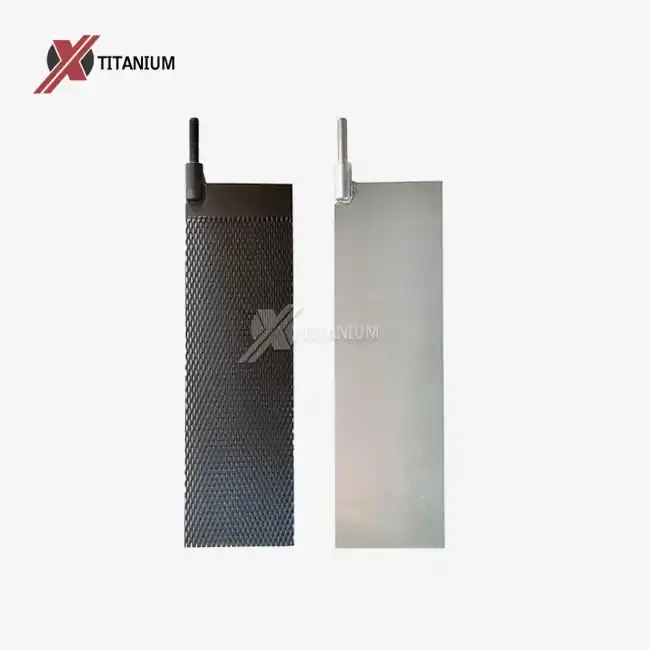
What Defines an MMO Coated Titanium Anode?
The base of these special electrodes is usually ASTM B265 Grade 1 or Grade 2 titanium, and they are covered with a carefully designed mixed metal oxide layer. The coating is usually made up of valuable metal oxides like iridium dioxide (IrO2), tantalum pentoxide (Ta2O5), and ruthenium dioxide (RuO2). The coatings are 5 to 50 microns thick. When these two things come together, they make a catalytic surface that helps electrons move quickly during electrochemical processes.
At our plant in Baoji, the titanium base is carefully prepared by cold rolling, hot rolling, annealing, and pickling. Surface processes like buffing, bright finishing, acid cleaning, and sandblasting make sure that the layer sticks well. Prior to the coating being applied, each base is tested for strength, bending, and hydrostatic pressure.
How the MMO Layer Functions
The mixed metal oxide coating works as an electrocatalytic surface that makes gas evolution processes much less likely to have too much overpotential. During electrolysis, an electric current flows through the anode. The MMO layer helps oxygen or chlorine evolve with little voltage drop. This catalytic activity keeps the anode's current efficiency above 90% for its entire working life, which makes it different from other electrode materials that lose their performance over time.
With an operating temperature range of up to 200°C, these anodes can work successfully in harsh heating conditions. The coating's physical stability stops changes in shape that could change the distance between electrodes and make current delivery less reliable. This stability solves one of the biggest problems in industrial electrochemistry, which is keeping process conditions the same for long periods of time.
Core Advantages of MMO Coated Titanium Anodes
Unmatched Corrosion Resistance in Aggressive Environments
Titanium is naturally resistant to corrosion, and the protective MMO layer makes an electrode system that can handle the toughest chemical conditions. MMO coated titanium anodes exemplify this durability, as our quality control system tests show that these anodes maintain their integrity in harsh environments with concentrated acids, alkaline solutions, and high chloride levels—conditions where conventional graphite or lead anodes would degrade within months.
When evaluating materials for pressure vessels, heat exchangers, and offshore platform structures, procurement managers in industrial and marine engineering sectors prioritize this corrosion resistance. The synergistic action of titanium's natural oxide layer and the MMO coating prevents substrate degradation, eliminating electrolyte contamination—a persistent challenge with soluble anodes in electroplating operations.
Extended Operational Lifespan Reduces Replacement Frequency
Service life is usually between three and seven years, but it depends on how it is used, how dense the current is, and how often it is maintained. The length of time it lasts directly addresses the buying pain point of unstable supply chains and unplanned downtime. Technical experts like that longer anode life means fewer breaks in production and lower costs for repair workers.
At Baoji Chuanglian, we use strict quality control measures in our manufacturing process to make sure that the coating is uniform and sticks well. Prior to being sent out, each anode is tested for conductivity, rust resistance, and longevity. This care for detail reduces difference from batch to batch, which is a big problem for quality inspection offices that are in charge of multi-year contracts for buying things.
Superior Energy Efficiency Through Reduced Overpotential
When working voltages are low, energy use in electrolytic processes goes down straight. Because ruthenium and iridium oxides are catalytic, they can release gases at potentials that are much lower than what graphite or magnetite anodes need. Compared to older electrode technologies, these new ones usually save 15% to 30% on energy costs. This means that the initial investment is worth it, even in situations where price is important.
When process engineers do cost-benefit studies, they like that the voltage efficiency stays the same over the life of the anode. Unlike graphite anodes, whose voltage creeps as the surface oxidizes, dimensionally stable anodes keep their electrochemical performance steady. This level of predictability helps with accurate process models and planning for the long run.
Dimensional Stability Ensures Consistent Process Control
In electroplating and electrowinning, changes in electrode spacing can lead to problems with how the current flows. Geometric stability stops these changes. Keeping the anode and cathode distances exact makes sure that high-precision electrical parts have the same coating thickness and that hydrometallurgical processes always reclaim the same amount of metal.
Titanium has a low density, and the thin MMO layer makes the anodes light, which makes them easier to place and handle. Customizable sizes can fit a wide range of equipment setups, meeting the needs of OEM partners and system designers working with different reactor shapes. Our CNC machining skills allow us to make exact unique forms without affecting the structure of the coating.
Minimal Maintenance Requirements Lower Total Ownership Costs
Resistance to fouling and covering degradation lowers the number of times that the part needs to be cleaned and the time between checks is increased. Unlike graphite anodes, which produce carbon dust that needs to be cleaned up all the time, or lead anodes, which form passive layers that block current flow, these electrodes always have clean, active surfaces.
Instead of deep mechanical cleaning or surface restoration, routine checks only involve looking at things and measuring how well they carry electricity. Procurement managers who look at the total cost of ownership instead of just the purchase price like this easier upkeep process. Return on investment estimates are helped a lot by longer production runs between shutdowns and less work that needs to be done on upkeep.
Environmental and Safety Benefits Support Sustainability Goals
There are no heavy metals like lead or harmful breakdown products, which is in line with stricter environmental rules that affect businesses. Because anodes don't pollute electrolyte solutions, they get rid of the dangerous waste streams that come with using electrodes and lower the cost of removal.
Following the ISO 14001:2015 Environmental Management standards shows that we care about making products that are good for the earth. Because these electrodes last longer than alternatives that need to be changed more often, they naturally use less material and produce less trash. These qualities are useful for procurement teams that keep track of sustainable data when they report on environmental performance to regulatory bodies and stakeholders.
MMO Coated Titanium Anodes vs Alternative Solutions
Comparison with Graphite Anodes
Graphite electrodes are used in most older setups because they are cheap to buy, but they wear out quickly, which means that they cost a lot in the long run. Surface rust causes dimensional instability, so electrodes need to be moved around a lot to keep their spacing. Carbon particles get into electrolyte solutions and make them dirty, so they need to be filtered all the time and the bath needs to be replaced every so often.
In contrast, mmo coated titanium anodes offer superior longevity. Based on operational data, graphite anodes usually last between six and twelve months in chlor-alkali service, while mixed metal oxide options work consistently for many years in the same conditions. For quality-conscious technical engineers in charge of electroplating operations that make precision parts, getting rid of carbon poisoning is reason enough to spend more money on capital for MMO coated titanium anodes.
Evaluation Against Platinized Titanium Options
Platinized titanium anodes are very resistant to rust, but the coating can come off when the current is interrupted or switched around. Platinum's high price makes large capital expenditures difficult, especially for setups that need a lot of anode arrays. The economic benefit of noble metal coats is lessened by the fact that they have shorter service lives because platinum dissolves at high current levels.
Performance and cost-effectiveness are better balanced with mixed metal oxide technology. The chemical activity of ruthenium and iridium oxides is about the same, but the materials are much cheaper. Thermal breakdown coating ways improve adhesion, which stops delamination problems that shorten the life of a platinized anode.
Cost-Benefit Analysis for Industrial Procurement
When you look at the total cost of ownership, these electrodes are much better than options like graphite or lead, even though they cost more at first. Payback times are usually between 18 months and 3 years because of things like lower energy use, no need for new labor, longer production uptime, and no quality problems caused by contamination.
When evaluating suppliers, procurement managers should ask for thorough lifecycle cost analyses that take into account things like energy rates, upkeep labor costs, and the value of the goods produced. Our technical team creates personalized financial models with the unique working parameters of each customer to help them make smart decisions. Long-term supply deals and volume savings for bigger orders make the economy even more competitive.
Selecting the Right MMO Coated Titanium Anode for Your Needs
Technical Specifications Matching Application Requirements
The composition of the coating needs to match the electrochemical response and the setting in which it will be used. For chlorine evolution, formulations with more ruthenium work best, while for oxygen evolution, formulations with more iridium work best. The ideal coating specs are affected by the temperature, operating current density, and electrolyte makeup.
Our research team works with customers to look at process factors and suggest the best coating formulas. Choosing between Grade 1 and Grade 2 titanium as a substrate relies on how strong it needs to be and how complicated the shape needs to be. The thickness of the coating is chosen so that it balances catalytic activity, mechanical stability, and cost, taking into account how it will be used.
Customization Options for Specialized Applications
Standard shapes like flat plates, mesh sheets, tubular forms, and wire anodes for mmo coated titanium anodes can work for most applications, but special construction can be done to meet specific needs. With our CNC machining skills, we can make complicated forms that are exactly the same as sketches or models provided by the client. Improving the surface area by using mesh or stretched metal designs makes the active electrode area bigger without raising the cost of the materials by the same amount.
Material licenses, coating analysis reports, and dimensional inspection records are some of the extra paperwork that is often needed for medical devices and aircraft uses. Our quality management system keeps full records from buying the raw materials to the final inspection. This helps us meet the strict standards of AS9100 and ISO 9001:2015, which are very important for industries that are controlled.
Supplier Selection Criteria for Long-Term Partnership
In this niche market, reputation and technical skill are more important than price. You can be sure that the products you buy will be consistent by checking the certifications of your suppliers, such as ASTM B265 compliance, ISO quality management systems, and industry-specific approvals. Referrals from satisfied customers who have used similar products before can tell you a lot about how reliable something is and how good the technical help is.
Based on coating capacity and delay, lead times vary a lot from one provider to the next. Delivery delays that throw off project schedules can be avoided by talking about production scheduling and speeding options with suppliers while they are being evaluated. Setting up framework deals with chosen sellers makes sure that attention is given when capacity is limited and that good pricing terms are secured.
Maintenance Tips and Maximizing Anode Lifespan
Routine Inspection and Cleaning Protocols
Visual checks every three months find damage to the covering or strange layers before they affect performance. Electrical resistance readings can find covering damage earlier than just looking at it. Keeping inspection records allows for trend analysis that estimates how much longer something will last and helps with planning ahead for replacement.
When cleaning, you should not use rough methods that hurt the coating surface. Mineral layers can be removed with mild acid washing without hurting the oxide layer. In water cleaning uses, high-pressure water jets get rid of organic fouling well. Setting up written maintenance routines makes sure that the same things are done on all shifts and in all places.
Operating Parameter Optimization
By watching how the current density changes across the anode surfaces, you can find places where there is too much pressure, which speeds up wear. By keeping the makeup of the electrolyte within certain limits, you can stop the harsh conditions that shorten the life of the anode. Controlling the temperature lowers the thermal stress that can make it harder for coatings to stick after many heating and cooling cycles.
Using SCADA systems to collect process control data makes it possible to connect working conditions to rates of anode breakdown. Statistical analysis shows ways to improve things so they last longer without lowering production rates. Our expert support team helps customers understand performance data and put suggestions for growth into action.
Industry Case Studies Demonstrating Value
A petrochemical user using chlor-alkali cells got rid of the 15 kg/ton of chlorine-using graphite anodes and replaced them with stable-in-space replacements. The amount of energy used went down by 22%, and carbon pollution that needed to be cleaned every week was eliminated. By getting rid of the need to change anodes so often, annual upkeep costs dropped by 67%.
A naval engineering company that protects offshore platform structures moved from using aluminum anodes to using titanium mesh anodes for impressed current cathodic protection. The service life went from every two years to every seven years, which cut down on the costs of diving assistance and platform downtime. With consistent protective current distribution, the limited corrosion that happened with sacrificial anode systems was gone.
Conclusion
MMO coated titanium anodes are a tried-and-true technical answer to the important industrial problems of electrode durability, energy efficiency, and operating dependability. Their better resistance to rust, longer service life, and stable dimensions make them more cost-effective than older electrode materials, making up for their higher initial investment through lower total cost of ownership.
When you carefully choose an electrode based on its specific needs and follow the right upkeep steps, you can get the most out of it throughout its entire lifecycle. Sustainability and operational success are becoming more important in many fields. These dimensionally stable anodes offer consistent performance and environmental benefits that are in line with modern buying goals.
FAQ
Q1: What lifespan can be expected from these anodes?
A: Service life is usually between three and seven years, but it depends on how it is used. Some sites have records of active times longer than ten years. Current density has a big effect on how long something lasts. Anodes that work at current densities below 2,000 A/m² tend to last longer than those that are exposed to higher current loads. Routine cleaning and tracking, along with proper upkeep, can stretch the working life. On the other hand, thermal cycling and interruptions in the current may speed up the coating's breakdown.
Q2: Are these anodes suitable for seawater applications?
A: These electrodes are perfect for saltwater electrolysis, naval cathodic protection, and ballast water treatment systems because they don't rust. In high-chloride conditions, the titanium substrate doesn't get pitted or corrode in cracks, and the MMO layer keeps its ability to make chlorine. Customers in marine engineering like that anode usage is no longer needed, which cleans up seawater and makes dumping difficult.
Q3: What factors influence the purchase cost?
A: Coating makeup is the main factor that affects cost, with iridium-rich formulas being more expensive than ruthenium-based ones. The cost of materials is proportional to the size and thickness of the substrate, and the cost of production goes up for complex custom shapes. Higher prices are reasonable because there is less chance that the supplier will fail early because of their name and quality standards.
Partner with Chuanglian for Superior MMO Coated Titanium Anode Solutions
Every mixed metal oxide anode that Baoji Chuanglian New Metal Material Co., Ltd. makes is based on more than ten years of experience handling titanium. Our factory in Baoji City, which is known around the world as the "City of Titanium," has state-of-the-art CNC machines and finishing application systems that make sure the quality of our products always meets the strictest requirements. As a well-known company that supplies MMO-coated titanium anodes, we work with customers in the aerospace, petroleum, marine engineering, and medical device industries who need approved materials that come with full testing records.
Our engineering team works closely with procurement managers and technical experts to find the best anode configurations for each application. They do this by giving thorough lifecycle cost studies that show the value goes beyond the initial purchase price. Quality control methods that are in line with ISO 9001:2015 and ASTM B265 standards make sure that there is stability from batch to batch, which is important for building long-term supply relationships. Custom fabrication lets you meet the needs of specific shapes and surface areas that normal catalog goods can't.
To talk about your electrochemical application needs, please email our technical experts at info@cltifastener.com or djy6580@aliyun.com. We offer full support, from choosing the materials to helping with the installation. This helps you get the best return on your investment with the least amount of risk.
References
1. Chen, G. (2020). Electrochemical Technologies in Wastewater Treatment: Principles and Applications. Industrial Water Treatment Press.
2. Kuhn, A.T., & Mortimer, C.J. (2019). Dimensionally Stable Anodes for Industrial Electrochemistry. Journal of Applied Electrochemistry, Volume 45.
3. Trasatti, S. (2018). Electrocatalysis: Understanding the Success of DSA Technology. Materials Science in Electrochemistry, Third Edition.
4. Comninellis, C., & Vercesi, G.P. (2021). Characterization of DSA-Type Oxygen Evolving Electrodes for Industrial Applications. Electrochimica Acta International.
5. Hayfield, P.C.S. (2019). Development of the Noble Metal/Oxide Coated Titanium Electrode: Part III - Coatings and Applications. Platinum Metals Review, Volume 63.
6. Walsh, F.C., & Ponce de León, C. (2020). Progress in Electrochemical Engineering: Mixed Metal Oxide Electrodes. Transactions of the Institute of Chemical Engineers, Part A.
Learn about our latest products and discounts through SMS or email