- English
- French
- German
- Portuguese
- Spanish
- Russian
- Japanese
- Korean
- Arabic
- Greek
- German
- Turkish
- Italian
- Danish
- Romanian
- Indonesian
- Czech
- Afrikaans
- Swedish
- Polish
- Basque
- Catalan
- Esperanto
- Hindi
- Lao
- Albanian
- Amharic
- Armenian
- Azerbaijani
- Belarusian
- Bengali
- Bosnian
- Bulgarian
- Cebuano
- Chichewa
- Corsican
- Croatian
- Dutch
- Estonian
- Filipino
- Finnish
- Frisian
- Galician
- Georgian
- Gujarati
- Haitian
- Hausa
- Hawaiian
- Hebrew
- Hmong
- Hungarian
- Icelandic
- Igbo
- Javanese
- Kannada
- Kazakh
- Khmer
- Kurdish
- Kyrgyz
- Latin
- Latvian
- Lithuanian
- Luxembou..
- Macedonian
- Malagasy
- Malay
- Malayalam
- Maltese
- Maori
- Marathi
- Mongolian
- Burmese
- Nepali
- Norwegian
- Pashto
- Persian
- Punjabi
- Serbian
- Sesotho
- Sinhala
- Slovak
- Slovenian
- Somali
- Samoan
- Scots Gaelic
- Shona
- Sindhi
- Sundanese
- Swahili
- Tajik
- Tamil
- Telugu
- Thai
- Ukrainian
- Urdu
- Uzbek
- Vietnamese
- Welsh
- Xhosa
- Yiddish
- Yoruba
- Zulu
Titanium Forgings China vs Germany: Full Comparison
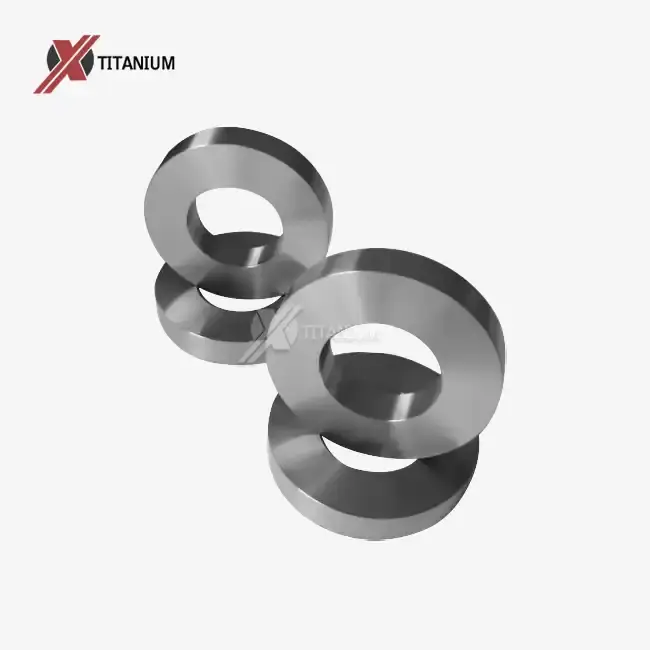
Procurement teams have to make a strategic choice: should they buy titanium forgings parts from China or Germany for aircraft turbine discs, underwater riser joints, or medical implant stems? Both countries are very good at making titanium, but they do it in very different ways. Chinese companies use economies of scale and adjustable production capacity to offer cost-effective options for a wide range of titanium grades. On the other hand, German companies focus on precision engineering, flight certifications, and strict traceability. Knowing these differences helps purchasing managers match the skills of suppliers with the needs of each project, like making sure that structural parts for airplanes are consistent from batch to batch or keeping costs down for high-volume industrial uses. To help you make smart buying choices, this comparison looks at technical skills, cost structures, and application suitability.
Market Overview of Titanium Forgings in China and Germany
There are two different ways of making things in the world of titanium forgings, which have their roots in industrial history and market positioning. The Chinese industry has grown very quickly in the last 20 years, making it the biggest maker of titanium powder and forgings in the world. Chinese providers have a lot of capacity for both standard and unique orders because there are so many manufacturers in Shaanxi Province, especially in Baoji City, which is known as the "City of Titanium." This system allows for large-scale output and faster purchasing of industrial-grade parts.
German makers, mostly in Bavaria and North Rhine-Westphalia, have been doing fine metalwork for more than one hundred years. Otto Fuchs and Leistritz Turbinentechnik are two companies that focus on making aerospace-grade forgings, which need to be carefully controlled during the manufacturing process and tested thoroughly. German factories usually keep their production levels low, but they put a lot of money into advanced forge modeling software, vacuum arc remelting (VAR) capabilities, and full non-destructive testing (NDT) labs. Boeing, Airbus, and Safran all want this technology infrastructure to meet the requirements of EN 9100 and NADCAP.
Production Capacity and Export Dynamics
Recent industry reports say that China's titanium forging exports are more than 15,000 metric tons per year, going to the petroleum, naval engineering, and consumer electronics industries around the world. Integrated supply chains—from making sponges in the United States to finishing the job—and lower business overhead give the company a price edge. Chinese makers can usually handle orders ranging from small prototype batches of 10 kg to large production runs of many tons. This gives project-based procurement models a lot of freedom.
Germany's exports focus on specific uses rather than sheer numbers. About 60% of Germany's titanium production goes to aerospace forgings, which have strict paperwork needs like material test reports (MTRs), heat treatment records, and ultrasonic inspection certificates. German suppliers usually need 12 to 16 weeks to deliver aerospace parts because they have strict quality standards. On the other hand, Chinese makers can usually deliver industrial-grade forgings in 8 to 12 weeks, based on how complicated they are.
Strategic Positioning in Global Supply Chains
Knowing how the market is positioned helps buying teams set reasonable goals. Chinese providers have been able to break into mid-level aircraft supply chains and take over industries where cost-effectiveness is key to decision-making. German companies continue to lead in safety-critical aircraft uses like landing gear actuators, turbine blade roots, and engine casings, where higher prices are necessary because of the bad things that could happen if they fail. Which of these places you choose will rely on how much risk you are willing to take, what certifications you need, and how much money you have available.
Technical Comparison: Quality, Standards, and Specifications
Three things affect how well titanium forgings work: the alloy makeup, the forging process settings, and the treatments done after the forging. Ti-6Al-4V (Grade 5) is the workhorse alloy used in about 80% of aircraft applications. Both Chinese and German companies make it, but there are changes in how it is made that show up in the microstructure and mechanical properties.
Alloy Selection and Standards Compliance
Titanium types that meet ASTM B381 (forgings), GB/T 16598 (Chinese national standard), and ISO 5832-3 (medical uses) are often supplied by Chinese companies. In Baoji, factories regularly confirm CP titanium Grades 1-4 and Ti-6Al-4V with tensile strengths of at least 895 MPa. To make foreign trade easier, material certificates usually refer to ASTM standards. However, testing methods used in other countries may use different sampling rates than those used in the West.
German manufacturers focus on aircraft metals like Ti-6Al-4V ELI (Extra Low Interstitial) for use in very cold environments and Ti-6Al-2Sn-4Zr-2Mo for use in high-temperature environments. AMS 4928 (aerospace material guideline), EN 4324 (European aerospace standard), and OEMs' customer-specific standards are all met. The testing methods are in line with ASTM E112 (grain size) and ASTM E1417 (liquid penetrant inspection). Witness samples from each production lot are often put through damaging testing as part of the testing process.
Forging Process Technologies
The forging method has a direct effect on the qualities of the end part. For complicated geometries, Chinese producers mostly use isothermal forging. For simpler shapes, they use standard press forging. Modern Chinese facilities use infrared pyrometry and programmed furnaces to keep temperatures within ±10°C limits during alpha-beta forging, which usually takes place at 900–950°C for Ti-6Al-4V. Temperature control has gotten a lot better. Post-forging, stress release annealing, and solution treatment all follow standard procedures. However, some sites may not have the ability to do their own heat treatment and may outsource these tasks.
German forging shops use high-tech modeling software to predict how the material will move and find any problems before the die is engaged. Beta forging techniques—processing above 995°C—are used to improve microstructures and make materials less likely to break. Heat treatment is always done in-house in vacuum or argon-atmosphere ovens, so there are no chances of surface contamination. The alpha case, the brittle oxygen-rich surface layer that forms when metal is exposed to high temperatures, is carefully removed by chemical milling to certain levels, making sure that there are no crack-starting spots left.
Quality Control Stringency
Rigid testing is what sets superior forgings apart from standard-grade ones. AS9100-certified Chinese sellers use thorough inspection programs that include ASTM E2375 ultrasonic testing (UT), dye penetrant inspection, and coordinate measuring machines (CMMs) to check the sizes of the products. From the sponge batch to the final machining, material tracking is possible. MTRs record chemical makeup using optical emission spectrometry and mechanical qualities using tensile and hardness tests.
Through 100% volumetric checking procedures, German makers go above and beyond what is required. Every aircraft forging goes through immersion ultrasound scans that can find 0.8 mm flat-bottom holes. This is recorded and records are kept for the life of the component. Tensile tests at room temperature and high temperatures, stress-rupture tests, and fracture toughness data are all part of mechanical testing. Third-party verification by TÜV or other recognized bodies adds another level of validation, which gives buying teams peace of mind about the consistency.
In real life, this means that Chinese forgings that meet international standards work consistently in industry and non-critical settings. When extreme weather demands and statistical certainty mean that there is no room for material variability, like in deep underwater pressure housings or hypersonic flight structures, German components are worth the extra cost.
Cost, Lead Time, and Procurement Considerations
Budgets and delivery times have a big impact on buying tactics, especially when you consider how expensive titanium forgings are as a raw material and how hard they are to work with. When you break down the total cost of ownership, you can see things that go beyond the original price.
Pricing Structures and Cost Drivers
Prices for industrial-grade Ti-6Al-4V forgings in China range from $35 to $65 per kilogram, based on the size and complexity of the order. This lower cost advantage comes from lower labor costs (about one-fifth of German levels), government backing for key materials industries, and narrowing of intermediate profit margins through vertical integration. When you buy more than 500 kilograms, you can often get bulk discounts. This makes Chinese sellers especially appealing for standard parts like flanges, valve bodies, and structural brackets.
German forging prices usually range between $80 and $150 per kilogram for similar grades. This is because of higher labor costs, strict environmental compliance costs, and large investments in quality assurance. When you consider that German forgings have better dimensional margins, which means less material is lost during machining and a lower chance of batch rejects, the price becomes smaller. When aerospace customers weigh the possibility of line stops due to non-conforming materials against higher unit costs, they often choose to do so.
Lead Time Variables
Production times rely on how complicated the order is and how busy the location is. Chinese makers usually give estimates of 8 to 12 weeks for industrial forgings. This time includes getting the raw materials (if they aren't already in stock), forging, heat treatment, the first inspection, and shipping within China to the port. Orders for aerospace materials that need a lot of paperwork take 12 to 16 weeks. Shipping to North America or Europe by ocean freight takes an extra three to five weeks. However, plane freight can cut the time it takes to get there to one week, but it costs a lot.
The lead time for German suppliers is about the same—12 to 16 weeks for aircraft parts—but they are closer to big European aerospace hubs, which is an advantage. It only takes days to ship goods by truck to Toulouse, Hamburg, or Munich. Processing of urgent requests is sometimes sped up, but freedom is limited by capacity issues. Because Chinese factories are so big, they can often handle rush orders more easily, as long as customers are willing to pay more for faster plans.
Supplier Credentials and Verification
To lower procurement risk, suppliers must be carefully checked out. Chinese companies that want to do business in the aerospace industry abroad try to get AS9100 or ISO 9001 certification. The best companies even get NADCAP approval for certain processes like heat treatment or non-destructive testing. Customer quality teams check the factory's skills, process controls, and tracking systems through audits. Established sellers keep technical support teams that speak English and set up enterprise resource planning (ERP) systems that let you track orders in real time.
All German providers are certified to EN 9100 standards, and many of them have customer quality experts who work directly with OEM buying teams. Technical documents like forging process specs, material property data sheets, and inspection records come in many languages and are translated very accurately. After the sale, there is mechanical failure analysis services available in case problems happen in the field. These find the root causes of problems and help make the design better.
The terms of payment show how mature the relationship is. For first Chinese sales, 30% to 50% payments are common, and the rest is due before the shipment. After building trust, terms can change to net-30 or net-60. German sellers usually offer net-60 to net-90 terms to approved customers. They do this because they know that buying things takes a long time and helps with managing cash flow.
Application Suitability: Aerospace, Automotive, and Industrial Uses
To choose the right supply source, you have to match the importance of the component with the manufacturer's skills, which is a calculation that is very different between industries for titanium forgings.
Aerospace Applications
The aerospace industry is the most difficult to work in, and when parts fail, the results can be catastrophic or even bankrupt the company. Due to strict approval processes, German titanium forgings are used for most of the main parts of airplanes, like bulkheads, wing spars, and landing gear. Boeing and Airbus keep approved supplier lists (ASLs) that are highly skewed toward European and North American companies that have been in business for decades. As part of the qualification barrier, materials must be fully characterized, tested for fatigue across a range of temperatures, and their corrosion resistance must be proven in salt-fog tanks that mimic marine settings.
Chinese aircraft forging makers have made big strides in secondary structures and engine parts that don't spin. China's main airplane maker, COMAC, gets a lot of its parts from suppliers in Baoji, which helps make sure that their products are safe for the air. International aircraft buyers are buying more and more brackets, fittings, and non-critical fasteners from Chinese makers. These products are cheaper than Western options by more than 40% while still meeting airworthiness standards. The catch is that first-article inspection (FAI) and test production batches are closely looked over before full-rate production approval.
Automotive and Industrial Sectors
Cost-effectiveness and production scalability are two main reasons why the car industry uses titanium. It's mostly used for connecting rods, valvetrain parts, and exhaust systems in speed vehicles. Chinese forgings are great at this because they can make Ti-6Al-4V bars at prices that let them reach a wider market. Automotive quality standards like IATF 16949 work well with how China makes things, and yearly numbers in the thousands are a good size for Chinese output.
In industries like chemical handling, power generation, and marine engineering, corrosion protection is more important than high mechanical performance. Parts for underwater wellheads, heat exchangers, and pumps can handle a wider range of material properties than parts for aircraft. For these uses, Chinese companies make forgings out of CP titanium (Grades 1-2), which is better at resisting rust in reducing acids and chloride conditions. The lower strength standards make quality control easier, which lowers the risk of rejecting a lot.
For special automobile race uses, like Formula 1 suspension parts and high-performance motorcycle parts, German forgings are still the best choice because they save weight and last longer under wear. Customers in the industrial sector who request German forgings usually work in harsh conditions, like chemical labs that handle anhydrous hydrogen fluoride or oil extraction that goes deeper than 3,000 meters.
Medical Device Manufacturing
Finding the right balance between biocompatibility, mechanical properties, and legal compliance can be hard when using materials in medical uses. Medical-grade titanium that meets ASTM F136 (Ti-6Al-4V ELI) and ISO 5832-3 standards is made in both China and Germany. It can be used for orthopedic implants and surgery tools. German suppliers keep their FDA licenses and ISO 13485 standards up to date. This makes it easier for American and European medical device companies to get through the regulatory process. Chinese producers are going after these licenses more and more, but getting FDA premarket approval is still hard to do.
German precision cutting makes sure that the dimensions of hip stem and knee joint forgings are always the same, which is important for proper biological integration. When buying surgical tool blanks like rongeurs, retractors, and bone saws, Chinese sellers can compete well because of their low prices. Biocompatibility standards are also very strict, but mechanical demands are not as strict.
Choosing Between China and Germany for Titanium Forgings
The assessment of a procurement strategy for titanium forgings is based on four pillars: the need for quality assurance, the budget, the reliability of delivery, and the level of expert assistance. Setting up this study in a structured way stops costly mismatches between what the project needs and what the provider can do.
Quality Assurance Evaluation
Quality assurance should be a big part of risk-averse buying teams that work on safety-critical apps. German providers provide proof that their processes have capability indices (Cpk values) higher than 1.67 for key dimensions and mechanical traits, which means they meet six-sigma quality standards. Traceability includes the source of each ingot, the identification of the casting die, and the logs from the heat treatment oven. This makes it possible to quickly find the root cause of problems that happen in the field.
Chinese producers that meet AS9100 standards provide similar documents, but the process capability may vary more. Procurement managers should ask for studies of the process's capabilities that include recent output lots and find out how to take corrective action. Site visits that show well-kept tools, organized material flow, and involved quality staff show that the commitment goes beyond the papers.
Cost-Benefit Analysis Framework
Unit price, tooling amortization, inspection costs, and risk-adjusted failure costs should all be part of total cost accounting. A Chinese forging that costs $45/kg instead of a German one that costs $95/kg seems like a good deal until you add the extra $8/kg for ultrasonic testing and measurement proof during arrival. If the importance of the application calls for 100% inspection, the gap gets smaller. On the other hand, large orders spread the cost of tools over thousands of units, which makes Chinese cost benefits even bigger.
Failure cost estimates are very helpful: a batch of forgings that cost $12,000 and were fitted in airplanes but cost $280,000 to replace due to labor and testing costs changes the risk equation greatly in favor of premium suppliers. Higher failure rates are acceptable in industrial settings where replacements are easy to get, like when pump housings can be changed during regular maintenance. This is why cost-optimized buying is a good idea.
Delivery Reliability and Supply Chain Resilience
Logistics problems, like crowded ports, a lack of containers, or political unrest, affect transpacific supply lines more than others. China should include safety stock buffers that are 8 to 12 weeks of usage in their buying plans. This will reduce transit variability. Dual-sourcing strategies, which include both Chinese and domestic/European sources, give you more options for dealing with sudden increases in demand or problems with supplies.
Because German suppliers are close to European production hubs, they can use just-in-time shipping models, which lower the cost of keeping goods on hand. When North American customers compare international delivery times (usually two to three weeks) to Chinese options, they often find that the total lead times are about the same when Chinese production delays are taken into account.
Technical Support and Collaboration
Suppliers who give metallurgical consulting, failure analysis, and design-for-manufacturability direction are helpful for uses that are more complicated. German companies often send engineers to customer sites to help with product development. They do this by improving the forging design to reduce the amount of cutting needed and improve the directionality of the properties. This way of working together is good for small, complicated projects where the value of tech help is higher than the cost premiums.
More and more, Chinese suppliers offer professional help, but it can be hard to talk to them in real time because of language hurdles and different time zones. Suppliers that have been around for a while keep expert liaisons who are skilled in English and know how Western engineering works. This helps bridge cultural gaps. During the qualification process, procurement teams should look at how quick suppliers are. Suppliers who answer technical questions within 24 hours show commitment that makes long-term relationships possible.
When these factors are aligned with buying goals, things become clear. German providers are preferred by aerospace projects with long timelines and strict certification requirements, even though they cost more. Cost-conscious industrial projects that need to make a lot of things tend to favor Chinese makers who are willing to accept more quality control. Medical device companies often split their sources, using German forgings for implantable devices and Chinese tools for other uses, so that each can be optimized on its own.
Conclusion
To carefully source titanium forgings, you need to find a balance between technical performance, cost effectiveness, and supply chain stability that meets the needs of your application. German companies make precision-engineered parts that come with strict certifications and are perfect for safety-critical and flight applications. On the other hand, Chinese companies offer cost-effective solutions with scalable capacity that are good for the industrial and car sectors. Instead of relying on geographical stereotypes, good procurement teams compare a supplier's skills to the needs of the project, such as quality, stability, delivery timelines, and expert teamwork. By understanding these subtle differences, you can make smart choices that improve performance and save money on things like medical devices, industrial tools, and underwater equipment. Instead of beliefs, a systematic review shows the best choice.
FAQ
What are the main differences between Chinese and German forging standards?
International standards like ASTM and ISO are followed by both countries. This makes sure that basic products can be used in all global supply lines. German companies put a lot of emphasis on aerospace-specific certifications, such as AMS and EN standards with strict testing rates, and for important parts, they often do a 100% volumetric check. Similar quality systems are used by Chinese providers that are approved to AS9100, though testing methods may use statistical sampling instead of full inspection. In real life, the difference can be seen in the amount of paperwork and consistency in the processes that can be used. For example, German suppliers have tighter statistical controls that are useful for aerospace uses of titanium forgings.
How do lead times compare between Chinese and German suppliers?
Industrial-grade forgings from Chinese makers are usually delivered within 8 to 12 weeks. Aerospace parts, on the other hand, take 12 to 16 weeks plus 3 to 5 weeks to get to Western markets by sea. German suppliers say the same thing about production times, but they are closer to European buyers, so they can send by truck within days. Due to their higher production capacity, Chinese factories are more open with rush orders, but they charge more. When comparing choices, procurement teams should look at the total amount of time that has passed, including both production and logistics. This is because Chinese supply lines require longer planning horizons.
Do corrosion resistance and mechanical properties differ between sources?
The qualities of a material depend more on the combination it is made of and how it was processed than on where it was made. When made according to ASTM standards, Ti-6Al-4V forgings from qualified Chinese or German sources show about the same level of corrosion protection in chloride and acidic conditions. German producers have better process controls, so the ranges of mechanical properties like tensile strength, elongation, and wear life are more even. Chinese materials are reliable for applications that can handle modest property spread, while German precision is better for parts that need to work in harsh environments.
Partner with Chuanglian for Reliable Titanium Forging Solutions
Getting titanium around the world is hard, so you need a partner with both manufacturing knowledge and quick technology help. We make titanium forgings for the aerospace, petroleum, marine engineering, and medical industries in North America and Europe at Baoji Chuanglian New Metal Material Co., Ltd. Our AS9100-certified factory in Baoji, China, makes forgings from CP titanium Grades 1-4 and Ti-6Al-4V. All of the materials used are fully traceable, and there is full testing paperwork.
We can combine low costs with high reliability thanks to our more than ten years of experience making complicated shapes and following strict quality standards. Our engineering team offers mechanical advice to help you make the best forging designs for your needs. We also offer quick quotes and a range of order sizes, from small prototypes to large production runs. Get in touch with our procurement experts at info@cltifastener.com or djy6580@aliyun.com to talk about your project needs and get full technical offers that are made just for you.
References
1. Boyer, R., Welsch, G., & Collings, E.W. (2021). Materials Properties Handbook: Titanium Alloys. ASM International.
2. Lütjering, G., & Williams, J.C. (2020). Titanium: Engineering Materials and Processes. Springer-Verlag Berlin Heidelberg.
3. Donachie, M.J. (2019). Titanium: A Technical Guide, 3rd Edition. ASM International.
4. Froes, F.H. (2022). Titanium: Physical Metallurgy, Processing, and Applications. ASM International.
5. Peters, M., Kumpfert, J., Word, C.H., & Leyens, C. (2018). "Titanium Alloys for Aerospace Applications," Advanced Engineering Materials, Vol. 5, pp. 419-427.
6. International Titanium Association. (2023). Global Titanium Industry Report: Production, Trade, and Market Analysis. ITA Annual Publication.
Learn about our latest products and discounts through SMS or email