- English
- French
- German
- Portuguese
- Spanish
- Russian
- Japanese
- Korean
- Arabic
- Greek
- German
- Turkish
- Italian
- Danish
- Romanian
- Indonesian
- Czech
- Afrikaans
- Swedish
- Polish
- Basque
- Catalan
- Esperanto
- Hindi
- Lao
- Albanian
- Amharic
- Armenian
- Azerbaijani
- Belarusian
- Bengali
- Bosnian
- Bulgarian
- Cebuano
- Chichewa
- Corsican
- Croatian
- Dutch
- Estonian
- Filipino
- Finnish
- Frisian
- Galician
- Georgian
- Gujarati
- Haitian
- Hausa
- Hawaiian
- Hebrew
- Hmong
- Hungarian
- Icelandic
- Igbo
- Javanese
- Kannada
- Kazakh
- Khmer
- Kurdish
- Kyrgyz
- Latin
- Latvian
- Lithuanian
- Luxembou..
- Macedonian
- Malagasy
- Malay
- Malayalam
- Maltese
- Maori
- Marathi
- Mongolian
- Burmese
- Nepali
- Norwegian
- Pashto
- Persian
- Punjabi
- Serbian
- Sesotho
- Sinhala
- Slovak
- Slovenian
- Somali
- Samoan
- Scots Gaelic
- Shona
- Sindhi
- Sundanese
- Swahili
- Tajik
- Tamil
- Telugu
- Thai
- Ukrainian
- Urdu
- Uzbek
- Vietnamese
- Welsh
- Xhosa
- Yiddish
- Yoruba
- Zulu
How to Order OEM Titanium Medical Screws in China
Ordering OEM titanium medical screws from China involves partnering with certified manufacturers who specialize in precision-engineered internal fixation devices made from Ti-6Al-4V ELI or commercially pure titanium alloys. These biocompatible fasteners are designed for osteosynthesis, orthopedic reconstruction, and dental implantology applications. The procurement process requires careful evaluation of supplier credentials, technical specifications, quality certifications, and manufacturing capabilities to ensure compliance with international medical standards while achieving cost-effective sourcing solutions for your organization.
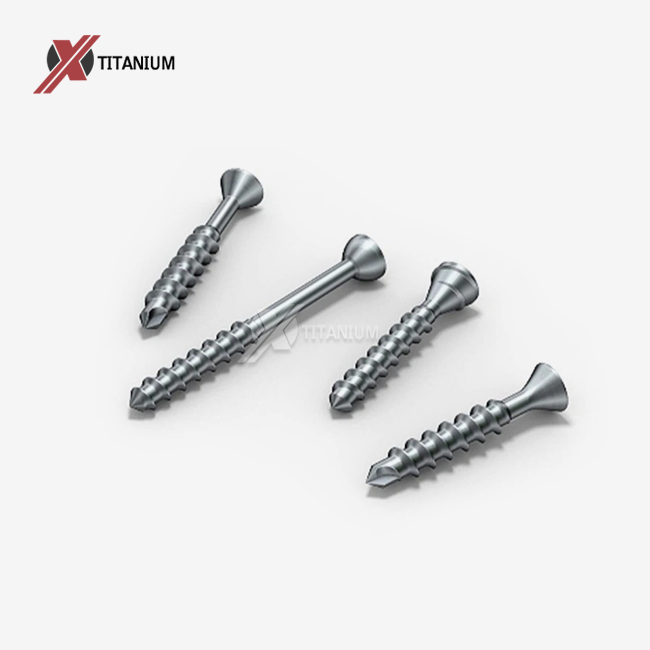
Understanding Titanium Medical Screws – Key Insights for Procurement
Titanium medical screws represent a revolutionary advancement in surgical hardware, offering superior performance characteristics that address critical challenges in modern orthopedic and trauma procedures. These precision-engineered components are manufactured from specialized titanium alloys, primarily Ti-6Al-4V ELI (Extra Low Interstitial) or commercially pure titanium, designed specifically for internal fixation applications.
Material Properties and Performance Advantages
The uncommon properties of medical-grade titanium make these screws perfect for surgical applications. With a thickness of around 4.43 g/cm³ and pliable quality extending from 860 MPa to 960 MPa for Review 23 titanium, these latches give ideal strength-to-weight proportions. The material's modulus of versatility (roughly 110 GPa) closely matches human bone, anticipating stretch shielding—a common issue where excessively unbending inserts cause bone resorption around the obsession site.
Titanium's biocompatibility stems from its bio-inertness and the unconstrained arrangement of a steady titanium dioxide (TiO2) oxide film upon presentation to oxygen. This common obstruction gives extraordinary erosion resistance in physiological situations whereas advancing osseointegration, permitting bone tissue to develop straightforwardly into the screw's surface without stringy tissue encapsulation.
Grades and Specifications for Medical Applications
Understanding titanium grades is vital for acquirement experts making educated acquiring choices. Review 23 (Ti-6Al-4V ELI) contains lower oxygen, nitrogen, and press substance compared to standard Review 5, advertising predominant ductility and break durability fundamental for therapeutic inserts. This detail follows to ASTM F136 guidelines for created titanium amalgams utilized in surgical implants. Commercial unadulterated titanium grades (1-4) are represented by ASTM F67 benchmarks and give fabulous biocompatibility for applications requiring most extreme erosion resistance. Review 2 titanium is commonly utilized for dental inserts and certain orthopedic applications where tall quality is less basic than biocompatibility.
Why Choose OEM Titanium Medical Screws from China?
China has emerged as a leading destination for sourcing high-quality OEM titanium medical screws, driven by significant investments in advanced manufacturing technologies and rigorous quality control systems. The country's titanium processing industry has matured considerably, with numerous manufacturers achieving international certifications including FDA registration, ISO 13485, and CE marking for medical device manufacturing.
Manufacturing Capabilities and Quality Standards
Chinese producers have contributed intensely in state-of-the-art CNC machining centers, accuracy turning gear, and progressed surface treatment advances. Numerous offices work beneath cleanroom conditions with comprehensive quality administration frameworks that meet or surpass universal therapeutic gadget guidelines. These producers experience standard reviews by worldwide certification bodies to keep up compliance with worldwide administrative requirements.
The competitive advantage expands past fetched reserve funds to incorporate fast prototyping capabilities, adaptable least arrange amounts, and customization alternatives for specialized applications. Driving Chinese providers keep up committed inquire about and advancement groups that collaborate with therapeutic gadget companies to create inventive screw plans and surface treatments.
Supplier Evaluation and Verification Processes
Evaluating potential providers requires a orderly approach to guarantee quality consistency and administrative compliance. Key evaluation criteria incorporate confirmation of restorative gadget fabricating licenses, quality framework certifications, and generation office assessments. Acquirement groups ought to ask comprehensive documentation counting fabric certificates, handle approval reports, and third-party testing results. Establishing provider connections includes conducting on-site reviews, looking into quality control strategies, and assessing specialized capabilities through test testing programs. Numerous trustworthy producers give point by point traceability documentation and keep up lot-specific records for restorative gadget applications.
Step-by-Step Process to Order OEM Titanium Medical Screws in China
Successful procurement of titanium medical screws requires a structured approach that emphasizes quality verification, regulatory compliance, and supply chain transparency. The ordering process involves multiple phases designed to minimize risk while ensuring product specifications meet exact medical requirements.
Initial Requirements Definition and Supplier Identification
The acquirement prepare starts with comprehensive specialized detail improvement, counting dimensional necessities, fabric grades, surface wrap up determinations, and bundling measures. Therapeutic gadget applications require point by point documentation of aiming utilize, biocompatibility prerequisites, and appropriate administrative standards. Supplier recognizable proof includes inquiring about producers with fitting certifications and generation capabilities. Industry databases, exchange affiliations, and therapeutic gadget presentations give important assets for distinguishing qualified providers. Starting screening criteria ought to incorporate administrative compliance, generation capacity, and quality framework maturity.
Technical Evaluation and Sample Approval
Technical assessment includes fabric confirmation, dimensional review, and execution testing to guarantee compliance with indicated prerequisites. Test endorsement forms regularly include different cycles to refine details and approve fabricating forms. Basic assessment focuses incorporate fabric composition investigation, mechanical property testing, and surface wrap up verification. Quality documentation audit incorporates examination of fabricating handle controls, approaching fabric assessment strategies, and last item testing conventions. Providers ought to give comprehensive test certificates illustrating compliance with appropriate restorative gadget standards.
Contract Negotiation and Production Planning
Contract arrangements must address quality prerequisites, conveyance plans, and compliance commitments particular to restorative gadget fabricating. Key legally binding components incorporate fabric traceability prerequisites, alter control strategies, and quality framework upkeep commitments. Least arrange amount assentions ought to adjust stock costs with generation productivity whereas keeping up competitive estimating structures. Production arranging coordination includes building up conveyance plans, bundling determinations, and coordinations courses of action. Numerous providers offer stock administration programs to back just-in-time conveyance prerequisites whereas keeping up buffer stock for basic applications.
Comparative Analysis and Decision-Making for OEM Titanium Medical Screws
Material selection for medical screw applications involves comprehensive evaluation of performance characteristics, cost considerations, and regulatory requirements. Titanium medical screws offer distinct advantages over alternative materials including stainless steel, bioabsorbable polymers, and ceramic fasteners.
Performance Comparison with Alternative Materials
Stainless steel screws, whereas cost-effective, show a few impediments counting attractive impedances with MRI imaging, higher modulus jumble with bone tissue, and potential erosion in forceful physiological situations. Titanium's non-ferromagnetic properties dispose of MRI artifacts, empowering clear post-operative imaging for persistent checking and assessment. Bioabsorbable materials offer brief obsession arrangements but need the mechanical quality required for high-load applications. Their debasement rates may not adjust with bone recuperating timelines, possibly compromising obsession keenness amid basic mending phases.
Grade Selection and Application-Specific Considerations
Grade 23 titanium gives ideal execution for high-stress applications counting injury obsession and spinal instrumented where weakness resistance is basic. Its prevalent ductility compared to Review 5 titanium diminishes break chance beneath cyclic stacking conditions common in orthopedic applications. Commercial unadulterated titanium grades offer amazing biocompatibility for applications where most extreme quality is not required. These materials are especially appropriate for maxillofacial surgery and dental embed applications where erosion resistance and tissue compatibility are essential concerns.
Best Practices for Successful Procurement and Long-Term Partnering
Establishing successful partnerships with Chinese OEM manufacturers requires commitment to quality excellence, transparent communication, and mutual understanding of medical device industry requirements. Long-term relationships provide benefits including priority production scheduling, continuous improvement initiatives, and cost optimization through process refinements.
Communication Strategies and Quality Management
Effective communication conventions incorporate normal advance overhauls, quality measurements detailing, and collaborative problem-solving approaches. Numerous fruitful associations include implanted quality agents who work straightforwardly with fabricating groups to guarantee consistency and nonstop improvement. Quality administration frameworks ought to incorporate measurable prepare control checking, customary review plans, and remedial activity conventions. Actualizing shared quality dashboards gives real-time perceivability into generation measurements and empowers proactive quality management.
Technology Integration and Supply Chain Optimization
Modern obtainment connections advantage from innovation integration counting electronic information compatibility, real-time stock following, and mechanized requesting frameworks. These devices improve supply chain perceivability whereas lessening authoritative overhead and progressing arrange accuracy. Supply chain optimization includes key stock situating, request determining collaboration, and hazard moderation arranging. Effective organizations regularly incorporate reinforcement provider capability and capacity sharing understandings to guarantee coherence amid disruptions.
Conclusion
Sourcing titanium medical screws from China represents a strategic opportunity for medical device companies seeking high-quality products at competitive prices. Success requires careful supplier evaluation, rigorous quality management, and commitment to long-term partnership development. The mature Chinese manufacturing ecosystem offers advanced production capabilities, comprehensive quality systems, and flexible customization options that meet diverse medical device requirements. By following structured procurement processes and maintaining focus on quality excellence, organizations can establish reliable supply chains that support their medical device manufacturing objectives while ensuring patient safety and regulatory compliance.
FAQ
What certifications should Chinese titanium medical screw manufacturers have?
Reputable manufacturers should maintain ISO 13485 quality management certification for medical devices, along with FDA registration for US market access and CE marking for European compliance. Additional certifications may include ASTM F136 and F67 material compliance certificates, demonstrating adherence to medical-grade titanium specifications.
How can buyers verify the quality of titanium medical screws before placing bulk orders?
Quality verification involves requesting material certificates, dimensional inspection reports, and mechanical property test results. Many buyers conduct third-party testing through independent laboratories to validate material composition and performance characteristics. Sample approval processes should include biocompatibility testing and surface finish verification.
What are typical lead times for OEM titanium medical screw production in China?
Standard lead times range from 4-8 weeks depending on order complexity, quantity, and customization requirements. Simple designs with existing tooling may ship within 3-4 weeks, while custom specifications requiring new tooling can extend to 10-12 weeks. Rush orders are often accommodated with premium pricing arrangements.
Are titanium medical screws compatible with MRI imaging procedures?
Titanium is non-ferromagnetic and MRI-safe, producing minimal image artifacts compared to stainless steel alternatives. This compatibility enables clear post-operative imaging for patient monitoring without requiring screw removal, representing a significant clinical advantage for long-term patient care.
What sterilization methods are appropriate for titanium medical screws?
Titanium medical screws are compatible with standard sterilization methods including steam autoclave, gamma irradiation, and ethylene oxide treatment without degrading material properties. Manufacturers typically provide sterilization validation data demonstrating efficacy and material stability under specified sterilization cycles.
Partner with Chuanglian for Premium Titanium Medical Screws
Chuanglian specializes in manufacturing precision-engineered titanium medical screws that meet the highest international quality standards for surgical applications. Located in Baoji City, known as the "City of Titanium," our facility combines over ten years of titanium processing expertise with advanced CNC machining capabilities and comprehensive quality control systems. We maintain strict compliance with medical device standards including ASTM F136 and ISO 13485 certifications, ensuring every product meets demanding biocompatibility and performance requirements.
Our experienced engineering team provides technical consultation throughout the procurement process, from initial specification development to final product delivery. As a trusted titanium medical screws supplier, we offer competitive pricing, flexible minimum order quantities, and reliable delivery schedules to support your medical device manufacturing needs. Contact our team at info@cltifastener.com or djy6580@aliyun.com to discuss your specific requirements and request detailed quotations.
References
1. American Society for Testing and Materials. "Standard Specification for Wrought Titanium-6Aluminum-4Vanadium ELI Alloy for Surgical Implant Applications." ASTM International, 2021.
2. International Organization for Standardization. "Medical devices - Quality management systems - Requirements for regulatory purposes." ISO 13485:2016 Standard.
3. Food and Drug Administration. "Guidance Document for Testing Orthopedic Implants with Modified Metallic Surfaces Apposing Bone or Bone Cement." FDA Center for Devices and Radiological Health, 2020.
4. Journal of Biomedical Materials Research. "Titanium Alloys for Medical Applications: Surface Modification and Biological Response." Biomedical Engineering Society, 2019.
5. Chinese Medical Device Industry Association. "Quality Standards and Manufacturing Guidelines for Titanium-Based Medical Implants." CMDIA Technical Publication, 2021.
6. International Titanium Association. "Medical and Dental Applications of Titanium and Titanium Alloys." ITA Industry Report, 2022.
Learn about our latest products and discounts through SMS or email