- English
- French
- German
- Portuguese
- Spanish
- Russian
- Japanese
- Korean
- Arabic
- Greek
- German
- Turkish
- Italian
- Danish
- Romanian
- Indonesian
- Czech
- Afrikaans
- Swedish
- Polish
- Basque
- Catalan
- Esperanto
- Hindi
- Lao
- Albanian
- Amharic
- Armenian
- Azerbaijani
- Belarusian
- Bengali
- Bosnian
- Bulgarian
- Cebuano
- Chichewa
- Corsican
- Croatian
- Dutch
- Estonian
- Filipino
- Finnish
- Frisian
- Galician
- Georgian
- Gujarati
- Haitian
- Hausa
- Hawaiian
- Hebrew
- Hmong
- Hungarian
- Icelandic
- Igbo
- Javanese
- Kannada
- Kazakh
- Khmer
- Kurdish
- Kyrgyz
- Latin
- Latvian
- Lithuanian
- Luxembou..
- Macedonian
- Malagasy
- Malay
- Malayalam
- Maltese
- Maori
- Marathi
- Mongolian
- Burmese
- Nepali
- Norwegian
- Pashto
- Persian
- Punjabi
- Serbian
- Sesotho
- Sinhala
- Slovak
- Slovenian
- Somali
- Samoan
- Scots Gaelic
- Shona
- Sindhi
- Sundanese
- Swahili
- Tajik
- Tamil
- Telugu
- Thai
- Ukrainian
- Urdu
- Uzbek
- Vietnamese
- Welsh
- Xhosa
- Yiddish
- Yoruba
- Zulu
Aerospace Applications of Precision Titanium Dowel Pins
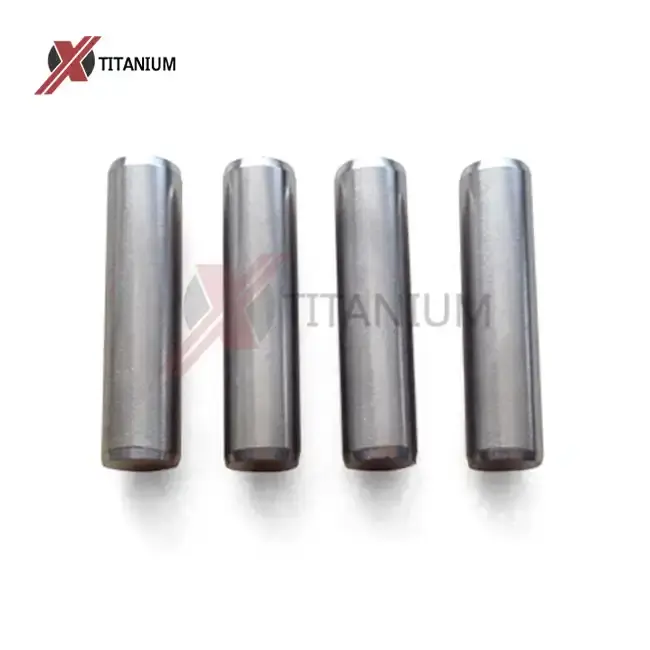
Precision titanium dowel pins represent a revolutionary advancement in aerospace manufacturing, serving as critical alignment and positioning components in aircraft assemblies where failure is simply not an option. These high-precision, unthreaded cylindrical fasteners are machined to strict tolerances and manufactured from premium titanium alloys to address the most demanding aerospace applications. Unlike conventional steel alternatives, titanium dowel pins offer an exceptional combination of lightweight properties, corrosion resistance, and structural integrity that makes them indispensable in modern aircraft construction, engine components, and avionics systems where every gram matters and reliability is paramount.
Understanding Titanium Dowel Pins in Aerospace
Fundamental Characteristics and Specifications
Precision titanium dowel pins in aviation applications are built to meet the most rigid execution necessities in the industry. These components are ordinarily fabricated from Review 2 commercially immaculate titanium or Review 5 Ti-6Al-4V combination, depending on the particular application requests. The fabric choice depends on whether greatest erosion resistance or extreme quality is the essential requirement.
Grade 5 titanium combination gives an extreme malleable quality of roughly 895 MPa with a shear quality of 550 MPa, making it perfect for high-stress basic applications. In the interim, Review 2 offers prevalent ductility and erosion resistance with a abdicate quality of 275 MPa, culminate for accuracy arrangement assignments in less requesting auxiliary roles.
Precision Manufacturing Standards
The manufacturing process for aerospace-grade titanium dowel pins involves centerless grinding to achieve surface roughness typically better than Ra 0.8µm. This exceptional surface quality ensures proper interference fits and prevents stress concentrations that could lead to premature failure. Dimensional tolerances are maintained within m6, h6, or h7 ISO limits, providing the precision necessary for critical aerospace assemblies.
Weight Reduction Benefits
At roughly 4.43 g/cm³ thickness, titanium dowel pins are generally 45% lighter than their steel partners. This weight lessening contributes specifically to fuel effectiveness advancements and payload optimization in commercial and military flying machine. The diminished rotational mass moreover upgrades the execution characteristics of turning gatherings such as motor components and landing equip mechanisms.
Comparing Titanium Dowel Pins with Alternative Materials
Material Performance Analysis
When assessing affixing arrangements for aviation applications, acquirement supervisors must consider numerous execution components past starting fetched. The comparison between titanium and elective materials uncovers noteworthy points of interest that legitimize the venture in premium securing solutions. Stainless steel pins, whereas cost-effective, carry a weight punishment that impacts in general air ship execution. Carbon steel options offer tall quality but endure from erosion vulnerability in cruel aviation situations. Aluminum pins give weight reserve funds but need the quality characteristics required for basic basic applications.
Corrosion Resistance Advantages
Titanium dowel pins form a spontaneous passive oxide layer (TiO2) that provides exceptional resistance to galvanic corrosion when mated with carbon fiber reinforced polymers (CFRP). This characteristic is particularly valuable in modern aircraft construction where lightweight composite materials are increasingly used for primary structures. The galvanic compatibility prevents the costly corrosion issues that plague other metallic fastening systems in composite assemblies.
Thermal Stability Characteristics
The moo coefficient of warm development (8.6 µm/m·K) shown by titanium guarantees dimensional steadiness over the wide temperature ranges experienced in aviation applications. This warm soundness keeps up exact resistances from ground operations through high-altitude journey conditions, avoiding releasing or authoritative that seem compromise gathering integrity.
How to Choose Precision Titanium Dowel Pins for Aerospace Applications?
Critical Selection Criteria
Selecting appropriate titanium dowel pins for aerospace applications requires careful evaluation of mechanical properties, dimensional specifications, and certification requirements. The procurement process must address both technical performance criteria and supply chain considerations to ensure project success.
Material review choice depends on the particular application necessities. Review 2 titanium offers amazing formability and erosion resistance for general-purpose applications, whereas Review 5 gives the higher quality characteristics essential for auxiliary components subjected to critical loads.
Supplier Qualification Requirements
Aerospace providers must keep up certifications counting AS9100 quality administration frameworks, illustrating their capability to meet aviation quality measures. Traceability documentation, fabric certificates, and dimensional review reports are fundamental components of the capability prepare. Providers ought to too have the capability to give custom arrangements for specialized applications where standard arrangements may not meet particular requirements.
Quality Assurance Protocols
The acquirement prepare must incorporate confirmation of warm parcel traceability, mechanical property documentation, and dimensional assessment records. Chemical composition investigation and mechanical testing comes about ought to adjust with pertinent aviation fabric details. Quality control frameworks ought to incorporate factual prepare control checking to guarantee steady item characteristics over generation batches.
Application Scenarios and Case Studies in Aerospace
Structural Assembly Applications
Titanium dowel pins play crucial roles in aircraft structural assemblies, particularly in wing-to-fuselage joints and control surface attachments. These applications demand precise alignment to maintain aerodynamic performance while withstanding the cyclic loading encountered during flight operations.
Landing equip gatherings speak to another basic application where titanium pins give the essential quality and erosion resistance for components uncovered to cruel working situations. The non-magnetic properties of titanium moreover dispense with obstructions with electronic route and communication systems.
Engine Component Integration
Aerospace motors utilize titanium dowel pins in compressor and turbine gatherings where high-temperature execution and weight diminishment are basic. The warm steadiness of titanium keeps up exact clearances and arrangements all through the motor working cycle, contributing to progressed productivity and decreased support requirements. Case thinks about from major air ship producers illustrate noteworthy advancements in upkeep interims and component lifecycle costs when titanium affixing frameworks supplant ordinary materials. These advancements decipher specifically to diminished working costs and moved forward airplane accessibility for commercial operators.
Avionics and Electronic Systems
The non-magnetic characteristics of titanium dowel pins make them ideal for avionics mounting systems where electromagnetic interference must be minimized. Modern aircraft rely heavily on sensitive electronic systems for navigation, communication, and flight control functions that require protection from magnetic field disturbances.
Procurement and Logistics for Titanium Dowel Pins
Supply Chain Considerations
Effective acquirement of aerospace-grade titanium dowel pins requires organizations with qualified providers who get it the interesting prerequisites of the aviation industry. Lead times for custom setups can expand a few weeks due to the specialized fabricating forms and quality control requirements. Inventory administration methodologies ought to account for the tall esteem and specialized nature of titanium components. Just-in-time conveyance frameworks must be adjusted against the hazard of generation delays caused by supply chain disturbances. Key provider connections offer assistance relieve these dangers whereas guaranteeing reliable item quality.
International Shipping and Documentation
Global aviation fabricating requires comprehensive coordinations bolster counting worldwide shipping capabilities and traditions documentation ability. Providers must give total fabric certification bundles that meet the prerequisites of numerous universal aviation authorities. Quality assessment conventions ought to incorporate approaching review methods to confirm dimensional exactness and fabric properties. Appropriate taking care of and capacity strategies anticipate defilement that seem influence fabric execution or compromise certification requirements.
Conclusion
Precision titanium dowel pins have become indispensable components in modern aerospace manufacturing, offering unique advantages in weight reduction, corrosion resistance, and structural performance, making it essential to collaborate with a reliable titanium dowel pins supplier to ensure consistent quality and precision tolerances. The investment in premium titanium fastening solutions delivers measurable benefits in fuel efficiency, maintenance reduction, and operational reliability.
As aerospace technology continues advancing toward more efficient and sustainable aircraft designs, the role of specialized titanium components will only grow in importance. Procurement professionals who understand these advantages and establish relationships with qualified suppliers position their organizations for long-term success in the competitive aerospace industry.
FAQ
What makes titanium dowel pins superior for aerospace applications?
Titanium dowel pins offer exceptional strength-to-weight ratios, corrosion resistance, and non-magnetic properties essential for aerospace applications. Their ability to withstand extreme temperature variations while maintaining dimensional stability makes them ideal for critical aircraft assemblies where failure could have catastrophic consequences.
How do you prevent galling during installation of titanium dowel pins?
Professional installation practices include applying anti-galling coatings such as diamond-like carbon (DLC) or using assembly lubricants containing molybdenum disulfide. Proper installation torque sequences and handling procedures prevent the cold welding tendency that can occur with titanium materials.
Can titanium dowel pins replace steel pins in all aerospace applications?
While titanium offers many advantages, direct replacement depends on specific application requirements. High-wear applications may require specialized hard coatings to match the wear resistance of heat-treated steel. Thorough engineering analysis ensures appropriate material selection for each specific application.
What certifications should aerospace titanium pin suppliers maintain?
Qualified suppliers must maintain AS9100 aerospace quality management certification along with material traceability documentation. Additional certifications may include NADCAP accreditation for specialized processes and compliance with international aerospace material specifications such as AMS standards.
How do you verify the authenticity of titanium dowel pins?
Authentication involves verification of material certificates, dimensional inspection reports, and chemical composition analysis. Reputable suppliers provide complete traceability documentation linking finished products to certified raw material heat lots with verified mechanical properties.
Partner with Chuanglian for Premium Aerospace Titanium Solutions
Aerospace manufacturers seeking reliable titanium dowel pins can trust Chuanglian's decade of expertise in precision titanium machining. Our AS9100-certified facility in Baoji, China's "City of Titanium," delivers consistent quality through advanced CNC machining capabilities and comprehensive quality control systems. Custom solutions, competitive pricing, and reliable delivery schedules support your most demanding aerospace projects. Contact our technical team at info@cltifastener.com or djy6580@aliyun.com to discuss your titanium dowel pins requirements.
References
1. Boyer, R.R. "An Overview on the Use of Titanium in the Aerospace Industry." Materials Science and Engineering A, Vol. 213, 1996.
2. Peters, M. "Titanium Alloys for Aerospace Applications." Advanced Engineering Materials, Vol. 5, No. 6, 2003.
3. Lutjering, G. "Titanium: Engineering Materials and Processes for Aerospace Applications." Springer Materials Science, 2007.
4. Froes, F.H. "Titanium: Physical Metallurgy, Processing, and Applications." ASM International Handbook, 2015.
5. Banerjee, D. "Perspectives on Titanium Science and Technology in Aerospace Structures." Acta Materialia, Vol. 61, 2013.
6. Williams, J.C. "Progress in Structural Materials for Aerospace Systems." Materials Research Society Bulletin, Vol. 28, 2003.
Learn about our latest products and discounts through SMS or email