- English
- French
- German
- Portuguese
- Spanish
- Russian
- Japanese
- Korean
- Arabic
- Greek
- German
- Turkish
- Italian
- Danish
- Romanian
- Indonesian
- Czech
- Afrikaans
- Swedish
- Polish
- Basque
- Catalan
- Esperanto
- Hindi
- Lao
- Albanian
- Amharic
- Armenian
- Azerbaijani
- Belarusian
- Bengali
- Bosnian
- Bulgarian
- Cebuano
- Chichewa
- Corsican
- Croatian
- Dutch
- Estonian
- Filipino
- Finnish
- Frisian
- Galician
- Georgian
- Gujarati
- Haitian
- Hausa
- Hawaiian
- Hebrew
- Hmong
- Hungarian
- Icelandic
- Igbo
- Javanese
- Kannada
- Kazakh
- Khmer
- Kurdish
- Kyrgyz
- Latin
- Latvian
- Lithuanian
- Luxembou..
- Macedonian
- Malagasy
- Malay
- Malayalam
- Maltese
- Maori
- Marathi
- Mongolian
- Burmese
- Nepali
- Norwegian
- Pashto
- Persian
- Punjabi
- Serbian
- Sesotho
- Sinhala
- Slovak
- Slovenian
- Somali
- Samoan
- Scots Gaelic
- Shona
- Sindhi
- Sundanese
- Swahili
- Tajik
- Tamil
- Telugu
- Thai
- Ukrainian
- Urdu
- Uzbek
- Vietnamese
- Welsh
- Xhosa
- Yiddish
- Yoruba
- Zulu
How to Select Dimensions for a Titanium Welded Tube (OD, ID, Wall)?
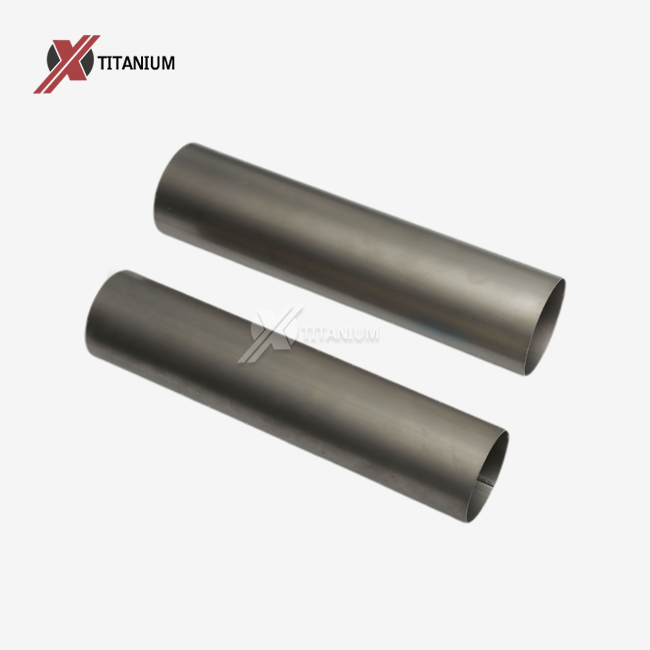
To choose the right measurements for a Titanium Welded Tube, you need to know how Outer Diameter (OD), Inner Diameter (ID), and wall thickness are connected. First, figure out the pressure grade, flow needs, and mechanical load for your purpose. Compare these requirements to ASTM standards such as B338 or B861, which say what the margins and grade requirements are. The right mix of dimensions guarantees thermal efficiency, structural stability, and long-term resistance to corrosion in chemical processes, medical devices, and aircraft.
Introduction
Picking the right tube measurements is one of the most important decisions you have to make when buying materials for mission-critical systems. Titanium Welded Tube's outer diameter, inner diameter, and wall thickness directly affect safety, efficiency, and total cost of ownership in fields where failure is not an option. For example, heat exchangers on offshore platforms, condenser systems in desalination plants, and hydraulic lines in airplanes are all examples of these fields.
This guide talks about the real problems that technical engineers, purchasing managers, and quality assurance teams face every day when they have to choose titanium tubes. We know that when you buy something, you're not just getting a product. You're getting a verified part that has to pass cross-departmental review, meet foreign standards, and work with systems that are already in place. The goal is to get rid of guessing and provide a system based on standards, performance data, and real-world experience with buying things.
This guide helps you make sure that engineering needs are met by the supply chain by explaining things like how dimensional tolerances affect pressure tank compliance and when special sizes are worth the extra time they take to make.
Understanding the Basics of Titanium Welded Tube Dimensions
Defining OD, ID, and Wall Thickness
The Inner Diameter (ID) measures the flow line inside the tube, while the Outer Diameter (OD) measures the width of the tube across its outside. The wall width is the amount of material that goes from one side to the other. These three factors depend on each other; if you set any two, the third is immediately set. Specification mistakes that can ruin whole projects can be avoided by understanding this link.
How Dimensions Affect Performance?
Pressure capacity and fall resistance are directly related to the thickness of the wall. Higher internal pressures can be handled by thicker walls, but they add weight and make heat movement less efficient, which are both important trade-offs in aircraft and heat exchanger design. ID controls the speed and turbulence of the fluid; sizes that are too small cause backpressure and erosion; and bores that are too big waste material and make the system bigger.
The OD tells you what fittings, tube sheets, and attachment tools will work with the tube. If this doesn't match, it could mean expensive changes to the field or a whole new plan. Titanium has a high strength-to-weight ratio, which means that walls can be thinner than steel ones, but only if the sizes are carefully calculated based on how the Titanium Welded Tube will be used.
Material Properties Influencing Dimensional Choices
Different types of titanium have different levels of strength and rust, which affects how quickly you can reduce wall thickness. Grade 2 is the industrial standard for pure steel. It is very resistant to rust but not as strong when pulled apart as Grade 5 (Ti-6Al-4V alloy). When choosing measurements, Grade 2 tubes that will be used in corrosive seawater may need walls that are thicker to keep the structure's edges. On the other hand, Grade 5 tubes that will be used in dry aircraft environments can get the same pressure rating with walls that are thinner, which saves weight.
When making Titanium Welded Tubes, cold-rolled strips usually have tighter size limits than hot-rolled seamless options. This means that the tubes will fit together more reliably during assembly. After welding, annealing returns the flexibility across the seam, making sure that the metal behaves the same way mechanically no matter how thick the wall is.
Core Principles for Selecting Titanium Welded Tube Dimensions
Referencing International Standards
ASTM B338 sets the rules for titanium tubes used in condensers and heat exchanges. It says how they should be tested and what their mechanical qualities should be. Because it is used for general rust service, ASTM B861 covers both smooth and welded titanium pipe. The guidelines include measurement tables that connect the outside diameter (OD) and wall thickness to schedule numbers, pressure classes, and the maximum stress that can be applied.
Following these rules when designing isn't just a form to be filled out; it's a way to lower the risk. Standards make sure that each batch is the same, which is important when you're buying things from many sellers over a long period of time. Through recorded quality controls, ISO 9001 and AS9100 certifications also make sure that production processes keep the integrity of dimensions.
Matching Application Requirements to Dimensions
Aerospace hydraulic systems need small, thin-walled tubes (6mm to 25mm OD and 0.5mm to 1.2mm walls) to keep weight down and handle working pressures of 3,000+ psi. For chemical processing, heat exchangers with bigger diameters (19mm to 50mm OD) and middling wall thicknesses (1.0mm to 2.5mm) work best because they have more surface area for transferring heat and don't rust in acidic environments.
Pressure tank codes, such as ASME Section VIII, use the formula t = (P × OD) / (2 × S × E + P) to find the minimum thickness needed. Here, P is the design pressure, S is the allowed stress, and E is the weld joint efficiency. This method shows why choosing the right OD is so important: it directly affects the thickness of your walls and the cost of the materials.
Balancing Performance and Cost
Titanium is very expensive, so optimizing its dimensions is important from a business point of view. A 1 mm rise in wall thickness along a 100-meter tube run can make the cost of materials go up by thousands of dollars. But guessing at a thickness that isn't thick enough to save money could lead to a catastrophic failure and danger.
Sharing your working envelope—temperature range, pressure cycles, and corrosion exposure—with your supplier's expert team is the best way to get things done. Manufacturers with a lot of experience can model how stresses are distributed and suggest the thinnest measurements that still meet the safety standards required by your business.
Comparing Key Dimension Options: OD, ID, and Wall Thickness Relationships
The Interdependence of Tube Dimensions
If you change one feature, it affects the whole plan. Increasing OD while keeping ID the same makes the wall thicker, which increases pressure capacity but makes it less flexible for twisting. On the other hand, increasing ID within a given OD makes the wall thinner, which increases flow efficiency but lowers structural strength.
These effects are made worse by tolerance stacking. In aerospace uses, OD tolerances are often set at ±0.1mm and wall thickness tolerances are set at ±10%. This means that a wall that is supposed to be 1.0mm could actually be anywhere from 0.9mm to 1.1mm. To keep safety gaps, always build against the minimum tolerance limit when figuring out the burst pressure or collapse resistance.
Welded vs. Seamless Dimensional Flexibility
Titanium Welded Tubes work best when the width is bigger than 25 mm, because smooth extrusion is too expensive and can't make tubes that long. Welded construction from cold-rolled strip gets better OD concentricity, which is very important when tubes need to slide into tight tube-sheet bores with little room for error. When properly annealed and checked with eddy current tests, the longitudinal weld seam has mechanical qualities similar to base metal.
Seamless tubes are most common for uses with small sizes (less than 20 mm OD) and very high pressures, since they don't have a weld line that could fail. It is generally better for seamless goods to have uniform dimensions across the length of the tube, but current welded tube mills have made this difference much smaller.
Common Challenges in Dimension Selection and How to Overcome Them?
Avoiding Costly Dimensional Mismatches
If you specify OD in inches but your production shop works in metric, or the other way around, it can lead to interference fits that damage the ends of the tubes during fitting. Always make sure of the unit systems up front, and use standard sizes from ASTM measurement tables instead of coming up with your own, which makes manufacturing more difficult and requires larger minimum orders.
When titanium tubes don't connect properly with compression fittings or orbital weld heads that are made for different OD tolerances, compatibility problems between the tubes and fittings show up late in the assembly process. If you ask for approved dimensional inspection records (which show the real measured OD, ID, and wall thickness) before shipping, you can find problems early and fix them.
Ensuring Weld Integrity Correlates with Dimensions
Welding factors need to be tighter when walls are thinner. In order to avoid burn-through, tubes with walls thinner than 1 mm need plasma arc welding or laser welding. The weld bead must be carefully sized to keep the ID consistent for flow models. Ultrasonic and eddy current tests check that the weld goes all the way through and find tiny cracks that could get bigger when the load is changed.
Hydrostatic tests at 1.5 times the design pressure proves that the estimates for wall thickness work in the real world. To find permanent deformation, ask for test papers that show the test pressure, hold time, and measures of the size of the part taken before and after it was pressurized.
Navigating Supply Chain Constraints
A lot of the time, minimum order numbers are linked to output mill runs. Custom sizes may need at least 500 meters, but normal ASTM sizes ship in smaller groups. Custom sizes can take up to 16 weeks to make, while stock sizes only take 4 to 6 weeks.
Regulatory compliance adds another layer: tubes going into ASME Code vessels need to be able to trace their materials back to mill test records that show their chemical make-up and mechanical features. Customs classifications change based on OD and wall thickness, which affects import times and tax rates. These problems can be solved by working with sellers who are good at paperwork and transportation.
Practical Tips for Procuring Titanium Welded Tubes with Optimal Dimensions
Communicating Requirements Clearly in RFQs
When you request a quote for Titanium Welded Tube, you should include OD, ID (or wall thickness), length, quantity, titanium grade (e.g., Grade 2 or Grade 7), applicable ASTM standard, surface finish (bright annealed, pickled, or polished), and end preparation (plain or beveled for welding). Also include operating temperature, pressure, and media exposure for Titanium Welded Tube so suppliers can verify suitability for your specific application requirements.
Include technical sketches that show the required inspections and any size errors. When this isn't clear, costs go up: a supplier quoting to commercial tolerances will underbid a rival quoting to aerospace tolerances, but you'll have to pay more for repairs when the material with the looser tolerances fails inspection when it comes in.
Evaluating Supplier Capabilities
Look at more than just price to judge professional skill. Do they have the necessary AS9100 or ISO 13485 (medical device) certifications for your business? Can they give you mill test results, verify that the materials meet AMS standards, and show you the whole process, from the raw titanium sponge to the finished tube?
The ability to make things is important. Equipment for cold rolling and annealing, in-line eddy current testing, and hydrostatic test stands all show that a provider can regularly meet size requirements. Companies that give scientific advice, like modeling heat transfer rates for suggested tube lengths, add value that is worth a small price boost.
At Baoji Chuanglian New Metal Material Co., Ltd., we have more than ten years of experience working with titanium and a full CNC cutting and quality testing system. We can make parts with ODs from 6mm to 114mm and wall thicknesses from 0.5mm to 6mm that meet ASTM B338, B861, and ASME SB338 standards. We help with custom dimension development by giving you focused engineering advice and making sure that your requirements lead to a reliable, approved Titanium Welded Tube.
Optimizing Costs and Delivery
You can get economies of scale when you buy in bulk, but it costs money to keep extra goods on hand. Talk about blanket purchase orders with planned releases to get the best prices on large orders and make sure supplies don't interfere with your production schedule. Requesting a slightly bigger OD or wall thickness than the minimum estimated values can help you get standard sizes that are easier to find, which can cut down on lead times without putting safety at risk.
Custom packaging for your handling equipment, like plastic wrapping for clean areas, wooden boxes for export, or custom bundling for automatic tube feeders, keeps things from getting damaged and cuts down on extra work that needs to be done. Global shipping by air, sea, or express depends on how quickly you need it. Sea freight is cheaper for big amounts, but it takes 4 to 8 weeks to get there.
Conclusion
Titanium Welded Tube measurements are chosen based on standards, application science, and the practicalities of the supply chain. How well your system meets its performance goals safely and cost-effectively depends on how OD, ID, and wall thickness work together. Mismatches and delays can be avoided by using ASTM standards, working with experienced suppliers, and writing down requirements clearly in purchase papers.
Precision in dimensions is not a nice-to-have; it's necessary for effective operation in acidic, high-pressure, and weight-sensitive situations. You can turn tube buying from a transactional headache into a strategic benefit by making sure your selection process is in line with best practices in the industry and using suppliers who can both manufacture and provide technical expertise.
FAQ
What is the most common OD range for titanium welded tubes?
Industry research shows that most heat exchanger and condenser uses are between 19mm and 50mm OD, especially in seawater cooling systems. The diameters of most aerospace hydraulic lines are between 6mm and 25mm. For large-volume transfer systems in chemical processing, the diameters can go up to 114mm for a Titanium Welded Tube.
How does wall thickness impact corrosion resistance?
The width of the wall doesn't change titanium's natural resistance to rust, but it does add extra material that can be worn away over time without affecting the structure's strength. In harsh environments, thicker walls increase the time between service intervals, which lowers the regularity of upkeep and the total cost of ownership.
Can you supply custom dimensions outside standard ASTM sizes?
It is possible to get custom sizes, but you usually have to order at least 500 meters and wait 12 to 16 weeks for delivery. Custom sizes make sense when normal sizes lose a lot of material or when the performance gains are worth the extra work that goes into buying them. A thorough look at the program helps figure out if the change adds value.
Partner with Chuanglian for Precision Titanium Welded Tube Solutions
Getting around dimensional selection shouldn't slow down your job or lower the grade. With ASTM and ASME licenses, Chuanglian is an expert at making Titanium Welded Tubes with exact control over OD, ID, and wall thickness. Our research team works with you to find the best measurements for your pressure, temperature, and corrosion conditions. This cuts down on waste while still meeting code standards. As one of the biggest companies making titanium welded pipe in Baoji, China (known as "Titanium City"), we can give you low prices, flexible order sizes, and fast shipping all over the world. Get in touch with our technical experts at info@cltifastener.com or djy6580@aliyun.com to talk about your size needs. We give you approved goods that can be fully tracked, so you can be sure that your purchases meet the high standards that your industry requires.
References
1. American Society for Testing and Materials. (2021). ASTM B338: Standard Specification for Seamless and Welded Titanium and Titanium Alloy Tubes for Condensers and Heat Exchangers. ASTM International.
2. American Society of Mechanical Engineers. (2019). ASME Boiler and Pressure Vessel Code, Section VIII: Rules for Construction of Pressure Vessels. ASME Press.
3. Boyer, R., Welsch, G., & Collings, E.W. (1994). Materials Properties Handbook: Titanium Alloys. ASM International.
4. Lutjering, G., & Williams, J.C. (2007). Titanium: Engineering Materials and Processes (2nd ed.). Springer-Verlag.
5. Schutz, R.W., & Thomas, D.E. (1987). Corrosion of Titanium and Titanium Alloys. In Metals Handbook (9th ed., Vol. 13). ASM International.
6. International Organization for Standardization. (2018). ISO 9001:2015 Quality Management Systems—Requirements. ISO Publications.
Learn about our latest products and discounts through SMS or email