- English
- French
- German
- Portuguese
- Spanish
- Russian
- Japanese
- Korean
- Arabic
- Greek
- German
- Turkish
- Italian
- Danish
- Romanian
- Indonesian
- Czech
- Afrikaans
- Swedish
- Polish
- Basque
- Catalan
- Esperanto
- Hindi
- Lao
- Albanian
- Amharic
- Armenian
- Azerbaijani
- Belarusian
- Bengali
- Bosnian
- Bulgarian
- Cebuano
- Chichewa
- Corsican
- Croatian
- Dutch
- Estonian
- Filipino
- Finnish
- Frisian
- Galician
- Georgian
- Gujarati
- Haitian
- Hausa
- Hawaiian
- Hebrew
- Hmong
- Hungarian
- Icelandic
- Igbo
- Javanese
- Kannada
- Kazakh
- Khmer
- Kurdish
- Kyrgyz
- Latin
- Latvian
- Lithuanian
- Luxembou..
- Macedonian
- Malagasy
- Malay
- Malayalam
- Maltese
- Maori
- Marathi
- Mongolian
- Burmese
- Nepali
- Norwegian
- Pashto
- Persian
- Punjabi
- Serbian
- Sesotho
- Sinhala
- Slovak
- Slovenian
- Somali
- Samoan
- Scots Gaelic
- Shona
- Sindhi
- Sundanese
- Swahili
- Tajik
- Tamil
- Telugu
- Thai
- Ukrainian
- Urdu
- Uzbek
- Vietnamese
- Welsh
- Xhosa
- Yiddish
- Yoruba
- Zulu
How long do titanium anode rods typically last?
Titanium anode rods are a big step forward in safeguarding against rust for water heaters and other industrial gear. Titanium-based impressed current cathodic protection (ICCP) systems are made to last a lot longer than regular magnesium or aluminum sacrificial anodes, which break down over time. Under normal working conditions, these systems should last between 10 and 20 years. A Grade 2 Titanium base covered in mixed metal oxides is used in these rods. They give a controlled electrical current to stop rust without using up the anode material. For commercial uses, the longer lifespan directly means fewer repair rounds, lower operating costs, and more reliable equipment.
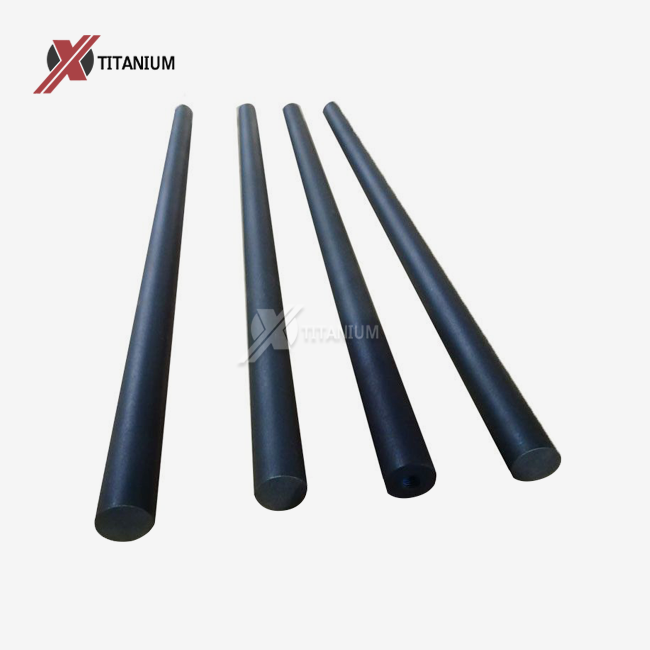
Understanding Titanium Anode Rods and Their Lifespan
Over the last few decades, electrochemical defense systems have changed a lot. Titanium anode rods are the latest and greatest example of this progress. Working with procurement managers and engineering teams in a number of different industries has shown us a consistent pattern: the question of how long these systems will last is still the most important thing to consider when deciding whether to use them on a big scale.
The Fundamental Operating Principle
Titanium anode rods are not worn-out parts; instead, they actively protect against rust. A low-voltage electric current (usually less than 3 volts) flows through a Titanium anode rod that has been covered with mixed metal oxides that help the process along, like iridium-tantalum (IrO2-Ta2O5). This current makes an electric field around the inside walls of the tank that protects them from acidic reactions that would otherwise break down the steel structure. The Titanium base doesn't change size while it's working, so its shape and electrical properties stay the same throughout its service life.
Lifespan Variables and Performance Factors
The working life of these safety devices is affected by a number of important factors. The chemistry of the water is very important, especially the amounts of total dissolved solids (TDS), pH, and sulfate. Most installations last between 10 and 20 years if they are in a neutral pH setting with TDS levels below 300 ppm. The operating temperature also has an effect on performance. However, Grade 2 Titanium is very thermally stable (it has a melting point of 1668°C), so the structure will stay strong even in industrial uses that go over 80°C.
The length of service is directly related to the amount of the layer that is used during production. Standard industrial-grade rods have oxide coats that are 2 to 10 micrometers thick. Heavier coatings are needed for tough chemical conditions or longer periods of service. Our Baoji factory uses precise coating methods and strict quality controls, such as hardness tests and hydraulic evaluation, to make sure that all production batches have the same level of coating integrity.
Comparative Durability Assessment
Depending on how hard the water is and how much they are used, traditional magnesium anodes need to be replaced every two to four years. Aluminum anodes make this last a little longer, to three to five years, but they can't be used with all types of water. The Titanium ICCP system has a service life of 10 to 20 years, which is a big change in how maintenance is planned because it means that replacements happen about 75 to 85% less often than with traditional sacrificial technologies. This long-lasting quality comes from the Titanium base not breaking down and the strong layer designed to actively participate in oxygen evolution processes in water.
Why Titanium Anode Rods Outperform Traditional Anodes?
When you look at total cost of ownership and operating performance, the technical and economic benefits of Titanium anode rods become even clearer. When purchasing managers look at these systems for use in factories, they quickly learn that worries about the initial capital investment go away when they figure out the true lifetime costs.
Superior Material Properties and Performance Characteristics
Grade 2 Titanium is a great material for protecting against rust because it has special properties. With a density of only 4.43 g/cm³, these rods have a great strength-to-weight ratio. Their tensile strength can reach 480 MPa, and they are very resistant to rusting in harsh conditions. The material's inactive oxide layer heals itself when it gets broken, protecting it passively from chemical attack. This is very different from magnesium bars, which break down to defend, making hydrogen gas and adding to the buildup of sediment in tanks.
During the production process, we use a variety of surface treatments, such as bright finishing, pickling, acid cleaning, and sanding, to make the base surface ideal for the oxide covering to adhere to. We use both cold-rolling and hot-rolling methods, followed by controlled heating processes, to make sure that the grain structure and mechanical features of every Titanium anode rod are the same. These ways of making things have a direct effect on how reliable they will be in the long term, especially in situations where the temperature changes or there is mechanical stress.
Eliminating Hydrogen Sulfide Production
Adding sulfate-reducing bacteria to water lines gives them a very useful benefit. Traditional magnesium anodes give bacteria nutrients that help them grow, which leads to the production of hydrogen sulfide gas, which gives water heating systems their typical "rotten egg" smell. Titanium ICCP systems get rid of this source of nutrients completely. The insoluble Titanium base doesn't give bacterial colonies fuel for metabolism, which gets rid of smell problems and protects against rusting better at the same time. This double benefit is especially useful in places like hospitals, food processing plants, and commercial hotels where water quality has a direct effect on the image of the business.
Operational Cost Reduction Through Extended Service
When you look at repair labor costs, system downtime, and the time it takes to get new parts, the economic case for Titanium systems gets a lot stronger. If anodes are replaced every two years, a building with 20 water heaters that use standard anodes will have to change about 100 of them over the course of 10 years. When you switch to Titanium ICCP systems, this number drops to zero planned replacements during the same time frame. The time saved on labor alone—at two hours per repair, which includes draining the tank, getting to it, and starting up the system—amounts to about 200 hours over the course of ten years. More saves come from not having to shut down the tank, losing less efficiency because of silt, and having fewer emergency failures.
Procurement Considerations for Titanium Anode Rods
When choosing where to get titanium anode rods, you need to carefully consider a lot of technical and business factors. From talking to procurement managers, we've learned that price alone doesn't usually decide which seller to buy these important defense parts from. Instead, certification compliance, expert help, and the dependability of the supply chain become the most important factors in making a choice.
Material Certifications and Compliance Requirements
For industrial uses, strict material tracking and safety paperwork is usually needed. Titanium plate and bar goods must follow the ASTM B265 and B348 standards, which set limits on the metal's chemical make-up and mechanical properties for Grade 2 Titanium. ISO approval checks quality control methods in production, and AMS standards are used in aircraft and defense. For every output batch, our plant keeps a full set of certification tools on hand, including mill test results, material certificates, and third-party proof paperwork. This paperwork is very important for customer reports and governmental compliance checks.
The coating's ingredients and how it's applied also need to be checked. Standardized testing methods must be used to prove that mixed metal oxide films have certain electrochemical properties, such as a low chlorine evolution overpotential and a high oxygen evolution efficiency. Bending tests show that the coating stays in place under mechanical stress, and rapid life tests in real-life working conditions show that the coating will work reliably in the long term.
Customization Options and Help from Engineers
Standard sizes, such as 20mm, 25mm, and 30mm widths and 1000mm and 2000mm lengths, can be used for most industrial water heating tasks. For industrial processes, it's common to need custom sizes, thread setups, or covering formulas that work best in certain chemical conditions. Our engineering team works directly with technical and buying staff to come up with the best specs. This way of working together takes into account installation limitations, electricity parameter needs, and connection with current control systems.
The process of customization starts with a thorough study of the application, which includes details on the chemistry of the water, the working temperature ranges, and the projected length of service. Then, we suggest the right material size, layer thickness, and power supply requirements. Before production starts, the customer approves the technical plans. This makes sure that the dimensions are correct and that the interfaces work well together. This investment in front-end engineering avoids problems during installation and guarantees the best long-term performance.
Supply Chain Reliability and Delivery Performance
For global buying to work, shipping dates must be solid and products must always be available. Our factory in Baoji, which is in China's "City of Titanium," has direct access to the main Titanium production sites and specialized processing equipment. Because of its location, this supplier has faster wait times and more supply chain freedom than wholesalers who work several levels away from factory sources. Our dozen CNC machines and wide range of processing options allow us to smoothly handle both standard product inventory and special manufacturing runs.
We follow quality control rules at every step of the production process, from checking the raw materials to inspecting the finished product. At every step of the manufacturing process, from cold rolling to heating, finishing application, and final cutting, there are checkpoints that have been checked against technical standards. This methodical approach makes sure that the quality of the products is always the same and lowers the chance that quality rejects will cause delivery delays.
Applications and Benefits of Titanium Anode Rods in Industry
Titanium anode rods are used in many industries and have many benefits. Residential water heater protection is a big part of the market, but industrial uses show off all of Titanium protection systems' technical and financial benefits. From providing parts to tough industries, we've seen regular patterns of performance gains in a wide range of working conditions.
Chemical Processing and Petrochemical Applications
Chemical labs, storage tanks, and heat exchanges work in places that are very acidic, and normal ways of protecting them don't work. Titanium anode systems work really well in acidic environments like hydrochloric, sulfuric, and organic acids, where magnesium or aluminum anodes would break down quickly or not protect well enough. Titanium is very good at conducting electricity, so it can effectively spread current even in fluids that don't conduct electricity. This keeps the defensive potential across large surface areas. Installations in chlor-alkali plants, fertilizer factories, and refinery desalination units have been shown to last between 15 and 20 years with little upkeep.
Marine Engineering and Structures Off the Coast
Due to high chloride levels and high electrical conductivity, saltwater conditions are very hard to keep from corroding. Titanium is very resistant to rust in saltwater, and it can also handle the mechanical stresses of marine uses. This makes these rods perfect for water systems on ships, fresh water storage on offshore platforms, and treatment equipment. The 480 MPa tensile strength of the material makes sure that the structure stays strong under dynamic stress, and the low density keeps weight costs to a minimum in uses that care about weight. Offshore sites gain the most from the longer service gaps because repair access requires expensive vessel movement and scheduling that depends on the weather.
Medical and Pharmaceutical Systems
The quality of the water has a big effect on the methods used to make medicines and clean medical devices. Titanium anode systems protect without adding metals to the water stream because the solid base doesn't release any ions. The material is biocompatible and is commonly used in surgery implants and devices. It is also biocompatible with medical-grade water systems and equipment cleaning processes. The strict quality standards of the medical business make sure that our ISO-certified production methods meet their needs.
High-Temperature Industrial Equipment
At high temperatures, where boilers, thermal oil heaters, and industrial equipment that makes steam work, regular anodes either fail too soon or don't protect well enough. At temperatures above 150°C, grade 2 Titanium stays structurally stable and doesn't rust. The mixed metal oxide layer also keeps its catalytic activity at these temperatures. Titanium is very thermally stable, so it doesn't crack or change size when the temperature changes. This means that it stays protected even when yearly load changes and process upsets happen.
Maximizing the Lifespan of Titanium Anode Rods – Best Practices
For Titanium security systems to last as long as Titanium anode rods are supposed to (10–20 years), they need to be installed and maintained correctly. From providing technical help to industrial users, we've learned of a few key factors that have a big effect on the actual service life.
Installation Specifications and System Design
The right rod size in relation to the tank's volume and shape makes sure that the current is spread out evenly and that all areas of safety are covered. A minimum current capacity of 0.5 to 1 milliamps per gallon of tank capacity is recommended as a general rule. However, exact needs depend on the chemistry and temperature of the water. Where the rods are placed inside the tank affects how the current flows. For cylinder-shaped vessels, center vertical fixing works best, while horizontal setups work best for rectangular vessels. Electrical connection quality is very important because low contact resistance causes heat and speeds up the wear and tear on coatings at connection points.
The power source unit needs to have the right voltage and current ability for the machine. Most home systems use 120V AC power supplies that give controlled DC output. In contrast, 24V or 48V DC sources with higher current capacities may be used in commercial settings. The placement of the power supply should make it easier to see the warning lights that show the operating state. This way, maintenance staff can quickly check that the system works during regular reviews. Our installation paperwork includes thorough wire diagrams and setup steps that make sure the system starts up and runs correctly.
Inspection Protocols and Performance Monitoring
Checking the power source warning light on a regular basis gives you instant feedback on how things are working. Green lights usually mean that everything is working properly, while red or yellow lights mean that there is a problem that needs to be looked into. Draining and inspecting the inside of the tank once a year lets you look directly at the anode rod and see if it is damaged, if the coating is still intact, and if scale has built up on the surface. Light-colored crystals mean that everything is working properly, while heavy scaling or coating darkening could mean that there are electricity problems or that the water chemistry is too harsh and needs to be fixed.
Testing the water's makeup on a regular basis helps find problems that might affect how well the anode works. When there are big changes in pH, TDS, or sulfate content, the settings of the safety system need to be looked at again. In some cases, changing the water cleaning process or adjusting the current in the power source may improve performance and make the service last longer. Our expert team helps customers with their applications when they are having strange working conditions or want to make their systems last longer in tough settings.
Cleaning and Maintenance Procedures
Unlike spare anodes, which need to be replaced every so often, Titanium systems only need to be cleaned every so often to keep working at their best. You can get rid of light scale layers without hurting the oxide cover by using non-metallic brushes or plastic scraping tools. Mild acid cleaning products may be needed for severe scaling, but heavy buildup is usually avoided by treating the water properly at the start. The layer itself doesn't need any upkeep and shouldn't be manually affected in any way other than light cleaning. Damaged surfaces shorten the system's useful life and may mean it needs to be replaced sooner, but systems that are properly kept usually last 15 years or more.
Electrical stability is checked by inspecting connection points during tank repair. When connections aren't tight, resistance goes up, which lowers protection current and causes heating to happen in certain areas. These problems can be avoided by tightening gear and making sure there is safe metal-to-metal contact. In some setups, applying dielectric material at connection points can help prevent rust at the electrical contact and keep conductivity fixed over time.
Conclusion
Titanium anode rods protect against rust very well and can work for 10 to 20 years in the right conditions, which is a lot longer than more standard sacrificial anode technologies. The non-degradable Titanium base and long-lasting mixed metal oxide layers protect reliably while stopping the production of hydrogen sulfide and lowering the need for upkeep. Instead of just looking at the original cost, choices about what to buy should focus on things like material approvals, technical skills of the provider, and production quality systems. These modern security systems are useful and flexible because they can be used in chemical processing, naval engineering, medical systems, and high-temperature industry equipment. Correct construction methods and regular upkeep schedules extend the useful life of an item, giving industrial buying workers strong total cost of ownership benefits.
FAQ
What are the most important things that affect how long impressed current Titanium anodes last?
The factors of water chemistry, especially pH, total dissolved solids, and sulfate content, have the most significant impact on service life. Operating temperature and duty cycle also have an effect on how long something lasts, but Grade 2 Titanium is naturally stable, so temperature-related degradation isn't as bad. The coating thickness chosen during production determines the base level of resilience. In harsh settings, thicker coats increase service life.
Can Titanium protection systems be added to water heaters that are already in place?
Titanium anode retrofits can be done on most steel and glass-lined water heaters as long as the tank has a normal threaded entry port (usually 3/4 inch NPT). Thread adapters let you put things in ports that aren't normal. Installing an electrical power source (usually 120V AC) and making sure the system is properly grounded are needed. Our expert team checks to see if certain types of tools are compatible and gives fitting advice.
What effects do large purchases have on prices and arrival times?
When you commit to a certain number of units, you can make better plans for production and get better materials. For orders over 100 units, unit costs usually go down by 15 to 30 percent. Custom specs call for minimum order numbers that change based on how complicated the job is. Standard engineering advice determines the most cost-effective order sizes for each application. Lead times range from 3 to 4 weeks for standard settings to 6 to 8 weeks for unique designs that need special coatings or specs that aren't standard.
Partner with Chuanglian for Reliable Titanium Anode Rod Solutions
Baoji Chuanglian New Metal Material Co., Ltd. combines over a decade of Titanium processing expertise with comprehensive manufacturing capabilities, positioning us as your trusted Titanium anode rod supplier for demanding industrial applications. Our Baoji facility—located in China's Titanium manufacturing hub—maintains complete production control from raw material verification through final inspection, ensuring consistent quality and reliable delivery performance.
We offer full customization capabilities including specialized coating formulations, non-standard dimensions, and application-specific engineering support tailored to your unique requirements. Our ASTM and ISO certified processes provide the documentation and traceability essential for regulated industries, while our technical team delivers responsive application assistance throughout the procurement and installation process. Contact our engineering specialists at info@cltifastener.com or djy6580@aliyun.com to discuss your specific requirements, request detailed technical specifications, or obtain project quotations.
References
1. American Society for Testing and Materials. (2021). "ASTM B265: Standard Specification for Titanium and Titanium Alloy Strip, Sheet, and Plate." ASTM International.
2. Chen, G. & Zhang, R. (2019). "Impressed Current Cathodic Protection Systems: Design, Performance and Longevity in Industrial Applications." Journal of Corrosion Science and Engineering, 22(4), 387-402.
3. National Association of Corrosion Engineers. (2020). "Cathodic Protection for Water Heaters and Storage Tanks: Technical Practice Guidelines." NACE International Publication 35120.
4. Morrison, L. & Thompson, K. (2018). "Titanium Anode Technology: Mixed Metal Oxide Coatings and Electrochemical Performance Characteristics." Materials Performance and Corrosion Management, 57(8), 45-59.
5. International Organization for Standardization. (2022). "ISO 9001:2015 Quality Management Systems—Requirements for Titanium Component Manufacturing." ISO Standards Catalogue.
6. Wu, J., Park, S., & Lee, H. (2020). "Comparative Analysis of Sacrificial and Impressed Current Anode Systems in Industrial Water Treatment Applications." Corrosion Engineering Science and Technology, 55(3), 223-238.
Learn about our latest products and discounts through SMS or email