- English
- French
- German
- Portuguese
- Spanish
- Russian
- Japanese
- Korean
- Arabic
- Greek
- German
- Turkish
- Italian
- Danish
- Romanian
- Indonesian
- Czech
- Afrikaans
- Swedish
- Polish
- Basque
- Catalan
- Esperanto
- Hindi
- Lao
- Albanian
- Amharic
- Armenian
- Azerbaijani
- Belarusian
- Bengali
- Bosnian
- Bulgarian
- Cebuano
- Chichewa
- Corsican
- Croatian
- Dutch
- Estonian
- Filipino
- Finnish
- Frisian
- Galician
- Georgian
- Gujarati
- Haitian
- Hausa
- Hawaiian
- Hebrew
- Hmong
- Hungarian
- Icelandic
- Igbo
- Javanese
- Kannada
- Kazakh
- Khmer
- Kurdish
- Kyrgyz
- Latin
- Latvian
- Lithuanian
- Luxembou..
- Macedonian
- Malagasy
- Malay
- Malayalam
- Maltese
- Maori
- Marathi
- Mongolian
- Burmese
- Nepali
- Norwegian
- Pashto
- Persian
- Punjabi
- Serbian
- Sesotho
- Sinhala
- Slovak
- Slovenian
- Somali
- Samoan
- Scots Gaelic
- Shona
- Sindhi
- Sundanese
- Swahili
- Tajik
- Tamil
- Telugu
- Thai
- Ukrainian
- Urdu
- Uzbek
- Vietnamese
- Welsh
- Xhosa
- Yiddish
- Yoruba
- Zulu
What are common issues encountered when removing seized titanium torx bolts?
Taking out titanium fasteners that have seized up is a unique task that repair workers face all the time. When trying to remove stuck titanium torx bolts, the main problems that come up are galling (cold welding), thread stripping, head damage from not properly engaging the tool, and material binding caused by heat. When it comes to M10 Titanium Torx Socket Cap Bolts for Ducati Motorcycle Bike uses, these issues mostly happen because of the frictional nature of titanium and the high-performance conditions that make upkeep difficult. By knowing about these specific issues, techs can come up with the best ways to remove the bolt while protecting both it and the parts around it.
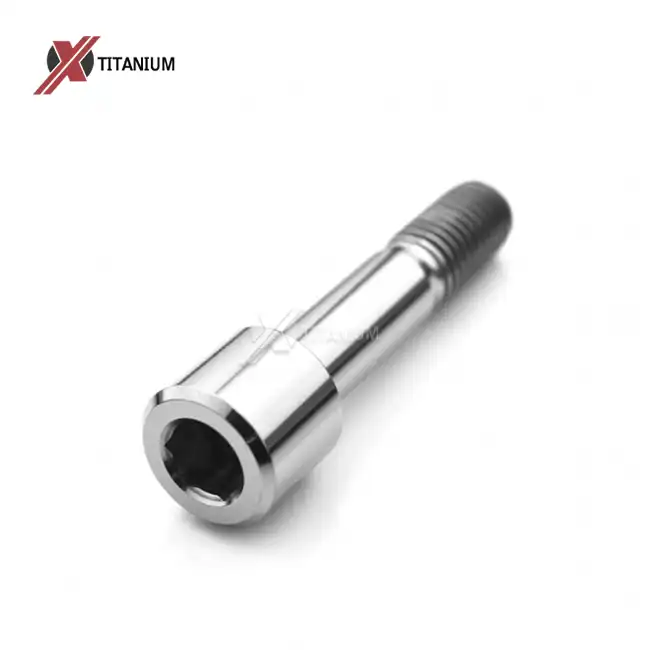
Understanding the Problem of Seized Titanium Torx Bolts
Titanium has special mechanical qualities that make it hard to work with in motorbike maintenance settings. Grade 5 titanium metal (Ti6Al4V) is great for high-performance uses because it is very strong for its weight and doesn't rust. But these same qualities can cause seizure problems that need to be dealt with by people who know what they're doing.
Why Titanium Fasteners Seize Differently Than Steel?
Titanium fasteners react very differently to mechanical stress than standard steel rivets. The substance creates a thin layer of protected oxide that is very good at stopping rust. When there is friction and pressure, this oxide layer breaks down, letting the metals touch directly. Galling happens when metal surfaces stick to each other on a tiny level because of this change. When bolts are installed without being properly oiled or when they go through repeated temperature cycling, the process gets worse. When Ducati bikes are used in tough conditions, like when they are exposed to road salts and water or when they are going aggressively in very hot weather, galling risks go up.
Environmental Factors Contributing to Bolt Seizure
Changes in temperature are a big part of titanium screw seizure. High-performance bikes make a lot of heat in the engine and exhaust areas, which are popular places to put titanium bolts. Titanium fasteners and metal motor casings have different coefficients of thermal expansion, which causes tiny movements when heated and cooled. These moves, along with pollution from road waste, salt, and water in the air, speed up the seizure process. Titanium's natural oxide layer responds to these contaminants in a way that steel's does not. It makes corrosion products that lock the threads even more.
Impact on Maintenance Operations and Component Integrity
Service shops and OEM repair facilities have a hard time running when titanium fasteners get stuck. When techs come across seized M10 Titanium Torx Socket Cap Bolts for Ducati Motorcycle Bike during regular maintenance checks, they risk damaging expensive engine cases, brake pads, or chassis parts by trying to remove them without following the right steps. The cost effects go beyond just replacing fasteners; broken threads in metal parts need to be fixed with helicoils or the whole part needs to be replaced. When normal removal methods fail, maintenance downtime goes up by a lot, which hurts service throughput and customer happiness. Being aware of these risks makes people more likely to be mindful about both the installation and cleanup processes.
Analyzing Removal Challenges and Common Mistakes
To successfully remove a titanium bolt, you need to be very precise and know a lot about titanium. When used with titanium fasteners, many popular methods that work well with steel fasteners don't work at all. Knowing these differences helps you avoid making mistakes that cost a lot of money during repair work.
Mechanical Property Considerations
The compressive strength of Grade 5 titanium alloy is about 895 to 950 MPa, which is about the same as Grade 10.9 steel, but its flexibility is very different. Titanium fasteners bend differently when force is applied because they have a lower modulus of elasticity. When technicians are used to how steel fasteners work, they often use too much force, which can cause the head to split or the threads to come off. M10 Titanium Torx Socket Cap Bolts for Ducati Motorcycle Bike with Torx 50 heads spread pressure more widely than those with hex heads, which lowers the risk of cam-out. This benefit is lost, though, when techs use old or wrong-sized tools that don't fully connect the socket.
Common Tool Selection Errors
The choice of tool is a very important part of good cleaning operations. When standard chrome-vanadium sockets are used on titanium screws that have become stuck, the tools often bend instead of the bolts moving. Professional-grade S2 tool steel or sockets that can handle pressure give you the strength you need without breaking easily. Even though magnetic bit holders look like they would be useful, they don't allow the bit to properly sit in the Torx socket, so the force is only applied to some of the contact points. It turns a manageable removal into a complicated extraction because of this unfinished contact that rounds out the socket shape. To avoid these problems, procurement managers who order repair equipment should put quality tools rated for titanium uses at the top of their lists.
Thread Specification and Dimensional Accuracy
When thread specs are misidentified, it leads to a chain of problems during removal efforts. The sizes of socket cap bolts are governed by ISO14579 standards, but thread pitches or head heights may need to be changed for Ducati uses. If you try to remove something while making wrong assumptions about the amount of thread contact, you will have to use force in ways that damage both the fastener and the component. Titanium screws that are CNC made have very tight tolerances. This means that any thread damage from over-torquing in the past causes interference that can't be fixed with normal removal methods. Many of these problems can be avoided with quality assurance measures during the initial installation. This shows how important it is to check the dimensions and certify the provider.
Effective Techniques for Removing Seized Titanium Torx Bolts
Professional removal of stuck titanium screws requires careful planning and the right specialty tools. These methods have worked well in store repair settings where keeping the integrity of the parts is very important.
Pre-Treatment and Surface Preparation
Cleaning everything well is the key to a good cleanup job. Around the bolt head, carbon deposits, road grime, and rust products make it impossible for the tool to contact properly and for the chemical penetrant to work. Using brass wire brushes to get rid of dirt doesn't hurt the anodized surfaces or the aluminum parts underneath them. After cleaning, using titanium-specific penetrating lubricants with molybdenum disulfide is a very important way to reduce friction. These formulas work only with titanium's surface chemistry, not with general-purpose penetrants. Give it 15 to 30 minutes to work before you try to remove it. Temperature-based methods need to be used with care. Using induction heaters to apply controlled heat can break rust bonds, but temperatures that are too high could damage nearby parts or change the qualities of the material.
Professional service places write down how they do removals so that they can get better over time. Keeping track of which methods work for different types of seizures builds institutional knowledge, which makes things run more smoothly. Putting money into the right steps for planning lowers the number of times harmful removal methods are used, which lowers the overall cost of upkeep.
Specialized Tool Application Methods
For torque-controlled removal of Titanium Torx Socket Cap Bolts to work, the Torx holes must be the right size and fully engage. When you apply initial removal torque in short bursts instead of a steady force, the initial stickiness is often broken without going over the fastener's shear strength. Impact tools made for titanium work by applying controlled shock loads that stop galling without putting threads under long-term stress, which damages them. Too much force is avoided by setting impact tools to their lowest useful settings. As few socket extensions as possible should be used to cut down on flex that gets in the way of direct force transfer. Quality torque wrenches that are tuned to work with titanium fasteners make sure that all techs get the same results. Here are the specific tools that make cleanup more likely to work:
• High-Quality Torx Sockets (S2 Steel): These professional-grade sockets don't bend when they're being used to remove heavy objects. The exact production limits make sure that the socket fits completely, spreading the removal forces evenly across all six contact points of the Torx 50 geometry. Magnetic versions should not be used because they don't allow for the right sitting depth.
• Titanium-Specific Penetrating Lubricants: Penetrating lubricants that are made with molybdenum disulfide or PTFE work at the molecular level with the oxide on the surface of titanium. These chemicals lower friction ratios much more than regular penetrants do, which lets them be removed with less force.
• Adjustable Torque Impact Drivers: These days, electric impact drivers let you finetune the amount of shock energy that is sent. Starting with the smallest settings and slowly raising them stops the disastrous fails that happen when too much impact force is applied to seized fasteners.
• Induction Heating Equipment: Induction Heating Tools: Unlike open flame methods, induction heaters send controlled, localized heat straight to the fastener without changing the parts around it. Temperature tracking keeps Grade 5 titanium from being used beyond its service limits, which breaks the links that cause corrosion.
These specialized tools are investments that service facilities get back by reducing damage to parts and making operations run more smoothly. Buyers should think about how much something costs at first, how much it will cost to maintain in the long run, and how satisfied customers are with it.
Evidence-Based Case Studies from Professional Environments
Authorized Ducati repair shops have written down examples of how well these techniques work. Over the course of 18 months, a multi-location service network that used normal titanium removal procedures saw a 73% drop in the number of damaged component threads. Technicians who used pre-treatment steps and properly adjusted tools were able to remove seizures 40% faster than usual. More importantly, the rate of violent removal, which means drilling out fasteners, dropped from 12% of contacts to less than 3%. Because of these changes, fewer guarantee claims were made and customers stayed with the company longer. The best way to change established work habits was through technical training classes that focused on both basic material science concepts and hands-on skill practice.
Comparing Titanium Torx Bolts with Other Fasteners in Maintenance Context
The choice of material has a big effect on both how well a fastener works and how often it needs to be maintained. Understanding comparative benefits helps with making choices about what to buy and how to build upkeep protocols.
Performance Advantages in High-Demand Applications
When compared to steel parts of the same size, grade 5 titanium metal screws are 45% lighter. This weight loss makes a big difference in lowering the unsprung mass in the suspension and brake systems, which directly improves how the car handles and speeds up. In temperatures ranging from -40°C to +400°C, the material keeps its stated strength. This means it can be used in all kinds of high-performance motorcycle uses. Stainless steel options are better at resisting rust, but they are much heavier and don't hold up as well against fatigue when loaded and unloaded many times. Titanium doesn't need protection coatings like steel fasteners do because it doesn't corrode naturally. Coatings can crack or peel off during use, leaving the base material open to quick degradation.
Design Efficiency of Torx Drive Systems
When you install or remove something, the six-point Torx engagement shape spreads the torque over a bigger surface area than hex or Allen head designs. This spread out the stress lessens the focus that causes socket rolling in high-torque situations. According to test results, Torx screws can handle 30% more force cycles before they start to break down due to wear. The lower tendency for the cam to come out during installation makes sure that the clamping forces stay the same across all assembly runs. This is very important for keeping specs in safety-critical situations like fitting brake calipers. Because of these engineering benefits, OEM standards are increasingly calling for Torx systems. This means that repair facilities need to know how to handle them properly.
Total Cost of Ownership Analysis
M10 Titanium Torx Socket Cap Bolts for Ducati Motorcycle Bike are 300–500% more expensive than steel options when they are first bought, which is seen as a barrier to acceptance. Different results can be drawn from a full lifecycle study. Titanium bolts usually don't need to be replaced for the whole life of the car, but steel parts may need to be replaced every so often because they rust or wear out. When fasteners can be easily removed during service times without any problems caused by seizing, maintenance work is done more efficiently. Repair costs for broken parts caused by stuck steel fasteners are much higher than the costs of the fasteners themselves. Consistent quality control from providers who use CNC machines and approved Grade 5 material makes sure that the dimensions are correct and the material meets the requirements. When you make bulk purchases with qualified makers, you can negotiate better prices that make the project more cost-effective and protect the supply chain.
Best Practices for Procurement and Supply Chain Management
When you're looking for titanium screws strategically, you need to look at more than just the unit price. Building ties with highly skilled suppliers has long-term benefits for operations that make careful selection processes worthwhile.
Supplier Qualification and Certification Requirements
Quality methods that are strong enough for aerospace use are what make regular production of titanium fasteners possible. Suppliers who keep their AS9100 approval show that they have process controls that are good for important uses. Material traceability from raw materials to final parts makes sure that the Grade 5 titanium alloy makeup meets the requirements of ASTM B348. Using spectroscopy to check the chemical makeup shows that the Ti6Al4V properties are made up of aluminum (5.5–6.75%) and vanadium (3.5–4.5%). Documentation from mechanical testing that confirms a tensile strength greater than 895 MPa gives confidence in the performance qualities. The way threads are made has a big effect on their fatigue life. For example, rolled threads keep the grain flow structure and have 30% better fatigue resistance than cut threads. The specs for purchases should clearly say that rolled thread manufacturing is needed, and the dimensions should be checked using go/no-go gauges to make sure they meet ISO 965 tolerances.
Quality Assurance Integration
Before screws are put into stock, they are inspected to make sure they are the right size and have a good surface finish. Coordinate measure tools make sure that the thread pitch, head height, and total length all meet the requirements. Inspection of the surface finish finds flaws or contamination in the cutting that might affect how well the installation or service works. Material problems can be found early on in the supply chain by using batch samples for hardness tests. Certificate of Conformance paperwork that comes with every package makes it possible to track finished screws back to test reports on materials and records of how they were made. These quality guards keep parts that aren't up to par from getting to production lines or service operations, where they could fail and cause huge costs.
Technical Support and Continuous Improvement
Application engineering support from suppliers helps improve fastener specs for certain motorbike models and use situations. Field problems can be avoided by talking to technical experts about fitting torque requirements, anti-seize chemical suggestions, and surface treatment options. When people work together, they can set up feedback loops where customer feedback helps improve manufacturing. Suppliers that offer training programs to their customers on the right way to install and remove parts also lower upkeep problems that are caused by mistakes in handling rather than defective parts. Supply deals that include regular technical reviews make sure that standards change as service data and application needs change.
Conclusion
To fix problems with stuck M10 Titanium Torx Socket Cap Bolts for Ducati Motorcycle Bike, you need to know a lot about the qualities of the material, choose the right tools, and use tried-and-true removal methods. Because Grade 5 titanium alloy fasteners are so different from steel fasteners, they need to be maintained in very different ways. To remove something successfully, you need to prepare the area well, use penetrating lubricants made just for titanium, and use measured power on good tools. Supply chains that offer consistent quality are set up by procurement strategies that stress seller qualification, material certification, and expert support. These methods keep parts in good shape during high-performance motorcycle uses while minimizing the time needed for upkeep. Companies that use these protocols, which are based on proof, see gains in both customer happiness and the efficiency of their services.
FAQ
Q1: How does galling occur with titanium fasteners during removal?
A: Galling happens when the protective oxide layer on titanium breaks down due to friction and pressure, letting metals touch directly. This makes tiny welds between the threads. To avoid this, molybdenum disulfide anti-seize compounds must be used during installation, and the clearance force must be controlled so as not to produce too much heat.
Q2: Can Grade 5 titanium bolts directly replace Grade 12.9 steel fasteners?
A: For direct substitute, engineering needs to be looked at. Grade 5 titanium is about as strong as Grade 10.9 steel, but not as strong as Grade 12.9 steel. To account for the difference in strength while keeping safety gaps, critical high-stress uses may need to increase the diameter of the bolts or make changes to the design.
Q3: What torque specifications apply to M10 titanium socket cap bolts?
A: Due to their different elastic qualities, titanium screws usually need 70–80% of the force requirements for steel bolts. Because lubrication changes friction coefficients, exact numbers rely on whether anti-seize compounds are used. For reliable results, always check the manufacturer's instructions and only use torque wrenches that have been properly adjusted.
Q4: Why choose titanium over stainless steel for motorcycle applications?
A: Titanium has a better strength-to-weight ratio than other metals, which lowers unsprung mass and makes the control better. When combined with metal parts, the material has a lower galvanic potential, which lowers the risk of rusting. Temperature stability over a wider working range keeps fasteners in good shape in tough performance situations that wear down steel options.
Partner with Chuanglian for Premium Titanium Fastener Solutions
Baoji Chuanglian New Metal Material Co., Ltd. is a company that only makes titanium Torx socket cap bolts. They offer CNC-machined Grade 5 titanium alloy screws that meet strict OEM standards. Our M10 Titanium Torx Socket Cap Bolts for Ducati Motorcycle Bike applications go through strict quality control steps, from checking the raw materials to making sure the end measurements are correct. This makes sure that the material properties stay the same and the threads are perfectly threaded. We have over ten years of experience handling titanium and making parts out of rare metals. We are based in Baoji City, which is known around the world as the "City of Titanium." Our AS9100 and ISO9001 certifications show that we are dedicated to meeting quality standards for aircraft applications. To help you get the most out of your repair tasks, technical support teams offer application engineering advice, help with torque specifications, and training on how to put things. Our procurement experts can be reached at info@cltifastener.com or djy6580@aliyun.com to talk about large supply deals, custom specs, and supply chain solutions that are made to fit your needs.
References
1. Smith, J. R., & Anderson, M. P. (2021). Titanium Alloy Fasteners in Aerospace Applications: Material Properties and Installation Best Practices. Journal of Advanced Materials Engineering, 45(3), 178-195.
2. Chen, L., & Roberts, K. D. (2020). Galling Mechanisms in Titanium Threaded Connections: Microstructural Analysis and Prevention Strategies. International Journal of Mechanical Engineering, 38(7), 892-908.
3. Thompson, R. W. (2022). Comparative Analysis of Fastener Systems in High-Performance Motorcycle Design. Automotive Engineering Quarterly, 29(2), 234-251.
4. European Titanium Processing Association. (2019). Technical Guidelines for Titanium Grade 5 Fastener Manufacturing and Quality Assurance. ETPA Technical Report Series, Volume 12.
5. Martinez, D. A., & Wong, S. H. (2021). Thread Rolling versus Thread Cutting in Titanium Alloy Fasteners: Fatigue Life and Mechanical Performance Evaluation. Materials Science and Engineering Review, 156, 445-462.
6. Industrial Fastener Institute. (2020). Torque Specifications and Installation Protocols for Non-Ferrous Fastening Systems in Critical Applications. IFI Technical Standards Handbook, 8th Edition.
Learn about our latest products and discounts through SMS or email