- English
- French
- German
- Portuguese
- Spanish
- Russian
- Japanese
- Korean
- Arabic
- Greek
- German
- Turkish
- Italian
- Danish
- Romanian
- Indonesian
- Czech
- Afrikaans
- Swedish
- Polish
- Basque
- Catalan
- Esperanto
- Hindi
- Lao
- Albanian
- Amharic
- Armenian
- Azerbaijani
- Belarusian
- Bengali
- Bosnian
- Bulgarian
- Cebuano
- Chichewa
- Corsican
- Croatian
- Dutch
- Estonian
- Filipino
- Finnish
- Frisian
- Galician
- Georgian
- Gujarati
- Haitian
- Hausa
- Hawaiian
- Hebrew
- Hmong
- Hungarian
- Icelandic
- Igbo
- Javanese
- Kannada
- Kazakh
- Khmer
- Kurdish
- Kyrgyz
- Latin
- Latvian
- Lithuanian
- Luxembou..
- Macedonian
- Malagasy
- Malay
- Malayalam
- Maltese
- Maori
- Marathi
- Mongolian
- Burmese
- Nepali
- Norwegian
- Pashto
- Persian
- Punjabi
- Serbian
- Sesotho
- Sinhala
- Slovak
- Slovenian
- Somali
- Samoan
- Scots Gaelic
- Shona
- Sindhi
- Sundanese
- Swahili
- Tajik
- Tamil
- Telugu
- Thai
- Ukrainian
- Urdu
- Uzbek
- Vietnamese
- Welsh
- Xhosa
- Yiddish
- Yoruba
- Zulu
3 Reasons Why You Should Upgrade Your Bike Bolts to Titanium Bolts
Investing in Gr5 titanium bicycle screws is a smart move that will improve the speed, dependability, and life of your bike. Titanium metal bolts have the best strength-to-weight ratios, resistance to rust, and structural integrity of any fastener on the market. Regular steel or aluminum fasteners break when they are stressed or exposed to the elements. This update fixes important weak spots in bike parts like handlebar stems and brake rotors, where material wear and weather damage cause parts to break too soon. Switching to aerospace-grade Ti-6Al-4V fasteners lowers guarantee risks for OEM makers, procurement managers, and professional cyclists. It also improves brand image by making products last longer.
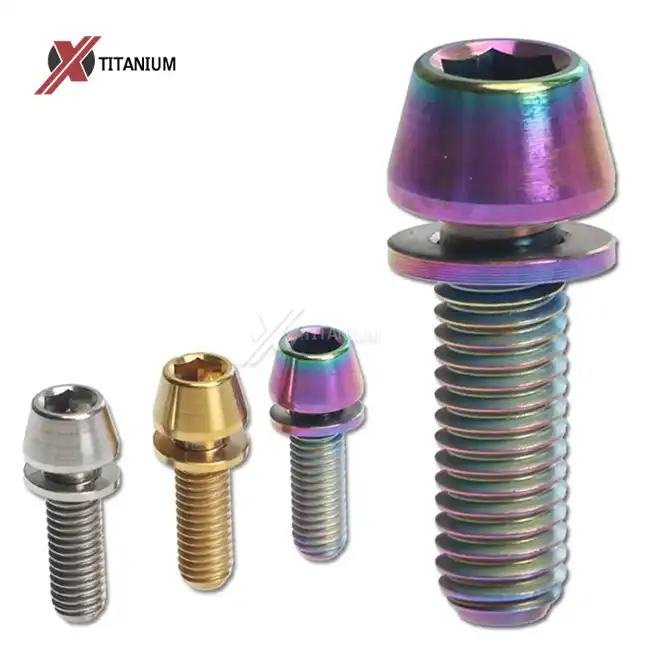
Reason 1: Outstanding Strength and Durability of GR5 Titanium Bicycle Bolts
Exceptional Tensile Strength and Fatigue Resistance
The tensile strength of grade 5 titanium metal is between 895 and 1000 MPa, and the yield strength is close to 828 MPa. This mechanical performance is about 30% better than 304 stainless steel, but it only has a mass of 4.43 g/cm³, which is about half that of steel versions. The alpha-beta crystalline structure of Ti-6Al-4V makes it very resistant to wear under cyclical loads, which is very important for bicycle parts that are constantly being hit and vibrated during use.
Precision rolling methods are used to make CNC-machined titanium bolts that keep the grain flow patterns that make structures stronger. Instead of cut threads that break up the consistency of the material, rolled threads make things last longer by reducing the amount of stress at the thread roots. In high-stress situations where a broken bolt can cause severe equipment malfunction, this production difference is important.
Performance Under Demanding Cycling Conditions
When mountain riding, fasteners are constantly hit by strikes with the ground that are stronger than 15G. For carbon fiber frames, precise torque application is needed without damaging the bearing surfaces. Titanium's elastic stiffness makes this balance easier to achieve than brittle aluminum alloys. Electric bicycle powertrains produce 40% more drivetrain pressure than regular bicycles. This means that bolts need to be able to keep their clamping force without giving way or stretching over time.
According to ASTM B348 standards, tests show that Gr5 titanium bicycle screws keep their structural stability when the temperature changes from -50°C to 300°C. This thermal stability stops the tightening that happens when steel nuts are heated and cooled many times, like in brake systems or during the summer when they are stored. Companies that make things for the aircraft, marine engineering, or high-performance sports equipment markets know that consistent materials lead to lower liability and higher customer happiness.
Gr5 titanium bicycle screws are the best choice for OEM partners making high-end bicycle lines because they are strong, have known mechanical behavior, and are made with great accuracy. When engineers are choosing fastener specs, they like that Gr5 titanium bicycle screws don't have to choose between weight reduction and safety gaps, which is something that aluminum options do.
Reason 2: Superior Corrosion Resistance and Lightweight Benefits
Unmatched Environmental Durability
Titanium makes a steady passive layer of titanium dioxide (TiO₂) when it comes into contact with oxygen in the air. This oxide film that heals itself is very strong against chloride ions, which are the main cause of pitting corrosion in marine settings and road salt exposure during winter riding. Titanium is naturally resistant to rust, while galvanized steel screws lose their protective coats over time due to wear and tear.
Coastal cycling conditions speed up rust processes that weaken steel bolts within 18 to 24 months. Sweat has levels of sodium chloride that are close to 0.9%, which creates an electrolytic environment on the bolts on the handlebars and seatposts every time you ride. When you put steel bolts into aluminum parts, for example, you create galvanic cells that speed up localized corrosion at the surfaces. The electrochemical potential of Gr5 titanium bicycle screws is very close to that of aluminum and carbon fiber alloys. This stops galvanic rusting completely.
Laboratory salt spray testing according to ASTM B117 standards shows that titanium fasteners don't corrode at all after 1000 hours of constant contact, which is the same amount of time that a bicycle would be used in real life for decades. This durability directly leads to fewer repair plans and gets rid of the stress of having to deal with stuck fasteners while fixing a component.
Strategic Weight Reduction Benefits
In terms of strength, each titanium bolt is about 40% lighter than its steel counterpart while still being just as strong. An update to all of a bike's fasteners usually takes away 80 to 120 grams of the system's weight. This is weight that is placed at key stress points that changes how the bike handles and how quickly it responds to acceleration. When it comes to competitive riding, where small improvements can decide who wins, reducing the weight of wheel hubs and other engine parts is very important.
When placed at the rotational ends, weight savings have the most effect. Putting in titanium rotor bolts lowers the unsprung mass around the edges of the wheels. This makes the suspension more flexible and the stopping more responsive. Drivetrain parts like chainring nuts and derailleur mounting tools work better when there is less inertial resistance when shifting gears and speeding up.
OEMs that are trying to sell high-performance bikes use the specs of Gr5 titanium bicycle screws to set their products apart in a crowded market. Product advertising that talks about aerospace-grade materials shows pledges to quality that appeal to picky buyers ready to spend a lot of money on high-end gear. Distributors who work with professional race teams and high-end stores say that the specs of titanium parts directly affect what informed customers decide to buy.
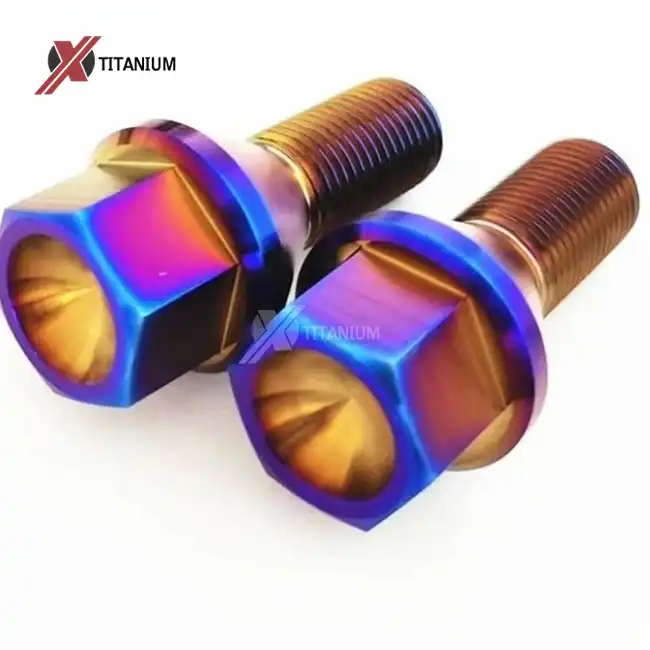
Surface treatments like sanding, anodizing, and nitriding improve both how something looks and how well it works. Anodized finishes come in gold, blue, purple, black, and rainbow colors. They let you customize your brand while only adding a small amount of thickness to precision-machined dimensions. When Gr5 titanium bicycle screws are threaded into aluminum or steel receiver threads without the right lubricants, galling can happen. These finishing methods make the surface harder so that galling doesn't happen during installation.
Reason 3: Cost-Effective Procurement and Maintenance for B2B Clients
Long-Term Investment Value
Initially, Gr5 titanium bicycle screws are 200–400% more expensive than other options at first, but a look at their total cost of ownership shows that they save a lot over their lifetime. When corrosion-related repairs are taken out of the picture, service times go from 12 to 18 months to 5 to 7 years under the same conditions of use. With corrosion-resistant titanium hardware, you don't have to pay for the work to remove seized fasteners, which often means replacing the part when the extraction process breaks the mounting threads.
Cutting down on warranty claims is very good for OEM makers' bottom lines. When a part fails because of a fastener corroding or not working properly, it costs more than 10 to 15 times the original cost of the fastener to ship new parts, pay for labor, and fix the brand's image. When titanium gear is used in important applications, a whole group of failure modes are taken out of the data used for guarantee analysis.
When you buy in bulk from well-known titanium product makers, you can get big discounts that cut the cost of each unit by 25–35% compared to retail prices for small amounts. Procurement managers get application-optimized parts instead of having to change designs to fit what's already in stock because of customization options like thread pitch specs, head style variations, and length optimization.
Quality Assurance and Supply Chain Reliability
Manufacturing facilities that are ISO 9001 certified use strict quality control procedures, such as checking the dimensions, tensile tests according to ASTM standards, and X-ray fluorescence spectroscopy to figure out what the material is made of. Batch traceability systems keep production records that connect finished fasteners to approvals for the mills that made the raw materials. This is necessary for aircraft and medical device uses that need to show where the materials came from.
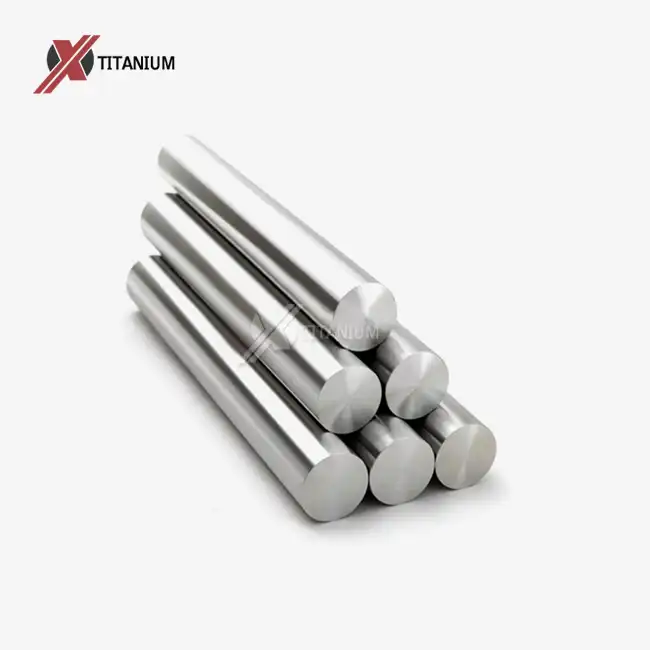
Following the rules in ASTM B348 and AMS 4928 makes sure that the makeup, mechanical qualities, and surface finish of Ti-6Al-4V meet standards around the world. Third-party testing labs independently check what manufacturers say, giving procurement managers objective performance data for internal engineering approval processes.
Stability in the supply chain is especially helpful for OEMs when planning when to make things. Lead times for normal configurations are always between 15 and 30 days when manufacturers keep specialized titanium processing facilities with CNC machining centers, thread rolling equipment, and anodizing lines. Rapid production can handle pressing repair orders or short deadlines for prototype development that come up when a product needs to be released quickly.
Technical advice services set competent titanium fastener providers apart from generic ones. Engineering support teams help come up with torque specifications, choose thread lubricants, and write up fitting instructions that are specific to bicycle uses. This joint technique cuts down on the time needed to learn by making mistakes when making new products, and it also improves the performance of fasteners by making sure they are installed correctly.
Comparison of GR5 Titanium Bicycle Screws With Other Materials
Material performance characteristics directly influence application suitability across diverse bicycle types and operating environments. Understanding comparative advantages enables informed specification decisions that balance performance requirements against budgetary constraints.
| **Property** | **GR5 Titanium** | **Stainless Steel 304** | **Aluminum 7075-T6** |
|---|---|---|---|
| Tensile Strength | 950 MPa | 505 MPa | 572 MPa |
| Density | 4.43 g/cm³ | 8.00 g/cm³ | 2.81 g/cm³ |
| Corrosion Resistance | Excellent | Good | Moderate |
| Weight (relative) | Medium | Heavy | Light |
| Cost (relative) | High | Low | Medium |
| Fatigue Resistance | Excellent | Good | Moderate |
Because mountain bikes are exposed to mud, water, and trail debris, they need materials that are resistant to contact and rust. Gr5 titanium bicycle screws work especially well in places where failure could be very bad, like stem bolts, brake mounts, and suspension hardware. Titanium is the only material that can meet the needs of carbon fiber frame building because it doesn't corrode when exposed to electricity and can spread clamping loads without breaking the surface.
Electric bicycle drivetrains produce high torque levels, so they need screws that don't strip threads and keep pressure even when temperatures change. In road racing, reducing the weight of rotating parts is important, and equipment decisions are based on how well they move and how aerodynamic they are. Titanium's better strength-to-weight ratio makes it worth the higher price in competitive situations where performance benefits lead to measurable results.
Even though aluminum bolts are lighter, they don't have very good thread contact strength or fatigue properties. Galling during fitting often hurts the threads on both the bolt and the receiver. While stainless steel is less expensive and has good corrosion protection, it adds extra weight and can still rust in crevices in chloride-rich areas.
Conclusion
When you upgrade to Gr5 titanium bicycle screws, you get measured performance gains in terms of strength, longevity, resistance to corrosion, and weight reduction. This Ti-6Al-4V metal is very reliable and doesn't fail in the usual ways that other fastener materials do. It is used in aircraft. B2B clients, such as OEM makers, wholesalers, and procurement managers, get a competitive edge by having fewer warranty claims, longer maintenance intervals, and better brand placement. While the original cost of titanium gear is higher, it saves a lot of money over time and shows a commitment to quality standards that picky customers appreciate. Technical requirements like ISO 9001 production standards, ASTM B348 material compliance, and changeable surface treatments make sure that the bike is optimized for each type of riding.
FAQ
Q1: Can GR5 titanium screws be purchased in bulk quantities for OEM production?
A: Reputable companies that make titanium products keep inventory systems that can handle bulk orders of 1,000 to 100,000 or more Gr5 titanium bicycle screws, with price based on quantities. Customization choices include thread types, head shapes, lengths, and anodised color finishes that are made to fit the needs of the brand. Lead times for normal configurations are usually between 15 and 30 days, but faster production is possible for pressing needs.
Q2: How do I verify supplier credibility when sourcing titanium fasteners?
A: Suppliers that are trustworthy give proof of ISO 9001 certification, ASTM B348 material compliance certificates, and third-party testing results that confirm the mechanical qualities. Ask the mill for certifications that show how the raw materials were made and production batch records that show how quality control was done. Long-established manufacturers don't act as middlemen; they keep actual production sites with CNC machining capabilities.
Q3: Are titanium screws compatible with aluminum and carbon fiber components?
A: Titanium's electrochemical potential is very close to that of aluminum and carbon compounds. This stops galvanic rusting, which happens with steel bolts. For thread compatibility, the right installation force must be used, which is usually 20–30% less than with steel versions because titanium has frictional properties. Anti-seize oils made for titanium uses stop galling during installation and make it easier to take apart later.
Partner With Chuanglian for Premium Gr5 Titanium Bicycle Screws
Baoji Chuanglian New Metal Material Co., Ltd. has been making aerospace-grade titanium screws for over ten years and works with OEM partners and dealers around the world. Our CNC-machined Ti-6Al-4V screws are made to meet ASTM B348 and AMS 4928 standards, and each batch is carefully inspected to make sure there are no problems. As a top provider of Gr5 titanium bicycle screws, we offer custom sizes, different anodized colors, and price structures for bulk orders that are meant to make B2B buying easy. Get in touch with our technical team at info@cltifastener.com or djy6580@aliyun.com to talk about your unique application needs and get material approval paperwork.
References
1. Boyer, R., Welsch, G., & Collings, E.W. (1994). Materials Properties Handbook: Titanium Alloys. ASM International.
2. Lutjering, G., & Williams, J.C. (2007). Titanium: Engineering Materials and Processes (2nd ed.). Springer-Verlag.
3. Donachie, M.J. (2000). Titanium: A Technical Guide (2nd ed.). ASM International.
4. Schutz, R.W., & Watkins, H.B. (1998). "Recent Developments in Titanium Alloy Application in the Energy Industry." Materials Science and Engineering A, 243(1-2), 305-315.
5. ASTM International. (2020). ASTM B348-13: Standard Specification for Titanium and Titanium Alloy Bars and Billets. West Conshohocken, PA.
6. Peters, M., Kumpfert, J., Ward, C.H., & Leyens, C. (2003). "Titanium Alloys for Aerospace Applications." Advanced Engineering Materials, 5(6), 419-427.
Learn about our latest products and discounts through SMS or email