- English
- French
- German
- Portuguese
- Spanish
- Russian
- Japanese
- Korean
- Arabic
- Greek
- German
- Turkish
- Italian
- Danish
- Romanian
- Indonesian
- Czech
- Afrikaans
- Swedish
- Polish
- Basque
- Catalan
- Esperanto
- Hindi
- Lao
- Albanian
- Amharic
- Armenian
- Azerbaijani
- Belarusian
- Bengali
- Bosnian
- Bulgarian
- Cebuano
- Chichewa
- Corsican
- Croatian
- Dutch
- Estonian
- Filipino
- Finnish
- Frisian
- Galician
- Georgian
- Gujarati
- Haitian
- Hausa
- Hawaiian
- Hebrew
- Hmong
- Hungarian
- Icelandic
- Igbo
- Javanese
- Kannada
- Kazakh
- Khmer
- Kurdish
- Kyrgyz
- Latin
- Latvian
- Lithuanian
- Luxembou..
- Macedonian
- Malagasy
- Malay
- Malayalam
- Maltese
- Maori
- Marathi
- Mongolian
- Burmese
- Nepali
- Norwegian
- Pashto
- Persian
- Punjabi
- Serbian
- Sesotho
- Sinhala
- Slovak
- Slovenian
- Somali
- Samoan
- Scots Gaelic
- Shona
- Sindhi
- Sundanese
- Swahili
- Tajik
- Tamil
- Telugu
- Thai
- Ukrainian
- Urdu
- Uzbek
- Vietnamese
- Welsh
- Xhosa
- Yiddish
- Yoruba
- Zulu
MMO vs. Platinum Titanium Anode: Which one should you choose for electroplating
When it comes to electroplating, the choice between MMO and platinized titanium anodes comes down to your specific needs and goals. Because it is very resistant to corrosion and lasts a long time, a platinized titanium anode is the best choice for high-precision, harsh-environment uses that can't settle on plating quality. MMO anodes have lower initial costs and a decent lifespan, but they work best in moderate-demand operations where cost concerns are greater than the need for maximum lifespan. When buying teams know what each type of anode is made of, how it works, and how much it will be worth in the long run, they can make choices that meet both technical requirements and financial goals.
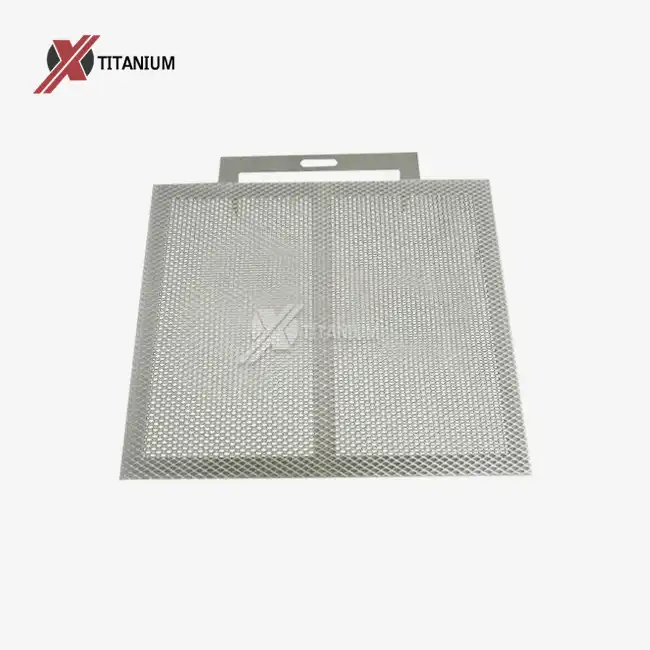
Understanding MMO and Platinum Titanium Anodes
What Is a Platinized Titanium Anode?
The base of a platinized titanium anode is usually Grade 1 or Grade 2 titanium that meets ASTM B265 standards. This is then electroplated or fused with a thin layer of pure platinum that is 2 to 15 microns thick. The titanium base has high mechanical strength, low density, and natural resistance to corrosion. The platinum layer, on the other hand, is very good at conducting catalysis and being electrochemically neutral. The anode can handle tough chemical conditions, high current rates (1–100 A/dm²), and high temperatures up to 800°C without breaking down much thanks to its composite structure.
In order to make these anodes, the titanium base has to be carefully prepared by cold rolling, hot rolling, heating, and pickling to make sure the surface is as clean as it can be. The platinum layer is then put on using precise electroplating methods. This is followed by strict quality checks that include bending tests, hardness tests, and bonding checks that are in line with ASTM B571 standards. This several-step process makes sure that there are no cracks in the coating. This keeps the electrolyte from penetrating and the substrate from passivating, which would otherwise create layers of titanium dioxide that don't carry electricity.
What Are MMO Anodes?
MMO anodes use a titanium base that is covered with a mix of metal oxides, mostly iridium oxide and ruthenium oxide. Other mixes may include tantalum or tin oxides, though, based on the purpose. Most of the time, the layer is between 3 and 25 microns thick. These anodes use the mixed oxide layer's ability to keep its shape and conduct electricity while keeping the titanium base's structural integrity.
Chemical precursor solutions containing the needed metal salts are applied to a titanium base and then fired to very high temperatures as part of the MMO anode-making process. This makes a layer of solid oxide that sticks to the titanium surface. MMO anodes work well with electricity and don't cost as much at first as platinized titanium anode options, but they might not last as long and may not be as resistant to some harsh chemicals.
Figuring out these basic differences in structure and makeup makes it possible to compare how well each type of anode works in different electroplating settings, especially those that need uniform quality and few interruptions to operations.
Performance Comparison: MMO Anode vs. Platinum Titanium Anode
Corrosion Resistance and Durability
Platinized titanium anodes show great corrosion resistance in a wide range of fluids, such as highly acidic solutions, chloride-rich environments, and high temperatures. Because the platinum layer is chemically neutral, it stops anodic dissolution. This keeps the base safe even when the current density is very high. This means that, based on how they are used and how often they are maintained, they can last for more than 10 years in steady industrial use.
MMO anodes have good corrosion protection in many situations, but their performance changes based on the electrolyte composition and the conditions under which they are used. Under some harsh conditions, like chlor-alkali processes or places where the pH level changes often, the mixed oxide layer can slowly wear away. Service lives are usually between 3 and 7 years, but they can be much shorter or longer depending on the amount of current and chemicals that are exposed.
Energy Efficiency and Electrochemical Performance
Because platinum is a reactive material, it lowers overpotentials during electrochemical processes. This means that less energy is used. Platinized titanium anodes keep their voltage fixed over the course of their useful life. This makes sure that they always use the least amount of energy and have the same operating costs. This security is especially helpful in places that make a lot of things and where energy costs are a big part of the costs of doing business.
MMO anodes also use a fair amount of energy, but over time, the voltage may rise as the layer falls off, causing the overall energy use to rise. The electrochemical activity of the mixed oxide coating rests a lot on the specific oxide makeup and the quality of the production process. Choosing the right supplier is therefore very important for getting the best performance.
Plating Quality and Consistency
Platinized titanium anodes help keep the current flowing evenly, which leads to better plating quality with even layer thickness and few surface flaws. This is very important in fields like finishing airplane parts, making medical devices, and precise electronics, where plating uniformity has a direct effect on how well the product works and how well it meets regulatory requirements.
In many situations, MMO anodes can produce good plating quality, but over time, the way the coating wears may cause small changes in the current distribution. This means that the process needs to be checked more often and maybe changed to keep the quality of the output uniform, which makes operations more difficult and increases the need for quality control.
Practical Considerations for Procurement and Use
Cost Analysis: Initial Investment vs. Total Cost of Ownership
Platinized titanium anodes are much more expensive up front than other MMO options, often three to five times the original investment. This difference in price is due to the high cost of platinum as a valuable metal and the need for very precise production methods. For projects with limited funds, procurement managers who are only interested in initial capital spending may find MMO anodes more appealing.
A full total cost of ownership study, on the other hand, shows a different picture. Platinized titanium anodes last longer than MMO anodes—often two to three times longer—so they don't need to be replaced as often, which saves money on shutdown costs. Operational saves are also increased by the fact that the anode uses less energy over its lifetime. The amortized cost per working hour often favors platinized titanium anodes when looked at over a 10-year operational horizon. This is especially true in high-use production settings.
Maintenance Requirements and Operational Reliability
Platinized titanium anodes don't need much care other than regular checks and cleaning to get rid of deposits that have built up. The tough finish doesn't easily get damaged by mechanical forces and keeps working properly with little effort. This makes things more reliable, which cuts down on unplanned downtime and makes planning upkeep easier. This is especially helpful in continuous production settings where the availability of equipment directly affects output.
MMO anodes need to be checked more often to see how the coating is doing and if the performance is dropping. As the oxide layer wears away, voltage drift and changes in coating quality may mean that the process needs to be changed more often or parts need to be replaced before they're used up. These repair needs make operations more difficult and may call for more advanced process control systems.
Supply Chain Considerations and Customization
There are a lot of technical barriers and not many seller networks in the titanium processing business. This makes supplier reliability and the ability to customize products very important when buying. Platinized titanium anodes can be bought from specialized companies that have full quality systems, such as AS9100, ISO9001, and standards specific to the industry. These systems make sure that materials can be tracked and that performance stays the same.
Customization choices for platinized titanium anodes include different sizes, coating thicknesses, surface finishes (bright, polished, pickled, and sandblasted), and special base treatments that can be used for different tasks. Suppliers who offer full scientific support, such as electrochemical testing data, coating thickness proof through X-ray fluorescence analysis, and rapid life testing, add value to the product that goes beyond the actual item.
Customization is also possible with MMO anodes, but the covering types and performance traits may not be as flexible. For long-term supply deals, procurement teams should give more weight to suppliers with strong quality control systems and clear paperwork to make sure that batches are all the same.
Decision-Making Guide: Which Anode Is Best for Your Electroplating Needs?
Application-Based Selection Framework
The best choice for an anode relies on how well the material's properties match the needs of the process. Platinized titanium anodes work especially well in situations where maximum rust protection, long operating life, and consistent plating quality are needed. These include finishing airplane parts, making medical devices, making high-precision electronics, and any other use where metal flaws could affect how well or safely a product works. Platinum's chemical inertness is very helpful for fields that work in difficult conditions, like marine engineering that deals with saltwater or chemical processing that uses strong acids.
When budgets are tight and the working environment isn't too harsh, MMO anodes work well in situations with moderate demand. MMO anodes may work well enough for general industrial electroplating, artistic finishing, and smaller production runs at a price that is reasonable. The most important thing to think about is whether the application can handle changing the anode on a regular basis and making possible process changes without affecting production plans or product quality.
Procurement Strategy for Long-Term Partnerships
Because of the project-based buying processes and long verification times that are common in high-performance industries, it is very helpful to build relationships with providers who offer full technical support. It is easier to make choices about what to buy when suppliers give you specific material approvals, coating thickness proof, adhesion testing documents, and accelerated life test data.
Requesting unique specs, like certain platinum coating thicknesses, specialized surface treatments, or measurement limits, makes sure that the system can be easily integrated with existing production equipment. Suppliers with tested quality systems, manufacturing methods that can be tracked, and quick expert support can lower the risk of buying and help operations stay up and running.
Comparing Key Features
Platinized titanium anodes are better at resisting corrosion, last longer than 10 years, use less energy, and produce constant plating quality. This makes them perfect for high-precision, harsh-environment uses, even though they cost more at first. MMO anodes require less money up front, have good corrosion protection in mild settings, and produce good plating quality. They are best for businesses that are on a budget and are okay with shorter lifespans and possibly higher upkeep needs.
The choice matrix should compare the original capital available to the long-term running costs, the level of accuracy needed for plating to the level of quality variation that is accepted, and the need for uninterrupted operations to the level of maintenance flexibility. When it comes to value, platinized titanium anodes are usually the best choice for procurement teams that work with businesses that have strict quality standards and legal compliance requirements. On the other hand, MMO alternatives may work well in applications that aren't as strict.
Conclusion
To choose between MMO and platinized titanium anodes, you need to carefully look at the needs of the product, the quality standards, and the total cost. Platinized titanium anodes are the best option because they fight rust better than any other material, last longer, and keep working well even in harsh conditions. Even though the initial investment is high, the long-term value becomes clear when you consider how often the parts will need to be replaced, how much energy will be saved, and how much better the finishing will be. MMO anodes work well in situations that don't need a lot of power or where starting cost is more important than longevity. In the end, choices about what to buy should be based on clear operating goals, quality standards, and how important plating activities are to the success of the whole production process.
FAQ
How Long Do Platinum Titanium Anodes Last in Continuous Electroplating Operations?
Platinized titanium anodes can last more than 10 years in constant industrial electroplating uses. However, the exact length of time they last relies on the current density, the composition of the electrolyte, the working temperature, and how well they are maintained. The anodes that have platinum coatings that are 10–15 microns thick last the longest, especially in harsh chemical conditions. Inspections done on a regular basis and proper cleaning to get rid of growth of deposits make things last longer. Following the NACE TM0108 protocols for accelerated life testing helps predict performance under certain working situations, which allows for more accurate planning of the lifecycle.
Can MMO Anodes Be Used for All Types of Electroplating Applications?
In mild chemical conditions, MMO anodes work well in a wide range of general electroplating tasks, including decorative chrome plating, zinc electroplating, and copper electroplating. However, their performance issues become clear in highly acidic environments, high-temperature situations, or processes that need very even current distribution. Platinized titanium anode options are better for uses that need exact control of plating thickness or use strong electrolytes. Because suitability depends on the mixed oxide composition, it is important to talk to a provider before using MMO anodes for particular tasks.
What Factors Cause Premature Anode Degradation?
Usually, covering flaws, bad working conditions, or not enough upkeep cause things to break down too quickly. ASTM B571 bend testing shows that the platinum layer and titanium base don't stick together well, which causes delamination and failure quickly. When current levels are exceeded, too much heat is produced, which speeds up the wear and tear on the coating. Electrolyte pollution, especially organic substances or metals impurities, can make the layer less strong. Not cleaning well enough lets deposits build up, which causes stress points to form and eventually the layer to fail.
Partner with Chuanglian for Your Platinized Titanium Anode Requirements
Baoji Chuanglian New Metal Material Co., Ltd. has been making precision platinized titanium anodes for over ten years. These anodes meet the high standards of the medical device, chemical processing, aircraft, and marine engineering industries. Our thorough quality control method includes checking the coating thickness, adhesion testing according to ASTM B571, and rapid life testing to make sure that every anode works well for a long time. We can make any specs you need, such as platinum coating thicknesses ranging from 2 to 15 microns, different surface finishes, and physical limits that are specific to your equipment.
As a well-known platinized titanium anode seller, we strictly follow AS9100 and ISO9001 quality standards and give full material traceability and verification paperwork for every order. Our expert team can give you full advice on choosing the right anode, improving the electrochemistry, and making changes that are specific to your application so that it fits in perfectly with your operations. No matter if you need a few prototypes for testing purposes or a lot of them to make sure the quality of each batch is the same, our manufacturing skills and quality assurance methods will help you reach your procurement goals. You can email our engineering team at info@cltifastener.com or djy6580@aliyun.com to talk about your unique needs and ask for full technical specs.
References
1. Trasatti, S. (2000). Electrocatalysis: Understanding the Success of DSA®. Electrochimica Acta, 45(15-16), 2377-2385.
2. Chen, G. (2004). Electrochemical Technologies in Wastewater Treatment. Separation and Purification Technology, 38(1), 11-41.
3. Comninellis, C., & Vercesi, G. P. (1991). Characterization of DSA-Type Oxygen Evolving Electrodes: Choice of a Coating. Journal of Applied Electrochemistry, 21(4), 335-345.
4. Hardee, K. L., & Bard, A. J. (1977). Semiconductor Electrodes: X. Photoelectrochemical Behavior of Several Polycrystalline Metal Oxide Electrodes in Aqueous Solutions. Journal of The Electrochemical Society, 124(2), 215-224.
5. Panizza, M., & Cerisola, G. (2009). Direct and Mediated Anodic Oxidation of Organic Pollutants. Chemical Reviews, 109(12), 6541-6569.
6. Beer, H. B. (1980). The Invention and Industrial Development of Metal Anodes. Journal of The Electrochemical Society, 127(8), 303C-307C.
Learn about our latest products and discounts through SMS or email