- English
- French
- German
- Portuguese
- Spanish
- Russian
- Japanese
- Korean
- Arabic
- Greek
- German
- Turkish
- Italian
- Danish
- Romanian
- Indonesian
- Czech
- Afrikaans
- Swedish
- Polish
- Basque
- Catalan
- Esperanto
- Hindi
- Lao
- Albanian
- Amharic
- Armenian
- Azerbaijani
- Belarusian
- Bengali
- Bosnian
- Bulgarian
- Cebuano
- Chichewa
- Corsican
- Croatian
- Dutch
- Estonian
- Filipino
- Finnish
- Frisian
- Galician
- Georgian
- Gujarati
- Haitian
- Hausa
- Hawaiian
- Hebrew
- Hmong
- Hungarian
- Icelandic
- Igbo
- Javanese
- Kannada
- Kazakh
- Khmer
- Kurdish
- Kyrgyz
- Latin
- Latvian
- Lithuanian
- Luxembou..
- Macedonian
- Malagasy
- Malay
- Malayalam
- Maltese
- Maori
- Marathi
- Mongolian
- Burmese
- Nepali
- Norwegian
- Pashto
- Persian
- Punjabi
- Serbian
- Sesotho
- Sinhala
- Slovak
- Slovenian
- Somali
- Samoan
- Scots Gaelic
- Shona
- Sindhi
- Sundanese
- Swahili
- Tajik
- Tamil
- Telugu
- Thai
- Ukrainian
- Urdu
- Uzbek
- Vietnamese
- Welsh
- Xhosa
- Yiddish
- Yoruba
- Zulu
How to Select the Correct Size of Titanium Flat Washer
It is very important to choose the right size of Titanium Flat Washer to keep the joint strong, keep the material from breaking, and make sure that heavy industrial units are loaded evenly. These precision-engineered parts are very important for connecting fasteners to surfaces, especially in medical implant devices, underwater pipeline flanges, and fuselage sections for airplanes. Incorrect sizing can cause more than just instant mechanical failure. It can also cause delays in the supply chain, costly repair processes, and safety standards that aren't up to par. Procurement managers and design engineers can make confident, cost-effective decisions that meet technical requirements and build long-term relationships with suppliers when they know how inner diameter tolerances, outer diameter coverage, and thickness parameters affect different bolt grades and substrate materials.
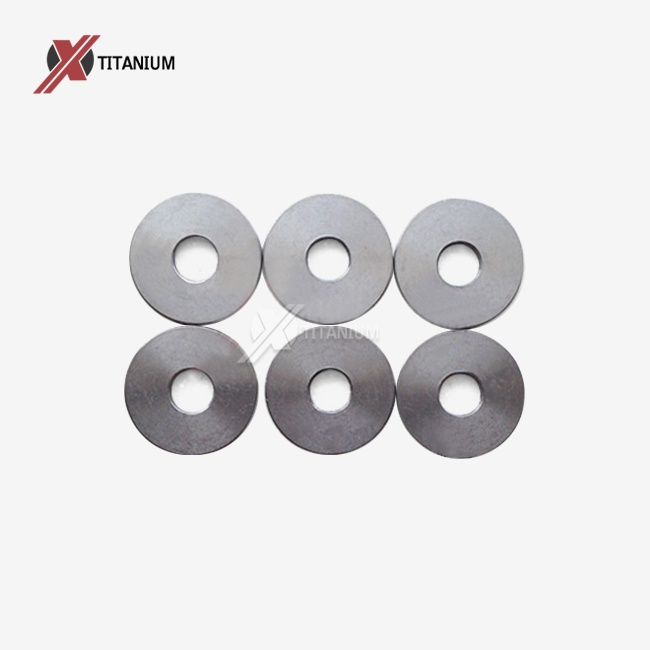
Comprehending Titanium Flat Washers and Their Specifications
Titanium Flat Washers are a specific type of load-distributing fastening part that is made from pure titanium or titanium alloys that are produced commercially. These circular disks change the tightening forces on bolts into surface pressure that is spread out evenly. This protects delicate substrates and keeps torque values constant over long service periods. What makes these washers different from other steel options is that they don't rust. Titanium forms a stable oxide layer on its own, which keeps it from breaking down in chloride-filled seawater, acidic chemical streams, and high-temperature oxidizing environments where stainless steel would pit and fail.
Material Grades and Their Industrial Relevance
The choice of material grade has a direct effect on how well the cleaner works in a range of situations. Grade 2 commercially pure titanium is the most resistant to corrosion and easy to shape. This makes it perfect for chemical processing equipment and naval gear, where protection from corrosion is the most important design factor. Grade 5 titanium alloy (Ti-6Al-4V) has a density of only 4.43 g/cm³, which is about 56% that of steel but has almost twice the tensile strength (more than 895 MPa). This strength-to-weight advantage is very important in aircraft structural joints and high-performance automobile suspension systems, where lowering the unsprung mass has a direct effect on how well the car handles and how much fuel it uses.
Critical Dimensional Parameters
Three main factors determine how well and how often a machine will work. The inner diameter needs to have enough room for the screw shaft while also reducing stress concentrations caused by gaps. Tolerances of ±0.1mm to ±0.3mm are usually stated, but this depends on how precise the work needs to be. The effective bearing area on the substrate is based on the outer diameter. Larger diameters spread loads over larger surfaces, lowering localized pressure and keeping the substrate from breaking in soft metals or composite materials. Different thicknesses affect both the compressive stiffness and the ability of the washer to smooth out uneven surfaces. Different standards, from 0.5 mm for thin electronics housings to 5 mm for heavy naval flanges, meet different structural needs.
International standards are necessary to make sure that measurements are always the same and that the product works as expected. For washers used in production in Europe, DIN 125 sets the rules for metric sizes, and ISO 7089 sets the rules for standard and large series washers around the world. The military and defense businesses in North America use imperial measurements, which are defined in ANSI B18.21.1. Following these guidelines makes it easier to buy things across borders, speeds up the quality control process, and makes sure that the products will work with fastener parts from different sources.
Core Criteria for Selecting the Correct Size of Titanium Flat Washer
Instead of just meeting the diameter, the right way to choose a size is to do a thorough study of several factors that affect each other for a Titanium Flat Washer. The technical facts of your application—such as mechanical loads, environmental exposure, substrate properties, and assembly limitations—must guide your choice of dimensions so that you get solid long-term performance without having to pay more than necessary.
Matching Inner Diameter to Fastener Specifications
The important part that connects the washer to the bolt or screw shaft is its inner width. As a general rule, the inner diameter should be about 10% bigger than the standard fastener diameter to account for production errors and keep the screws from binding during installation. An M10 bolt with a standard diameter of 10 mm goes well with a nut with an inner diameter of 11 mm to 12 mm. This space is very important in titanium systems because galling, which is when similar metals cold-weld together under pressure, can seize up parts when they are being tightened. If the space is more than 15%, it makes it less efficient to transfer load and lets the bolt move laterally, which can loosen the preload when the system vibrates.
Calculating Optimal Outer Diameter for Load Distribution
The bearing stress on the base material is directly related to the choice of outer diameter. The formula for this relationship is: Bearing Stress = Applied Load / (π/4 × (OD² - ID²)), where OD and ID are the outer and inner sizes, respectively. To keep the matrix from getting damaged, composite materials like carbon fiber reinforced plastics need bigger bearing areas. For example, a 10mm bolt in CFRP panels usually needs washers with an outer diameter of 30mm or more, while steel substrates might work fine with 20mm diameters under the same loads. As a safety measure, aerospace uses usually call for minimum outer diameters that are twice the standard fastener diameter. However, finite element analysis can support stricter requirements when weight saves are very important.
Determining Appropriate Thickness for Structural Demands
The width of the washer affects both how stiff it is when compressed and how well it can fill in rough spots on the base. Thin washers that are between 0.5 mm and 1.5 mm thick work well on precisely machined surfaces in instrument systems and electronic cases where tight flatness tolerances are needed. Medium thicknesses, between 2 mm and 3 mm, are used for general industrial machines and structural steel links that are subject to mild temperature changes and vibrations.
Heavy-duty uses like offshore drilling equipment, pressure tank flanges, and mining equipment often need 4mm to 5mm thick washers that can keep their clamping force even when the base gives way and creeps over time. Titanium has a low elastic stiffness (about 113 GPa compared to 200 GPa for steel), which means that thicker washers can work as compliant spring elements to make up for differences in heat expansion between different materials in the assembly stack.
Step-by-Step Process for Accurate Sizing of Titanium Flat Washers
Using an organized approach to choosing washers cuts down on mistakes during the buying process and speeds up project timelines. This organized process leads technical teams from the first measurements to the final contract with the seller. It makes sure that measurements are correct and that all regulations are followed.
Precise Measurement of Fastener Dimensions
For accurate sizing to start, the measures of the fasteners must be checked using standardized tools. Digital calipers with a precision of 0.01 mm should be used to confirm the stated sizes of the bolts. Multiple samples from different production lots should be checked to find differences in the tolerances. Thread pitch measures check whether fitting systems are metric or imperial. This keeps expensive mistakes from happening when fastener standards don't match.
By measuring the length of the shaft, you can tell if the washers will sit on flat surfaces or in hollow counterbores, which changes the space limits around the outer circle. By writing down these baseline measures, you have an objective point of reference that clears up any confusion that may arise during talks with suppliers and quality checks.
Applying Load Analysis to Determine Required Bearing Area
Engineering formulas turn operating forces into the smallest washer sizes that can be made. To find the needed bearing area, divide the highest predicted bolt tension (which is usually given in fastener torque tables) by the substrate material's allowed bearing stress. Change the order of the bearing area formula to find the smallest outer diameter for the chosen inner diameter clearance. There are safety factors between 1.5 and 2.0 that take into account uneven load distribution, dynamic effects, and changes in the material's properties between runs of production. In the marine and aerospace industries, these figures must usually be written down in assembly processes and design files that can be audited by regulators.
Verifying Compliance with Industry Standards and Certifications
Quality-critical businesses need to be able to prove that they are following the rules. Make sure that the sizes you choose are within the range bands set by the relevant standards, such as DIN 125, ISO 7089, or ANSI B18.21.1. This will ensure that the parts can be swapped out and that the provider is always the same.
Manufacturers that are AS9100 approved and can provide material test results, dimensional inspection certificates, and lot tracking documents are often needed for aerospace parts. For medical device uses, providers must have ISO 13485 certification and validation procedures that show biocompatibility and consistent surface finish. For sour gas service settings where hydrogen embrittlement resistance is important, petrochemical sites may say that the material must be NACE MR0175 compliant.
Consulting Supplier Technical Resources and Custom Capabilities
Getting maker technical support teams involved speeds up the process of finalizing specifications and finds alternatives that add value. Suppliers with a lot of experience keep huge databases of proven washer setups from a wide range of industries. These databases may include suggestions for dimensional improvements that lower costs without lowering performance.
When normal stock sizes can't fit specific geometric needs or when surface treatments like polishing, anodizing, or nitriding need to be built into the base component specification, custom manufacturing becomes necessary. Making the minimum order numbers clear early on in the buying process keeps surprises from happening during the quote review process. This is especially important for Titanium Flat Washers, which have relatively high material costs, and the economics of setting up CNC machines for custom measurements.
Comparing Titanium Flat Washers with Other Washer Materials for Optimal Selection
The choice of material has a big effect on the total cost of ownership, which includes more than just the initial purchase price. It also affects how often equipment needs to be maintained, replaced, and shut down. When titanium is compared to other materials, it shows clear performance ranges where each one is the best value.
Titanium Versus Stainless Steel Performance Trade-offs
In acidic settings, stainless steel washers, especially 316 marine-grade ones, are usually the standard. Even though it is much cheaper than titanium, stainless steel can still rust in still seawater and form pits when marine organisms feed on it. After 18 to 36 months of continual soaking, the steel usually starts to break down. Titanium's inactive oxide layer heals itself right away when it gets scratched, so it can be used for a very long time in the same circumstances.
In aerospace uses, where titanium's 45% lighter weight directly improves payload capability and fuel usage, the difference in weight becomes very important. When you mix materials, you can get problems with galvanic compatibility. For example, titanium screws and stainless steel bolts can make the less noble steel part rust faster in an electrolyte, so you need to be careful when designing the material system.
Aluminum and Specialty Material Comparisons
Aluminum washers are cheaper and lighter than other materials, but they aren't hard enough for high-stress situations and often break permanently when bolt preloads are normal. They are still mostly used for lightweight casings and non-structural parts in consumer gadgets. Copper bolts are good at conducting heat, which is useful in heat sink uses, but they rust quickly and aren't very strong.
Electrical separators like nylon and polymer washers stop galvanic coupling, but they can't handle temperatures above 120°C or keep their shape when they're compressed for a long time. Grade 5 Titanium Flat Washers have the unique combination of strength, resistance to corrosion, and thermal stability that makes single-specification solutions possible across temperature ranges from cryogenic to 400°C. This makes managing inventory easier and reduces the amount of engineering validation work needed for product lines that are used in different environments.
Practical Tips for the Procurement of Titanium Flat Washers
Strategic buying practices include more than just technical specifications. They also include qualifying suppliers, organizing orders, and making the whole supply chain more efficient. Intelligent buyers know that trustworthy source partners add technical value to the parts they sell.
Supplier Selection and Qualification Criteria
For makers to be found, they need to be evaluated in more than just price competitiveness. Certifications for quality management systems, like AS9100 for aircraft, ISO 13485 for medical equipment, and ISO 9001 as a general industry standard, show that an organization is dedicated to controlling processes and always making them better. To check the consistency of the manufacturing process, ask for material test results that list the chemical makeup, mechanical properties, and grain structure features of recent production lots.
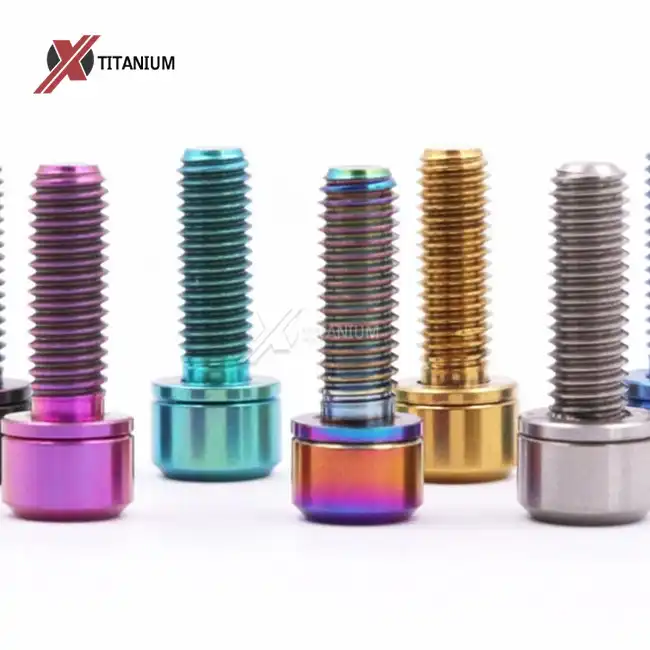
Metrics for delivery performance show how reliable a company is when meeting tight project deadlines. This is especially important for titanium, which is used in complicated assembly processes where delays can affect operations further down the line. Customization options, such as precise CNC machining, surface treatment choices (such as polishing and anodizing in colors ranging from natural titanium to gold, blue, green, purple, black, and rainbow finishes), and quick engineering support are what set strategic partners apart from transactional vendors.
By building ties with makers in well-known titanium processing hubs, you can get access to a lot of knowledge and well-established supply lines. Baoji City in China is known as the "City of Titanium" because it has been developing in a specific way for many years and now has combined groups of companies that process raw materials, make precise machines, and test products for quality. Companies that have been around for ten years or more have been able to stay in business through changing market conditions and have learned how to fix problems in a wide range of application fails and wins.
Cost Management and Order Optimization Strategies
Titanium has a higher material cost than most metals, which makes talks about price based on quantities very important. Minimum order numbers often make unit prices much lower. For example, a single Titanium Flat Washer might cost $5 to $8, but if you buy more than 500 of them, the price per unit can drop by 30% to 40%. Annual blanket buy orders with planned releases keep inventory costs in check with bulk discounts. This keeps the budget stable while meeting the needs of just-in-time delivery.
Standardizing on fewer dimensional versions across multiple projects makes managing supplies easier and gives you more power when negotiating with suppliers. Asking for thorough cost breakdowns that separate material, machining, surface treatment, testing, and packing parts lets you have focused conversations about how to make the process more efficient and find other standards that keep performance while cutting costs.
Installation Best Practices for Maximum Performance
The efficiency of the washer and the life of the joint are directly related to how well it is installed. Thoroughly clean all touch areas to get rid of oils, dirt, and oxidation that build up stress and make it harder to predict the friction coefficient. Apply molybdenum disulfide (MoS2) or special titanium anti-seize chemicals to the areas that will be tightened. This will stop galling during tightening and allow correct torque-preload relationships. To make sure that clamping forces are spread out evenly, torque should be applied using newly certified torque tools and calibrated processes.
Fasteners should be tightened in the right order, using star patterns for circular bolt circles. When working with titanium, stay away from impact tools because they can damage its relatively soft surface, creating stress peaks that shorten its wear life. Periodic retorquing plans take into account the initial embedment relaxation that happens when surface irregularities bend under load. This is usually done after the first temperature cycle or vibration exposure time.
Conclusion
To choose the right size of Titanium Flat Washer, you have to make choices about buying that take into account technical specs, operational needs, and supply chain issues. The process includes more than just matching dimensions; it also includes load analysis, evaluating weather compatibility, choosing the right material grade, and evaluating the supplier's abilities. Titanium's unique mix of resistance to rust, high strength-to-weight ratio, and temperature stability makes it worth the extra cost in situations where failure would lead to safety risks, high costs for downtime, or problems with replacement. Getting experienced makers involved early in the design process gives engineers new ideas and lets them make changes that improve the performance of parts and keep project costs down.
FAQ
Can titanium washers be used interchangeably with stainless steel washers?
When specs meet, there is dimensional compatibility, but the risks of galvanic corrosion need to be looked at. Because titanium is higher on the galvanic series, it can speed up the corrosion of stainless steel nuts that are lower on the series when they come into touch with electrolytes like saltwater. Titanium Flat Washers and bolts that match are the best way to set up something in a marine or chemical setting.
How can people make sure that something is real before they buy it?
Ask for approved material test records (MTRs) that show the results of spectrometry-based chemical composition analysis, mechanical property testing, and heat lot tracking. These certificates are standard practice for reputable sellers. If there are any doubts, samples can be checked by a third-party testing service that uses X-ray fluorescence to confirm the makeup and hardness tests to confirm the grade.
What lead times should be expected for custom washer manufacturing?
Standard catalog sizes usually ship between 7 and 14 business days after stock is confirmed. Custom sizes that need CNC cutting usually take 3 to 5 weeks from the time the order is confirmed until it is fully inspected and packed. Timelines may be pushed back by an extra week for more complicated surface processes like multi-color anodizing. Custom production usually has a minimum order quantity of 100 to 500 pieces, but this can be higher or lower based on how complicated the dimensions are.
Partner with Chuanglian for Your Titanium Flat Washer Requirements
Baoji Chuanglian New Metal Material Co., Ltd. has more than ten years of experience making titanium parts for businesses around the world that need them. From choosing the raw materials to the final review, our thorough quality control system keeps an eye on every Titanium Flat Washer. This makes sure that the performance is the same from batch to batch. We have AS9100 and ISO 9001 certifications, which means we can work with industries like aerospace, marine, petroleum, and medical devices that need to be sure of tracking and accuracy in measurements.
Custom Titanium Flat Washers can be made from Grade 2 and Grade 5 materials using CNC cutting. The inner diameters range from 3mm to 40mm, the outer sizes from 5mm to 50mm, and the thicknesses range from 0.5mm to 5mm. There are natural titanium, gold, blue, green, purple, black, and colorful finishes, as well as surface processes like polishing, anodizing, and nitriding. Get in touch with our engineering team at info@cltifastener.com or djy6580@aliyun.com to talk about your needs, ask for material approvals, or get quotes for large orders.
References
1. Boyer, R., Welsch, G., & Collings, E.W. (1994). Materials Properties Handbook: Titanium Alloys. ASM International.
2. Donachie, M.J. (2000). Titanium: A Technical Guide (2nd Edition). ASM International.
3. American Society for Testing and Materials. (2021). ASTM F467: Standard Specification for Nonferrous Nuts for General Use. ASTM International.
4. German Institute for Standardization. (2012). DIN 125: Flat Washers for Bolts, Screws and Nuts - Product Grade A. Beuth Verlag.
5. International Organization for Standardization. (2016). ISO 7089: Plain Washers - Normal Series - Product Grade A. ISO Publications.
6. Schutz, R.W. & Watkins, H.B. (1998). "Recent Developments in Titanium Alloy Application in the Energy Industry." Materials Science and Engineering: A, 243(1-2), 305-315.
Learn about our latest products and discounts through SMS or email