- English
- French
- German
- Portuguese
- Spanish
- Russian
- Japanese
- Korean
- Arabic
- Greek
- German
- Turkish
- Italian
- Danish
- Romanian
- Indonesian
- Czech
- Afrikaans
- Swedish
- Polish
- Basque
- Catalan
- Esperanto
- Hindi
- Lao
- Albanian
- Amharic
- Armenian
- Azerbaijani
- Belarusian
- Bengali
- Bosnian
- Bulgarian
- Cebuano
- Chichewa
- Corsican
- Croatian
- Dutch
- Estonian
- Filipino
- Finnish
- Frisian
- Galician
- Georgian
- Gujarati
- Haitian
- Hausa
- Hawaiian
- Hebrew
- Hmong
- Hungarian
- Icelandic
- Igbo
- Javanese
- Kannada
- Kazakh
- Khmer
- Kurdish
- Kyrgyz
- Latin
- Latvian
- Lithuanian
- Luxembou..
- Macedonian
- Malagasy
- Malay
- Malayalam
- Maltese
- Maori
- Marathi
- Mongolian
- Burmese
- Nepali
- Norwegian
- Pashto
- Persian
- Punjabi
- Serbian
- Sesotho
- Sinhala
- Slovak
- Slovenian
- Somali
- Samoan
- Scots Gaelic
- Shona
- Sindhi
- Sundanese
- Swahili
- Tajik
- Tamil
- Telugu
- Thai
- Ukrainian
- Urdu
- Uzbek
- Vietnamese
- Welsh
- Xhosa
- Yiddish
- Yoruba
- Zulu
Custom Titanium Ring Forging China for Oil & Gas
When procurement managers look for important parts for oil and gas operations, they know that the choice of materials has a direct effect on both safety and the life of the operations. Custom titanium forged rings made in China have become a key answer because they are very resistant to corrosion and have the structural stability needed for high-pressure and underwater uses. Forged titanium rings go through controlled thermo-mechanical deformation, which aligns the grain flow circumferentially to get rid of internal voids and provides better wear resistance against hoop stress compared to cast options that have holes and uneven grain structures. China's titanium forging infrastructure is well-developed and follows international standards like ASTM B381 and AMS 4928. This means that business-to-business buyers can get precisely engineered parts that can withstand hydrogen sulfide exposure, saltwater corrosion, and extreme temperature cycling for decades of use.
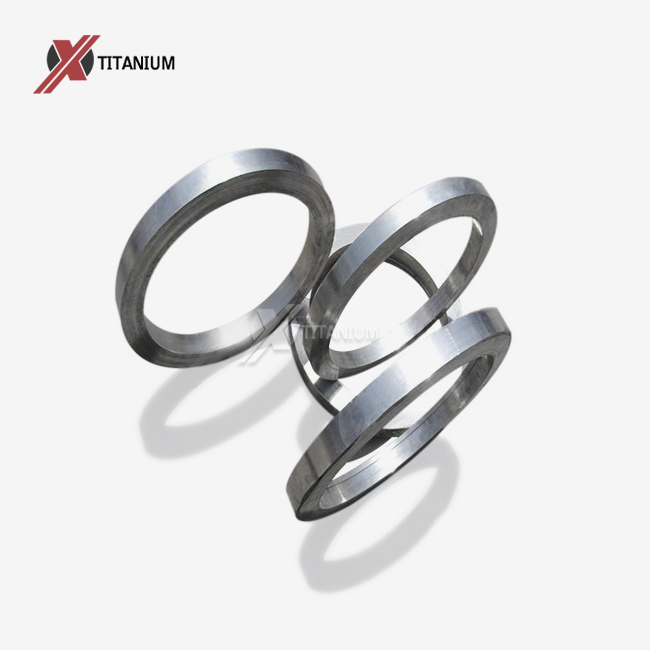
Understanding Titanium Forged Rings: Material Benefits and Manufacturing Process
The main difference between machined and cast titanium parts is how well they work and how reliable they are in harsh industrial settings. To start the forging process, we choose aerospace-grade titanium billets. Next, we carefully heat the billets to temperatures between 900°C and 1050°C, based on the alloy's makeup. The heated material is upset to redistribute its mass, and then it is punched to make the original ring shape. Finally, it is rolled to gradually increase the circle while keeping the wall thickness the same.
Why Forging Outperforms Casting?
Three major problems can be fixed with this production method that casting can't. Microshrinkage and gas gaps that happen during solidification are removed by the plastic deformation that happens during forging. Continuous metal flow makes directed grain structure that follows load lines, which makes the toughness of impacts much better. When you refine the nanoscale by recrystallization, the mechanical properties stay the same across the whole shape of the part.
Core Material Advantages for Oil & Gas
Titanium alloys have a density of about 4.43 g/cm³ for Grade 5 (Ti-6Al-4V), which means they are 45% lighter than steel versions while still having compressive strengths of over 895 MPa. The naturally occurring oxide film protects against chloride pitting and stress corrosion cracks in sour gas conditions with high levels of H2S. It stays stable at temperatures up to 400°C and doesn't change shape over time, making it good for use in downhole tools and surface processing equipment.
The buy-to-fly ratio edge is something that buying teams often forget about. Forged near-net forms need less subtractive cutting than plate-cut shapes, which means that 60–70% less material is wasted for large-diameter rings. Even though the price of raw materials is higher per kilogram, this economy means that the total cost of acquisition is lower.
Manufacturing Process Control
During the whole forging process, our center keeps strict records of the process parameters. Ultrasonic testing makes sure the inside is sound, and infrared analysis makes sure the chemistry meets customer requirements. For Grade 5 applications, the needed hardness values are between 30 and 38 HRC, and heat treatment methods follow written steps to get there. For dimensional inspection, coordinate measuring tools with a precision of 0.01 mm are used to make sure that the surfaces are straight and centered within very narrow limits that are necessary for sealing.
The forging process factors have a direct effect on the spread of grain sizes, which we can control by setting the strain rates and cooling profiles. The right thermomechanical processing creates equiaxed alpha grains within a changed beta matrix, which makes the material stronger and more flexible. You can't get this level of microstructural control by casting or powder metallurgy.
Advancing Oil & Gas Procurement with Custom Titanium Forged Rings from China
In the last twenty years, China's titanium industry has changed a lot. It used to just make sponges, but now it can do a lot of complex processing afterward. When foreign buyers look to China for supplies, they have good reasons to be worried about quality control and protecting their intellectual property. To address these issues, we need to be open and honest about our production and quality processes.
Customization Capabilities Matching Project Requirements
During the process of developing specifications, our engineering team works with your expert staff. Customization of dimensions allows for outer widths ranging from 100 mm to 3000 mm, and wall thickness ratios can be made to fit your unique loading needs. Alloy choices go beyond the basic Grade 2 and Grade 5. They also include special mixes like Grade 7 (with palladium for better rust resistance) and Grade 23 (extra-low interstitial for better fracture toughness).
Because underwater links need Ra values below 1.6 μm to stop crevice corrosion from starting, surface finish standards are given extra attention. Precision cutting, electrochemical polishing, and passivation processes are some of the finishing choices we offer. Batch freedom allows for both small numbers of prototypes for quality testing and large numbers of units for production, up to hundreds per year.
Quality Assurance Infrastructure
We keep our ISO 9001:2015 certification and our API 6A approval for wellhead equipment parts. Mechanical tests are done in our quality control lab according to ASTM E8 (tensile), ASTM E23 (Charpy impact), and ASTM E384 (microhardness mapping). Optical emission spectrometry is used for chemical research, and it can be linked to approved reference materials. Liquid penetrant inspection, magnetic particle testing (when needed), and radiography review for important uses are all examples of non-destructive examination.
Materials must be able to be tracked at all times in oil and gas supply lines. Each titanium forged ring is given a unique number that can be linked to the heat number of the raw material, the forging settings, records of the heat treatment process, and data from the final check. With every package, we include full material test records that list the chemistry, mechanical properties, and ultrasonic testing results.
Supply Chain Reliability Considerations
Custom casting companies always have trouble keeping track of lead time. Standard setups usually take 8–10 weeks to ship from the time the buy order is received. This time includes getting the materials, forging, heat treating, finishing the work, and inspecting it for quality. Times may take 12 to 14 weeks if the shapes or metal are complicated. We keep a planned stock of popular billet sizes to shorten the time it takes to buy things for repeat customers.
We have built freight forwarding relationships that help with the process of moving goods from our Baoji facility to foreign ports. We take care of export paperwork like business bills, packing lists, certificates of origin, and certifications for materials. For shipping, wooden boxes with moisture shields and anti-corrosion treatments are used, which are good for ocean freight and long-term storage.
Comparing Titanium Forged Rings with Other Industrial Ring Materials
A lot of people have to weigh the performance qualities of a material against its total cost of ownership in order to make a choice. Titanium forged rings cost more than most materials when they are first bought, but lifecycle research shows that they have strong economic benefits in harsh service settings.
Performance Benchmarking Against Alternatives
Grades of stainless steel like 316L offer basic protection to rust at costs that are about 40% lower. These metals work fine in light chloride environments, but they get pitted in concentrated brines and break down completely in H2S-containing environments. Nickel metals, like Inconel 625, are better at withstanding heat and oxidation, but their density is very high—nearly double that of titanium—which makes it hard to install big parts.
Duplex stainless steels are good for use in saltwater because they have the right amount of austenitic rust protection and ferritic strength. These materials can crack under stress above 60°C in chloride solutions, which makes them less useful in alkaline processing settings. Titanium metals keep the inactive film stable over a wider range of temperatures and pH levels, which gets rid of the catastrophic failure modes that come with SCC.
Cost-Benefit Analysis Framework
Structured review methods help procurement managers explain why they chose an expensive material. We suggest looking at three main factors: how often parts need to be replaced, how hard it is to get to for repair, and how much downtime costs. A titanium ring that costs $3,000 and lasts 25 years without any upkeep is a better deal than a stainless steel part that costs $1,200 and needs to be replaced every 7 years in the same conditions.
When used offshore, where crane capacity limits the weight of parts, installation procedures favor titanium even more. A 500 mm circular titanium ring that weighs 12 kg can be placed by hand, but a stainless steel ring that weighs 28 kg needs to be lifted by a machine. Less complicated rigging means quicker installation windows and lower costs for contractors to move around when the platform turns around.
Design Optimization Opportunities
Because of its high strength-to-weight ratio, it is possible to optimize its shape in ways that would not be possible with heavy materials. Ring wall thickness can be cut by 30–40% while keeping the same load capacity. This makes room for more sealing elements or measurement ports. In centrifuge uses, lower spinning inertia lets acceleration profiles move faster and separation efficiency go up.
When designing bolted joints, engineers should keep in mind that titanium has a lower elastic stiffness (110 GPa vs. 200 GPa for steel). Titanium can handle differences in temperature and base movement better because it bends more when it is loaded. This flexibility lowers the stress concentration factors at geometric breaks, which makes the wear life longer when loading is done in cycles.
Optimizing Procurement Decisions: How to Choose the Best Supplier for Titanium Forged Rings in China?
Instead of just comparing prices, the method for choosing a vendor should focus on checking their professional abilities. We've seen that tactics that focus on getting the lowest bid often lead to problems with quality that need expensive fixes that cancel out any savings that were made in the beginning. Structured seller review guards against supply failures and deviations from specifications regarding the titanium forged ring quality.
Qualification Criteria Assessment
To start, ask for proof of factory licenses and quality system certifications that are important to your business. People who have an API monogram have had their facilities audited to make sure that the process control paperwork and tracking systems work. AS9100 certification means that the quality control is at an aerospace level and can be used in important situations. Ask for customer references from well-known companies in similar fields, and then call those references to talk about how well they deliver and how quickly they respond to technical help requests.
When it's possible, building tours should be part of the manufacturing capability verification process. These tours should include checking the forging press tonnage capacity, heat treatment furnace instrumentation, and the calibration state of inspection equipment. We encourage customer audits and keep picture records of our production tools so that they can be looked at from afar. Check to see how well the expert staff can understand your drawings and specs. How well they communicate during the quotation phase will tell you a lot about how well they can work together during production.
Commercial Terms Negotiation
Payment terms usually follow industry standards, with a 30% deposit due when the order is confirmed, 60% due when the pre-shipment check is approved, and 10% held back until the delivery is accepted. Volume contracts allow for better price structures; yearly deals for 200 or more units may be worth 8–12% discounts compared to buying on the spot. To avoid disagreements during execution, make sure that the terms you negotiate are clear about how to handle changes to the specifications, delivery delays, and how to handle nonconformances.
The warranty should cover more than just size compliance; it should also cover how the material works. We offer 24-month guarantees that cover flaws in the materials and the work, and metallurgical investigations can be done if breakdowns happen in the field. Find out if the seller can provide emergency replacement stock. The wait time for expedited orders often decides how operations will be affected when unplanned component failures happen.
Building Long-Term Partnerships
Successful relationships for getting titanium move from buying things one-time to working together on long-term goals. Share your list of future projects so that you can plan your resources and get materials ready ahead of time. Include your forging provider in the design development process. Their knowledge of how to make things can often help you find ways to cut costs while still meeting performance standards. We've helped users change the shape of rings so that they don't have to do as many extra steps. This has cut costs by 15–20% without affecting usefulness.
Set up regular technical exchange meetings to talk about changes in the business, new alloy choices, and ways to make the process better. Our metallurgy team keeps an eye on academic study and trade magazines, and they share important results that could help your projects. By letting companies use new materials or industrial methods faster, this knowledge sharing gives them a competitive boost.
Care and Maintenance Tips for Titanium Forged Rings in Harsh Industrial Settings
Handling and repair procedures that follow the right steps extend the life of parts and keep them working reliably. Even though titanium forged rings naturally resist rust better than most materials, it is still important to follow the right care procedures in oil and gas settings.
Routine Inspection Protocols
During regular maintenance checks, the surface should be looked at visually to see if it has changed color from being too hot or being attacked by chemicals. Titanium keeps its bright shiny look in regular use. If it turns purple, blue, or straw-colored, it means it has been exposed to temperatures higher than what was intended. Take pictures and measure the sizes of any surface problems so that you can look at trends.
When cleaning, you should not use rough methods that hurt the protection metal layer. We suggest using alkaline detergents, then washing with clean water, and finally drying with compressed air. Stay away from hydrofluoric acid and other chemicals with fluoride that can damage titanium's passive surface. When working in chloride settings, washing with fresh water on a regular basis gets rid of salt layers that could build up corrosive species.
Long-Term Performance Monitoring
Do regular measurement checking to find patterns of wear or deformation. At regular distances, check the key diameters, straightness, and finish of the surface. Trending data shows that things get worse over time before they break, which lets you plan for replacements ahead of time. Ultrasonic thickness gauging measures wall loss in situations where the wall is being worn away.
Storage methods are important for extra parts that are waiting to be installed. Keep titanium rings in climate-controlled spaces with less than 60% relative humidity to keep the surface from getting stained. When storing titanium, keep it away from carbon steel parts because galvanic coupling can cause localized rusting on steel surfaces and hydrogen absorption could damage titanium. For long-term keeping, use plastic wrap or papers with a volatile rust inhibitor.
Replacement Decision Framework
Set clear criteria for retirement that are based on acceptable outward standards and limits for size. If the wear level goes above 10% of the original wall thickness or the depth of surface cracking hits 0.5 mm, the part usually needs to be replaced to keep safety standards. Talk to your forging provider about fitness-for-service assessments when readings get close to rejection limits. An engineering study may show that the process can go on with fewer parameters.
Conclusion
Custom titanium forged rings from Chinese makers have been used successfully in oil and gas uses that need high-quality materials that are resistant to rust, have the right balance of strength and weight, and last a long time. Forging creates better microstructural properties than casting, getting rid of pores and making grain flow patterns that make the material more resistant to wear. Structured supplier evaluation that focuses on technical capability proof, quality system maturity, and open communication is more important than lowest-price bidding for successful buying.
Titanium forged parts can last for decades in underwater connectors, valve bodies, and processing equipment if they are properly designed and kept. This means that the total cost of ownership is lower, even though they cost more to buy at first. Getting suppliers involved early in the design process helps procurement teams because it lets manufacturers give feedback that improves both performance and producibility.
FAQ
Are titanium forged rings truly necessary for oil and gas applications, or can stainless steel serve equivalently?
The choice of material relies on the factors of the service. Titanium forged rings are needed in places with sour gases like H2S, strong chloride brines above 60°C, and uses where saving weight supports paying more for the material. Some types of stainless steel, like 316L, work well in mildly corrosive environments. However, they can pit and crack under stress in tough marine settings. Lifecycle cost analysis usually picks titanium when it's hard to get new parts or when a broken part could mean losing more than $50,000 a day in production.
How does forging improve durability compared to machining rings from solid plate stock?
When metal is forged, the grain structure is aligned around the ring shape, which greatly increases the strength in the direction of pressure. Plate-cut rings have weak spots where cracks can start because the grain flow is stopped by the cutting process. Forged parts have a 40–60% longer wear life when loaded and unloaded many times. Controlled plastic distortion and recrystallization are also used to get rid of internal flaws.
Can Chinese manufacturers accommodate bulk custom orders with specific dimensional tolerances?
Well-known forging shops regularly make custom rings with key measurement tolerances of ±0.1mm in numbers ranging from small prototype batches to more than 500 units per year. Production capacity and wait times vary based on how complicated the design is. Standard configurations ship in 8–10 weeks, while specialized shapes may need 12–14 weeks. During the seller qualification process, ask for specific capability statements and examples of past work.
Partner with Baoji Chuanglian for Premium Titanium Forged Ring Solutions
Baoji Chuanglian New Metal Material Co., Ltd. has been making titanium forged rings for oil and gas companies around the world for more than ten years. We have advanced forging skills and strict quality systems because we are located in China's titanium production hub. Our ISO 9001:2015 and API certifications show that we are committed to world standards. Our engineering team works with your technical staff to make sure that the ring shapes are the best they can be for your pressure ratings, corrosion conditions, and size restrictions.
We provide full material traceability, thorough testing documents, and expert help for the entire lifecycle of your component. As a company that only makes titanium forged rings, we are happy to get requests for both prototypes and large production runs. Get in touch with our purchasing experts at info@cltifastener.com or djy6580@aliyun.com to talk about your project needs and get specific quotes.
References
1. Boyer, R., Welsch, G., and Collings, E.W. (1994). Materials Properties Handbook: Titanium Alloys. ASM International, Materials Park, Ohio.
2. Donachie, M.J. (2000). Titanium: A Technical Guide, 2nd Edition. ASM International, Materials Park, Ohio.
3. Lütjering, G. and Williams, J.C. (2007). Titanium, 2nd Edition: Engineering Materials and Processes. Springer-Verlag, Berlin.
4. American Society for Testing and Materials (2021). ASTM B381-20: Standard Specification for Titanium and Titanium Alloy Forgings. ASTM International, West Conshohocken, Pennsylvania.
5. SAE International (2019). AMS 4928N: Titanium Alloy, Rings 6Al-4V Annealed. SAE Aerospace Material Specification, Warrendale, Pennsylvania.
6. Schutz, R.W. and Thomas, D.E. (1987). "Corrosion of Titanium and Titanium Alloys." Metals Handbook, 9th Edition, Volume 13: Corrosion. ASM International, pp. 669-706.
Learn about our latest products and discounts through SMS or email