- English
- French
- German
- Portuguese
- Spanish
- Russian
- Japanese
- Korean
- Arabic
- Greek
- German
- Turkish
- Italian
- Danish
- Romanian
- Indonesian
- Czech
- Afrikaans
- Swedish
- Polish
- Basque
- Catalan
- Esperanto
- Hindi
- Lao
- Albanian
- Amharic
- Armenian
- Azerbaijani
- Belarusian
- Bengali
- Bosnian
- Bulgarian
- Cebuano
- Chichewa
- Corsican
- Croatian
- Dutch
- Estonian
- Filipino
- Finnish
- Frisian
- Galician
- Georgian
- Gujarati
- Haitian
- Hausa
- Hawaiian
- Hebrew
- Hmong
- Hungarian
- Icelandic
- Igbo
- Javanese
- Kannada
- Kazakh
- Khmer
- Kurdish
- Kyrgyz
- Latin
- Latvian
- Lithuanian
- Luxembou..
- Macedonian
- Malagasy
- Malay
- Malayalam
- Maltese
- Maori
- Marathi
- Mongolian
- Burmese
- Nepali
- Norwegian
- Pashto
- Persian
- Punjabi
- Serbian
- Sesotho
- Sinhala
- Slovak
- Slovenian
- Somali
- Samoan
- Scots Gaelic
- Shona
- Sindhi
- Sundanese
- Swahili
- Tajik
- Tamil
- Telugu
- Thai
- Ukrainian
- Urdu
- Uzbek
- Vietnamese
- Welsh
- Xhosa
- Yiddish
- Yoruba
- Zulu
What Size Titanium Pipe Do You Need? A Buyer’s Guide
You need to be very careful when picking the right titanium alloy pipe size because it affects how well your system works, how long it lasts, and how safe it is. The measurements must exactly match the pressure levels, flow needs, temperature cycles, and corrosion exposure. This is true whether the pipe is for a hydraulic line under the sea, a heat exchanger in a chemical plant, or a fuel system in space. Making the right choice the first time can save you a lot of money, time, and trouble in the future. Bad decisions in the field can also hurt your reputation and your ability to follow the rules.
Introducing Titanium Alloy Pipes: Properties and Applications
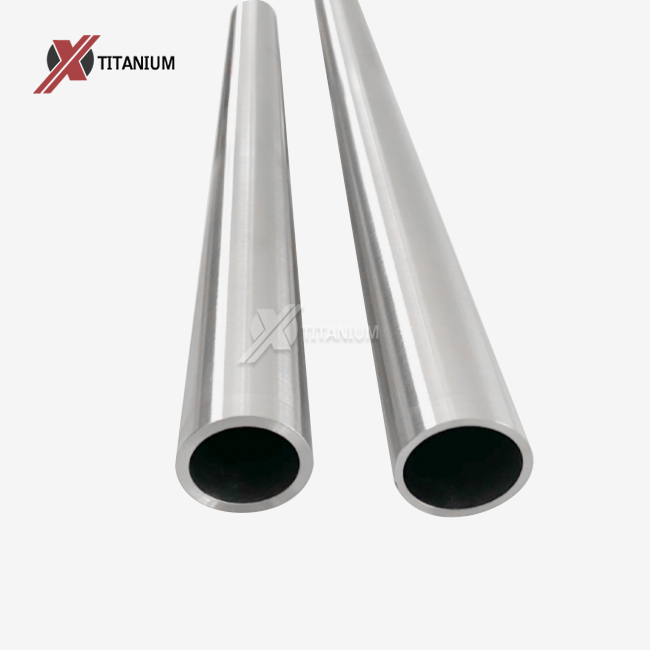
Titanium alloy pipe represents a big change in how companies deal with tough, corrosive environments where regular materials often break down. Pure titanium, on the other hand, doesn't rust and isn't very strong. Aluminum, vanadium, molybdenum, and tin are some of the alloying elements that are used to make these pipes. Titanium's tensile strength, creep resistance, and temperature stability are all greatly improved by this two-phase microstructure. It still has the important rust resistance that makes it so useful.
Commercially Pure Titanium vs. Titanium Alloys
Grade 2 of commercially pure titanium (CP Ti) is very good at stopping pitting and fissure rust that are caused by chloride. In other words, they can be used to remove salt from seawater and do some light chemical processing. Their tensile strength, on the other hand, stops at about 345 MPa, so they can't be used in places with high temperatures or pressures. Grade 5 (Ti-6Al-4V) and Grade 9 (Ti-3Al-2.5V) titanium metal lines are used because of this. Grade 5 has tensile forces greater than 895 MPa, which means it can handle heavy loads in underwater shafts and structural parts of airplanes. It is best to use Grade 9 for tough hydraulic wiring in airplanes because it is strong and can be formed even when it is cold.
Industry Grades and Their Applications
Following the rules set by ASTM B338, ASTM B861, and ISO 5832-2, we make titanium alloy pipes. Different alloys, like Ti-6Al-4V, Ti-5Al-2.5Sn, and Ti-6Al-2Sn-4Zr-6Mo, are used to make these pipes. There were a lot of different ways that each grade could be used. Ti-6Al-4V is the engine of the airplane business. A lot of turbine engine parts need to be strong at high temperatures and not grow too much. Because it can stay flexible at temperatures as low as -253°C, Ti-5Al-2.5Sn is great for use in cold places. It works great with systems that use LNG (liquefied natural gas).
It is also called Ti-6-2-4-6. Ti-6Al-2Sn-4Zr-6Mo has better creep strength than other alloys and is used in parts of jet engines where high temperatures would break down other alloys over time. When buying teams know about these differences, they can choose a grade that is made for the specific stress, temperature, and acidic conditions that their application needs. Things like stress corrosion cracking (SCC), premature fatigue cracking, or heat degradation could break down if you choose the wrong grade. This could be expensive and risky.
How to Determine the Right Size Titanium Pipe for Your Needs?
You need to do more than just measure the space you have to pick the right size titanium alloy pipe. To figure out how strong and useful a system is as a whole, you need to know how the length, wall thickness, and outer diameter (OD) affect the working pressure, flow speed, and temperature expansion.
Core Dimensional Parameters
You can tell how much flow your pipe can handle and how much room it takes up by its outside width. We have titanium alloy pipes at Chuanglian that are between 6 mm and 200 mm in diameter. From large-bore process pipes to accurate measurement lines, these pipes can be used for a lot of different tasks. How thick the walls are is also very important for our goods.
They can be anywhere from 1 mm to 20 mm thick. Even though thin-wall pipes are lighter and use less material, you need to make sure you know how much pressure they can handle. Pipes with thick walls are needed for high-pressure jobs like extracting oil from the sea or processing supercritical fluids because they are less likely to break. You can get custom lengths so you don't have to weld as much in the field, which can leave weak spots and needs more quality control.
Pressure Ratings and Operating Temperatures
You have to take both internal and external loads into account when you figure out a pressure number. When titanium alloy pipes are used underwater, they need to be able to survive the crushing forces of air pressure while still keeping their internal pressure straight so that water or chemicals can flow through them. If you work with aerospace hydraulic lines that are under 3,000 to 5,000 psi, you need to know the exact wall thickness figures to make sure they don't break or wear out after millions of pressure cycles.
The temperature at which the part will be used also affects the material that is used and the part's size. Ti-6Al-4V won't change in how it works up to 400°C. After that, creep shifting starts to be a problem. Many chemical processes that happen above 500°C use near-alpha metals, such as Ti-5Al-2.5Sn, because they can handle high temperatures better.
Flow Rates and Velocity Considerations
The speed of the flow changes both the resistance to rust and the pressure drop. In chemical processes, erosion and rusting can't happen if flow speeds are kept below 3 meters per second. Erosion-corrosion happens when protective oxide coats are broken, letting violent media hit new metal. When lines are too small, they speed things up, which leads to damage from turbulence and high costs for filling. It takes longer to do things and costs more to use lines that are too big. The best balance between how well the fluid works and how much material is used can be found with the help of computational fluid dynamics (CFD) modeling or empirical flow charts.
Comparing Titanium Alloy Pipes with Other Materials for Size and Performance
In order to decide if the high cost of titanium alloy pipe is worth it, you should look at how well they work compared to materials like carbon steel, aluminum, stainless steel, and nickel alloys.
Stainless Steel vs. Titanium Alloy Pipes
When it comes to acidic environments, stainless steel, especially 316L, is the best choice because it is cheaper and easy to find. It can rust and pit in places with a lot of chloride, like the ocean, brine, or chlorine process streams. It breaks after a few months most of the time. The lines made of titanium metal, on the other hand, create a solid oxide layer that heals itself and is not damaged by chloride, even when the temperature is high. This gets rid of the need for expensive coatings that guard against rust, corrosion, or replacements. Titanium is stronger than steel, and it weighs less. A Grade 5 titanium alloy pipe is just as strong as stainless steel, but it's only about 60% as heavy. This is very helpful for planes and platforms in the ocean, where lighter materials save fuel and let you take more.
Nickel Alloys and Exotic Alternatives
Metals that are made from nickel, like Hastelloy and Inconel, are very strong and don't rust when they get hot. Above 600°C, they often work better than titanium. Tin metals are lighter than nickel metals, but nickel metals cost a lot more. Titanium alloy pipe is just as resistant to rust as steel pipe, but it is much lighter and cheaper. It can be used in places where the temperature stays below 400°C. It's also easier to weld titanium than it is to weld many nickel metals, which need extra steps and heat treatment after the weld to not break.
Aluminum and Carbon Steel Comparisons
Titanium is stronger than aluminum, but aluminum isn't strong enough or immune to rust enough for tough work in industry. This type of steel is strong and cheap, but it rusts quickly when it gets wet or is exposed to chemicals. This means that the product needs coats, cathodic protection, or rust limits, which make it more expensive over time. Because titanium alloy lines don't need to be maintained, they are a "fit and forget" choice that cuts down on downtime and lengthens the time between service calls. These examples show that titanium alloy pipes are not a luxury. They are an investment that pays off over time when something breaks and the cost of new parts is higher than the cost of the materials themselves.
Buying Titanium Alloy Pipes: Key Considerations for Procurement
When you need to buy titanium alloy pipe, you have to deal with many different sellers, each with their own skills, quality standards, pricing, and shipping times. Making smart decisions in these areas has a direct effect on how well the project goes, how safe the supply chain is, and how reliable operations will be in the long run.
Supplier Credibility and Manufacturing Capabilities
It's not enough to just compare prices when picking a seller. Titanium is very hard to work with. From extruding billets to carefully grinding them and heating them, suppliers need to have strong quality systems and a history of technical knowledge. The companies in Baoji, China, also known as the "City of Titanium," are the most efficient in the world. This is because they have been working with metal for decades and have integrated the supply chain. Some of the testing labs we have here in the building are for hardness tests, hydraulic pressure tests, and non-destructive exams. We also have CNC machining centers and smooth extrusion lines. This vertical link makes sure that everything is the same, that it can be watched, and that special needs are met quickly.
Quality Certifications and Compliance
When you work in areas like aerospace, medical products, and nuclear energy, you have to follow the rules set by other countries. Chinglian makes titanium alloy pipes that are very careful to follow the rules set by ASTM B338, ASTM B861, and ISO 5832-2. Some of the standards we use are ISO 9001 for quality control and AS9100 for aircraft. We make sure they are always up to date. We make sure that every batch has mill test records (MTRs), a way to keep track of the materials, and, if necessary, third-party inspection certificates. The peace of mind that these licenses give buying managers helps them pass internal quality checks and follow the law.
Pricing Factors and Order Volume Dynamics
There are several things that affect the cost of titanium metal pipes. It's very important what kind of metal is used. Grade 5 costs more than Grade 9 because it is more difficult to make and costs more to do so. The price is also affected by the pipe's size; big pipes with thick walls take longer and more raw materials to make. There are economies of scale when you place a lot of orders, but even small orders are still cost-effective when you think about how well they work over time and how little maintenance they need. Things are more flexible when you can choose custom production options like non-standard lengths, different surface finishes (bright, polished, pickled, sanded), and extra heat treatments. But you need to work with the seller early on to get the best wait times.
Delivery Timelines and Supply Chain Considerations
For regular sizes, lead times for titanium alloy pipe can be a few weeks. For custom alloy grades or large orders, they can be a few months. Providers should be talked to early on by buying teams to make sure that production plans are in line with project goals. Chuanglian says that we keep strategic stocks of raw materials and flexible production planning so that we can meet urgent needs without lowering the quality of our work to meet tight deadlines.
Practical Tips: Ensuring You Get the Perfect Titanium Pipe Size
People need to work together and use their professional knowledge, strict tests, and what they've learned from past projects to find the best titanium alloy pipe size. If you don't make the same mistakes and follow best practices, your job will turn out much better.
Leveraging Technical Datasheets and Supplier Consultation
The most stress that can be put on a material, its temperature and pressure ranges, and what it is made of are all important things that can be found in technical datasheets. To be clear, these papers are not the final rules; they are just starting points. Buying teams and engineers can talk to providers like Chuanglian about problems that are specific to each application. For example, they can talk about problems that happen when materials are subject to mixed acids, cyclic loads, or temperatures below 0°C. We can help you find the best metal grades, wall thickness estimates, and production methods, like hot rolling, cold rolling, or heating, for your specific use case. These will all improve performance.
Avoiding Common Sizing Pitfalls
In case you don't think about working pressures or pressure spikes (also called "water hammer"), pipe breaks can be very bad. In the same way, ignoring thermal expansion in systems that are exposed to high temperatures makes joints and fittings more stressed, which speeds up fatigue failure. When people choose pipe sizes, they often do so based only on price, without thinking about what rust, erosion, or stress corrosion cracking might mean in the long run. It can cut the service life from decades to just a few years in chemical processes if the wall thickness isn't thick enough to account for rust.
Real-World Case Studies
One good example of this is the hydraulic systems in airplanes. A big company that makes airplanes moved from steel pipes to Grade 9 titanium alloy pipes for the hydraulic lines. Because of this, the device was 40% lighter and didn't need any maintenance for rust. The engineer team and the seller had to work together more than once to get the wall thickness just right. This was needed to meet the standards for burst pressure while also keeping the weight as low as possible. This helped make a pipe system that was safe and good at what it did.
A desalination plant moved from heat exchanger tubes made of stainless steel to pipes made of Grade 2 titanium. This made the time between service visits longer, from 18 months to over a decade, and stopped leaks caused by cracking that were expensive to fix when they happened without warning. There's more to proper size than just technical needs. It's also a business decision that impacts safety, productivity, and the overall cost of ownership.
Conclusion
You need to know a lot about the material, the pipe's size, how it will be used, and what the provider can do in order to choose the right size titanium alloy pipe. The performance, safety, and living costs of your piping system will depend on how well it fits its measures and how well the materials are kept together. This is true whether you're using it for subsea oil extraction, chemical processing, making medical devices, or aircraft hydraulics. They can be sure that the titanium alloy pipes they order will meet all of their needs and be a good long-term investment if they work with sellers with a lot of experience, like Chuanglian, and use their technical knowledge to learn about the best ways to do things in the business.
FAQ
Can Titanium Alloy Pipes Replace Stainless Steel in High-Pressure Environments?
Grade 5 (Ti-6Al-4V) titanium alloy pipes are harder, lighter, and less likely to rust than 316L stainless steel pipes. It's not like stainless steel that gets pitting or crevice rust in places with a lot of chlorine, like chemical plants or ocean sites. Because of this, it is a good choice for stainless steel in the long run.
What Grade of Titanium Alloy Pipe is Best for High-Pressure Applications?
Grade 5 (Ti-6Al-4V) is the best choice for high-pressure systems because it can withstand more than 895 MPa of tension and doesn't break down easily. Grade 9 (Ti-3Al-2.5V) is good for things like hydraulic lines in spaceships that need to be shaped in a difficult way and under a lot of pressure.
How Does Wall Thickness Influence Cost and Service Life?
Thick walls cost more and weigh more, but they last longer in tough environments because they are better at fighting bursts and rust. Using rust tests and pressure rating figures, the best wall thickness takes into account both how much it cost to build and how reliable it will be in the long run.
Partner with Chuanglian for Reliable Titanium Alloy Pipe Solutions
It can be hard to figure out the specs for titanium pipes. You need a company that is committed to technical excellence, quality assurance, and building relationships with customers. Chuanglian is very good at making high-performance titanium alloy pipe that are used in chemical processing, medical devices, airplanes, and ships. We have more than ten years of experience, use modern CNC machines, and have strict quality control that meets ASTM and ISO standards. This means that we can give you things that meet all of your strict needs. Our team can be reached at info@cltifastener.com or djy6580@aliyun.com by email to talk about your project, get custom prices, or set up a technical meeting. As a trustworthy titanium alloy pipe maker, we want to help you make the best purchases by being honest, correct, and dependable.
References
1. American Society for Testing and Materials (ASTM). Standard Specification for Seamless and Welded Titanium and Titanium Alloy Pipe. ASTM B338/B861, 2021.
2. Boyer, R., Welsch, G., and Collings, E.W. Materials Properties Handbook: Titanium Alloys. ASM International, 1994.
3. Donachie, Matthew J. Titanium: A Technical Guide. ASM International, 2nd Edition, 2000.
4. Peters, M., and Leyens, C. Titanium and Titanium Alloys: Fundamentals and Applications. Wiley-VCH, 2003.
5. Schutz, R.W., and Watkins, H.B. "Recent Developments in Titanium Alloy Application in the Energy Industry." Materials Science and Engineering, Vol. A213, 1996.
6. Veeck, Steven, and Rebak, Raul B. "Corrosion Behavior of Titanium Alloys in Industrial Environments." Corrosion Engineering, Science and Technology, Vol. 52, 2017.
Learn about our latest products and discounts through SMS or email