To choose the suitable size titanium axle nuts, you need to know the thread requirements, the needs of the application, and the features of the material that affect performance and safety. Titanium axle nuts are great for aerospace, automotive, and high-performance cycling applications where accuracy is very important since they have a great strength-to-weight ratio and are resistant to corrosion. The right size makes sure that the torque is spread out evenly, prevents parts from breaking, and makes the equipment last as long as possible under tough conditions.
The increasing need for titanium axle nuts in bike manufacturing and industrial equipment shows how important they are for improving performance and making things last longer. Getting the right size is important not only for the best fit and torque, but also for safety and durability. This book gives procurement managers, engineers, distributors, and OEMs a complete picture of titanium axle nuts, from their basic measurements to the best ways to buy them. This will help them make smart, cost-effective choices for global B2B supply chains.
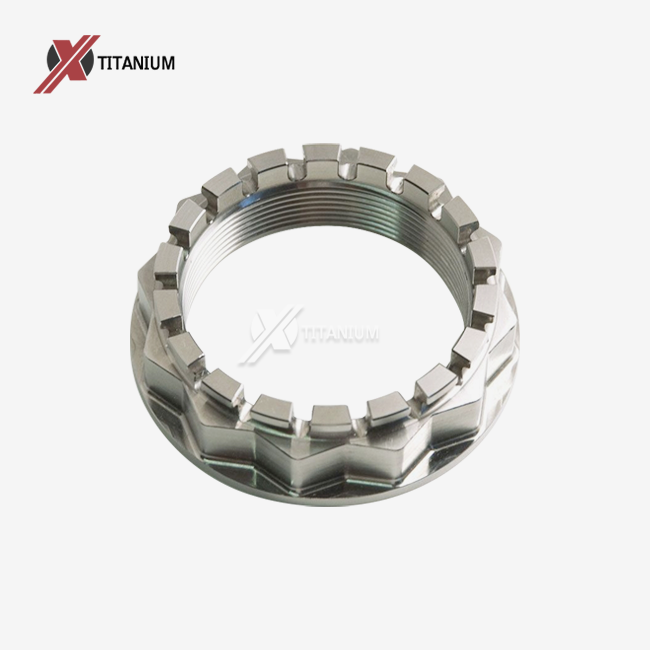
Understanding Titanium Axle Nuts and Their Critical Dimensions
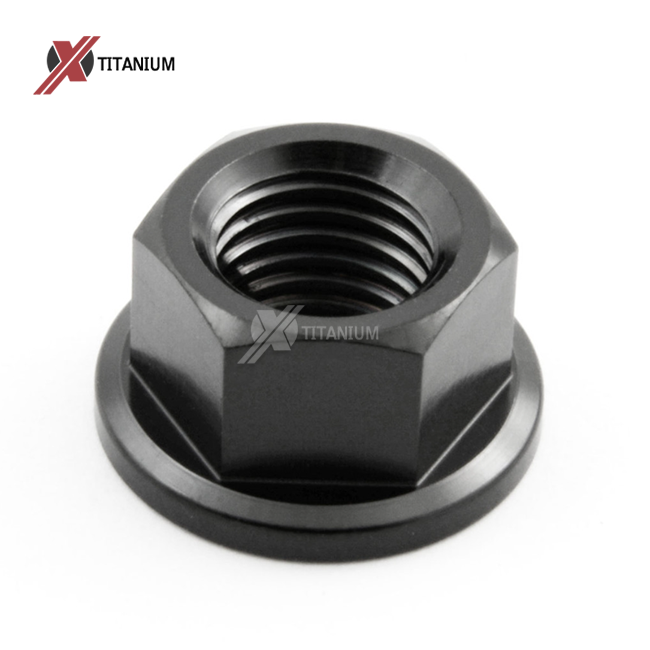
Titanium axle nuts are important fasteners in bicycles and machines since they are very strong for their weight and don't rust. These specialist parts are made of Ti-6Al-4V (Grade 5) titanium alloy, which has a tensile strength of more than 950 MPa and is around 40% lighter than steel parts.
Essential Dimensional Parameters
You need to carefully consider crucial measures like thread diameter, pitch, width across flats (WAF), and overall thickness to make sure that everything fits together and performs correctly. There are standard thread diameters for M10, M12, M14, M16, M18, and M20. The thread pitches that correlate with these sizes vary from 1.0mm to 2.0mm, depending on what the application demands.
The size of the thread engagement and the amount of torque used are quite crucial when it comes to titanium fasteners. To maintain the connection strong, titanium nuts need to be tightened to particular torque levels so they don't gall or cross-thread. Steel nuts don't require this. The width across flats must be able to accommodate standard wrenches and have adequate contact area for the tool to perform well.
International Standards Compliance
Following international standards like ASTM B348, ISO 5832-3, AMS 4928, JIS H4650, DIN 934, DIN 985, and EN 10204 makes sure that all supply chains throughout the world are reliable and consistent. Knowing how these dimensional connections effect torque application and component life may greatly lower the chances of failure and downtime in tough settings.
How to Precisely Measure and Verify Titanium Axle Nut Size?
Accurately measuring the size of titanium axle nuts is the first step in effective quality assurance and procurement procedures. To make sure that titanium alloys are the right size and avoid expensive specification mistakes, you need to use particular measuring methods.
Essential Measurement Tools and Techniques
When utilizing precise tools like digital calipers and thread gauges, professionals should stick to standard ways of measurement. Digital calipers with a resolution of 0.01mm are good enough to assess the diameter of a thread, and pitch gauges make sure that the threads fit together the right way. Go/no-go gauges allow you swiftly qualify for production jobs where speed and reliability are very critical.
The first step in the measuring process should be to check the thread diameter, then the pitch, and finally the breadth across flats. When measuring titanium parts, temperature adjustment is required since the thermal expansion coefficients are different from those of steel references used in calibration standards.
Common Measurement Errors and Prevention
Real-world case studies show that inaccuracies in measuring may cause expensive delays and problems in the supply chain. Common mistakes include reading thread pitch scales wrong, mixing up metric and imperial measurements, or not taking into consideration how surface quality changes might change dimensional readings. To make sure that the dimensions stay the same, it is important to check them again every so often when handling and storing them. This will help keep the project on schedule and the product reliable.
Comparing Titanium Axle Nuts with Other Materials: Size and Performance Considerations
When you compare titanium axle nuts to steel, aluminum, or carbon fiber axle nuts, the size discrepancies frequently mean that the weight, strength, and corrosion resistance profiles are different. Choosing the right material affects not only the size needs but also the installation process and how well it works over time.
Performance Characteristics Analysis
Titanium is lighter than steel, which is good for performance-critical uses like racing and mountain bikes. However, torque standards may need to be changed to match those of steel. Titanium's elastic modulus (around 114 GPa) is different from steel's (200 GPa), which changes the preload on bolts and how joints behave when they are under dynamic loading conditions.
Carbon fiber alternatives may make things more lighter, but titanium is usually stronger and more durable for threaded fastening applications. Aluminum is cheaper, but it doesn't have the corrosion resistance or strength needed for maritime or chemical processing settings.
Cost-Performance Optimization
When teams acquire goods, they should carefully look at the price-performance ratio, which means they should think about the size and quality of the materials they require. This will help them get the most bang for their buck without giving up safety or durability. Titanium parts often cost more, but they last longer and require less care, so the additional expense is worth it in the long term.
Step-by-Step Guide to Choosing the Right Titanium Axle Nut Size for Your Needs
You need to first figure out the application criteria, such as load ratings, environmental circumstances, and axle specifications, in order to determine the proper size titanium axle nuts. This careful process makes sure that the right parts are picked and lowers the risk of purchasing the incorrect parts or making errors in the specifications.
Application Parameter Definition
When you undertake load analysis, you should consider about both static and dynamic forces, such vibration, shock loads, and thermal cycling. Extreme temperatures, chemicals, and high humidity levels are all environmental factors that impact the choice of material grade and the necessity for surface treatment. The basic size requirements are based on the axle specifications, which include the kind of thread, the length of engagement, and the space needed.
You may choose the best bike or equipment for your requirements by using decision matrices that rank strength, corrosion resistance, and weight. For applications where weight is really essential, you may need to use higher grades or special surface treatments. For projects where money is extremely essential, simple setups with the necessary safety margins could be all that's needed.
Supplier Engagement and Customization
Getting suppliers engaged early on with specifications and customisation options could lead to metric threads that aren't standard or sizes that are different. CNC machining enables you produce custom parts for specific needs, while standard parts are cheaper and faster to ship for everyday usage.
Instructions for installation and maintenance, such recommended torque values, help the product endure longer and work better. Correct torque settings eliminate galling and ensure sure there is adequate preload to maintain the joint robust. For certain purposes, it could be a good idea to add anti-seize chemicals to make it simpler to take things apart afterward.
Procurement Insights: How to Buy the Right Titanium Axle Nut Size Efficiently?
Choosing suppliers with a track record of quality, suitable certifications, and full technical support skills is key to efficient procurement. Because titanium processing is so specialized, suppliers need to have proven experience with handling materials, machining, and quality control.
Supplier Evaluation Criteria
Quality certifications like AS9100, ISO 9001, and material traceability paperwork give you confidence in what a supplier can accomplish. Knowing about minimum order quantities (MOQs), lead times, and bulk pricing structures helps in planning purchases while keeping inventory costs and cash flow needs in check.
Custom sizing is especially useful for specific uses that need dimensions that aren't conventional or surface treatments that are one-of-a-kind. Suppliers that do anodizing may make color-coded identification systems that improve corrosion resistance and surface hardness.
Logistics and Quality Assurance
Paying attention to logistics, such as safe packing and shipping procedures, makes sure that the components stay intact when they arrive. Proper packing keeps surfaces from being damaged or dirty, which might impact how well they work or how they seem. Material certifications and dimensional inspection reports show that the specifications have been met.
Conclusion
Chuanglian New Metal Material Co., Ltd. is a leader in the field. Our plant is located China's "City of Titanium" and has superior CNC machining capabilities and strong quality control systems. This means we can make parts that satisfy ASTM B348, ISO 5832-3, and AMS 4928 requirements. We provide a wide range of surface treatment options, including as polishing, anodizing, and nitriding. You may choose from a variety of colors, including natural titanium, gold, blue, green, purple, black, and rainbow finishes.
Choosing the right size for a titanium axle nuts means finding a balance between precision in dimensions, material qualities, and application-specific needs, all while keeping in mind long-term performance and cost. A thorough review of thread specifications, load requirements, and environmental conditions makes sure that components can be integrated successfully and work reliably. Choosing the right source, checking the quality, and following the right installation steps all help to get the most out of titanium materials while lowering the risks and expenses of buying them.
FAQ
Q1: How do I determine the correct thread pitch for my titanium axle nut application?
A: Use a pitch gauge or thread checker to find out how the axle is already threaded. ISO standards govern standard metric threads. For example, M12 threads have a pitch of 1.25mm, M14 threads have a pitch of 1.5mm, and M16 threads have a pitch of 2.0mm. Check with the axle maker or look at technical drawings to be sure.
Q2: Can I use standard torque specifications when installing titanium axle nuts?
A: To keep titanium from galling, it needs precise torque values that are usually 10–15% lower than those of steel. Use an anti-seize agent and follow the manufacturer's instructions for your grade and size. If you over-torque, the threads may be irreversibly damaged.
Q3: What surface treatment provides the best corrosion protection for marine applications?
A: Anodized coatings are better at resisting corrosion while yet keeping their shape. Type II anodizing protects well in saltwater, and nitriding treatments make surfaces harder for applications that wear them down quickly.
Partner with Chuanglian for Premium Titanium Axle Nuts
Chuanglian's full range of titanium axle nuts manufacturing options may help you simplify your purchasing procedure. Our Grade 5 Ti-6Al-4V parts exceed strict aerospace and automotive standards and have great strength-to-weight ratios. We have been working with titanium for more than 10 years, so we can help you with your most difficult projects by offering bespoke sizing, innovative surface treatments, and dependable worldwide delivery.
Our CNC machined titanium axle nuts supplier capabilities include thread sizes from M10 to M20, multiple surface finishes, and complete material certification documentation. Experience the advantages of working with a dedicated titanium fastener manufacturer committed to quality excellence and customer satisfaction. Contact us at info@cltifastener.com or djy6580@aliyun.com to discuss your specific requirements and receive expert technical support for your next project.
References
1. Smith, J.A. "Titanium Fastener Design and Application Guidelines for Aerospace Systems." Journal of Advanced Materials Engineering, Vol. 45, 2023.
2. Chen, L.M. "Dimensional Accuracy and Measurement Techniques for Precision Titanium Components." International Manufacturing Review, Issue 12, 2022.
3. Rodriguez, P.K. "Comparative Analysis of Titanium Alloy Fasteners in High-Performance Applications." Materials Science Quarterly, Vol. 28, No. 3, 2023.
4. Thompson, R.B. "Quality Control Standards for Titanium Axle Hardware in Racing Applications." Motorsports Engineering Today, Spring 2023.
5. Williams, S.C. "Procurement Best Practices for Specialty Titanium Fasteners in Industrial Settings." Supply Chain Management Review, Vol. 17, 2022.
6. Anderson, M.J. "Thread Engagement and Torque Specifications for Lightweight Titanium Nuts." Mechanical Engineering Handbook, 8th Edition, 2023.