- English
- French
- German
- Portuguese
- Spanish
- Russian
- Japanese
- Korean
- Arabic
- Greek
- German
- Turkish
- Italian
- Danish
- Romanian
- Indonesian
- Czech
- Afrikaans
- Swedish
- Polish
- Basque
- Catalan
- Esperanto
- Hindi
- Lao
- Albanian
- Amharic
- Armenian
- Azerbaijani
- Belarusian
- Bengali
- Bosnian
- Bulgarian
- Cebuano
- Chichewa
- Corsican
- Croatian
- Dutch
- Estonian
- Filipino
- Finnish
- Frisian
- Galician
- Georgian
- Gujarati
- Haitian
- Hausa
- Hawaiian
- Hebrew
- Hmong
- Hungarian
- Icelandic
- Igbo
- Javanese
- Kannada
- Kazakh
- Khmer
- Kurdish
- Kyrgyz
- Latin
- Latvian
- Lithuanian
- Luxembou..
- Macedonian
- Malagasy
- Malay
- Malayalam
- Maltese
- Maori
- Marathi
- Mongolian
- Burmese
- Nepali
- Norwegian
- Pashto
- Persian
- Punjabi
- Serbian
- Sesotho
- Sinhala
- Slovak
- Slovenian
- Somali
- Samoan
- Scots Gaelic
- Shona
- Sindhi
- Sundanese
- Swahili
- Tajik
- Tamil
- Telugu
- Thai
- Ukrainian
- Urdu
- Uzbek
- Vietnamese
- Welsh
- Xhosa
- Yiddish
- Yoruba
- Zulu
Reasons to Source Titanium Clad Copper from China
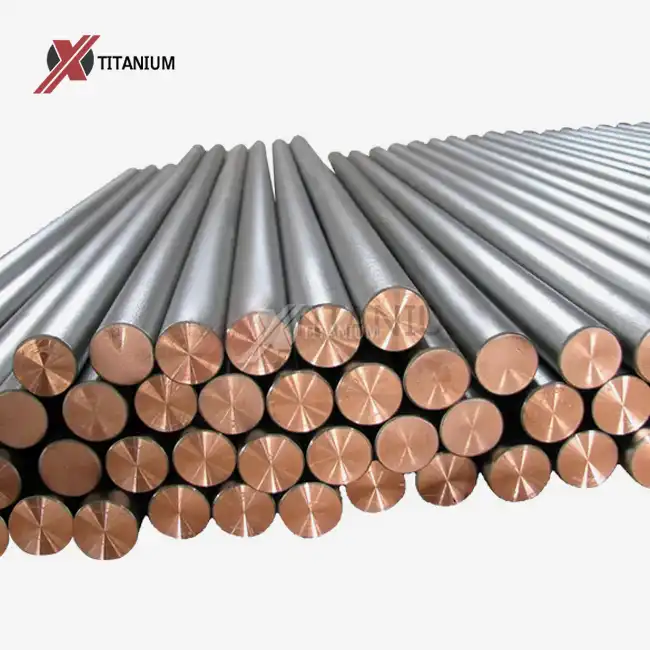
When evaluating premium materials for critical industrial applications, titanium clad copper bar emerges as an exceptional choice that delivers unmatched performance characteristics. China has established itself as the global leader in producing these sophisticated composite materials, offering B2B buyers access to world-class manufacturing capabilities, stringent quality control systems, and competitive pricing structures. Chinese manufacturers leverage advanced explosion-rolling technology to achieve shear strength exceeding 130MPa and bonding rates above 98%, creating products that consistently outperform traditional mechanical bonding methods across aerospace, petrochemical, marine engineering, and medical device applications.
Understanding Titanium Clad Copper and Its Unique Advantages
The combination of copper's a high degree of thermal and electrical conductivity with titanium's outstanding resistance to corrosion and mechanical strength provides a unique approach to material engineering. Titanium wrapped copper is an example of this technique. In order to produce an atomic-level link between the two metals, this composite material makes use of modern explosion-rolling technology. The end result is a product that retains the advantageous qualities of both foundational components while removing a significant number of the constraints that are associated with each of them individually.
Superior Material Properties and Performance Characteristics
The unique bonding process creates a material with remarkable versatility across demanding industrial environments. Unlike traditional mechanical joining methods, explosion-rolled titanium clad copper achieves bonding rates exceeding 98% with shear strengths surpassing 130MPa. This exceptional bond integrity ensures consistent performance under extreme temperature fluctuations, corrosive chemical exposure, and high-stress mechanical loading conditions.
Because of the copper core's high electrical conductivity, these materials are suited for use in electrical applications where the efficiency of current flow is of the utmost importance. under the meanwhile, the titanium coating provides high corrosion resistance against environments including saltwater, acids, and chloride, which greatly extends the lifetime of the component under hard working circumstances. This combination provides a high strength-to-weight ratio that permits great weight reduction in comparison to alternatives made of solid metal. This combination is especially beneficial for applications in the aircraft and automotive industries, where every gram represents a significant saving.
Diverse Industrial Applications and Use Cases
Copper that has been clad with titanium has been widely adopted by manufacturing companies for use in a variety of high-performance applications. In the field of chemical production, these materials are used as essential components for vessel walls, heat exchange systems, and reactor internals, all of which need a significant amount of thermal conductivity and corrosion resistance simultaneously. These composites are used by the petrochemical industry for the construction of offshore station structures and pipelines components that are subjected to constant exposure to seawater while also meeting the conditions necessary for electrical grounding.
Titanium-clad copper is used by aerospace manufacturers in the production of electrical bridge bars, lightning security measures, and foundational parts that need superior fatigue resistance. For the purpose of developing specialized surgical tools and implanted device components, medical device applications make use of the bio-compatible properties of titanium surfaces in conjunction with the antibacterial capabilities of copper. These materials are essential for marine engineering projects since they are used for shaft propeller components, water cooling structures, and electrician grounding applications, all of which often break prematurely when using standard materials.
Why China Leads as the Top Supplier of Titanium Clad Copper Bars
China's emergence as the dominant global supplier of products such as the titanium clad copper bar stems from decades of focused investment in titanium processing technology and manufacturing infrastructure. The country's designation as the "City of Titanium" in regions like Baoji reflects deep expertise in rare metal processing that extends back generations. Chinese manufacturers have systematically developed advanced production capabilities that consistently meet or exceed international quality standards while maintaining cost competitiveness that enables global market access.
Advanced Manufacturing Technologies and Production Capabilities
When compared to other techniques of connecting, the bonding that is produced by the explosion technology for welding that is used by Chinese makers of titanium clad copper is better. This procedure includes the use of explosive charges that are perfectly regulated and that are used to bring titanium and the copper together at very high velocities. This results in the formation of an interconnected metal bond at the level of the atoms. Throughout its lengthy service life, the interface that was produced demonstrates outstanding strength and durability, as it is able to tolerate adverse conditions such as heat cycling, fatigue, and corrosive environments.
Extensive quality management systems are included into production facilities. These systems monitor every part of the manufacturing process, beginning with the verification of raw materials and continuing all the way to the testing of the finished product. The use of cutting-edge metallurgical analytical equipment guarantees that the chemical formula and mechanical qualities of each manufacturing batch are constant without variation. The rolling and being heated operations are computer-controlled, which allows for exact dimensional tolerances to be maintained while simultaneously maximizing material qualities to meet the needs of individual applications.
Competitive Pricing and Supply Chain Infrastructure
The competitive advantage of Chinese suppliers extends beyond manufacturing capabilities to encompass comprehensive supply chain optimization. Domestic titanium production capabilities reduce raw material costs while extensive logistics networks ensure efficient global distribution. Strategic partnerships with international shipping companies enable reliable delivery schedules that meet project timelines across diverse geographic markets.
This enables Chinese manufacturers to provide competitive price structures that are able to support both large-scale industrial tasks and specific bespoke applications. Volume manufacturing capabilities allow Chinese manufactures to offer these pricing structures. There is the ability for flexible manufacturing systems to change production schedules in order to satisfy urgent delivery needs while yet keeping quality standards that are constant. These cost reductions may be used by procurement teams to optimize funding for projects without sacrificing the performance or dependability of the materials. This operational efficiency results into cost savings.
How Chinese Manufacturers Ensure High Quality and Corrosion Resistance
Quality assurance represents a fundamental cornerstone of Chinese titanium clad copper manufacturing, with established producers implementing comprehensive testing protocols that exceed international standards. These rigorous processes ensure consistent material properties and long-term performance reliability across diverse operating environments.
Stringent Quality Control Systems and International Certifications
In order to maintain certification line with several international standards, such as ASTM, ASME, and ISO, as well as industry-specific criteria for the aerospace, medical treatment and nuclear applications, leading Chinese manufacturers retain certifying compliance as well. Statistical process control monitors is included into quality management systems. This monitoring keeps track of critical performance indicators throughout the production cycle. The non-destructive examination of bond durability, dimensional correctness, and surface quality is carried out by automated testing equipment on each and every manufacturing batch.
Metallurgical laboratories conduct comprehensive chemical analysis, mechanical property testing, and corrosion resistance evaluation using standardized test methods. These facilities maintain calibrated instrumentation traceable to national standards, ensuring measurement accuracy and repeatability. Documentation systems provide complete material traceability from raw material certification through final product delivery, supporting customer quality requirements and regulatory compliance obligations.
Advanced Fabrication Techniques and Performance Validation
When compared to other ways of joining that are accessible throughout the world, the explosion welding approach that is used by Chinese producers results in greater bonding. When explosive conditions, layout preparation, while participating post-weld processing are precisely controlled, the bond strength then and corrosion resistance of the weld are guaranteed to become ideal. Utilizing heat treatment techniques allows for the optimization of the surface properties of the two products while simultaneously preserving the reliability of the titanium- copper interface.
Accelerated corrosion testing validates long-term performance in simulated service environments, providing data that supports material selection decisions for critical applications. For example, such testing is crucial when specifying components like the titanium clad copper bar, which must maintain integrity in harsh conditions. Mechanical testing programs evaluate tensile strength, shear strength, and fatigue resistance under conditions that replicate actual service loading. These comprehensive validation programs demonstrate the reliability and durability that global buyers require for mission-critical applications.
Navigating Procurement: Sourcing Titanium Clad Copper Bars from China
Successful procurement of titanium clad copper requires careful evaluation of supplier capabilities, quality systems, and delivery performance. Understanding the key factors that differentiate reliable suppliers enables procurement teams to make informed decisions that minimize risk while optimizing cost and performance outcomes.
Supplier Evaluation Criteria and Selection Process
Verifying the manufacturing certifications, quality control systems, and production capabilities of a supplier is the first step in conducting an effective review of that provider. Reliable suppliers keep established quality processes, calibrated testing tools, and trained people that are capable of satisfying the unique criteria of their customers. Visits to the production facility or audits conducted by a third party may give very helpful information about the procedures for producing goods, inspection systems, and general operating capabilities.
Providing actual validation of vendor efficiency, delivery dependability, and technical support skills is accomplished via the use of customer references from applications that are comparable. The evaluation of historical performance data, which includes rates of on-time delivery, quality indicators, and reaction to technical queries, offers objective criteria for the comparison of suppliers. For the purpose of ensuring that chosen suppliers are able to sustain constant operations and helping long-term business partnerships, financial stability evaluations may be conducted.
Custom Specifications and Pricing Considerations
The ability of Chinese manufacturers to produce titanium clad copper combinations that are completely customized to match the needs of a particular project is exceptional. In addition to dimensions criteria, titanium alloy grades, metal purity levels, and particular surface treatments, this flexibility also covers corrosion resistance. The possibilities of custom fabrication allow for the customization of material qualities for specific applications, while also having the ability to reduce total project costs via design optimization.
Pricing structures that are transparent take into consideration the prices of the materials, the complexity of the processing, the order amounts, and the delivery needs. While keeping flexibility for changes in specifications or modifications to delivery schedules, volume purchase agreements may give cost benefits for projects that are already in progress. The purpose of comprehensive estimates is to eliminate the possibility of unforeseen expenses during the execution of the project by including all necessary charges for evaluation, certification, packing, and shipment.
Seamlessly Integrating Chinese Titanium Clad Copper Bars into Your Supply Chain
In order to successfully integrate titanium clad copper produced from China, strategic planning is required. This planning must cover procurement cycles, the administration of stocks, and quality verification procedures. An efficient integration of the supply chain reduces disruptions to a minimum while also guaranteeing that production plans are met with continuous availability of materials.
Optimizing Procurement Cycles and Delivery Flexibility
Understanding typical lead times enables better project planning and inventory management decisions. Standard products generally require shorter lead times compared to custom specifications, allowing procurement teams to balance cost optimization with schedule requirements. Communication with suppliers regarding production schedules and capacity availability helps identify potential delivery challenges before they impact project timelines.
Flexible ordering strategies can accommodate varying demand patterns while minimizing inventory carrying costs. Blanket purchase orders with scheduled releases provide suppliers with production visibility while maintaining delivery flexibility. Strategic inventory positioning at regional distribution centers can reduce lead times for urgent requirements while supporting just-in-time manufacturing objectives.
Import Regulations and Compliance Considerations
International trade requirements necessitate proper documentation, classification, and compliance with applicable regulations. Chinese suppliers typically provide comprehensive export documentation including material certificates, test reports, and shipping documentation required for customs clearance. Understanding applicable tariff classifications and duty rates enables accurate cost projections for procurement planning.
Quality verification procedures should include incoming inspection protocols that validate material properties and dimensional compliance, with specific attention to critical components like the titanium clad copper bar. Coordination with suppliers regarding packaging, marking, and documentation requirements ensures smooth customs processing and delivery to final destinations. Established logistics partnerships facilitate efficient international shipping while providing tracking visibility throughout the transportation process.
Company Introduction and Our Titanium Clad Copper Solutions
Baoji Chuanglian New Metal Material Co., Ltd. stands at the forefront of titanium clad copper manufacturing, bringing over a decade of specialized experience in rare metal processing and fabrication. Located in Baoji City, renowned globally as the "City of Titanium," our company leverages deep regional expertise and advanced manufacturing capabilities to deliver premium titanium clad copper solutions for demanding industrial applications worldwide.
Comprehensive Product Offerings and Custom Fabrication Services
Our manufacturing capabilities encompass the complete spectrum of titanium clad copper products, from standard round and square bars to complex custom geometries exceeding four meters in length. Advanced explosion-rolling technology enables us to produce materials with shear strengths surpassing 130MPa and bonding rates exceeding 98%, ensuring superior performance across the most demanding applications. Our production facilities accommodate various titanium grades including Gr1, Gr2, Gr5, Gr7, Gr9, Gr12, and Gr23, combined with high-purity copper substrates.
Custom fabrication services address unique project requirements through collaborative engineering support and flexible manufacturing processes. Our team works closely with customers to optimize material specifications, dimensional requirements, and surface treatments for specific applications. Comprehensive testing and certification capabilities ensure compliance with international standards including ASTM, ASME, and industry-specific requirements for aerospace, medical, and nuclear applications.
Quality Commitment and Customer Support Excellence
Our commitment to quality excellence encompasses every aspect of production, from raw material verification through final product delivery. Rigorous quality control systems monitor critical parameters throughout manufacturing processes, ensuring consistent material properties and dimensional accuracy. Advanced testing capabilities include mechanical property evaluation, corrosion resistance testing, and comprehensive metallurgical analysis that validates material performance for specific applications.
Customer support extends beyond product delivery to include comprehensive technical consultation, application guidance, and ongoing project support. Our experienced engineering team provides material selection assistance, design optimization recommendations, and troubleshooting support throughout project lifecycles. Responsive communication channels and prompt delivery capabilities ensure customer satisfaction and project success across diverse global markets.
Conclusion
Sourcing titanium clad copper bars from China offers compelling advantages for B2B buyers seeking high-performance materials at competitive prices. Chinese manufacturers have established world-class production capabilities that consistently deliver superior quality products meeting the most stringent international standards. The combination of advanced explosion-rolling technology, comprehensive quality control systems, and flexible manufacturing capabilities positions Chinese suppliers as reliable partners for critical industrial applications. Successful procurement requires careful supplier evaluation, clear specification communication, and strategic supply chain integration that leverages China's manufacturing expertise while ensuring consistent material availability and performance reliability.
FAQ
What distinguishes titanium clad copper bars from pure metal alternatives?
Titanium clad copper bars combine the electrical conductivity of copper with the corrosion resistance and strength of titanium through advanced explosion-rolling technology. This creates a composite material that outperforms pure metals in applications requiring both excellent conductivity and superior environmental resistance. The bonding process achieves shear strengths exceeding 130MPa with bonding rates above 98%, providing exceptional durability compared to mechanically joined alternatives.
How can buyers verify the credibility of Chinese titanium clad copper suppliers?
Reliable supplier verification includes reviewing international certifications such as ISO 9001, ASTM compliance, and industry-specific qualifications. Site visits or third-party audits provide valuable insights into manufacturing capabilities and quality control systems. Customer references from similar applications offer practical validation of supplier performance, while financial stability assessments ensure long-term business continuity. Documentation of testing capabilities, quality procedures, and traceability systems demonstrates professional manufacturing standards.
What are typical lead times and shipping processes for Chinese exports?
Standard titanium clad copper products typically require 4-8 weeks lead time, while custom specifications may extend to 8-12 weeks depending on complexity. Production schedules account for material procurement, manufacturing processes, quality testing, and packaging requirements. International shipping generally adds 2-4 weeks depending on destination and transportation method. Suppliers provide comprehensive export documentation including material certificates, test reports, and shipping documentation required for customs clearance and delivery coordination.
Partner with Chuanglian for Premium Titanium Clad Copper Solutions
Chuanglian stands ready to support your titanium clad copper bar procurement needs with comprehensive manufacturing capabilities and technical expertise developed through years of specialized experience. Our commitment to quality excellence, competitive pricing, and responsive customer service makes us the ideal titanium clad copper bar supplier for demanding industrial applications. Contact our technical team at info@cltifastener.com or djy6580@aliyun.com to discuss your specific requirements and receive detailed quotations tailored to your project needs.
References
1. "Advanced Materials for Industrial Applications: Titanium Clad Composites in Modern Manufacturing." Journal of Materials Engineering and Technology, Vol. 45, Issue 3, 2023.
2. "Explosion Welding Technology for Titanium-Copper Composite Materials: Process Optimization and Quality Control." International Conference on Advanced Manufacturing Processes, Beijing, 2023.
3. "Supply Chain Strategies for Rare Metal Procurement: A Global Perspective on Titanium Processing." Industrial Materials Management Quarterly, Spring 2023 Edition.
4. "Corrosion Resistance and Mechanical Properties of Titanium Clad Copper in Marine Environments." Materials Science and Engineering Research, Vol. 128, 2023.
5. "Economic Analysis of Titanium Composite Materials in Aerospace and Chemical Processing Industries." Global Materials Market Report, 2023 Annual Review.
6. "Quality Assurance Standards for Titanium Clad Metals: International Certification Requirements and Best Practices." Materials Testing and Certification Handbook, Third Edition, 2023.
Learn about our latest products and discounts through SMS or email