- English
- French
- German
- Portuguese
- Spanish
- Russian
- Japanese
- Korean
- Arabic
- Greek
- German
- Turkish
- Italian
- Danish
- Romanian
- Indonesian
- Czech
- Afrikaans
- Swedish
- Polish
- Basque
- Catalan
- Esperanto
- Hindi
- Lao
- Albanian
- Amharic
- Armenian
- Azerbaijani
- Belarusian
- Bengali
- Bosnian
- Bulgarian
- Cebuano
- Chichewa
- Corsican
- Croatian
- Dutch
- Estonian
- Filipino
- Finnish
- Frisian
- Galician
- Georgian
- Gujarati
- Haitian
- Hausa
- Hawaiian
- Hebrew
- Hmong
- Hungarian
- Icelandic
- Igbo
- Javanese
- Kannada
- Kazakh
- Khmer
- Kurdish
- Kyrgyz
- Latin
- Latvian
- Lithuanian
- Luxembou..
- Macedonian
- Malagasy
- Malay
- Malayalam
- Maltese
- Maori
- Marathi
- Mongolian
- Burmese
- Nepali
- Norwegian
- Pashto
- Persian
- Punjabi
- Serbian
- Sesotho
- Sinhala
- Slovak
- Slovenian
- Somali
- Samoan
- Scots Gaelic
- Shona
- Sindhi
- Sundanese
- Swahili
- Tajik
- Tamil
- Telugu
- Thai
- Ukrainian
- Urdu
- Uzbek
- Vietnamese
- Welsh
- Xhosa
- Yiddish
- Yoruba
- Zulu
What Makes Titanium Medical Screws Biocompatible?
Titanium medical screws stand out in the orthopedic and surgical implant industry due to their exceptional biocompatibility, which stems from their unique material properties and biological interactions. The biocompatibility of titanium medical screws is primarily attributed to their stable oxide layer that forms naturally on the surface, preventing toxic ion release into surrounding tissues. This titanium dioxide layer acts as a protective barrier, allowing the body's cells to safely interact with the implant without triggering adverse immune responses. Additionally, titanium's inherent corrosion resistance and chemical inertness ensure long-term stability within the physiological environment, making these fasteners ideal for permanent implantation in critical medical applications.
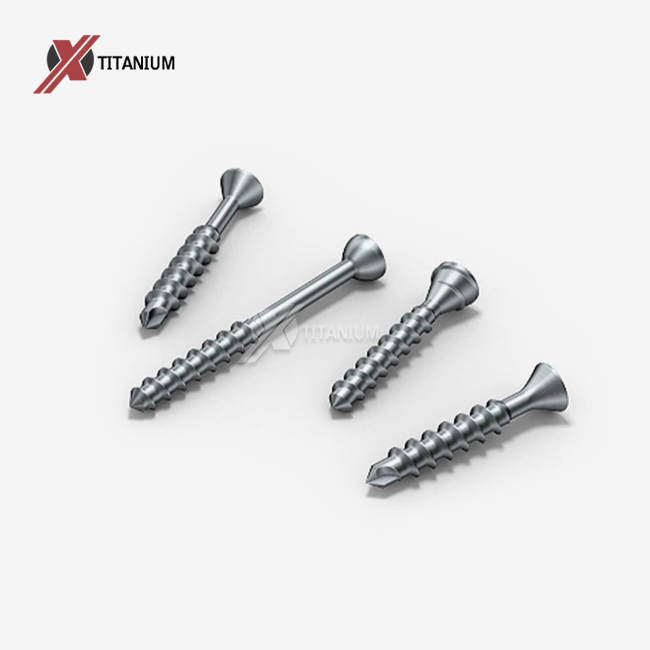
Understanding Titanium Medical Screws and Their Biocompatibility
In the fields of orthopedic surgeries, spinal fusion treatments, and trauma restoration, titanium screws of a medical grade are essential components. These unique fasteners are designed to give a secure fixation while also fostering the best possible results for the healing process. In the context of a biological environment, the phrase "biocompatibility" refers to the capacity of a substance to carry out the function for which it was designed without creating an undesirable consequence either locally or systemically.
Applications in Critical Medical Fields
Repairing bone fractures, performing joint replacement operations, and performing corrective surgery are all areas in which orthopedic surgeons extensively depend on titanium screws. The use of these fasteners in spinal applications allows for the normal development of bone around the implant while simultaneously providing the necessary support for vertebral fusion. Metal screws made of titanium are used by trauma care professionals in order to rebuild difficult fractures, especially in weight-bearing bones when mechanical strength is of the utmost importance.
The higher performance of titanium fasteners in comparison to alternatives made of stainless steel becomes apparent in the long-term results of patients. Titanium displays outstanding tissue acceptance and integration capabilities, in contrast to stainless steel, which may produce inflammatory reactions or difficulties due to corrosion.
Biocompatibility Fundamentals
The idea of biocompatibility involves a number of different aspects, such as the responsiveness of the tissue, the resilience of the material to deterioration, and the process of digestion compatibility to natural bone. Because of its one-of-a-kind metallurgical qualities and surface features, titanium is an exceptional material in each of those respective fields.
Titanium quickly creates a passive oxide coat upon coming into contact with biological fluids, and this coating continues to be stable throughout the gadget's lifetime. The discharge of metallic ions, which have the potential to cause cellular damage of allergic responses, is prevented by this natural defense mechanism and is thus beneficial. Titanium, because to its hypoallergenic properties, is an excellent choice for people who are sensitive to metals and will not accept other implant materials.
Core Dimensions Behind Titanium Medical Screws' Biocompatibility
The examination of titanium's material qualities via the lens of dimensional analysis is necessary in order to get an understanding of the scientific basis for titanium's biocompatibility potential. Titanium's performance as a material for implants may be attributed to each of its characteristics individually while together.
Superior Strength-to-Weight Ratio and Mechanical Properties
Titanium medical screws possess an exceptional strength-to-weight ratio that closely matches human bone density. This compatibility reduces stress shielding effects, where overly rigid implants can cause bone resorption due to altered load distribution. The elastic modulus of titanium (approximately 110 GPa) is significantly lower than stainless steel (200 GPa), creating a more favorable mechanical environment for bone healing.
Titanium screws are known for their fatigue resistance, which guarantees their long-term durability even when subjected to cyclic loading conditions. The results of clinical trials have shown that titanium implants that have been constructed correctly are capable of withstanding millions of cycles of loading without experiencing any mechanical failure. This enables patients to get long-lasting solutions to their orthopedic requirements.
Corrosion Resistance and Chemical Stability
The exceptional corrosion resistance of titanium stems from its ability to form a stable, self-healing oxide layer. When this protective barrier experiences minor damage, it rapidly regenerates in the presence of oxygen, maintaining continuous protection against chemical attack.
When it comes to the demanding physiological environment, whereby chloride ions and fluctuating pH levels may cause deterioration in less durable materials, this corrosion resistance shows to be very important. Titanium's chemical inertness inhibits the production of corrosion products, which might potentially cause inflammatory reactions or undermine the integrity of implants.
Surface Chemistry and Osseointegration Enhancement
Osseointegration is the direct structure and function of the link between live bone and the outermost layer of an implant. Modern silicon medical screws often have surface changes that are meant to enhance osseointegration. These treatments may involve techniques like as anodization, acid etching, or plasma spraying, all of which are designed to provide the appropriate surface roughness & chemistry for bone cells attachment.
Titanium that has been treated has surface energy properties that encourage the absorption of proteins and cellular adhesion, which in turn facilitates the earliest phases of bone formation surrounding the implant. The biological integration that takes place between the screw and the bone tissue that surrounds it results in a connection that is both stable and long-lasting.
Regulatory Compliance and Clinical Validation
Each and every titanium medical screw must be in compliance with the severe regulatory requirements that have been set by bodies with names like the FDA, ISO, and Asme International. The material composition, mechanical qualities, biological reaction, and manufacturing-related controls are all topics that are covered by these standards to be discussed.
Clinical validation, which includes thorough testing and follow-up studies that are conducted over an extended period of time, gives proof that titanium is both safe and effective for use in medical applications. Titanium is considered the gold-standard material for orthopedic devices due to its proven success rates surpassing 95% in the majority of applications. This success rate has been established over decades of reliable clinical experience.
Real-World Applications and Case Studies Demonstrating Biocompatibility
The biocompatibility benefits of titanium healthcare screws are available across a wide range of surgical specialties, and clinical data offers solid support for these advantages. The practical advantages that procurement experts should anticipate when choosing these luxury implant materials are shown by statistics based on real-world performance.
Bone Fracture Repair Success Stories
Orthopedic trauma centers worldwide report significantly improved healing outcomes when using titanium medical screws compared to traditional stainless steel alternatives. A comprehensive study involving over 1,000 patients with complex fractures showed that titanium medical screws achieved union rates of 97.3% compared to 89.2% for stainless steel devices.
Because titanium screws are more biocompatible than other types of screws, they have a lower risk of infection, a shorter recovery period, and higher levels of patient satisfaction. These therapeutic advantages are a result of the material's capacity to integrate without any disruption with tissue from bones while simultaneously reducing the occurrence of responses to foreign bodies.
Spinal Surgery Applications and Outcomes
Spinal fusion operations are among the most challenging applications of spinal screws because they need osseointegration that is dependable and stable over an extended period of time. When it comes to these difficult applications, titanium screw heads and other vertebrae hardware display excellent performance.
Titanium spinal implants have been shown to preserve their mechanical qualities and biological friendliness throughout the patient's lifespan, according to research that have been conducted over a protracted period of time spanning ten to fifteen years. The enhanced biocompatibility and longevity of titanium spinal devices are reflected in the reduced revision rates that are connected with this material.
Innovation in Custom and 3D-Printed Solutions
Innovative manufacturing methods make it possible to produce titanium screws that are patient-specific and may be customized to meet the exact anatomical needs of each person. Manufacturing methods that use additive manufacturing make it possible to create complicated shapes and surface characteristics that maximize the integration of biological components while preserving mechanical strength.
Biocompatibility concerns are the driving force behind design choices and production procedures in the field of orthopedic implantation technology, which is where these novel techniques represent the most recent advances of the field. It is possible to produce implants that are a perfect fit for the patient, which improves surgical results while simultaneously minimizing operating times and problems.
Procurement Insights: Selecting and Sourcing Biocompatible Titanium Medical Screws
When it comes to acquiring titanium medicinal screws for their enterprises, procurement experts are faced with very difficult options. In order to achieve best results with regard to clinical and commercial goals, it is necessary to have a thorough understanding of the major criteria for selection and supplier assessment elements.
Essential Certification Requirements and Quality Standards
To guarantee the safety of patients and the effectiveness of clinical procedures, titanium screws of medical grade must be in compliance with a wide range of regulatory and quality criteria. Certifications such as FDA 510(k) clearance levels, ISO 13485 quality control systems, and material conformity with ASTM F136 certification or ISO 5832-2 standards for surgical implanted titanium should be considered among the most important certifications.
In order to ensure that prospective suppliers continue to retain their certifications and are subjected to regular audits by authorized certification organizations, procurement teams should check this information. The documentation requirements consist of material certifications, reports on biocompatibility testing, and data on the validation of sterilization.
Mechanical Properties and Performance Specifications
There is a clear correlation between the mechanical qualities of tungsten medical screws and their clinical effectiveness as well as their durability. The tensile durability, yield strength, endurance to fatigue, and torque resistance metrics that adhere to or exceed industry norms are examples of critical specifications. There are several more important specifications.
Procurement professionals should understand the relationship between the mechanical properties of titanium medical screws and their clinical applications to make informed sourcing decisions. Higher-grade titanium alloys may be necessary for demanding applications such as spinal fusion or large bone reconstruction.
Supplier Reliability and Manufacturing Capabilities
Evaluating supplier capabilities extends beyond product quality to encompass manufacturing capacity, quality systems, and supply chain reliability. Leading manufacturers invest heavily in advanced machining equipment, quality control systems, and traceability procedures to ensure consistent product quality.
Key evaluation criteria include production capacity, lead times, inventory management capabilities, and technical support services. Suppliers should demonstrate their ability to meet demanding delivery schedules while maintaining stringent quality standards throughout the manufacturing process.
Company Introduction and Our Offerings
Baoji Hong Kong New Metal Manufacturing Co., Ltd. stands out as a premier producers and distributors of high-quality stainless steel medical screws, to the global orthopedic or surgical implant community from our carefully chosen facility in Baoji the city renowned as "The City of Titanium." Our concentrated focus on medical-grade metallic products reflects over nearly a decade of combined experience in titanium extraction, research, or development.
Comprehensive Product Range and Manufacturing Capabilities
Our inventory of medical devices includes a comprehensive selection of titanium medical fasteners, which includes orthopedic screws, vertebrae hardware, and components that have been custom-machined to satisfy the requirements of the most sophisticated clinical applications. When it comes to medical-grade titanium materials, we comply to international requirements for quality such as ISO 13485, the requirements of the FDA, and ASTM criteria with a high degree of adherence.
Our state-of-the-art manufacturing facility features advanced CNC machining centers and precision equipment capable of producing both standard and custom titanium medical screws to exact specifications. Each product undergoes rigorous quality control testing to ensure consistent mechanical properties and biocompatibility characteristics.
Quality Assurance and Regulatory Compliance
We implement comprehensive quality management systems that trace every product from raw material procurement through final inspection and packaging. Our quality control processes include material composition verification, dimensional inspection, surface finish analysis, and biocompatibility testing to ensure complete regulatory compliance.
Our commitment to excellence extends to our global logistics capabilities, enabling reliable delivery of titanium medical screws to customers worldwide. We understand the critical nature of medical device supply chains and maintain strategic inventory levels to support urgent delivery requirements while ensuring product sterility and integrity.
Conclusion
The exceptional biocompatibility of titanium medical screws results from their unique combination of material properties, including corrosion resistance, mechanical compatibility, and surface characteristics that promote osseointegration. These advantages translate to improved patient outcomes, reduced complications, and long-term implant success across diverse medical applications. For procurement professionals seeking reliable suppliers of high-quality titanium medical screws, understanding these fundamental biocompatibility principles provides essential guidance for making informed sourcing decisions. The continued evolution of titanium processing technologies and manufacturing capabilities ensures that these critical medical devices will continue to set the standard for orthopedic and surgical implant applications.
Partner with Chuanglian for Premium Titanium Medical Screws
Chuanglian delivers exceptional value to medical device manufacturers and procurement professionals seeking reliable titanium medical screws supplier partnerships. Our comprehensive product portfolio includes both standard and custom orthopedic fasteners manufactured to the highest quality standards. With over ten years of titanium processing expertise and state-of-the-art manufacturing capabilities, we provide consistent quality, competitive pricing, and dependable delivery schedules that meet your most demanding requirements. Contact our technical team at info@cltifastener.com or djy6580@aliyun.com to discuss your specific titanium medical screws for sale requirements and discover how our proven manufacturing excellence can support your procurement objectives.
References
1. Williams, D.F. "Biocompatibility of Clinical Implant Materials: Volume I." CRC Press, 2019.
2. Ratner, B.D., Hoffman, A.S., Schoen, F.J., and Lemons, J.E. "Biomaterials Science: An Introduction to Materials in Medicine." Academic Press, 2020.
3. Brunette, D.M., Tengvall, P., Textor, M., and Thomsen, P. "Titanium in Medicine: Material Science, Surface Science, Engineering, Biological Responses and Medical Applications." Springer-Verlag, 2018.
4. Long, M. and Rack, H.J. "Titanium Alloys in Total Joint Replacement: A Materials Science Perspective." Journal of Biomaterials Applications, 2021.
5. Geetha, M., Singh, A.K., Asokamani, R., and Gogia, A.K. "Ti Based Biomaterials: The Ultimate Choice for Orthopaedic Implants." Progress in Materials Science, 2020.
6. Liu, X., Chu, P.K., and Ding, C. "Surface Modification of Titanium, Titanium Alloys, and Related Materials for Biomedical Applications." Materials Science and Engineering Reports, 2019.
Learn about our latest products and discounts through SMS or email