- English
- French
- German
- Portuguese
- Spanish
- Russian
- Japanese
- Korean
- Arabic
- Greek
- German
- Turkish
- Italian
- Danish
- Romanian
- Indonesian
- Czech
- Afrikaans
- Swedish
- Polish
- Basque
- Catalan
- Esperanto
- Hindi
- Lao
- Albanian
- Amharic
- Armenian
- Azerbaijani
- Belarusian
- Bengali
- Bosnian
- Bulgarian
- Cebuano
- Chichewa
- Corsican
- Croatian
- Dutch
- Estonian
- Filipino
- Finnish
- Frisian
- Galician
- Georgian
- Gujarati
- Haitian
- Hausa
- Hawaiian
- Hebrew
- Hmong
- Hungarian
- Icelandic
- Igbo
- Javanese
- Kannada
- Kazakh
- Khmer
- Kurdish
- Kyrgyz
- Latin
- Latvian
- Lithuanian
- Luxembou..
- Macedonian
- Malagasy
- Malay
- Malayalam
- Maltese
- Maori
- Marathi
- Mongolian
- Burmese
- Nepali
- Norwegian
- Pashto
- Persian
- Punjabi
- Serbian
- Sesotho
- Sinhala
- Slovak
- Slovenian
- Somali
- Samoan
- Scots Gaelic
- Shona
- Sindhi
- Sundanese
- Swahili
- Tajik
- Tamil
- Telugu
- Thai
- Ukrainian
- Urdu
- Uzbek
- Vietnamese
- Welsh
- Xhosa
- Yiddish
- Yoruba
- Zulu
The Truth About Bolts: Choosing Between Titanium and Stainless Steel for Your Motorcycle Upgrade
When looking at fastener changes for your motorcycle, the choice between titanium bolt kits for motorcycles and standard stainless steel hardware isn't just a matter of personal taste. In the long run, this choice will have a direct effect on how the weight is distributed, how well the structure holds up, and how much it costs to run. Based on thorough tests and real-world use, titanium, especially Grade 5 Ti-6Al-4V alloy, has clear benefits in certain situations, while stainless steel can still be used in some situations. Procurement managers, engineers, and maintenance experts can make decisions that meet performance goals and price limits if they understand the material science behind these fasteners.
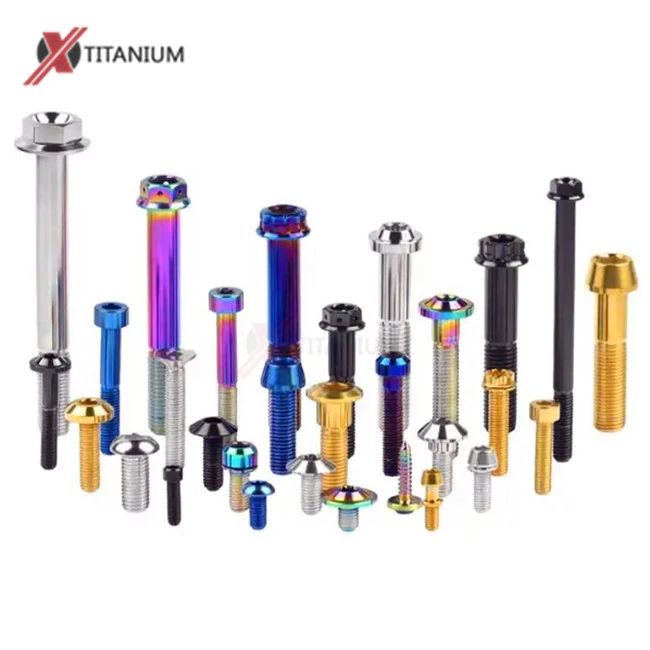
Understanding Titanium and Stainless Steel Bolt Kits for Motorcycles
Material Composition and Fundamental Properties
Titanium screws made from Grade 5 (Ti-6Al-4V) have great mechanical qualities because they are made of an alloy with about 6% aluminum and 4% vanadium. The density of this material is 4.43 g/cm³, which is about 43% less than the density of stainless steel, which is 7.85 g/cm³. The tensile strength is between 950 and 1,050 MPa, which is higher than many steel equivalents. It also has better wear resistance thanks to cold-rolled threading methods that keep the grain structure intact.
Stainless steel nuts, which are usually made from austenitic types like 304 or 316, have a number of benefits. These metals have chromium (16–18%) and nickel (8–10%) in them, which makes them very resistant to corrosion by forming an inactive chromium oxide layer. Their tensile strength is between 500 and 700 MPa, which is enough for most uses. However, their weight makes them unsuitable for systems that need to work well.
Application Scenarios Across Motorcycle Segments
Unsprung weight reduction is important in high-performance race settings. Putting titanium fasteners in the axle pinch bolts, brake calipers, and rotor mounting points directly makes the chassis respond and handle more precisely. MotoGP teams and Superbike competitors have shown that complete weight loss tactics can improve lap times. Replacing fasteners is one way to help optimize overall mass.
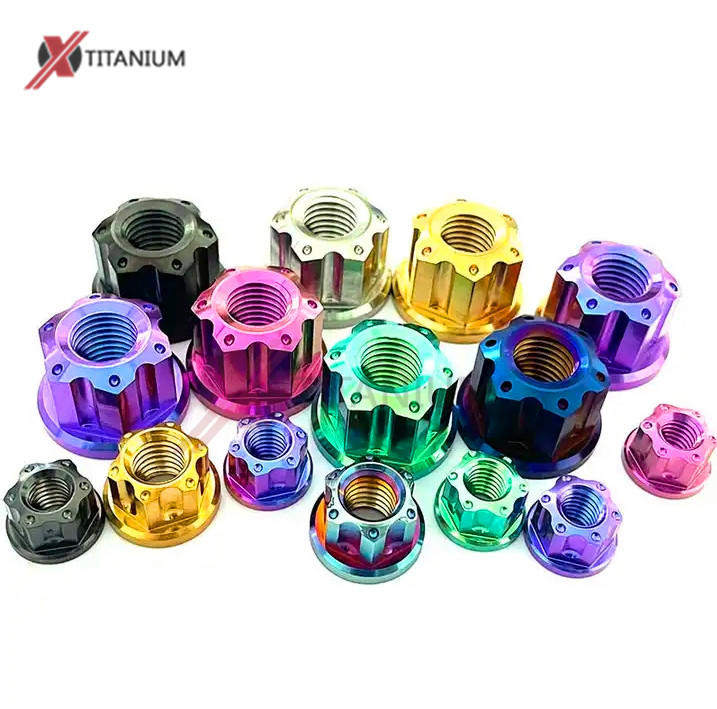
Adventure travel bikes have their own set of problems. Operating conditions are tough because of road salts, coastal humidity, and temperature cycles from exhaust systems. The inactive TiO2 oxide layer on titanium protects better against environmental damage than stainless steel. This is especially true for exhaust manifold studs and engine case bolts, where heat-induced seizure is common with regular fasteners. Custom makers and repair experts are asking for titanium gear with obvious mounting points more and more. Anodization and Physical Vapor Deposition (PVD) coating are two surface processes that give metals long-lasting, physically pleasing finishes in gold, blue, purple, rainbow, and black that don't chip or pit like chrome-plated options do.
Comparative Analysis: Titanium vs Stainless Steel Bolt Kits
Strength and Fatigue Characteristics
The yield strength of grade 5 titanium is around 880 MPa, and its maximum tensile strength is 1,000 MPa. This ratio of strength to weight is higher than that of Grade 8.8 steel and, in some situations, gets close to that of Grade 10.9 steel. Importantly, titanium has better wear resistance when threads are cold-rolled instead of cut. This way of making things squeezes the grain structure, which makes the cyclic loading tolerance about 30% higher than with polished threads. This is an important quality for parts that are stressed over and over again, like bolts for suspension and brake systems.
Bolts made of stainless steel are strong enough for non-critical uses. Grade 8.8 steel bolts have a yield strength of 640 MPa, which is strong enough for fixing fairing panels and accessories. But because they are heavier and don't last as long, they aren't as good for rotating or unsprung mass uses where efficiency is important.
Corrosion Resistance and Environmental Durability
Both materials in titanium bolt kits for motorcycles don't rust, but they do it in different ways. Titanium makes a solid, self-healing layer of titanium dioxide on its own, which protects it very well from chlorides, road salts, and mild acids. Titanium is used a lot in marine and chemical processing because this passive film works well at a lot of different temperatures. Chromium oxide passivation is what makes stainless steel work. This protection works in many places, but it wears off after long-term contact to chloride, especially when mixed with heat cycles. Surface rust can happen on fasteners in exhaust systems or near brake parts, which can cause them to seize up during upkeep. Titanium screws can be taken off even after years of use in these tough places.
Cost-Effectiveness and Lifecycle Value
Titanium screws are three to five times more expensive than stainless steel ones when they are first bought. This price difference is due to the higher cost of raw materials, the need for specialty machining, and the quality control steps that are needed for aerospace-grade parts. Lifecycle study, on the other hand, shows a different economy. Titanium screws don't need to be replaced because they rust. This saves money on upkeep and time lost when hardware stops working or breaks down. When choosing parts for a season-long effort, racing teams compare these savings to the beginning investment. In the same way, fleet managers who work with motorcycles near the coast or in the winter see less frequent maintenance as a big practical benefit.
Weight Reduction Impact on Performance
When compared to steel gear, a full titanium fastener repair kit is 40–45% lighter. This means that the mass of the whole motorbike is reduced by about 500 to 800 grams. Even though it might not seem like much, taking weight from unsprung components like wheels, brakes, and chassis makes the handling much better.
Weight Reduction Impact on Performance
By lowering the amount of mass that isn't being sprung, suspension systems can react more quickly to changes in the road surface, keeping tire contact and grip. Because of this physical principle, performance-driven makers choose titanium fasteners for brake calipers and axle gear even though heavier options might be cheaper.
How to Choose the Right Bolt Kit for Your Motorcycle Upgrade?
When choosing materials, they should be in line with specific working needs, spending limits, and performance goals.
Assessing Operational Demands and Use Case Requirements
The best motorbikes for titanium gear are sport and track bikes. Because it saves weight, doesn't wear out easily, and keeps the torque consistently, it's worth the higher price for uses like brake systems, swingarm pivots, and engine case bolts. Teams that compete in professional racing categories always use titanium screws when the rules allow it.
For adventure and travel uses, corrosion protection and ease of upkeep are very important. Titanium works really well in exhaust systems, even though they have to deal with a lot of heat cycle and moisture. When fixed correctly with anti-seize compounds, the material is resistant to galling, which means it can be used on long trips where fixes may be needed on the side of the road. When building a cruiser or a personalized car, the looks are often just as important as the functionality. Anodized titanium screws have a unique look and actually work better than other fixings. Custom makers who work with wealthy clients often ask for colored titanium parts as a way to set their work apart as more expensive.
Critical Evaluation Criteria for Procurement Decisions
• Material certification and traceability Material approval and being able to track its origin are basic needs. Reliable makers give mill certificates that prove the Grade 5 Ti-6Al-4V composition and mechanical qualities meet ASTM B348 standards. This paperwork makes sure that the materials are real and that the performance is the same from one production batch to the next.
• Thread manufacturing methodology The way threads are made has a big effect on their wear life. When it comes to strength, cold-rolled threads that meet ISO 965 "6g" accuracy standards are better than cut threads. To make parts more reliable, procurement specs should make it clear that rolled threading is needed.
• Surface treatment options Surface treatments can be used for more than just looks. Anodization makes the surface harder and adds color coding to help with fitting. The PVD coating makes the base more resistant to wear without changing its mechanical features. Understanding the unique needs of the product helps you choose the right finish.
Partnering with Qualified Manufacturers
Due to the complicated nature of quality control and the need for specialty machinery, the titanium processing business has high entry hurdles. For buying relationships to work, suppliers need to be able to do more than just offer reasonable prices.
Manufacturing partners for titanium bolt kits for motorcycles should be able to show that they are fully skilled in CNC cutting and have experience working with titanium alloys. The tendency of the material to work harden and tool wear means that it needs special ways to be cut and maintained. This is what sets skilled makers apart from those who don't know much about titanium. Having quality assurance systems that include AS9100, ISO9001, or medical device certifications shows that a company is dedicated to controlling processes and keeping records of them. These models make sure that stability from batch to batch and material traceability are maintained, which are very important in situations where a failed component could have serious safety or financial effects.
Procurement and Supply Chain Insights for Titanium and Stainless Steel Bolt Kits
Titanium and stainless steel bolt kits: how to buy them and how the supply chain works
Supplier Evaluation and Qualification Processes
Finding skilled suppliers requires looking at many aspects of a company. Manufacturing ability tells potential partners if they can handle both small batches of prototypes and large batches of production. Companies that work with OEMs show that they can grow and improve their processes, which leads to solid shipping performance. Transactional suppliers are different from strategic partners because they don't offer technical help. Suppliers who offer help with choosing materials, figuring out power requirements, and application engineering are more valuable than just supplying parts. This knowledge comes in very handy when choosing fasteners for new uses or making current designs better.
Good documentation methods show that the provider is knowledgeable. Full material certificates, dimensional inspection records, and mechanical property test results make sure that the parts supplied meet the requirements. Suppliers with quality management systems that are ISO-certified show that they handle processes in a planned way and are always looking for ways to make them better.
Managing Lead Times and Delivery Logistics
Because of the time it takes to get materials and the special skills needed to machine them, making titanium fasteners usually takes longer than making gear out of regular steel. Standard store items may ship in one to two weeks, but special configurations usually take four to eight weeks from the time the order is placed until it arrives. When you plan your purchases well, you take these deadlines into account, especially when you're working on a project and the supply of parts affects when you can put the parts together. Setting up framework deals with qualified providers can cut down on lead times for repeat orders by letting you pre-position materials and prioritize production schedules.
When buying things from other countries, shipping processes need extra care. Due to their high value compared to their weight, titanium fastener kits can be sent by air freight when needed right away. Total landed costs can be kept as low as possible while project deadlines are met by suppliers who offer flexible shipping choices and consolidated order processing.
Negotiating Terms and Optimizing Total Cost of Ownership
Volume-based price systems encourage purchasing titanium bolt kits for motorcycles in bulk. When people buy full fastener kits instead of individual parts, they usually get better prices because the costs of handling and packaging them are lower. Similarly, making blanket buy orders for expected yearly needs can often lead to lower prices while still ensuring a steady supply. The total cost of doing business internationally is affected by the payment terms and the currency used. Suppliers who offer flexible payment terms and multi-currency invoices make it easier for customers who do business in more than one market to manage their purchases and lower their foreign exchange risk.
Installation Best Practices and Maintenance Tips for Titanium Bolt Kits
When you setup something the right way, you get the most out of its performance and service life while avoiding common failure modes.
Installation Procedures and Critical Torque Considerations
Titanium fasteners need to be installed differently than steel fasteners because of the way the metal is made. Titanium bolts extend more when they are loaded because the material has a lower amount of elasticity (about 110 GPa compared to 200 GPa for steel). Manufacturers usually say to follow OEM torque specs, but workers should make sure that the specs take titanium's unique properties into account.
Using anti-seize chemical is an important part of the building process. Titanium is very prone to galling, which is when cold welding happens between threads while they are being tightened. This doesn't happen with special titanium anti-seize, copper-based chemicals, or molybdenum disulfide paste. Applying it to both the threads and the bolt head contact areas makes sure that the torque-tension relationships are correct and makes removal easier in the future. The right order of tightening is especially important for multi-bolt systems like brake pads and sprocket carriers. Gradual, alternate torque application over a number of stages spreads the load evenly and keeps the part from warping. When adjusted to the manufacturer's specs, high-quality torque wrenches make sure that the bolt preload is correct without the risk of over-tightening.
Routine Maintenance and Inspection Protocols
How often visual inspections are done depends on how the machine is being used. Track bikes that are put under a lot of stress can benefit from being inspected before an event to look for harm or loose parts. Adventure bikes that are used in rough settings should be inspected every three months, with a focus on bolts that are exposed to salt spray, mud, or big changes in temperature. Titanium's resistance to corrosion means that it needs less upkeep than steel options. The TiO2 oxide layer can fix itself, so it doesn't need any extra surface treatments or protective coats after it's been finished. Fasteners keep their shape and look even after a long time of use in tough conditions, which cuts down on the number of replacements needed and the downtime that comes with them.
Addressing Common Installation Challenges
The length of the thread contact has a direct effect on how strong and reliable the joint is. Titanium is stronger than steel, so it requires less engagement. However, a minimum engagement of 1.5 times the bolt width is needed to make sure the load is spread out evenly. Installers should make sure there is enough thread depth before asking for shorter bolt lengths. When OEM paperwork only talks about steel hardware, finding the right torque specs for titanium replacements can mean talking to fastener makers. Reliable providers give advice that is specific to the application by looking at the joint configuration, the material properties, and the situations that the product will be used in.
Conclusion
When deciding between titanium and stainless steel motorcycle screws, you need to carefully think about the needs of the application, the performance goals, and the cost over the product's entire life. Titanium bolt kits for motorcycles have real benefits in reducing weight, resisting fatigue, and not corroding, which make the higher price worth it for uses that need to perform well. Titanium's special qualities work best in racing settings, harsh working conditions, and situations where reducing unsprung mass is important. Stainless steel is still good for non-critical uses where starting costs are more important than weight and extreme longevity. For material selection to go well, you need to work with skilled makers who can show they have the titanium processing skills, quality systems, and technical support that go beyond just supplying parts.
FAQ
Q1: Do titanium bolts require different torque settings than steel fasteners?
A: For the most part, OEM torque specs still apply to titanium substitutes. But because anti-seize compounds change the friction coefficients, it's important to use measured torque tools and make sure the threads connect cleanly. Because Grade 5 titanium has a different elastic stiffness, nuts stretch a little more when they are loaded, but fasteners that are made correctly are designed to account for this. Talking to the bolt maker before changing important structural fasteners makes sure that the right torque values are used in the right situations.
Q2: Why does Grade 5 titanium dominate motorcycle applications over other titanium grades?
A: Grade 2 economically pure titanium has a tensile strength of only 345 MPa, making it only good for non-structural covering bolts. The tensile strength of Grade 5 Ti-6Al-4V is between 950 and 1,000 MPa, which means it can be used for brake pads, suspension parts, and engine mounts that need to stay strong even when they are loaded and unloaded many times. These alloying elements, which are aluminum and vanadium, make the metal much stronger while keeping its good weight and rust protection.
Q3: Can titanium fasteners cause galvanic corrosion with aluminum components?
A: Titanium is higher on the galvanic line than aluminum, which means it could theoretically rust. Using the right anti-seize products or dielectric grease stops galvanic reactions from happening by isolating thread touch, even when it's wet. Titanium-aluminum joints that are properly placed last a long time and don't rust in marine and aircraft uses that go back decades.
Upgrade Your Motorcycle Performance with Chuanglian Titanium Solutions
Chuanglian is an expert at making titanium bolt kits for motorcycles that are precisely designed to meet the high standards of performance fans and professional teams all over the world. Our plant is in Baoji City, which is known around the world as the "City of Titanium." It has over ten years of experience processing titanium, as well as full CNC machining skills and strict quality control systems that meet ASTM, ISO, and AMS standards. We can make fasteners to your exact specifications out of Grade 5 Ti-6Al-4V metal. The surface can be polished, anodized, or nitrided to get natural titanium, gold, blue, green, purple, black, or rainbow finishes. As a reliable company that sells titanium bolt kits for motorcycles, we offer full material certifications, measurement inspection reports, and technical advice to make sure that our products work perfectly in your unique situations. Get in touch with our engineering team at info@cltifastener.com or djy6580@aliyun.com to talk about your needs and get full product details that are made to fit your buying needs.
References
1. ASM International. (2015). Titanium: A Technical Guide, 2nd Edition. Materials Park, OH: ASM International Handbook Committee.
2. Boyer, R., Welsch, G., & Collings, E.W. (1994). Materials Properties Handbook: Titanium Alloys. Materials Park, OH: ASM International.
3. Donachie, M.J. (2000). Titanium: A Technical Guide for Engineers and Manufacturers. Materials Park, OH: ASM International Technical Books.
4. Lutjering, G., & Williams, J.C. (2007). Titanium, 2nd Edition: Engineering Materials and Processes. Berlin: Springer-Verlag.
5. Peters, M., Kumpfert, J., Bird, C.H., & Leyens, C. (2003). "Titanium Alloys for Aerospace Applications." Advanced Engineering Materials, 5(6), 419-427.
6. Schutz, R.W., & Watkins, H.B. (1998). "Recent Developments in Titanium Alloy Applications in the Energy Industry." Materials Science and Engineering A, 243(1-2), 305-315.
Learn about our latest products and discounts through SMS or email