- English
- French
- German
- Portuguese
- Spanish
- Russian
- Japanese
- Korean
- Arabic
- Greek
- German
- Turkish
- Italian
- Danish
- Romanian
- Indonesian
- Czech
- Afrikaans
- Swedish
- Polish
- Basque
- Catalan
- Esperanto
- Hindi
- Lao
- Albanian
- Amharic
- Armenian
- Azerbaijani
- Belarusian
- Bengali
- Bosnian
- Bulgarian
- Cebuano
- Chichewa
- Corsican
- Croatian
- Dutch
- Estonian
- Filipino
- Finnish
- Frisian
- Galician
- Georgian
- Gujarati
- Haitian
- Hausa
- Hawaiian
- Hebrew
- Hmong
- Hungarian
- Icelandic
- Igbo
- Javanese
- Kannada
- Kazakh
- Khmer
- Kurdish
- Kyrgyz
- Latin
- Latvian
- Lithuanian
- Luxembou..
- Macedonian
- Malagasy
- Malay
- Malayalam
- Maltese
- Maori
- Marathi
- Mongolian
- Burmese
- Nepali
- Norwegian
- Pashto
- Persian
- Punjabi
- Serbian
- Sesotho
- Sinhala
- Slovak
- Slovenian
- Somali
- Samoan
- Scots Gaelic
- Shona
- Sindhi
- Sundanese
- Swahili
- Tajik
- Tamil
- Telugu
- Thai
- Ukrainian
- Urdu
- Uzbek
- Vietnamese
- Welsh
- Xhosa
- Yiddish
- Yoruba
- Zulu
Titanium Alloy Caliper Pistons: Installation Guide and Use Cases
There are three steps in the Installation Guide and Use Cases for Titanium Alloy Caliper Pistons. It's important that the piston fits perfectly in the caliper's bore and seal. It should also be used when the price is worth it because of its weight, resistance to corrosion, and ability to cool things down. Gr5 (Ti-6Al-4V) titanium alloy caliper pistons are about 44% lighter than steel and don't heat the brake fluid as much as aluminum pistons do. In this guide, I show engineers and buying teams how to choose, set up, use in real life, make, and buy things. This way, they can make smart choices. I also talk about times when titanium isn't the best material.
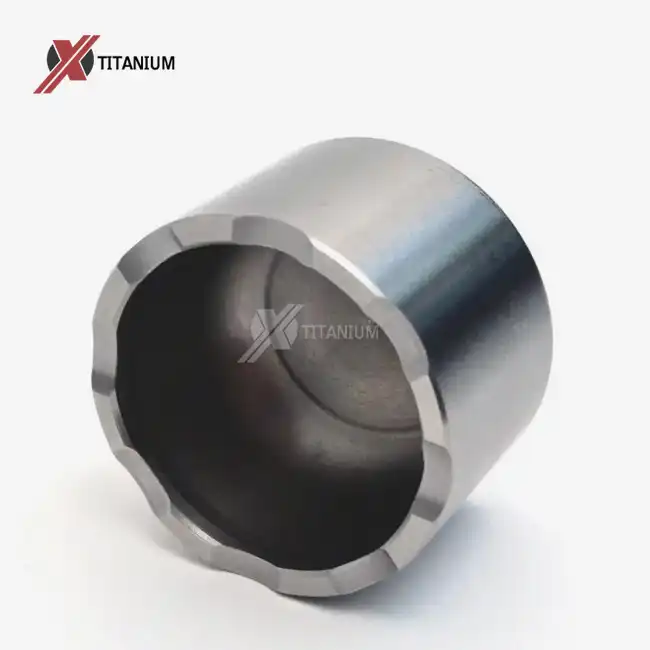
Why Titanium Alloy Caliper Pistons Matter in Brake Design?
What Are Titanium Alloy Caliper Pistons?
Titanium alloy caliper pistons are the round, sliding parts inside the caliper bore. When you step on the pedal or lever, the brake fluid pressure pushes the piston against the brake pad. The pad then holds the rotor in place. The seal around the piston pulls it back a little when you let go of it. The titanium alloy Gr5 (Ti-6Al-4V) is what we use to make these parts here at Chuanglian. Some jobs that are prone to corrosion can be done with commercially pure grades, but Gr5 is better for jobs that are under a lot of stress. Because of this, I always see the piston as a part of something bigger than itself. It works with the fluid, seal, pad, and bore.
Why Use Titanium in a Caliper?
Three things determine most orders. Steel is about 7.85 g/cm³ dense, while Ti-6Al-4V is about 4.43 g/cm³ dense. In other words, a titanium piston weighs 44% less than a steel piston. Second, Ti-6Al-4V doesn't conduct heat very well—only 6.7 W/m·K, a lot less than aluminum alloys. It means that the pad heat moves toward the fluid less. FMVSS 116 says that DOT 4 fluid must have a dry boiling point of at least 230°C and a wet boiling point of at least 155°C. That's important to know. The boiling point drops over time as water adds to it. Third, titanium forms a stable oxide film that doesn't react with water, salt, or many other chemicals. It costs more than steel, so the benefits must be good enough for you.
Titanium vs. Aluminum, Steel, and Stainless Steel
Aluminum pistons are about 2.7 g/cm³ lighter than titanium pistons, but their surface needs to be kept from wearing down because they let heat move through them easily. Chromed steel is strong and well-known, but it is heavier, and if it gets damaged, the plating can get pits in it. Even though it costs less and doesn't rust, stainless steel is heavier and heat moves through it faster. Titanium is in the middle because it doesn't rust, has a low mass, and doesn't carry heat well. It doesn't always get better than the others. If having a low unit price and already being approved are important to your brake program, stainless steel could be a better choice. I think you should look at the weight, heat, corrosion, cost, and service life in the real world.
How to Choose the Right Titanium Caliper Piston?
Confirm Grade and Dimensions
Draw the first thing for titanium alloy caliper pistons. Look at the outside diameter, height, internal cavity, chamfers, and radii of the piston and compare them to the bore of your caliper. This part is usually grade Gr5 (Ti-6Al-4V). ASTM B348 says that Grade 5 bar needs to have a tensile strength of at least 895 MPa. For hydraulic loads, this is a good place to start. We made sure that the wall thickness of your caliper was just the right amount of thick and light. You can change the piston's diameter to suit your needs. A 2D drawing or 3D model helps us make better quotes and find the right part faster, but a worn sample is still fine.
Surface Treatments and Colors
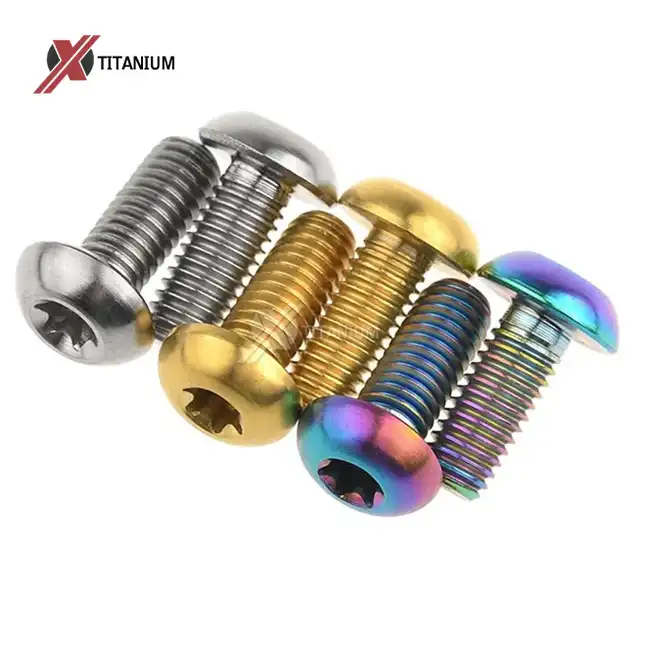
What makes a piston slide smoothly or get stuck is the surface that touches the seal. We are able to polish, anodize, and nitride your things. If you polish the surface, the seal will be able to stick to it. Anodizing adds a thin oxide layer to the metal, which protects it from rust and gives it a color, like Ti natural, gold, blue, green, purple, black, or rainbow. When you nitrate titanium, the surface gets harder. This helps protect it from wear and galling, which can happen if you leave it bare. Colors also help brands keep caliper lines separate and styles aligned. We need to know how rough and forgiving you want the surface to be before we choose a process.
Thermal Expansion and Clearance
Clearance changes when it gets hot. For Ti-6Al-4V to expand, it takes about 8.6 µm/m·K. For aluminum, it takes 23 µm/m·K, and for steel, it takes 12 µm/m·K. An aluminum caliper body's bore grows faster than a titanium piston's when the temperature rises. There is more room between them now. Too much or too little space can cause the brakes to stick and leak fluid. Too much space can also cause the pads to wear unevenly. No matter how hot it gets, our Gr5 pistons can still work. But the brake fluid, seals, and caliper material set the real system limit. This way, we can check the fit together. Let us know what your caliper is made of and what its highest temperature is.
Titanium Alloy Caliper Piston Installation Guide
Preparation and Inspection
Before you do anything, make sure that the piston fits the caliper's model and bore. Clean up the work area because dust or metal chips can score a bore or cut a seal. When you take out the old piston, seal, and dust boot, don't press against the wall of the bore. Search the bore for damage like wear, corrosion, and scratches. Also, check the seal groove for any damage. There should be burrs, sharp edges, or flakes on the surface that hits the seal if you put the drawing next to the new piston. Use the seal and brake fluid kit that came with the caliper. Check to see if anything is wrong before putting it all together.
Fitting the Seal and Piston
Make sure the new seal stays flat and doesn't twist after you put it in the groove. To get the seal and piston wet, use new brake fluid or an approved assembly lubricant. Avoid using oil-based grease on rubber seals because it can make them swell. In the hole, put the piston straight down and push it in with your hand. Do not use a hammer or any other tool that could hurt the surface to hit it. Titanium does not rust, but if you scratch a surface that seals, it can still leak. After that, put on the dust boot and any rings that hold it in place. Do not push the piston if it does not want to move. Instead, take it out and check the alignment again.
Bleeding, Testing, and Bedding-In
After putting everything back together with titanium alloy caliper pistons, add the right fluid and let all the air out of the system. After pressing the pedal or lever a few times, check the area around the piston and boot for leaks. Make sure that it's easy to remove the pads and that the wheel can spin freely. Then, follow the directions from the manufacturer to bed in the pads. Usually, this means doing a series of light stops before you do any heavy work. In your service notes, write down what the bleed, piston changes, and leak checks showed. These checks should be added to the normal tests that are done on OEM assembly lines. A short road or dyno test is done on the brake before it is used to make sure the pedal feels good.
Common Installation Problems and How to Avoid Them
Most problems are caused by a few things: not enough space between the parts, broken seals, using the wrong lubricant, dirt, or rough seal surfaces. If there is too much clearance, the pads will leak and bind, and if there is too little clearance, they will release slowly. Titanium should not touch wet or salty aluminum or steel. This could cause galvanic effects. Tin doesn't change, but the less valuable metal might rust faster. To avoid these problems, check the sizes before shipping, clean everything, and use the right seals. When a customer tells me something is sticking, the first thing I do is check the surface finish and clearance. That's where sealing problems show up first.
Titanium Alloy Caliper Piston Use Cases
Motorsport and Track Use
Race brakes that get checked out a lot and get hot do well with titanium. Once the fluid is stopped hard over and over, it is less likely that vapor will form because the flow of heat into the fluid is slowed down. When the piston mass is low, the caliper assembly is also lighter. Teams need to make their own diameters and heights for many caliper designs. Small groups of these parts can be made with CNC machining. Keep in mind that titanium can help keep the heat down, but it can't replace good pads, cooling vents, and new fluid. People who use brake fluid on tracks should flush it often because water lowers the boiling point of all brake fluid.
Performance Road Vehicles and Motorcycles
Parts that are light and look good are liked by motorcycles, high-end street builds, and aftermarket brake kits. Even if the pistons are stored wet or exposed to winter road salt, titanium won't rust. Anodized colors also let brands match the style of the calipers. When it comes to motorcycles, lighter pistons make the caliper lighter, which riders may notice at the lever, but the whole system shapes the result. Gas and electric cars should each have their own check. The friction brakes don't have to work as often when regenerative braking is in place. This means that parts can stay still and get wet for longer. That's why it's so important that it doesn't rust there.
Marine, Aerospace, and Industrial Applications
People use brake systems in boats, cars, and planes, and we list titanium alloy caliper pistons in our product data. The clear marine case is for saltwater, and the piston surface is protected by the fact that titanium doesn't rust. Material certificates and batch records are often asked for by people who buy aerospace brake parts because they need to be light and easy to keep track of. People who work in fields like making energy equipment and processing chemicals may use the same type of piston for hydraulic parts that need to be resistant to corrosive media. So, I think you should send your specification early because each sector has its own rules for validation and paperwork. Then we check to see if it's possible before we start sampling.
Manufacturing, Quality Control, and Buying Custom Pistons
How We Manufacture Titanium Alloy Caliper Pistons
It is in Baoji, which is known as the "City of Titanium." For more than ten years, we have been researching and making titanium. Twelve CNC machines in our plant help us turn, bore, and groove the piston. A Gr5 titanium rod is the first thing we use. When cutting titanium, it's important to be careful with the settings because the cutting edge gets hot and tools wear out quickly. Once the part has been machined, it is cleaned up and given the chosen surface treatment. This could be anodizing, polishing, or nitriding. We check every step, from the raw materials to the finished item.
Quality Checks Buyers Should Request
If someone wants to buy a brake piston, they should ask for proof. A certificate of ASTM B348 Grade 5 material, reports on the outer diameter and roundness, readings on the surface roughness of the seal-contact area, and a visual inspection of the edges and finished surfaces are some of the things that are usually asked for. A lot of brake programs also need to be able to track batches and get samples of the first item. We make sure that everything is good, from the raw materials to the finished item. We can talk about your inspection list and the format of your report before anything is made. These numbers should be on the drawing because they come from the way the seal is made.
Buying Custom Pistons and Judging the Cost
A clean inquiry speeds up the process. Send a drawing or 3D model along with the exact number, tolerances, color, seal information, surface treatment, and date of delivery. Then, use your caliper to check the samples for fit, leak, and function before approving the bulk order. Not only the price per unit, but also the total cost. How much time you spend on machining, finishing, inspecting, packing, and shipping is important, as is how much money you save on repairs and replacements. When weight, corrosion, heat, or brand positioning are important, titanium is a good choice. Price-driven programs that do a lot of work may do better with aluminum or stainless steel. You might not want to give too many details if you begin with a short technical review.
Conclusion
Due to their low density, low thermal conductivity, and high corrosion resistance, titanium alloy caliper pistons made from Gr5 (Ti-6Al-4V) are perfect for use in motorsport, high-end motorcycle and road brakes, marine, and aerospace systems. They're better than aluminum or stainless steel for a number of different reasons. Which one to use depends on how much it costs, how much is needed, and how it will be used. It is important to make sure that the grade, size, surface finish, thermal expansion, and seals are all right for the caliper. To put something in place, you need clean parts, a seal that fits right, a square hole to go into, a lot of bleeding, and to check for leaks. Each batch is not the same because of different steps in the manufacturing process, like CNC machining, surface treatment, and inspection. It is important for buyers to weigh the real benefits against the total cost.
FAQ
Q1: Are titanium alloy caliper pistons better than stainless steel ones?
A: Not all the time. A lot of the time, titanium costs more than stainless steel. Titanium is less dense and lighter than steel. Choose based on your budget, the temperature where it will be used, the weight you want it to be, and how likely it is to rust.
Q2: Can I install a titanium piston directly in my existing caliper?
A: After you check the brake fluid, caliper material, diameter, and height, as well as the seal groove and groove and material. Once you send us your drawing or sample, we'll make sure it fits.
Q3: Which finishes and colors do you offer?
A: We are able to polish, anodize, and nitride your things. Ti comes in plain black, blue, green, purple, gold, and rainbow colors.
Q4: What should I send to request a quote?
A: Please send a drawing or 3D model of what you want along with the quantity, grade, tolerances, surface treatment, testing needs, and delivery date. We then check to see if it's possible and give you sampling options if it is.
Contact Chuanglian for Custom Titanium Alloy Caliper Pistons
Chuanglian has been working with titanium for over ten years and has CNC machines in Baoji, which is known as the "City of Titanium." If you need a company to make titanium alloy caliper pistons for custom Gr5 parts, email info@cltifastener.com or djy6580@aliyun.com with your drawing, quantity, and finish requirements. The people on our team will look into it and get back to you with a price for packs or samples.
References
1. ASTM International, Standard Specification for Titanium and Titanium Alloy Bars and Billets (ASTM B348), 2019.
2. Boyer, R., Welsch, G., and Collings, E.W. (eds.), Materials Properties Handbook: Titanium Alloys, ASM International, 1994.
3. Donachie, M.J., Titanium: A Technical Guide, 2nd Edition, ASM International, 2000.
4. Limpert, R., Brake Design and Safety, 3rd Edition, SAE International, 2011.
5. U.S. Code of Federal Regulations, Title 49, Part 571.116: Motor Vehicle Brake Fluids (FMVSS No. 116), 2023.
6. Leyens, C. and Peters, M. (eds.), Titanium and Titanium Alloys: Fundamentals and Applications, Wiley-VCH, 2003.
Learn about our latest products and discounts through SMS or email