- English
- French
- German
- Portuguese
- Spanish
- Russian
- Japanese
- Korean
- Arabic
- Greek
- German
- Turkish
- Italian
- Danish
- Romanian
- Indonesian
- Czech
- Afrikaans
- Swedish
- Polish
- Basque
- Catalan
- Esperanto
- Hindi
- Lao
- Albanian
- Amharic
- Armenian
- Azerbaijani
- Belarusian
- Bengali
- Bosnian
- Bulgarian
- Cebuano
- Chichewa
- Corsican
- Croatian
- Dutch
- Estonian
- Filipino
- Finnish
- Frisian
- Galician
- Georgian
- Gujarati
- Haitian
- Hausa
- Hawaiian
- Hebrew
- Hmong
- Hungarian
- Icelandic
- Igbo
- Javanese
- Kannada
- Kazakh
- Khmer
- Kurdish
- Kyrgyz
- Latin
- Latvian
- Lithuanian
- Luxembou..
- Macedonian
- Malagasy
- Malay
- Malayalam
- Maltese
- Maori
- Marathi
- Mongolian
- Burmese
- Nepali
- Norwegian
- Pashto
- Persian
- Punjabi
- Serbian
- Sesotho
- Sinhala
- Slovak
- Slovenian
- Somali
- Samoan
- Scots Gaelic
- Shona
- Sindhi
- Sundanese
- Swahili
- Tajik
- Tamil
- Telugu
- Thai
- Ukrainian
- Urdu
- Uzbek
- Vietnamese
- Welsh
- Xhosa
- Yiddish
- Yoruba
- Zulu
Titanium Flanged Axle Nut vs Stainless: Which Is Best for Motorsports?
The titanium flanged axle nut is often the best choice in terms of weight, corrosion resistance and premium performance on the track. Stainless steel is the winner when cost, availability and OEM-matched standard components matter more. Grade 5 Titanium (Ti-6Al-4V) has a density of 4.43 g/cm³, which is approximately 45% less dense than the ~8.0 g/cm³ of austenitic stainless steel. Its minimum tensile strength also exceeds that of ordinary stainless nuts A2-70 and A4-80. However, neither material is better in all situations. The proper option is determined by axle load, thread specification, operating environment, and the torque guideline of the vehicle manufacturer. This document is intended for racing workshops, parts distributors and buying teams. In Baoji, we manufacture titanium fasteners for Chuanglian and I am responsible for engineering and purchasing.
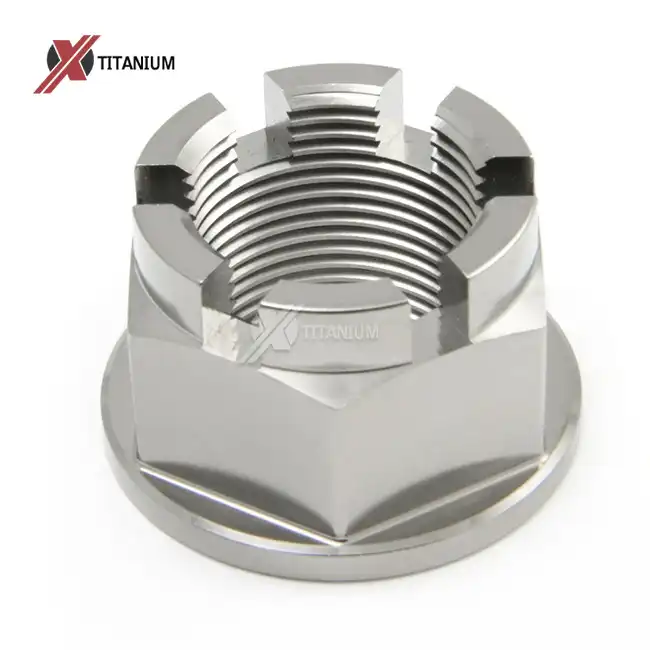
What Is a Titanium Flanged Axle Nut?
Design and Function of the Integrated Flange
A titanium flanged axle nut is a precision-machined fastener that has a large bearing flange incorporated into the base of the hex head. The flange distributes the clamping force across a greater contact surface, and so in many axle assemblies it substitutes a separate washer. That means one piece to deal with during a wheel change instead of two . The broader face also minimises point load stress on the swingarm or fork surfaces. This look will be seen on motorbikes, racing cars, off-road vehicles and powersports equipment. When exchanging make sure the flange diameter is level on the axle seat.
Dimensions That Decide Fitment
Five measurements define fitment: thread diameter, thread pitch, flange diameter, nut height, and across-flats size. Labels such as M10 or M12 only give the nominal diameter. An M12 nut can come in more than one pitch, so you must verify the full thread, flange, and wrench size against the axle. We machine customized sizes from M6 to M100 in metric or imperial threads, with a ±0.01 mm tolerance on our specification sheet. Sending a drawing or a sample axle lets us match dimensions without guesswork.
Grade 5 vs Grade 2 Titanium
Grade 5 (Ti-6Al-4V) and Grade 2 (commercially pure titanium) behave differently. Under ASTM B348, Grade 5 carries a minimum tensile strength of 895 MPa, while Grade 2 sits at 345 MPa. Grade 2 offers strong corrosion resistance and ductility, but it gives up strength, so it suits lightly loaded parts. Racing axle nuts normally call for Grade 5. Our nuts use Grade 5 Ti-6Al-4V, CNC machined, with a Rockwell C hardness of 34-38 and a density of 4.43 g/cm³.
Titanium Flanged Axle Nut vs Stainless Steel: Performance Comparison
Strength and Weight
Stainless nuts follow ISO 3506 property classes. A2-70 guarantees 700 MPa tensile strength, and A4-80 guarantees 800 MPa. Grade 5 titanium starts at 895 MPa with an 825 MPa minimum yield under ASTM B348, at about 45% lower density. Weight matters most in rotating and unsprung mass, where lighter parts help the wheel and suspension respond. One titanium flanged axle nut saves only grams, though, so the real gain comes from pairing titanium nuts with other lightweight components. Do not pick titanium for weight alone if your axle design already runs a validated stainless part.
Corrosion, Heat, and Fatigue
Titanium forms a stable oxide film on contact with oxygen, which gives strong resistance to seawater and road salt. Grade 316 stainless steel handles salt better than 304 but can still pit in warm, chloride-rich crevices. Ti-6Al-4V also expands about half as much as austenitic stainless steel when heated, so your joint design must account for how the mating parts expand. Fatigue life depends on thread quality, surface finish, and preload as much as on the alloy. Inspect nuts at regular intervals regardless of material.
Galling and Safe Installation
Both materials can gall, which means threads cold-weld and tear. Titanium is especially prone to it, and austenitic stainless steel is known for it too. Follow a clean routine:
- Inspect axle threads and the flange seat for burrs and corrosion, then clean everything.
- Apply anti-seize only when the manufacturer permits it, because lubricant changes friction and the clamp load a given torque produces.
- Start the nut by hand, skip impact tools, and tighten with a calibrated torque wrench to the specified value.
Then fit the cotter pin, safety wire, or locking washer the design requires, and recheck for loosening during maintenance.
Titanium Flanged Axle Nut vs Stainless Steel: Cost and Lifecycle Value
Why Titanium Costs More?
Titanium costs more to buy and more to machine. Its low thermal conductivity traps heat at the cutting edge, which speeds tool wear and forces slower cutting speeds. Smaller production runs and tighter inspection add to the price. Stainless steel machines more easily and ships in standard configurations from many sources, so unit prices run lower. When you compare quotes, check that each supplier quotes the same grade, finish, and tolerance. A low price for an unspecified "titanium" nut may hide Grade 2 material instead of Grade 5.
Total Cost of Ownership
Unit price tells only part of the story. Add the weight benefit, corrosion performance, replacement frequency, inspection time, and the cost of a lost session or a seized axle. A club rider in a dry climate may never recover the extra cost of titanium. A coastal racing team that strips wheels often may recover it through longer service life. Work through your own usage: how often you remove the nut, what environment it sees, and what downtime costs you. That math, not the sticker price, shows which material pays off.
MOQ, Duties, and Repeat Orders
Bulk buyers should ask about minimum order quantity, lead time, certificates, and packaging before comparing prices. Request a sample first, then place a trial order, so you can confirm fit and finish. Import duties depend on tariff classification and country of origin, so check them with your customs broker before you commit. Repeat-order consistency matters as much as the first batch. Ask how the supplier controls thread dimensions and traceability from one order to the next. Chuanglian discusses MOQ and delivery by project, so send your specification and we will reply with the details.
How to Choose the Best Titanium Flanged Axle Nut for Motorsports?
When Stainless Steel Is the Better Choice
Choose stainless steel when your program values standardization, availability, and cost control over minimum weight. It suits fleet maintenance, general racing, OEM replacement, and distributor stock built on standard axle dimensions. Grade 316 with proper passivation and cleaning can perform well in wet, humid, or coastal conditions. If the manufacturer already validated an axle system with a specific nut material, keeping that material is usually the safest path. Stainless steel gives dependable service whenever titanium flanged axle nut's extra cost and weight savings do not pay back.
When a Titanium Flanged Axle Nut Is the Better Choice
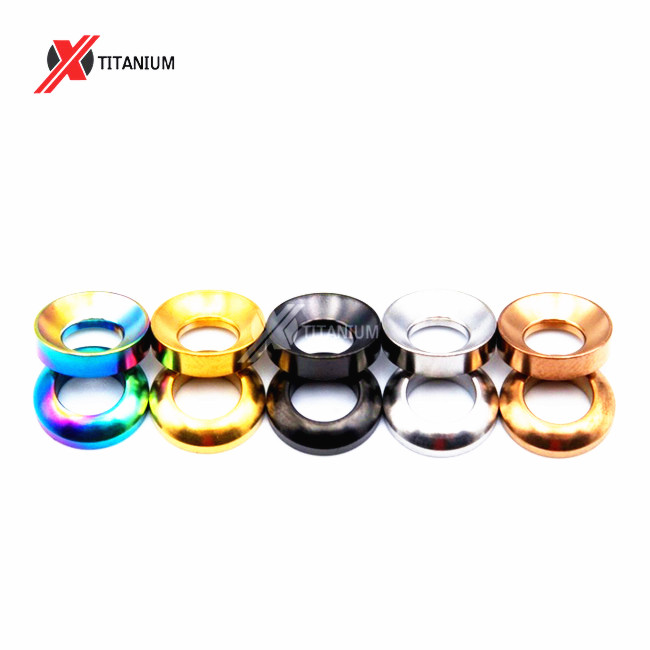
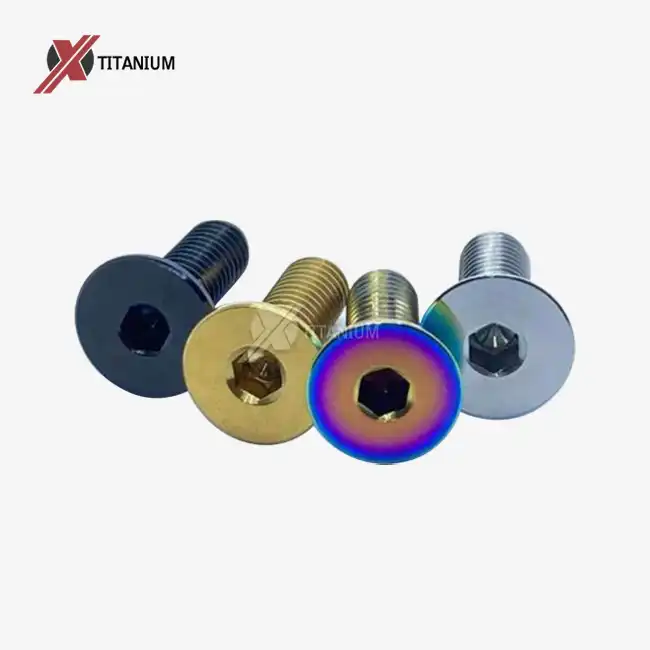
Titanium makes sense when weight, packaging, corrosion resistance, and premium performance lead your priorities. Professional motorcycle teams, lightweight race cars, time-attack builds, and prototypes fit that profile. Aftermarket brands also value the look. We offer polishing, anodizing, and nitriding, with colors including natural titanium, gold, blue, green, purple, black, and rainbow. Because we CNC machine to your drawing, we can adjust flange geometry or wrench size when the design calls for it. Treat titanium as an engineered solution, not a universal upgrade, and validate grade, thread preparation, and torque before race day.
Specifications to Confirm Before You Order
Write down the vehicle, axle position, race environment, maintenance schedule, and load conditions first. Then confirm titanium grade, thread diameter and pitch, flange dimensions, nut height, locking method, and torque specification. Ask whether the surface treatment touches the threads, since coatings and anodizing can affect fit. Pick Grade 5 for strength-to-weight performance on loaded axles, and consider Grade 2 only for lightly loaded uses. Finally, check supplier capability: CNC machining, material certification, calibrated thread inspection, traceability, and prototype support.
Procurement Guide: Buying Titanium Flanged Axle Nuts in Bulk
What to Include in Your RFQ?
A complete RFQ prevents fitment errors and speeds up quotes. List the titanium flanged axle nut grade, thread diameter and pitch, tolerance, flange diameter, nut height, across-flats dimension, finish, locking feature, quantity, packaging, and delivery target. Attach drawings, CAD files, or a sample part when you have them. Distributors can also add packaging and labeling requests so the supplier prices them upfront rather than after the first order.
How to Vet a Titanium Supplier?
Ask for material certificates, thread-gauge inspection records, batch traceability, and export documentation. Confirm CNC capacity, prototype support, and lead time. A supplier should verify alloy composition, because a softer Grade 2 part passed off as Grade 5 weakens the joint. Go/no-go gauge checks, flange flatness checks, and surface inspection at the hex-to-flange radius catch common defects. Compare suppliers on quality systems, communication, and after-sales support, not only price.
Why Buyers Work with Chuanglian?
Baoji Chuanglian New Metal Material Co., Ltd. is based in Baoji, known as the "City of Titanium." We have more than ten years of titanium machining and research experience and run a dozen CNC machine tools. Our titanium flanged axle nut is made from Gr5 Ti-6Al-4V to ASTM B348, and Chuanglian is ISO 9001:2015 certified and RoHS compliant. We inspect every production step from raw material to finished product. Our titanium products also serve racing, marine, petrochemical, medical, and aerospace fields.
Conclusion
Choosing between a titanium flanged axle nut and a stainless steel one depends on the full axle assembly, not a material ranking. Grade 5 titanium has about 45% lower density than stainless steel, a higher minimum tensile strength than A2-70 and A4-80 classes, and strong corrosion resistance, but it costs more to machine and buy. Stainless steel suits standardized maintenance, OEM replacement, and budget-driven stock. Both materials can gall, so correct thread dimensions, clean threads, controlled torque, and proper locking decide safety and service life. Total cost of ownership, not unit price alone, shows which option pays off for a given use.
FAQ
Is titanium stronger than stainless steel?
Grade 5 titanium has a minimum tensile strength of 895 MPa under ASTM B348, above the 700 MPa of A2-70 and 800 MPa of A4-80 nuts. Geometry and thread quality still affect real strength.
Can I reuse a stainless torque value?
Not automatically. Friction, lubrication, and axle design change the result, so follow the vehicle manufacturer's specified value.
Does titanium gall?
Yes, and so can stainless steel. Clean the threads, use approved anti-seize only where permitted, and avoid impact tools.
When should I choose Grade 5 over Grade 2?
Choose Grade 5 for loaded racing axles. Grade 2 offers corrosion resistance and ductility, but its 345 MPa minimum tensile strength suits lighter duty.
What identifies M10 or M12 fitment?
Verify thread pitch, flange diameter, nut height, and across-flats size, not only the nominal diameter.
Request a Titanium Flanged Axle Nut Quote from Chuanglian
Chuanglian is a titanium flanged axle nut manufacturer in Baoji, the "City of Titanium," with over ten years of titanium machining experience. Send your drawing, thread size, quantity, and finish to info@cltifastener.com or djy6580@aliyun.com, and our team will review fitment and quote custom Gr5 CNC-machined nuts.
References
1. ASTM B348/B348M: Standard Specification for Titanium and Titanium Alloy Bars and Billets, 2019
2. ISO 3506-2: Fasteners — Mechanical Properties of Corrosion-Resistant Stainless Steel Fasteners, Part 2: Nuts, 2020
3. Materials Properties Handbook: Titanium Alloys (ASM International), 1994
4. Titanium: A Technical Guide, 2nd Edition (ASM International), 2000
5. Titanium and Titanium Alloys: Fundamentals and Applications (Wiley-VCH), 2003
6. An Introduction to the Design and Behavior of Bolted Joints (CRC Press), 2007
Learn about our latest products and discounts through SMS or email