- English
- French
- German
- Portuguese
- Spanish
- Russian
- Japanese
- Korean
- Arabic
- Greek
- German
- Turkish
- Italian
- Danish
- Romanian
- Indonesian
- Czech
- Afrikaans
- Swedish
- Polish
- Basque
- Catalan
- Esperanto
- Hindi
- Lao
- Albanian
- Amharic
- Armenian
- Azerbaijani
- Belarusian
- Bengali
- Bosnian
- Bulgarian
- Cebuano
- Chichewa
- Corsican
- Croatian
- Dutch
- Estonian
- Filipino
- Finnish
- Frisian
- Galician
- Georgian
- Gujarati
- Haitian
- Hausa
- Hawaiian
- Hebrew
- Hmong
- Hungarian
- Icelandic
- Igbo
- Javanese
- Kannada
- Kazakh
- Khmer
- Kurdish
- Kyrgyz
- Latin
- Latvian
- Lithuanian
- Luxembou..
- Macedonian
- Malagasy
- Malay
- Malayalam
- Maltese
- Maori
- Marathi
- Mongolian
- Burmese
- Nepali
- Norwegian
- Pashto
- Persian
- Punjabi
- Serbian
- Sesotho
- Sinhala
- Slovak
- Slovenian
- Somali
- Samoan
- Scots Gaelic
- Shona
- Sindhi
- Sundanese
- Swahili
- Tajik
- Tamil
- Telugu
- Thai
- Ukrainian
- Urdu
- Uzbek
- Vietnamese
- Welsh
- Xhosa
- Yiddish
- Yoruba
- Zulu
What Should I Check Before Buying Titanium Exhaust Bolts for Racing?
When choosing a titanium exhaust bolt for racing, I look at six factors before buying: the true operating temperature, the titanium grade, thread and head fit, galling control, installation torque and supplier paperwork. Grade 5 (Ti-6Al-4V) works for most performance exhaust joints. But hottest areas need test data. Titanium also costs more than stainless steel, therefore the savings in weight, corrosion resistance, and service life must justify the expense. Below, I explain through each check in straightforward words, so you may design a precise specification and prevent leaky flanges, failed samples and expensive rework. This guide was written for aftermarket vendors, brands and exhaust manufacturers.
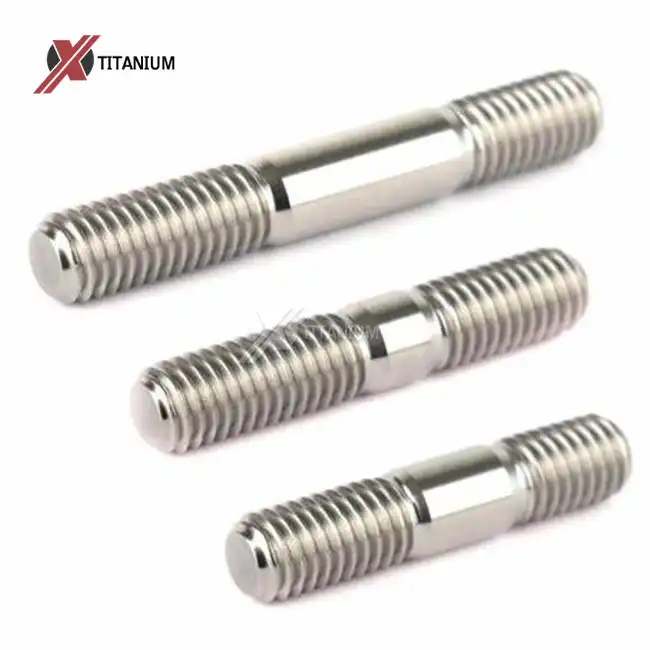
Confirm Titanium Fits Your Racing Exhaust System
Map the Bolt Location and Operating Temperature
Start with where the bolt is. Header flanges, collector joints, slip-on connectors and silencer mounts get very varied heat. Fasteners near the exhaust vents may see 300–600 °C whereas a bracket on the tail section might be considerably cooler. Our Gr5 (Ti-6Al-4V) bolts are rated to 500C therefore I would say anything approaching that limit is a test case not an assumption. Record peak temperature and continuous temperature . Add heat shield location , air flow and thermal cycling . Dyno run thermocouple reading beats a guess. If you plan to use the joint at a temperature over 500°C, contact the supplier for high temperature strength data before ordering.
Match the Bolt to Your Vehicle Type
Each platform places a distinct emphasis on the joint. Motorcycles require small heads, tight clearance and resilience to vibration and road spray. Racing automobiles are subject to intense temperature cycling and rapid pit stops. Water, dirt and impact for off-road vehicles and ATVs. Motorcycle flanges commonly utilise M8 or M10 bolts so I check size against the flange hole first. Turbo manifolds and the hottest areas of the header require special attention, since stainless or alloy steel may be better in certain areas than titanium. The correct bolt for each location, rather than one for the whole system, reduces weight and minimises danger. Check mating nut and washer simultaneously.
Weigh Heat, Corrosion, and Vibration Together
Heat is only one burden. A titanium exhaust bolt is also subject to moisture, road salt, cleaning chemicals and frequent vibration. Titanium has a passive oxide coating. Our product data shows good resistance to saltwater, acids and chlorides, and fatigue resistance for high vibration service. Strength continues to decrease with temperature and oxidation becomes more of a problem when the maximum limit is approached. Galvanic contact is also important. Aluminium may corrode faster when in touch with titanium in moist, salty environments. Put isolating washers or chemicals where the two metals contact. I suggest inspection intervals for racing fleets and replacing any bolt exhibiting galling, strain or thread damage.
Choose the Right Grade, Size, and Finish
Grade 5 or Grade 2: Strength Comes First
Grade 2 is commercially pure titanium, with a minimum tensile strength of 345 MPa as specified in ASTM B348. That will fit mild duty parts not clamp loads on an exhaust flange. Grade 5 (Ti-6Al-4V) is a significantly stronger material. Our Gr5 bolts have a tensile strength of 1,200 MPa, a yield strength of 1,100 MPa and 350 HV hardness. AMS 4928 is included in our references for Ti-6Al-4V material. Titanium is also less rigid than steel, at ~114 GPa vs. ~200 GPa, and hence stretches more under pressure. That is why I ask for the precise grade, heat number and material certificate for every transaction.
Size, Thread, and Head Design
A bolt that is close enough will leak or come free. Verify diameter, pitch, length, and thread engagement to the flange and tapped hole. Make sure the bolt never bottoms out in a blind hole. We CNC Machine Bolts from M6 to M36 and custom sizes. This includes the M8 and M10 sizes often seen on motorbike exhausts. Tool access and heat shield clearance are aided by custom lengths and head designs. Ask for hex, flange or drilled heads. Provide a design or sample and approve a first piece before manufacturing. A thread gauge check on the first article, detects pitch mistakes early.
Finish and Color Under Exhaust Heat
Finish impacts both appearance and durability. Natural, gold, blue, green, purple, black and rainbow colours. Polishing, anodising and nitriding services. We provide both a matte and a polished finish so you can match your current hardware. Anodised colour is a thin coating of oxide and exhaust heat may move or degrade it. So I put bright colours on cooler hardware like brackets or cosmetic fasteners. Hot joints can get a heat tint on bare titanium, which some riders appreciate. Nitriding may harden the surface, and may aid with wear resistance, but try it on your own threads. First choose the finish by temperature, and second by look.
Compare Titanium with Stainless Steel and Alloy Steel
Weight and Strength Trade-Offs
Ti-6Al-4V has a density near 4.4 g/cm³, while steel sits near 7.8 g/cm³. Our titanium exhaust bolts weigh about 40% less than steel bolts of comparable strength. One bolt saves only grams, so I add the savings across a full exhaust system with many fasteners, especially when it pairs with a titanium pipe. Stainless steel costs less and is easy to source; ISO 3506 class 70 bolts carry a 700 MPa minimum tensile strength. Alloy steel can reach higher clamp loads in heavily loaded joints, though it needs coating against rust. Titanium makes the most sense where weight, corrosion resistance, and appearance matter to your customer.
Thermal Expansion Against Stainless Flanges
Ti-6Al-4V expands roughly half as much as 304 stainless steel, about 9 versus 17 micrometers per meter per degree Celsius. That gap matters when a titanium bolt clamps a stainless flange. As the flange heats and grows faster than the bolt, clamp load can change, and it shifts again on cooling. I suggest testing torque retention and gasket sealing through repeated heat cycles on a rig or a real exhaust before you approve a design. A bench test costs far less than a warranty claim. Washers and flange geometry that spread load evenly also help, and your engineer should confirm the preload target.
Total Cost Instead of Unit Price
Stainless bolts cost less per piece, and some of your customers will ask for them. I answer with total cost. Count replacement frequency, seized hardware, extraction labor, downtime, and warranty claims. Titanium resists rust, which removes one common cause of seized exhaust hardware, though it still needs anti-seize to prevent galling. For a premium exhaust brand, a titanium bolt also supports the weight and appearance story that buyers pay for. Use titanium where those benefits justify the extra cost, and keep stainless for low-stress, low-visibility positions. Your own warranty and service records give the strongest evidence for any comparison between the two.
Plan Installation, Torque, and Galling Control
Anti-Seize and Galling Prevention
Titanium resists rust, but it can gall, which means the threads cold-weld under pressure. Galling is a common reason titanium hardware seizes during removal. Apply a high-temperature anti-seize compound that your supplier approves, such as a nickel-based or copper-based product, and keep threads clean. Wipe off oil and metal chips before applying the compound. Hand-start every bolt to avoid cross-threading, and skip impact tools for final tightening. Surface treatments such as nitriding may lower galling risk, yet I still treat anti-seize as standard for exhaust service. Bolts that bind during assembly are cheaper to catch on the line than in a customer's garage.
Torque Values That Match Titanium
Never copy a steel bolt torque chart. Friction changes with lubricant, thread condition, nut material, and grade, so the same torque can create very different clamp loads. Anti-seize usually lowers friction, which raises preload at a given torque, and over-tightening can yield the bolt. A bolt that yields may look fine, yet it loses clamp load and can leak after the next heat cycle. Ask the supplier for application guidance, then validate it on your flange with a calibrated torque wrench. Follow a set tightening sequence and record final values for your production line and for the service manuals your customers read.
Inspection and Reuse
A titanium exhaust bolt can handle repeated removals only if its threads stay clean and intact. After each removal, look for galling marks, a stretched shank, thread damage, and heavy discoloration beyond the normal heat tint. Replace any suspect bolt. A broken exhaust bolt can loosen a pipe and cause leaks or lost parts, so I set replacement intervals for race fleets and retail repair kits. Keep a few spare bolts from the same batch on hand so a failed one gets replaced with a matching part. Aftermarket sellers can add a short instruction card with torque and anti-seize notes, which can reduce misuse and returns.
Vet the Supplier and Build Your Pre-Purchase Plan
Documents and Quality Checks
Ask for material certificates, heat or batch numbers, dimensional reports, and thread gauge results. Ask for these items with your samples, so you judge the paperwork before you commit to volume. Chuanglian runs a strict quality control system from raw material to finished product, and our product data lists ISO 9001 quality management. Request chemical composition checks to confirm Ti-6Al-4V, plus tensile and hardness data and a visual check for burrs and surface defects. Also ask how the supplier handles non-conforming lots. Clear records let your quality manager approve parts faster and trace any issue back to its batch.
Custom Development and Sampling
Many OEM and ODM exhaust makers follow a staged path: confirm requirements, review suppliers, validate samples, run a small batch, then place repeat orders. I recommend heat testing and a road test on samples before any volume purchase. Chuanglian has more than ten years of titanium machining experience and a dozen CNC machine tools, and we produce custom lengths, head designs, finishes, and colors from your drawings. Our base is Baoji, known as the City of Titanium. Ask early about MOQ, sample charges, lead time, packaging, and branding needs, so pricing and schedules match your annual volume and quarterly reorders.
Pre-Purchase Checklist
Here is a short list I use before approving any order.
- Application data: Confirm bolt location, continuous and peak temperature, vibration level, and service interval. Add flange material, hole size, thread pitch, length, and head style. Share these details with the supplier so they can recommend Gr5 only where it fits and flag joints needing extra validation before any production run starts.
- Quality proof: Collect the material certificate, batch number, dimensional report, thread gauge results, and sample approval. Run a heat-cycle test and road test on your own exhaust before releasing a production order, and record torque, anti-seize type, and any finish changes after testing. Keep these records with each batch to trace any later complaint.
- Commercial terms: Compare MOQ, sample cost, lead time, packaging, export paperwork, payment terms, and repeat-order support. Look at landed cost and total ownership cost instead of unit price, since replacements, downtime, and warranty claims often outweigh a small price gap on the fastener. Quote the same drawing across suppliers to keep comparisons fair.
These three checks cover most technical and commercial risks in a titanium exhaust bolt purchase.
Conclusion
Buying a titanium exhaust bolt for racing comes down to matching the part to the joint. Bolt location and real temperature decide whether Gr5 titanium fits, and the hottest zones need test data. Grade 5 provides the strength that Grade 2 lacks, but correct size, thread, head, and finish still matter, since anodized color can fade under heat. Compared with stainless and alloy steel, titanium saves weight and resists rust, yet thermal expansion, galling, and total cost need careful review. Correct torque, anti-seize, and inspection keep joints sealed and removable. Supplier documents, sampling, and a clear checklist reduce technical and commercial risk, so titanium belongs where its benefits outweigh the premium.
FAQ
Does a titanium exhaust bolt need anti-seize?
Yes. Titanium can gall under pressure, which seizes threads. Use a high-temperature anti-seize approved by your supplier, keep threads clean, and adjust torque, because the compound lowers friction and raises clamp load at the same setting.
Is Grade 2 titanium acceptable for exhaust bolts?
Usually not. ASTM B348 sets Grade 2's minimum tensile strength at 345 MPa, too low for most clamped exhaust flanges. Grade 5 (Ti-6Al-4V) is the safer choice, and our Gr5 bolts list a 1,200 MPa tensile strength.
Will anodized color last on hot exhaust parts?
Not always. Exhaust heat can shift or fade anodized color. Test samples on your own system, place bright colors on cooler hardware, and accept that bare titanium will show a natural heat tint on the hottest joints.
Can I reuse titanium exhaust bolts?
Often yes. Titanium bolts that stay within their elastic range can return to service, provided the threads show no galling, stretch, or damage. Inspect each bolt at every removal and replace any doubtful one.
Request a Titanium Exhaust Bolt Quote from Chuanglian
Chuanglian is a titanium exhaust bolt manufacturer based in Baoji, the City of Titanium, with more than ten years of titanium machining experience. We CNC machine Gr5 (Ti-6Al-4V) bolts from M6 to M36 and custom sizes, with polishing, anodizing, or nitriding. Send drawings, quantities, and temperature targets to info@cltifastener.com or djy6580@aliyun.com.
References
1. ASTM International, Standard Specification for Titanium and Titanium Alloy Bars and Billets (ASTM B348), 2019
2. ASM International, Materials Properties Handbook: Titanium Alloys, 1994
3. ISO, ISO 3506-1: Fasteners — Mechanical Properties of Corrosion-Resistant Stainless Steel Fasteners, Part 1: Bolts, Screws and Studs, 2020
4. Lütjering, G. and Williams, J. C., Titanium, Springer, 2007
5. Bickford, J. H., Introduction to the Design and Behavior of Bolted Joints, CRC Press, 2008
6. Barrett, R. T., Fastener Design Manual (NASA Reference Publication 1228), 1990
Learn about our latest products and discounts through SMS or email