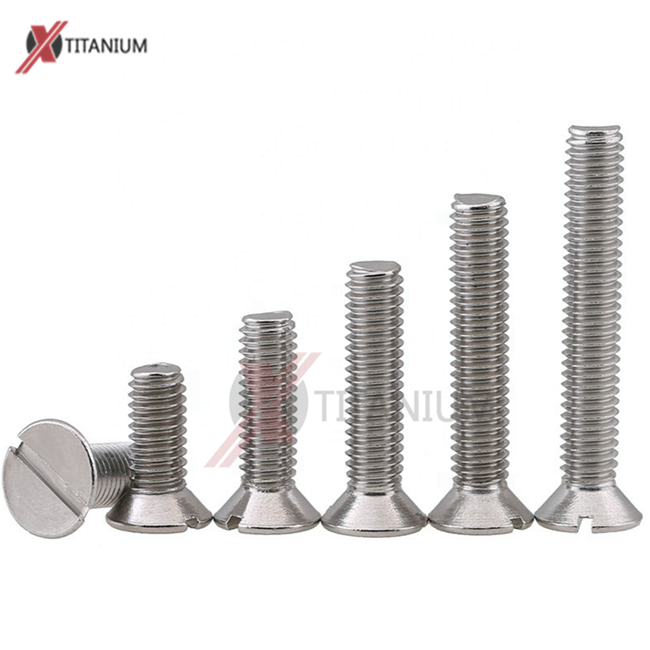
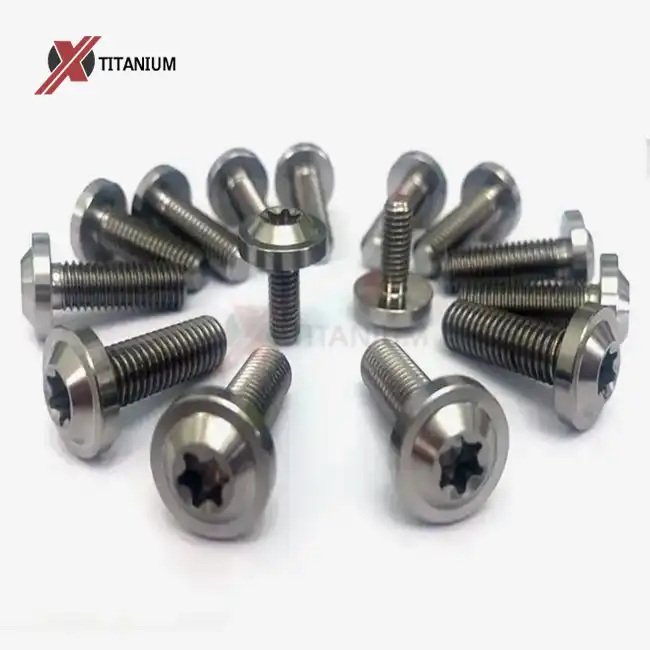
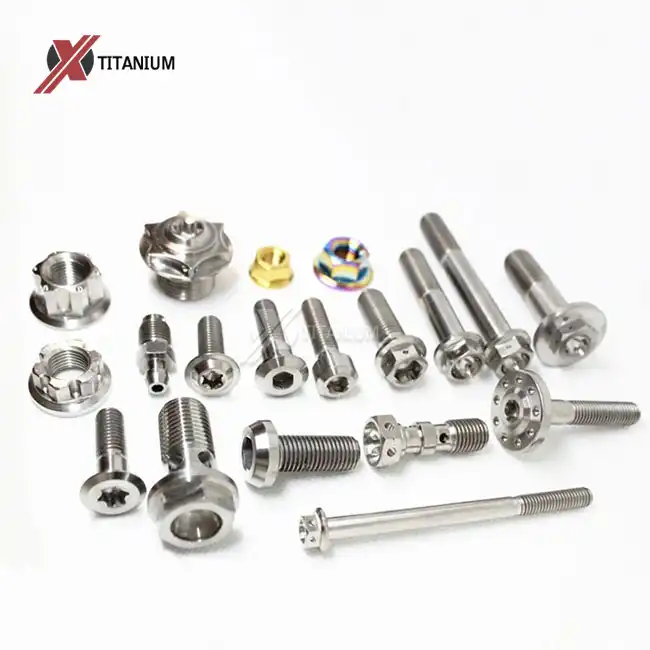
When selecting securing arrangements for basic applications, the choice between titanium alloy screws and brass screws altogether impacts performance, life span, and cost-effectiveness. Titanium combination screws exceed expectations in aviation, restorative, and marine situations due to their remarkable erosion resistance, lightweight properties, and predominant strength-to-weight ratio. Brass screws offer amazing conductivity and a stylish option for electrical and enriching applications. Understanding the mechanical properties, application prerequisites, and long-term execution characteristics makes a difference when engineers make educated choices that align with extended determinations and operational demands.
Understanding Material Composition and Properties
Titanium amalgam screws utilize progressed materials like Ti-6Al-4V, containing 6% aluminum and 4% vanadium. This combination composition conveys remarkable mechanical properties with ductile quality coming to 900 MPa. The fabric thickness measures 4.43 g/cm³, making it 40% lighter than steel while keeping up predominant auxiliary integrity. Brass screws combine copper (60-70%) with zinc (30-40%), making a combination with great erosion resistance and amazing machinability. The ductile quality regularly ranges from 300-500 MPa, depending on the brass composition. Brass thickness measures around 8.5 g/cm³, essentially heavier than titanium alternatives.
The alloy composition directly influences performance characteristics:
- Titanium's oxide layer provides natural corrosion protection
- Brass offers antimicrobial properties beneficial in specific applications
- Titanium maintains strength at elevated temperatures up to 500°C
- Brass conductivity makes it ideal for electrical applications
If you need fasteners for high-temperature environments or weight-critical applications, then titanium alloy screws are more suitable for maintaining performance under demanding conditions.
Corrosion Resistance and Environmental Performance
Corrosion resistance speaks to a basic calculation in clasp determination for marine building, chemical handling, and open-air applications. Titanium illustrates extraordinary resistance to saltwater, acids, and soluble substances. Research facility testing appears titanium keeps up basic keenness after 1000+ hours of salt splash introduction without critical degradation. Brass shows great erosion resistance in climatic conditions but appears powerless to prevent dezincification in certain situations. Saltwater presentation can cause specific filtering of zinc, compromising mechanical quality over time. In any case, brass performs well in freshwater applications and gives satisfactory security for direct presentation conditions.
Key performance differences include:
- Titanium resists pitting corrosion in chloride environments
- Brass is susceptible to stress corrosion cracking under tension
- Titanium maintains properties in acidic conditions (pH 1-14)
- Brass requires protective coatings for harsh environments
If you need fastening solutions for offshore platforms or chemical processing equipment, then titanium provides superior long-term reliability and reduced maintenance requirements.
Strength and Load-Bearing Capacity Analysis
Mechanical quality decides load-bearing capacity and auxiliary execution in basic applications. Titanium amalgam screws illustrate prevalent quality characteristics with abdicating quality coming to 830 MPa and extreme ductile quality up to 900 MPa. The fabulous strength-to-weight proportion makes titanium perfect for aviation clamps and lightweight structures. Brass screws regularly display abdicate quality between 200-400 MPa, depending on amalgam composition and warm treatment. Whereas satisfactory for numerous applications, brass cannot coordinate with titanium's execution in high-stress situations. The ductility of brass permits a few misshapenings without breaking, useful in applications requiring flexibility.
Comparative performance data shows:
- Titanium fatigue strength: 500-600 MPa (10⁷ cycles)
- Brass fatigue strength: 150-200 MPa (10⁷ cycles)
- Titanium elastic modulus: 114 GPa
- Brass elastic modulus: 100-125 GPa
If you need fasteners for high-stress applications or vibration-prone environments, then titanium alloy screws provide superior fatigue resistance and maintain structural integrity under cyclic loading.
Weight Considerations for Engineering Design
Weight decrease drives fabric determination in aviation, car, and versatile hardware applications. Titanium's moo weight (4.43 g/cm³) offers critical weight investment funds compared to brass (8.5 g/cm³). A standard M8x20 titanium screw weighs around 3.2 grams, whereas the brass proportionate weighs 6.2 grams. Weight reserve funds have become significant in congregations requiring various clamps. Airship producers report a 15-20% weight lessening when replacing steel or brass clamps with titanium options. This weight lessening translates to improved fuel efficiency and an upgraded payload capacity.
Weight comparison benefits include:
- Reduced overall assembly weight improves performance
- Lower shipping costs for high-volume applications
- Enhanced portability for handheld equipment
- Improved dynamic response in moving assemblies
If you need to minimize weight while maintaining strength for racing applications or aerospace components, then titanium provides the optimal balance of performance and weight reduction.
Temperature Resistance and Thermal Performance
Operating temperature extends altogetheimpactts fabric determination for high-temperature applications. Titanium combinations keep up mechanical properties at temperatures up to 500°C, making them appropriate for motor components and warm exchangers. The warm extension coefficient (8.6 × 10⁻⁶/°C) minimizes dimensional changes amid warm cycling. Brass shows lower temperature limits, with mechanical properties deteriorating over 200°C. The higher warm extension coefficient (18 × 10⁻⁶/°C) can cause releasing in gatherings subjected to temperature variations. In any case, brass offers amazing warm conductivity for warm scattering applications.
Temperature performance characteristics:
- Titanium maintains 80% strength at 400°C
- Brass strength drops 50% at 200°C
- Titanium resists oxidation at elevated temperatures
- Brass requires protective atmospheres above 300°C
If you need fasteners for exhaust systems or high-temperature processing equipment, then titanium provides reliable performance across extended temperature ranges without degradation.
Cost Analysis and Economic Considerations
Initial fabric costs vary significantly between titanium and brass latches. Titanium amalgam screws ordinarily take a toll 3-5 times more than brass options due to crude material costs and handling complexity. In any case, lifecycle-fetched investigation frequently favors titanium for demanding applications due to expanded service life and decreased replacement frequency. Economic components incorporate fabric costs, machining costs, and support requirements. Titanium's predominant erosion resistance eliminates coating costs and diminishes substitution interims. Brass requires more visit review and potential substitution in destructive environments.
Cost considerations encompass:
- Higher initial investment for titanium fasteners
- Reduced maintenance costs over service life
- Lower total cost of ownership for critical applications
- Brass offers economical solutions for standard applications
If you need cost-effective fasteners for non-critical applications with moderate environmental exposure, then brass provides adequate performance at lower initial costs.
Surface Treatment Options and Finishing
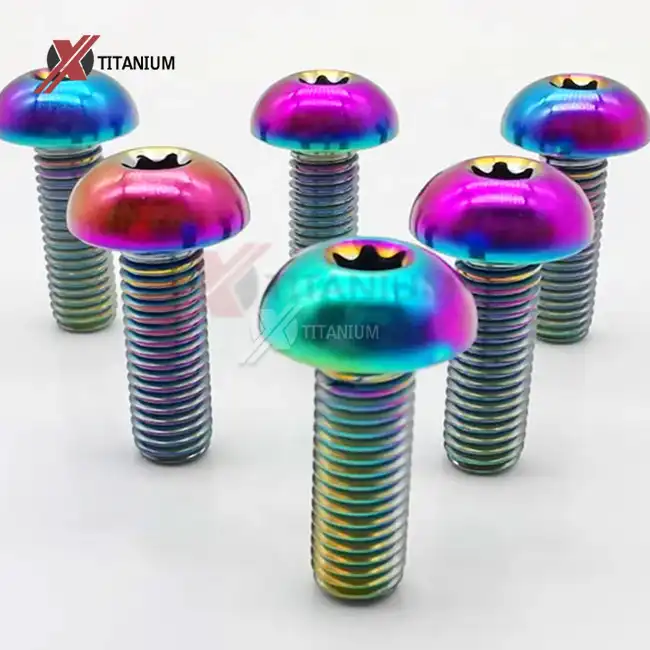
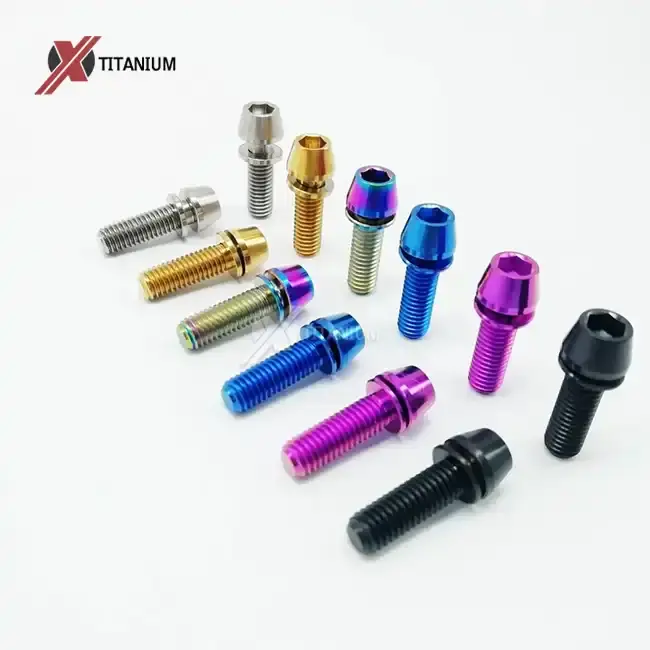
Surface treatments enhance performance and appearance for both materials. Titanium alloy screws benefit from anodizing, nitriding, and polishing treatments. Anodizing creates colored finishes (gold, blue, green, purple, black, rainbow) while improving surface hardness and wear resistance. Nitriding increases surface hardness to 70+ HRC for wear-critical applications.
Brass fasteners accept various platings, including nickel, chrome, and zinc coatings. These treatments improve corrosion resistance and provide decorative finishes. Polishing creates attractive appearances for visible applications in architectural and marine hardware.
Available surface treatments include:
- Titanium anodizing for color and hardness enhancement
- Brass plating for improved corrosion protection
- Polishing for aesthetic and functional benefits
- Passivation for enhanced corrosion resistance
If you need fasteners with specific color requirements or enhanced surface properties, then both materials offer treatment options to meet application demands.
Application-Specific Recommendations
Different industries require specific material characteristics for optimal performance. Aerospace applications demand lightweight, high-strength fasteners capable of withstanding extreme temperatures and corrosive environments. Titanium alloy screws excel in aircraft engines, structural components, and satellite systems.
Medical applications require biocompatible materials that resist body fluids and sterilization processes. Titanium's biocompatibility makes it ideal for surgical instruments and implantable devices. Brass contains copper, which provides antimicrobial benefits but may cause allergic reactions in sensitive individuals.
Industry-specific applications include:
- Aerospace: Titanium for weight-critical structural fasteners
- Marine: Titanium for seawater exposure resistance
- Medical: Titanium for biocompatibility requirements
- Electrical: Brass for conductivity and EMI shielding
If you need fasteners for biomedical implants or aerospace applications, then titanium provides the necessary biocompatibility and performance characteristics required by regulatory standards.
Quality Standards and Certification Requirements
Quality certifications ensure material compliance with industry standards and performance specifications. Titanium fastener manufacturers must maintain certifications like AS9100 for aerospace applications, ISO 13485 for medical devices, and NACE compliance for corrosive environments. Material traceability and test reports verify chemical composition and mechanical properties.
Brass fasteners require compliance with relevant ASTM and SAE standards for specific applications. Quality control includes dimensional verification, material composition analysis, and mechanical property testing. Certification requirements vary by industry and application criticality.
Essential quality requirements include:
- Material test reports (MTR) for chemical composition
- Mechanical property verification testing
- Dimensional inspection per drawing specifications
- Industry-specific certifications and approvals
If you need certified fasteners for regulated industries, then suppliers with comprehensive quality systems and industry certifications provide the necessary documentation and traceability.
Conclusion
The selection between titanium alloy screws and brass screws depends on specific application requirements, environmental conditions, and performance expectations. Titanium offers superior strength, corrosion resistance, and weight advantages for demanding applications in aerospace, medical, and marine environments. Brass provides cost-effective solutions for standard applications with moderate environmental exposure and electrical conductivity requirements. Understanding material properties, performance characteristics, and application demands enables informed decisions that optimize fastener performance while meeting project objectives and budget constraints.
Partner with Chuanglian for Premium Titanium Alloy Fastening Solutions
Chuanglian specializes in manufacturing high-performance titanium alloy screws that meet the demanding requirements of aerospace, medical, and industrial applications. Our advanced CNC machining capabilities and comprehensive quality control systems ensure consistent performance and reliability. Located in Baoji City, known as the "City of Titanium," we leverage over ten years of experience in titanium processing and precision engineering.
Our titanium alloy screws feature customizable specifications from M2 to M36 sizes, utilizing premium Ti-6Al-4V material with superior mechanical properties. Advanced surface treatments, including anodizing, polishing, and nitriding, enhance performance characteristics while providing aesthetic options. Comprehensive testing and AS9100 certification guarantee material compliance and performance consistency.
As a trusted titanium alloy screws manufacturer, Chuanglian provides technical consultation, material selection guidance, and custom machining services to optimize fastener performance for specific applications. Our quality-focused approach and reliable delivery ensure project success from prototype development through full-scale production.
Ready to discuss your titanium fastener requirements? Our technical team provides expert guidance on material selection, design optimization, and application-specific solutions. Contact us at info@cltifastener.com or djy6580@aliyun.com to explore how our precision-engineered titanium alloy screws can enhance your project performance and reliability.
References
1. American Society for Testing and Materials. "Standard Specification for Titanium and Titanium Alloy Fasteners." ASTM F467-19. 2019.
2. Boyer, R. R., and Briggs, R. D. "The Use of β Titanium Alloys in the Aerospace Industry." Journal of Materials Engineering and Performance, vol. 14, no. 6, 2005, pp. 681-685.
3. Copper Development Association. "Brass Fasteners: Properties and Applications in Marine Environments." Technical Publication CDA 123, 2018.
4. International Titanium Association. "Guidelines for Titanium Fastener Design and Application." ITA Technical Manual TM-2020-03, 2020.
5. Peters, M., and Leyens, C. "Aerospace and Space Applications of Titanium Alloys." Titanium and Titanium Alloys: Fundamentals and Applications, Wiley-VCH, 2003, pp. 333-350.
6. Society of Automotive Engineers. "Fastener Standards for Aerospace Applications: Material Selection and Performance Requirements." SAE ARP 1228C, 2017.