To choose the right titanium flange nut for your project, you need to know about the qualities of the material, the needs of the application, and the supplier's skills. These special screws are essential for medical, naval, and aircraft uses because they are very strong for their weight and don't rust. To ensure the best performance and dependability in your application, the selection process includes looking at grade requirements, measurement requirements, surface treatments, and source standards.
Understanding Titanium Flange Nuts
What is a Titanium Flange Nut?
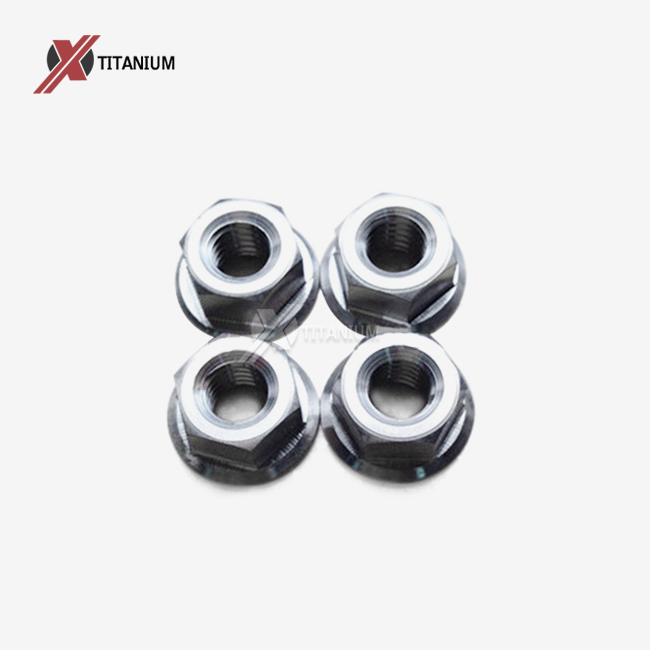
The titanium flange nut is a high-tech way to hold things together. It combines the great qualities of titanium with the better load-distributing abilities of a flange design. In contrast to regular hex nuts, these screws have a washer-like lip built right in. This means you don't need to use separate washers, and the bearing surface area is better. The shape of the flange spreads binding loads more evenly across the joining surface. This lowers stress levels and keeps the material from breaking. The titanium makeup offers huge benefits in tough situations.
Ti alloy flange nuts are about 45% lighter than steel, so they make the whole system much lighter without affecting its strength. Because they aren't magnetic, they can be used in sensitive electrical contexts, and because they are safe, they can also be used in medical settings. It is naturally more resistant to rust than stainless steel, especially in salt settings and high-temperature oxidation situations.
How are Titanium Flange Nuts Made?
Titanium flange nuts are made using complex methods that keep the material's qualities while getting exact measurement limits. The first step in production is usually using high-quality titanium alloy billets, usually Grade 5 (Ti-6Al-4V), which has the best strength and workability. The main way things are made is through CNC cutting, which gives exact control over thread shape and flange measurements. Because titanium doesn't conduct heat well and tends to work harden, it needs special cutting tools and conditions for the machining process.
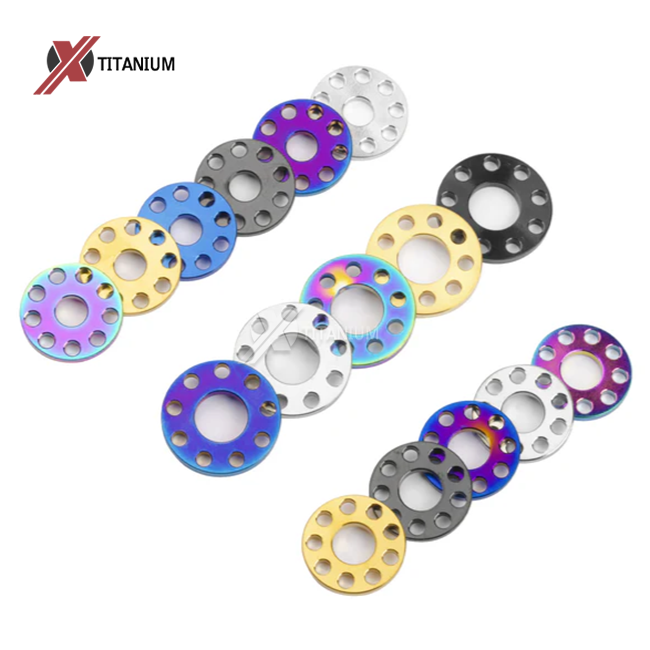
Modern factories use multi-axis CNC machines that can make complicated shapes while sticking to tight limits set by standards like DIN 6923, ISO 4032, and ANSI B18.2.2. Surface treatments improve both how things look and how well they work. Anodizing adds more rust protection and lets you choose from natural titanium, gold, blue, green, purple, black, and rainbow finishes. Polishing gets rid of cutting marks and improves the surface finish. For uses that need better wear protection, nitriding methods can make the surface even harder.
Comparing Titanium Flange Nuts with Other Materials
Titanium Flange Nut vs. Stainless Steel Flange Nut
When considering titanium flange nuts and stainless steel flange nuts, there are a few key things that make them different. The strength-to-weight ratio of titanium is about twice that of austenitic stainless steels, making it a better material overall. This benefit is especially important in uses that need to be light, like aircraft platforms and race parts. Another thing that titanium does very well is resisting corrosion. While 316 stainless steel works well in many situations, titanium is much more resistant to stress corrosion cracking caused by salt and stays stable at temperatures up to 600°C.
In seawater situations, titanium's passive oxide layer has a service life that is almost infinite, while stainless steel may split or crack over time. When projects are on a tight budget, stainless steel is often the best choice. TCO estimates often explain titanium's higher starting cost by showing that it lasts longer, needs less upkeep, and doesn't need to be replaced as often in important uses.
Titanium Flange Nut vs. Aluminum Flange Nut
Comparing titanium and aluminum flange nuts shows that they have different performance traits that make them better for different uses. With a mass about 40% lower than titanium, aluminum is a great way to lose weight. However, titanium's higher strength makes up for its lower weight, allowing it to carry more weight in smaller packages.
Titanium performs much better at high temperatures than aluminum alloys because it keeps its structure intact at temperatures above 500°C, while aluminum alloys usually lose strength above 200°C. Galvanic compatibility is another thing to think about. When aluminum is mixed with more precious metals, its anodic behavior can speed up rust, but titanium's place on the galvanic series makes this less of a problem.
Choosing the Right Supplier
Best Titanium Flange Nut Suppliers
When looking for a skilled source, you need to look at more than just price. Certifications of quality are important signs of a supplier's skills. For example, military applications need AS9100 certification, medical applications need ISO 13485 compliance, and general industry applications can benefit from ISO 9001 certification. In the market for titanium fasteners, better providers can be told apart by their technical skills. Advanced factories should have the right CNC machining centers, the ability to heat treat materials in a controlled atmosphere, and a wide range of testing tools, such as those for measuring dimensions, analyzing chemical makeup, and testing mechanical properties.
Quality assurance is greatly improved by traceability systems that make sure all the paperwork is in order, from certifying the raw materials to the final review. Stability and knowledge of the supplier in working with titanium are important decision factors. Titanium cutting is very complicated and needs specific knowledge that comes from years of experience. As a minimum, suppliers should show that they have completed similar projects in the past and keep enough stock on hand to meet shipping needs.
Price Comparison and Reviews
The prices of titanium flange nuts on the market vary a lot depending on the grade, size, amount, and the supplier's abilities. Most of the time, Grade 2 pure titanium costs less than Grade 5 metal. However, unit costs go up for special specs and small amounts. When you buy in bulk, you usually save a lot of money, but the minimum order requirements can be hard for smaller tasks.
References and reviews from customers are great ways to find out how well a company is doing. Quality-focused buyers care more about stability, on-time delivery, and expert help than they do about price. Customers usually stick with the same suppliers for a long time, which shows that they are happy with both the quality of their products and the level of service they provide.
Purchasing Titanium Flange Nuts
Where to Buy Titanium Flange Nuts Online?
Buying titanium fasteners online is easy and gives you access to many suppliers. Industrial supply websites usually have a lot of information about their products, like full product specs, material approvals, and comparison tools to help you make your choice. But for special uses, working directly with the provider is often needed to make sure that the specifications are met. When you can buy in bulk, it's helpful for big jobs or long-term needs. Many sellers offer savings for buying in bulk, even for small amounts. This makes buying in bulk a good deal for even medium-sized projects. It is very important to know about wait times because titanium screws often need longer production plans than regular steel parts.
Order Process and Supplier Contact
Creating specifications, such as size needs, material grade choices, surface treatment preferences, and number determination, is usually the first step in the purchase process. Drawings or models of technical things make it easier to talk to each other and cut down on design mistakes. For special items, suppliers should give full quotes that include unit prices, tooling costs, wait times, and delivery terms. The types of quality documents needed depend on the job, but they usually include material test certificates, measurement inspection records, and proof of the surface finish. For aerospace and medical uses, extra paperwork like process control certificates and group tracking records may be needed.
Conclusion
Selecting the optimal titanium flange nut requires careful consideration of material properties, application requirements, and supplier capabilities. The superior performance characteristics of titanium, including exceptional strength-to-weight ratios, outstanding corrosion resistance, and temperature stability, justify its selection for demanding applications across aerospace, marine, and medical industries. Success depends on partnering with experienced manufacturers who possess the technical expertise, quality systems, and manufacturing capabilities necessary to deliver consistent, high-quality products that meet your specific requirements and ensure long-term project success.
Frequently Asked Questions
What are the key advantages of titanium flange nuts over conventional fasteners?
Titanium flange nuts provide exceptional strength-to-weight ratios, superior corrosion resistance, and non-magnetic properties. The integrated flange design eliminates separate washers while distributing loads more evenly, preventing loosening and enhancing joint reliability. Their biocompatible nature makes them suitable for medical applications, while high-temperature stability ensures performance in extreme environments.
How do I determine the correct grade of titanium for my application?
Grade selection depends on specific performance requirements. Grade 2 pure titanium offers maximum corrosion resistance and formability for moderate strength applications. Grade 5 (Ti-6Al-4V) provides higher strength and excellent overall properties for demanding structural applications. Consider factors such as operating temperature, corrosion environment, strength requirements, and biocompatibility needs when selecting appropriate grades.
What quality certifications should I expect from titanium fastener suppliers?
Reputable suppliers should maintain relevant quality certifications such as AS9100 for aerospace applications, ISO 13485 for medical devices, or ISO 9001 for general industrial applications. Additionally, suppliers should provide material test certificates, dimensional inspection reports, and complete traceability documentation to ensure product compliance with specifications.
Partner with Chuanglian for Premium Titanium Flange Nut Solutions
Chuanglian delivers unmatched expertise as your dedicated titanium flange nut manufacturer, combining advanced manufacturing capabilities with comprehensive technical support to ensure project success. Our commitment to quality excellence and customer satisfaction has established long-term partnerships with leading companies across aerospace, marine, medical, and industrial sectors.
Our competitive advantages include extensive customization capabilities, rapid prototyping services, and flexible production scheduling to meet urgent project requirements. With comprehensive inventory management and strategic sourcing, we maintain optimal availability while providing cost-effective solutions for both small-batch custom orders and large-volume production runs.
Ready to enhance your project with premium titanium fastening solutions? Contact our technical team today to discuss your specific requirements and discover how our expertise can optimize your application performance. Reach out to us at info@cltifastener.com or djy6580@aliyun.com for detailed technical consultation and custom quotations. Visit our website at cl-titanium.com to explore our complete product portfolio and discover why engineering professionals worldwide trust Chuanglian for critical fastening applications.
References
1. Boyer, R., Welsch, G., & Collings, E.W. (2019). Materials Properties Handbook: Titanium Alloys. ASM International Press.
2. American Society for Testing and Materials. (2020). ASTM F467-20 Standard Specification for Nonferrous Nuts for Use with Externally Threaded Fasteners. ASTM International.
3. Lutjering, G. & Williams, J.C. (2018). Titanium: Engineering Materials and Processes. Springer-Verlag Berlin Heidelberg.
4. International Organization for Standardization. (2019). ISO 4032:2019 Hexagon Regular Nuts - Product Grades A and B. ISO Standards.
5. Peters, M., Kumpfert, J., Ward, C.H., & Leyens, C. (2021). Titanium Alloys for Aerospace Applications: Current Status and Future Perspectives. Advanced Engineering Materials, Volume 23.
6. Aerospace Industries Association. (2020). AS9100D Quality Management Systems Requirements for Aviation, Space and Defense Organizations. AIA Publications.