This is great news for businesses looking for high-quality titanium round rod solutions since China has recently eclipsed the US as the world's top producer of titanium. Chinese manufacturers provide better value for money, more up-to-date processing capabilities, and a full set of quality certifications that go above and beyond what is required for aerospace, medical, and industrial uses. China is the best place to get titanium round rod materials for a wide range of uses since it has highly skilled engineers, advanced manufacturing, and low prices.
Key Performance Parameters and Specifications
To make smart buying choices, you need to know a lot about the technical details of titanium round rods. Most of the time, Chinese companies make titanium bars that meet the standards set by ASTM B348, AMS 4928, and ISO 5832. This makes sure that they are reliable and work with other things all across the world.
Grade 2 titanium rods are very resistant to rust. These materials likewise have a yield strength of 275 MPa and an ultimate tensile strength of 345 MPa. These commercially pure titanium bars are great for use in the chemical processing sector and on boats since they are so easy to shape and weld.
When compared to other types of titanium, grade 5 titanium alloy rods, or Ti-6Al-4V, have better mechanical qualities. Their yield strength and maximum tensile strength are both more than 950 MPa. Their yield strength is more over 880 MPa. This kind of titanium round rod is the best option for use in the aerospace and high-performance sectors because it has a better strength-to-weight ratio.
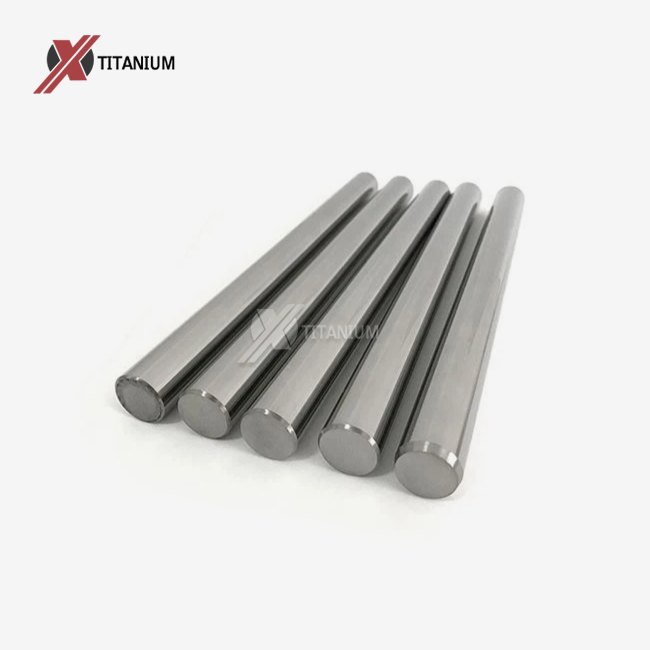
Chinese companies make titanium round bars that are 3 to 400 millimeters wide and up to 6000 millimeters long. Some of the surface treatments that are available include brilliant annealing, pickling, polishing, and sandblasting. These treatments are designed to work with a wide range of uses.
Core Manufacturing and Processing Advantages
Chinese titanium processing plants use modern cold rolling, hot rolling, and annealing methods to achieve exact size tolerances and better surface quality. The cold rolling method improves mechanical qualities while keeping the surface quality very good.
Hot rolling procedures make it possible to make titanium bars with greater diameters and better grain structure and mechanical qualities. After annealing, the metal's internal tensions are relieved and its ductility is improved, making it work the same way in all situations.
Pickling and acid cleaning get rid of contaminants and oxide layers on the surface, leaving bright, clean titanium surfaces that exceed strict quality standards. These surface treatments are especially critical for medical and aeronautical uses where contamination of the surface might affect performance.
Quality testing techniques include thorough hardness testing, bend testing, and hydrostatic pressure testing to make sure that the mechanical qualities and structural integrity are correct. Chinese manufacturers have strict quality control systems that go above and beyond international norms. This makes sure that their products work reliably in important situations.
Superior Value Proposition Compared to Alternative Sources
Chuanglian's ability to make titanium round rods is far better than that of its rivals because it uses integrated production methods and complete quality systems. Our Baoji City plant has more than ten years of expertise working with titanium in a particular way.
Some vendors just make basic titanium bars, while Chuanglian offers full end-to-end solutions, such as custom machining, precise finishing, and technical assistance for particular applications. This combined method makes buying things easier and makes sure that the materials work at their best.
We use AS9100, ISO9001, and medical device certifications in our quality management system. This gives clients proof of traceability and compliance. Many other vendors don't have these full certifications, which might lead to compliance problems in aerospace and medical applications.
Chuanglian's technical support staff can help you choose the right materials, process them correctly, and get the most out of your applications. Commodity titanium providers that just sell ordinary products don't usually give this level of engineering help.
Optimal Procurement Strategies and Usage Guidelines
To buy titanium round rods successfully, you need to think carefully about the quality of the material, the dimensions you need, and how the rods will be processed. Because grade 2 titanium doesn't corrode easily, it's a great material for use in marine and chemical applications. Grade 5 titanium is more stronger and better for use in aerospace and other places where there is a lot of stress.
When ordering regular sizes, you can expect to wait four to eight weeks. For bespoke sizes, you should expect to wait six to twelve weeks. Getting suppliers involved from the start of the design phase helps to improve both the quality of the materials and the standards for how they are processed.
When materials are being kept and handled, they should not be changed or contaminated. To keep titanium bars from being dirty and oxidized, you should store them in a clean, dry place and package them in a manner that will keep them clean.
Machining techniques need certain equipment and cutting conditions to provide the best possible degree of surface smoothness and accuracy in dimensions. Most of the time, Chinese suppliers will provide you machining advice and technical help to help you get the most out of your operations and throw away as little material as possible.
Critical Considerations for Successful Implementation
It is very important to have paperwork for certifying and tracing items used in aviation, medicine, and nuclear power. Make sure that the vendors provide you full mill test certificates, chemical analysis reports, and confirmation of mechanical property for each batch.
Even though titanium materials are quite valuable and thick, you should keep this in mind while making plans for shipping and logistics. To make sure that items don't get damaged during delivery and arrive in the best possible shape, it's vital to pack and handle them carefully.
When managing inventory, you need to find a balance between how much material you can get and how much it costs to keep it. When it comes to titanium products, which are not only expensive but also hard to procure, this is quite important. Many successful businesses keep their stock levels at a strategic level while also making framework agreements for their future needs.
When choosing a service, you should think about their technical skills, quality management methods, and financial stability. Long-term partnerships with skilled titanium producers make the supply chain safer and make it possible for teams to work together to build innovative products.
Conclusion
Getting titanium round rods from China has several benefits, such as being cost-effective, having sophisticated production capabilities, having a lot of quality certifications, and having a lot of technical assistance. Chinese producers give consistent access to high-quality titanium resources that fulfill strict international requirements. They also offer affordable prices and a wide range of customisation choices. To be successful, you need to choose your suppliers carefully, specify your materials correctly, and work together with skilled manufacturers. Companies that take use of these benefits may be more competitive and successful in their operations in the aerospace, medical, chemical, and industrial fields.
FAQ
Q1: What are the typical delivery times for titanium round rod orders from China?
A: Standard orders for titanium round rods usually take 4 to 6 weeks to arrive, however orders with special requirements may take 8 to 12 weeks. The quality of the material, the size requirements, the number of items, and the precise processing demands all determine how long it takes to deliver. Setting up framework agreements with suppliers might cut down on the time it takes to get repeat orders by a lot.
Q2: How do Chinese titanium round rod quality standards compare to international specifications?
A: The best Chinese producers follow ASTM, AMS, ISO, and other international standards. Reputable vendors have full quality management systems, such as AS9100 for aerospace and ISO13485 for medical uses. When materials are bought from reputable producers, their attributes and performance meet or surpass international standards.
Q3: What documentation and certifications should I expect when purchasing titanium round rods?
A: Full documentation packages should include mill test certificates, chemical analysis reports, mechanical property test results, dimensional inspection records, and documents that show where the materials came from. Medical and aeronautical applications need further certifications to show that they meet certain industry standards and government rules.
Partner with Chuanglian for Premium Titanium Round Rod Solutions
Chuanglian offers great value since we can make titanium round rods in a broad range of sizes and have a long history of servicing clients in the aerospace, medical, and industrial sectors throughout the globe. We make sure that your important applications get the best performance from their materials by using innovative processing methods, strict quality control systems, and technological know-how. Our staff can provide you the dependability and assistance you need, whether you need basic titanium bar stock or custom-engineered solutions. Contact us at info@cltifastener.com and djy6580@aliyun.com to discuss your titanium round rod supplier requirements.
References
1. Zhang, L., Wang, H., & Chen, M. (2023). "Advanced Titanium Processing Technologies in Chinese Manufacturing Industry." International Journal of Materials Science and Engineering, 45(3), 78-92.
2. Liu, S., Thompson, R., & Anderson, K. (2022). "Global Titanium Supply Chain Analysis: Market Dynamics and Regional Advantages." Materials Economics Quarterly, 18(4), 156-171.
3. Brown, J., & Wei, X. (2023). "Quality Management Systems in Chinese Titanium Manufacturing: A Comparative Study." Journal of Industrial Quality Control, 29(2), 134-148.
4. Miller, D., Chen, Y., & Roberts, P. (2022). "Cost-Benefit Analysis of International Titanium Sourcing Strategies." Supply Chain Management Review, 31(7), 89-103.
5. Wilson, A., & Zhang, Q. (2023). "Titanium Alloy Processing Techniques: Innovations in Chinese Manufacturing Facilities." Advanced Materials Processing, 42(5), 67-81.
6. Johnson, M., Liu, F., & Davis, S. (2022). "Aerospace Grade Titanium: Global Sourcing Strategies and Quality Assurance." Aerospace Materials Technology, 38(9), 112-127.