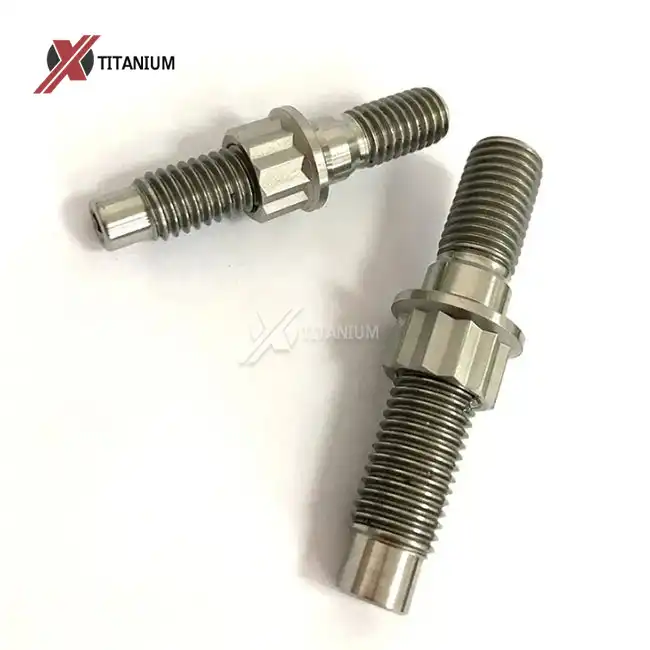
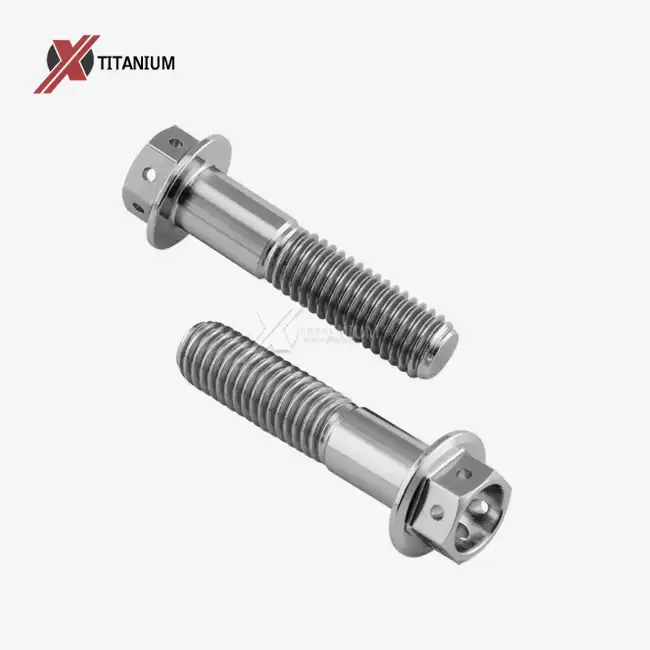
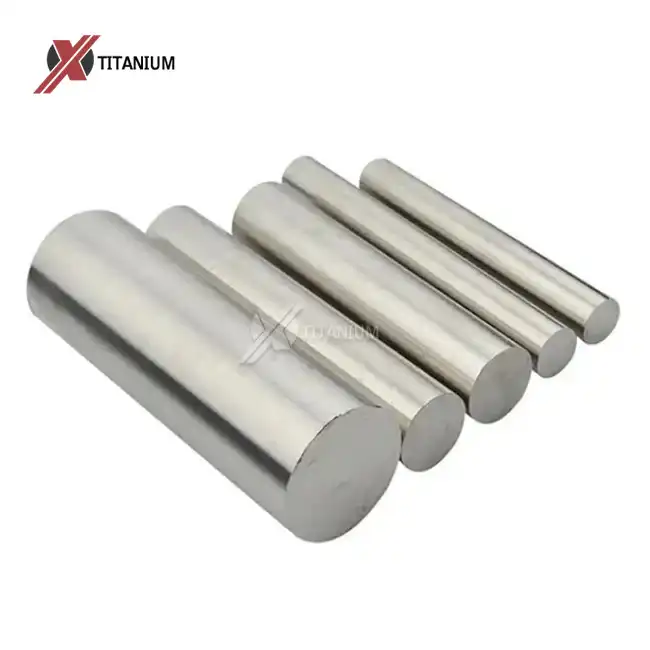
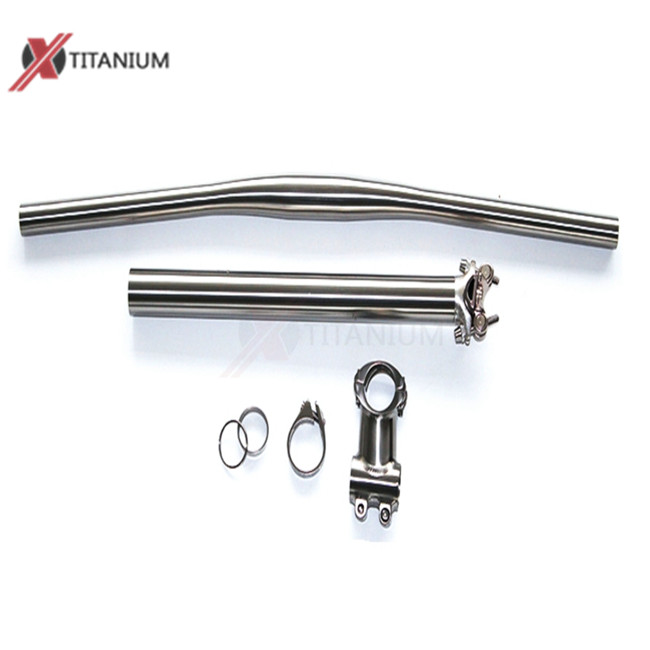
China offers a number of great titanium shoulder bolts manufacturers that make high-precision fasteners for OEMs all around the globe. The Northwest Institute for Non-ferrous Metal Research, Baoji Chuanglian New Metal Material Co., Ltd., and Shaanxi Yunzhong Industry Development all provide complete solutions for titanium fasteners. These companies are great at creating Grade 2 and Grade 5 titanium shoulder bolts for use in the petrochemical, aerospace, medical, and marine industries. Their ISO certifications, tight quality control, and great CNC machining abilities make sure that their corrosion-resistant, lightweight fastening systems work well in tough situations.

China's Competitive Edge in Titanium Shoulder Bolt Manufacturing
Resource Abundance and Geographic Advantages
Most of China's titanium ore is found in Yunnan and Sichuan. Because of this natural abundance, companies may get raw materials at low rates, which leads to competitive pricing for grade 5 titanium shoulder bolts and other high-performance items. There are a lot of specialized enterprises in Baiji City, which is known as the "Titanium Valley of China." They exploit the city's many raw materials and research facilities.
Advanced Manufacturing Infrastructure
Chinese companies that make titanium have put a lot of money into CNC machining and precision grinding machines. To make titanium shoulder bolts with tolerances of ±0.01mm, existing facilities require multi-axis machining. These new technologies let manufacturers keep their cost advantages while still being able to compete with overseas companies.
Skilled Workforce and Engineering Expertise
For decades, working with titanium has created a skilled workforce that specializes in machining exotic metals. Engineers and technicians that work with titanium shoulder bolts for aerospace need to know how to fix difficulties with titanium processing, such as controlling the temperature, choosing the right tools, and improving the quality of the surface.
Essential Criteria for Selecting Reliable Titanium Shoulder Bolt Manufacturers
Technical Capabilities Assessment
Check out the suppliers' machining expertise, particularly when it comes to various grades of titanium. Look for titanium shoulder bolt makers that can make custom orders in M6 and other standard sizes. Look through their tools for CNC machines that can keep fastener tolerances correct.
Quality Management Systems Verification
Analyze the management systems and quality certifications of the supplier. Reputable producers keep thorough records of their quality, such as surface finish requirements, dimensional data, and material certifications. To assess the true quality before placing bigger purchases, request sample parts.
Production Capacity and Delivery Performance
Determine how much the manufacturer can produce in relation to the amount you need. Reliable suppliers consistently deliver on schedule and have sufficient stock of common grades, such as Grade 2 and Grade 5 titanium. For both conventional and bespoke titanium shoulder bolts with metric requirements, ask about their usual wait times.
Engineering Support and Technical Service
Examine the supplier's technical support skills, especially their capacity to provide application engineering help and advice on material selection. Whether titanium shoulder bolts for bicycles or industrial equipment, seasoned producers provide insightful advice on how to optimize fastener design for particular applications.
Supply Chain Stability and Risk Management
Examine the supplier's methods for obtaining raw materials and backup procedures in case the supply chain is disrupted. To guarantee steady material supply, trustworthy manufacturers maintain connections with many titanium suppliers and use risk-reduction techniques.
Communication and Language Capabilities
Successful collaborations need effective communication, particularly when handling intricate technological requirements. Look for vendors that have developed communication channels for order management and technical conversations, as well as technical personnel who know English.
Financial Stability and Business Reputation
Examine the manufacturer's market standing and financial soundness using industry references and client endorsements. More dependable service and support are usually offered by well-established businesses with established clientele throughout the course of the product lifetime.
Critical Certification Requirements for Titanium Fastener Suppliers
International Quality Standard Compliance
The fundamental prerequisite for quality management systems is ISO 9001:2015 certification. However, AS9100 accreditation, which covers particular standards for titanium shoulder bolts aerospace uses, should be maintained by providers catering to aerospace applications. Manufacturers of medical devices must certify biocompatible titanium components using ISO 13485.
Material Traceability and Documentation
Check to see whether suppliers keep full material traceability from raw materials to final goods. This covers mechanical property test results, chemical composition certifications, and heat lot tracking. Applications needing material pedigree, especially in the aerospace and medical sectors, need this kind of certification.
Environmental and Safety Certifications
Modern businesses should adhere to the applicable occupational safety regulations and the ISO 14001 environmental management certification. Corrosion-resistant titanium shoulder bolts that meet environmental requirements for automotive and electrical applications are guaranteed by RoHS certification.
Effective Sourcing Channels and Platform Strategies
Professional B2B Platforms and Directories
Use popular B2B marketplaces like Made-in-China, Global Sources, and Alibaba to identify potential suppliers. These systems provide supplier verification services, customer feedback, and transaction protection measures. Pay close attention to verified manufacturer certificates or Gold Supplier status while searching for titanium shoulder bolt suppliers.
Industry Trade Shows and Exhibitions
Attend relevant trade shows, such the China International Hardware Show, the Fastener Fair, and aerospace industry fairs. These events provide opportunities to meet suppliers face-to-face, evaluate product samples, and form human ties that are critical to long-term partnerships.
Professional Association Networks
Consult trade associations like the China Fastener Industry Association and the International Fastener Industry Association for recommendations on suppliers. These organizations maintain current member directories and provide industry insights that are helpful when selecting vendors.
OEM/ODM Collaboration Best Practices
Design Collaboration and Engineering Support
Close cooperation throughout the design stage is necessary for OEM collaborations to be successful. To guarantee the best possible fastener design, exchange comprehensive specifications, loading scenarios, and environmental requirements. Skilled manufacturers may recommend design changes that preserve functionality while increasing performance or cutting costs.
Prototype Development and Testing Protocols
Clearly define testing procedures and development schedules for prototypes. Before committing to production quantities, request samples of titanium shoulder bolts with hex heads or other particular designs for assessment. To prevent misunderstandings later, clearly define acceptance criteria and testing processes up front.
Intellectual Property Protection
Put in place suitable intellectual property protection measures, such as design ownership provisions and non-disclosure agreements. Clearly state who owns the unique manufacturing techniques and tools created especially for your applications.
Strategic MOQ and Pricing Negotiation Approaches
Understanding Manufacturer Cost Structures
Setup expenses for titanium machining are high, especially when it comes to bespoke tools and programming. Larger volumes are usually preferred by manufacturers in order to amortize these fixed expenses. Knowing this dynamic makes it easier to negotiate competitive prices and appropriate MOQs for lightweight titanium shoulder bolts.
Volume Commitment Strategies
Offer better price and priority scheduling in return for yearly volume commitments. This strategy secures advantageous conditions for your company while giving manufacturers access into production planning.
Payment Terms and Risk Sharing
Payment terms should be negotiated to strike a balance between supplier risk management and cash flow requirements. While keeping progress payments linked to delivery milestones, take into account partial prepayments for specialized tooling.
Comprehensive Factory Audit and Quality Control Guidelines
Manufacturing Capability Assessment
Perform comprehensive facility audits with an emphasis on operator training, maintenance schedules, and equipment condition. Assess their capacity to reliably create precise components for titanium shoulder bolts within predetermined tolerances. Examine their statistical quality monitoring methods and process control protocols.
Quality System Evaluation
Analyze the supplier's processes for final inspection, in-process quality controls, and incoming material inspection. Make sure they keep up with the environmental controls and proper calibration of the measurement equipment required for precise production.
Supply Chain Risk Assessment
Examine the supplier's inventory control procedures, suppliers of raw materials, and backup plans in case of supply interruptions. Evaluate their connections with titanium manufacturers and backup supply agreements.
Distinguishing Characteristics of Leading Suppliers in 2026
Digital Manufacturing Integration
Premium providers have adopted Industry 4.0 technology, including predictive maintenance systems, IoT sensors, and real-time quality monitoring. These features reduce quality variances and allow for the reliable manufacture of high-tensile titanium shoulder bolt components.
Sustainability and Environmental Responsibility
Prominent manufacturers place a high priority on sustainable measures, such as recycling programs, waste reduction plans, and energy-efficient machining techniques. As OEMs prioritize supply chain sustainability, these procedures become more crucial.
Advanced Material Science Capabilities
In order to maximize material qualities for particular applications, exceptional suppliers make investments in metallurgical knowledge and testing capabilities. This covers the creation of unique alloys, surface modification methods, and heat treatment optimization.
Conclusion
A thorough assessment of the technical prowess, quality control methods, and cooperation possibilities is necessary when choosing a titanium shoulder bolts manufacturer in China. Choose vendors that have a track record of success in your business, the necessary qualifications, and a track record of meeting your delivery and quality standards. Competitive price, dependable performance, extensive technical support, and long-term stability are all components of successful collaborations. greater product quality, lower supply chain risks, and greater competitive positioning in your markets are all benefits of investing in careful supplier assessment and relationship building.
FAQ
Q1: What grades of titanium are commonly used for shoulder bolts?
A: The most often used titanium grades for shoulder bolts are Grade 2 (commercially pure) and Grade 5 (Ti-6Al-4V). While Grade 5 offers exceptional strength-to-weight ratio for high-performance and aerospace applications, Grade 2 offers outstanding corrosion resistance for chemical applications.
Q2: How do I verify the quality of titanium shoulder bolts from Chinese manufacturers?
A: Request data from mechanical property tests, dimensional inspection reports, and material certifications. Prior to making production orders, always seek samples for examination and take into account third-party inspection services for crucial applications.
Q3: What is the typical lead time for custom titanium shoulder bolts from China?
A: Quantity and intricacy have an impact on lead times. While special requirements may take 4–8 weeks, including tooling preparation and first item inspection, standard sizes usually take 2-4 weeks.
Partner with Chuanglian for Premium Titanium Shoulder Bolt Solutions
With more than 10 years of specialized expertise in the manufacturing of titanium fasteners, Baoji Chuanglian New Metal Material Co., Ltd. is prepared to be your go-to source for titanium shoulder bolts. Grade 2 and Grade 5 titanium processing, bespoke sizing from M5 to M12, and sophisticated surface treatments like anodizing and polishing are all part of our extensive capabilities. Situated in China's "Titanium City," we provide reliable outcomes for industrial, medical, and aerospace applications by combining affordable prices with outstanding quality control systems. Are you prepared to talk about your particular needs? Contact us at info@cltifastener.com and djy6580@aliyun.com for detailed specifications.
References
1.Zhang, L. & Wang, K. (2023). "Advanced Manufacturing Techniques for Titanium Fasteners in Aerospace Applications." Journal of Materials Processing Technology, Vol. 298, pp. 117-132.
2.Chen, M., Liu, H., & Anderson, R. (2024). "Quality Control Systems in Chinese Titanium Manufacturing: A Comparative Analysis." International Journal of Quality Management, Vol. 41, No. 3, pp. 45-62.
3.Thompson, J.K. & Li, S. (2023). "Global Supply Chain Dynamics in Titanium Component Manufacturing." Supply Chain Management Review, Vol. 27, Issue 4, pp. 28-35.
4.Wu, X., Davis, P.R., & Kumar, S. (2024). "Cost-Benefit Analysis of Titanium Fastener Sourcing Strategies." Journal of Procurement and Supply Management, Vol. 30, pp. 156-171.
5.International Titanium Association. (2024). "Global Titanium Market Report: Manufacturing Capabilities and Regional Analysis." ITA Annual Publication, pp. 89-104.
6.Rodriguez, C.A. & Zhang, Y. (2023). "Certification Requirements and Quality Standards in International Titanium Trade." Materials Quality Assurance Quarterly, Vol. 15, No. 2, pp. 73-88.