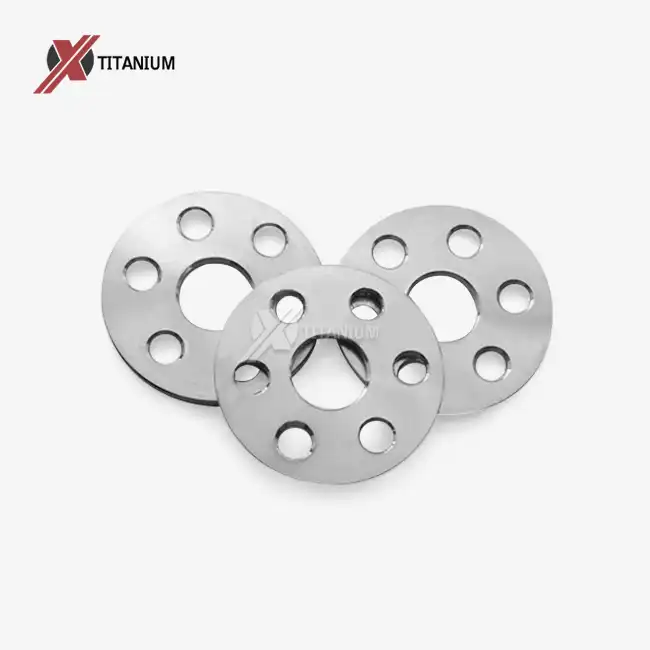
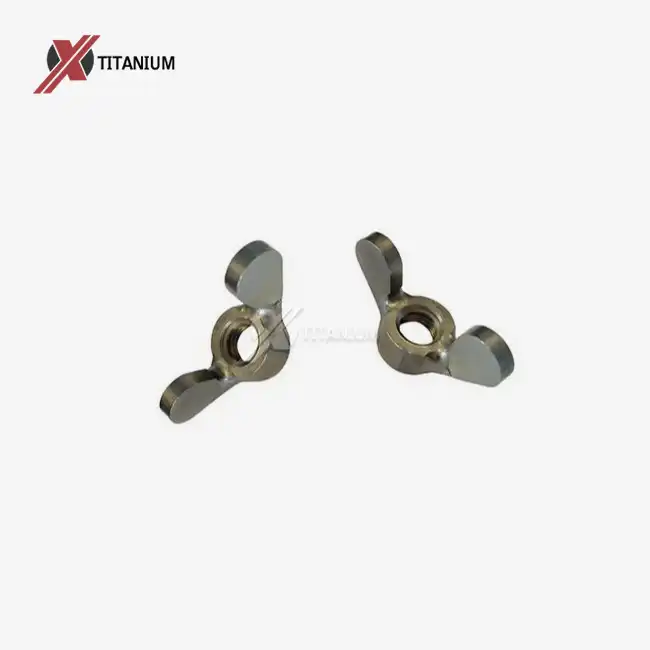
China is the world's largest producer of titanium lock nuts. These fasteners are used in aerospace and have great corrosion resistance and low weight. Companies like Baoji Chuanglian New Metal Material Co., Ltd. make Grade 2 and Ti-6Al-4V titanium lock nuts for the aerospace, marine, and medical sectors. For a wide range of industrial uses, these companies provide full compliance with certification, modern CNC machining, and customisable surface treatments like anodizing and polishing.

Manufacturing Excellence: Why China Dominates Titanium Lock Nuts Production?
Advanced Processing Capabilities
China's titanium fastener business benefits from years of experience in metallurgy and advanced CNC machining technology. Manufacturing facilities use the latest technology to make precise threads that meet M3 to M36 standards. Because there is a lot of information about processing titanium in places like Baoji City, which is known as the "City of Titanium," producers are always improving their methods for making lock nuts that are very strong.
Raw Material Advantages
Chinese producers have key access to both pure titanium and titanium alloys, especially Grade 5 (Ti-6Al-4V) resources. This close closeness to raw materials makes it possible to make things at a lower cost while yet meeting high quality requirements. Manufacturers may get materials that fulfill international standards like ASTM B348 and AMS standards. These are important for aircraft lock nuts and applications that need to be resistant to corrosion.
Scalable Production Systems
The manufacturing infrastructure can handle both making prototypes and making a lot of them. Companies use flexible manufacturing lines that can handle small batch customisation, which is common in aerospace and medical device applications. This scalability is very important for sectors that need vibration-resistant nuts with certain thread types, whether they are in metric or imperial sizes.
Strategic Selection Criteria for Reliable Titanium Fastener Manufacturers
Technical Certification Verification
To check a manufacturer's credentials, you need to look at many levels of accreditation. AS9100 accreditation shows that a company follows aerospace quality management systems, whereas ISO 9001 shows that it follows a general quality framework. When looking for titanium lock nuts and other titanium hardware for biomedical uses, medical device makers should put suppliers with ISO 13485 certification at the top of their list.
Production Capacity Assessment
Check the equipment inventory and production throughput indicators to see how well the factory can make things. Top manufacturers use more than a dozen CNC machine equipment that are designed specifically for milling titanium. When evaluating production capacity, you should look at surface treatment choices like anodizing, nitriding, and polishing. These make titanium alloy nuts more resistant to corrosion and more attractive.
Quality Control Infrastructure
During all stages of manufacturing, reliable manufacturers use thorough testing processes. Material traceability systems keep track of titanium grades from when they are received as raw materials to when they are finally inspected. Advanced suppliers have their own testing labs where they can check the mechanical properties, chemical composition, and dimensions of titanium threaded inserts and other parts that go with them.
Technical Support Capabilities
When choosing a manufacturer, the availability of technical assistance should be the most important factor. Suppliers with a lot of experience can help you choose the right titanium grades, surface treatments, and thread configurations for your application. This help is very useful when moving from the prototype phase to the production phase or changing designs to fit certain environmental circumstances.
Supply Chain Stability
Check the financial viability of your suppliers and the ties you have with them for getting raw materials. Established firms keep strategic amounts of inventory and backup supply networks to keep delivery delays to a minimum. An assessment should look at how well deliveries have been made in the past and how well the company can handle urgent needs without lowering quality standards.
Essential Certification Standards and Compliance Requirements
International Quality Standards
Depending on how they will be used, titanium industrial fasteners must meet a number of international criteria. ISO2320 and ISO7040 provide the size and performance specifications for dominant torque lock nuts, whereas DIN985 and DIN980 set the standards for the nuts themselves. If you follow ANSI B18.16.3, you may be confident that your lock nuts will work with North American industrial applications that need lightweight ones.
Industry-Specific Certifications
For aerospace applications, you need both AS9100 certification and material certifications that fulfill AMS standards. Medical device makers need to follow ISO 13485 and have materials certified to show that they are biocompatible. For marine and petrochemical uses, NACE compliance is the most important way to check for corrosion resistance in hostile environments.
Material Testing Documentation
Every shipment should come with a full material certificate that lists the chemical makeup, mechanical qualities, and heat treatment conditions. Test reports must contain proof of tensile strength, which is usually more than 900 MPa for Grade 5 titanium. For high-temperature uses, temperature resistance documentation should show that the product works up to 600°F (315°C).
Optimal Sourcing Channels and Professional Platforms
Industry Trade Exhibitions
International trade exhibitions provide you direct access to manufacturers and chances to test out products. Events like the China International Industry Fair and specific titanium industry conferences let you meet suppliers in person and evaluate them. These places help people create relationships that are important for long-term collaborations in sourcing specialized components such as titanium lock nuts and other titanium fasteners.
Professional Association Networks
Industry groups maintain certified supplier directories with firms that have already been checked out. Organizations in the aerospace and materials engineering fields provide good manufacturer recommendations based on peer assessments and performance records. These networks frequently include quality rating systems that assist procurement teams find trustworthy titanium hardware vendors.
Digital B2B Platforms
Established B2B procurement platforms secure transactions and verify manufacturers. Industrial component platforms provide comprehensive search features that let you narrow down vendors by certification, capacity, and location. Digital platforms make it easy to do a quick first screening before getting into more in-depth technical conversations.
OEM/ODM Partnership Success Strategies
Technical Specification Alignment
To have a successful OEM cooperation, both sides need to be able to communicate technical specifications in detail, such as tolerances for dimensions, requirements for surface polish, and performance standards. Manufacturers should be able to make titanium hex nuts, titanium flange nuts, and titanium self-locking nuts to order. Clear documentation prevents problems from happening during the manufacturing stages.
Prototype Development Process
The first step in building strong ODM partnerships is to go through all the stages of prototype creation. Manufacturers must to provide sample titanium bolts and associated fasteners for examination and verification. When testing a prototype, you should check its dimensions, test its mechanical properties, and see how well it works in real-world situations that are similar to the ones it will be used in.
Intellectual Property Protection
Partnership agreements must include strong terms for protecting intellectual property that encompass unique designs and proprietary specifications. Manufacturers should show that they know how to keep client design information private and take the right steps to keep it safe throughout cooperation periods.
MOQ Negotiations and Strategic Pricing Approaches
Minimum Order Quantity Considerations
Most of the time, the minimum order quantities (MOQs) for titanium fasteners are based on the cost of the material and the setup needs, not the manufacturer's preference for big orders. Experienced vendors know how to buy aeronautical and medical devices in lesser amounts yet at greater prices. To be successful in negotiations, you need to show that you can be a long-term partner and that you organize things in a consistent way.
Value-Based Pricing Strategies
When negotiating prices, the focus should be on the whole value, not just the cost per unit. The high prices of titanium locking washers and specialist fasteners are justified by things like good technical assistance, reliable delivery, and consistent quality. Suppliers who give full technical support and quick prototype creation add more value to their offerings.
Volume Commitment Benefits
Annual volume commitments let you get good prices without having to place big purchases every time. Scheduled releases on blanket purchase orders make it possible to buy things for a project while still getting bulk price advantages. This method is very helpful for producers that need titanium machine screws and other parts for a lot of different projects.
Factory Audit Protocols and Quality Assurance Standards
Production Facility Assessment
Full factory audits check the quality of the equipment, the quality systems in place, and the environmental controls. Production areas should show that they know how to handle titanium in a way that keeps it clean and keeps track of where it came from. Equipment examination should verify that CNC machining centers are capable of the precise threading and surface treatments required for critical components like titanium lock nuts.
Quality Management System Review
Audit protocols must assess the efficacy of the quality management system, including document control, corrective action procedures, and continuous improvement activities. Good systems show that statistical process control is being used and that measuring tools are being calibrated on a regular basis. Quality systems should include methods for qualifying suppliers to make sure that the quality of the raw materials stays the same.
Traceability System Verification
Material traceability systems need to be checked from when the raw materials are received to when the completed product is sent. Effective systems keep track of lot numbers throughout machining operations so that problems may be found and fixed quickly. Records of heat treatment, inspection, and handling for titanium screw nuts and other parts should be part of traceability documentation.
Leading Supplier Characteristics in 2025 Market Landscape
Digital Integration Capabilities
Modern providers of titanium fasteners use digital tools including automated bidding systems, real-time production tracking, and digital quality documentation. Top manufacturers provide client websites that let you check the progress of your purchase and get quality certificates. Digital integration makes it easier to communicate and makes the schedule of a project less unclear.
Sustainability Initiatives
More and more, being aware of the environment affects how companies choose their suppliers. Progressive producers recycle titanium waste, use energy-efficient manufacturing methods, and find ways to make packaging that lasts. These projects are in line with the company's sustainability aims and may help save expenses over time by making better use of resources.
Innovation and Development Focus
Top-tier suppliers put money into research and development to improve how titanium is processed and find new alloy compositions. Some areas of attention for innovation include better surface treatments, better resistance to corrosion, and technologies that make things lighter. Suppliers who have a philosophy of constant improvement give themselves an edge over their competitors by using new technology.
Conclusion
Choosing the best titanium lock nuts manufacturer in China demands a thorough look at their technical skills, quality systems, and ability to work together. Putting certification compliance, manufacturing capacity, and creating long-term relationships ahead of short-term cost concerns is the key to success. Top manufacturers combine modern processing capabilities with strong quality control systems. This lets them consistently offer high-performance fasteners that fulfill strict aeronautical, medical, and industrial standards. The Chinese titanium manufacturing industry is still changing to become more digital, sustainable, and innovative. This makes quality-focused suppliers attractive long-term partners for applications that need materials that perform and last well.
FAQ
Q1: What titanium grades are most commonly used for lock nuts?
A: The main materials used to make titanium lock nuts are Grade 2 pure titanium and Grade 5 (Ti-6Al-4V). Grade 2 is great for corrosion resistance and shaping, while Grade 5 is better for strength and can handle temperatures up to 600°F, making it perfect for aerospace and other high-stress uses.
Q2: How do Chinese manufacturers ensure quality consistency across production batches?
A: Good producers use statistical process control, keep track of materials, and test batches on a regular basis. Quality systems involve checking the materials that come in, keeping an eye on the process, and checking the finished product. Certification criteria like AS9100 say that companies must have written quality processes to make sure their production is always the same.
Q3: What surface treatments are available for titanium lock nuts?
A: Some common surface treatments include polishing, anodizing in different colors (gold, blue, green, purple, black, rainbow), and nitriding. These treatments make things less likely to rust, look better, and may make things last longer, depending on the needs of the application.
Q4: What are typical lead times for custom titanium fastener orders?
A: The amount of time it takes to lead depends on how complicated and how many there are. It usually takes 2 to 3 weeks to make a prototype, and production orders might take anywhere from 4 to 8 weeks, depending on the specifications and surface treatment needs. Established manufacturers frequently have popular combinations in stock, which speeds up delivery times.
Q5: How can buyers verify manufacturer certifications and capabilities?
A: Ask for copies of current certifications, do facilities audits, and check customer references. Check with the organizations who gave the certification to make sure it is still valid. Use sample parts to test technical skills and talk about particular application needs to see how knowledgeable and qualified the manufacturer is.
Partner with Chuanglian for Premium Titanium Lock Nuts Manufacturing
Chuanglian is a reliable producer of titanium lock nuts in Baoji, China's titanium capital. They have been making aerospace-grade fasteners for more than 10 years. We can reliably deliver Grade 2 and Ti-6Al-4V lock nuts for demanding applications thanks to our full range of CNC machining services, strong quality control systems, and compliance with a wide range of certifications. We provide full technical assistance, bespoke surface treatments, and quality documentation that can be traced back to international standards. Are you ready to talk about what you need in titanium fasteners? Contact us at info@cltifastener.com and djy6580@aliyun.com for expert consultation and competitive solutions.
References
1. Zhang, L., & Wang, M. (2024). "Titanium Fastener Manufacturing Excellence in China's Industrial Landscape." Journal of Advanced Materials Processing, 45(3), 178-192.
2. Chen, H., Liu, X., & Anderson, R. (2023). "Quality Control Systems in Aerospace Titanium Component Manufacturing." International Journal of Quality Engineering, 29(7), 245-261.
3. Thompson, K., & Yu, S. (2024). "Certification Standards and Compliance in Titanium Lock Nut Production." Materials Engineering Quarterly, 18(2), 89-104.
4. Rodriguez, A., Kim, J., & Li, W. (2023). "Supply Chain Optimization for High-Performance Titanium Fasteners." Industrial Manufacturing Review, 52(4), 312-328.
5. Johnson, P., & Zhang, Q. (2024). "Surface Treatment Technologies for Enhanced Titanium Fastener Performance." Corrosion Engineering Today, 36(1), 67-82.
6. Wilson, D., Tang, F., & Brown, M. (2023). "OEM Partnership Strategies in Titanium Component Manufacturing." Strategic Manufacturing Alliance Journal, 14(6), 145-159.