- English
- French
- German
- Portuguese
- Spanish
- Russian
- Japanese
- Korean
- Arabic
- Greek
- German
- Turkish
- Italian
- Danish
- Romanian
- Indonesian
- Czech
- Afrikaans
- Swedish
- Polish
- Basque
- Catalan
- Esperanto
- Hindi
- Lao
- Albanian
- Amharic
- Armenian
- Azerbaijani
- Belarusian
- Bengali
- Bosnian
- Bulgarian
- Cebuano
- Chichewa
- Corsican
- Croatian
- Dutch
- Estonian
- Filipino
- Finnish
- Frisian
- Galician
- Georgian
- Gujarati
- Haitian
- Hausa
- Hawaiian
- Hebrew
- Hmong
- Hungarian
- Icelandic
- Igbo
- Javanese
- Kannada
- Kazakh
- Khmer
- Kurdish
- Kyrgyz
- Latin
- Latvian
- Lithuanian
- Luxembou..
- Macedonian
- Malagasy
- Malay
- Malayalam
- Maltese
- Maori
- Marathi
- Mongolian
- Burmese
- Nepali
- Norwegian
- Pashto
- Persian
- Punjabi
- Serbian
- Sesotho
- Sinhala
- Slovak
- Slovenian
- Somali
- Samoan
- Scots Gaelic
- Shona
- Sindhi
- Sundanese
- Swahili
- Tajik
- Tamil
- Telugu
- Thai
- Ukrainian
- Urdu
- Uzbek
- Vietnamese
- Welsh
- Xhosa
- Yiddish
- Yoruba
- Zulu
Ultimate Guide to Buying Titanium Countersunk Screws
When sourcing precision fasteners for mission-critical applications, titanium countersunk screws represent the gold standard for industries demanding superior performance, weight reduction, and corrosion resistance. These specialized fasteners combine the flush-mounting advantages of countersunk geometry with titanium's exceptional material properties, making them indispensable for aerospace, marine, medical, and high-performance applications. Understanding their unique characteristics, proper selection criteria, and procurement strategies enables engineering teams and purchasing managers to make informed decisions that optimize both performance and cost-effectiveness across demanding operational environments.
Understanding Titanium Countersunk Screws: Properties and Benefits
When looking for accurate fasteners for mission-critical uses, titanium countersunk screws are the best choice for businesses that need high performance, low weight, and resistance to corrosion. These special screws combine the flush-mounting benefits of countersunk geometry with the unique properties of titanium. This makes them essential for high-performance, medical, aircraft, and marine uses. When engineering teams and buying managers know about the different types of products, how to choose the best ones, and the best ways to buy them, they can make decisions that improve performance and cut costs in tough working settings.
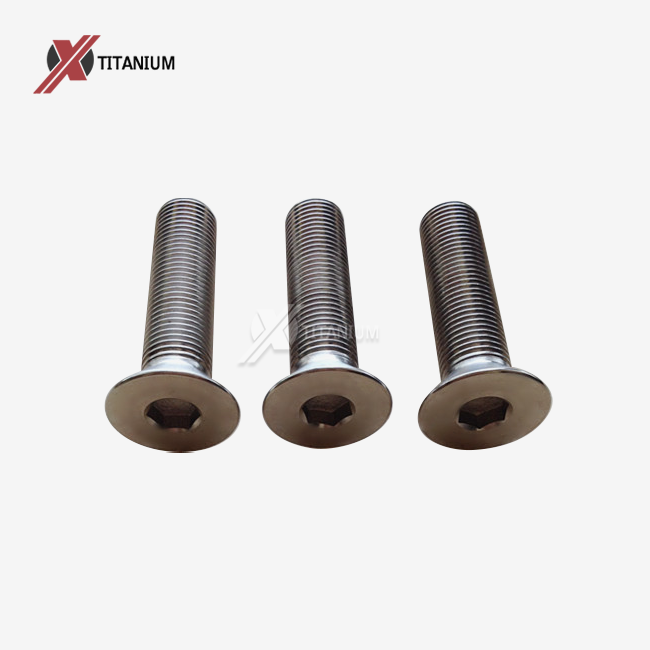
Titanium countersunk screws are perfectly made fasteners with a flat top and a conical bearing surface that is meant to sit flush with or below the base surface. The countersunk head usually stays at a 90° angle for metric standards or an 82° angle for imperial standards. This makes the shape smooth and aerodynamic, which gets rid of drag and snagging risks in important situations.
Superior Material Properties
Titanium's amazing mix of strength, weight, and resistance to the environment is the main benefit of these screws. Grade 5 titanium (Ti-6Al-4V) has a tensile strength close to 950 MPa, which is about the same as high-grade steel. However, at 4.43 g/cm³, it is only 56% as dense as steel. This amazing strength-to-weight ratio is very useful in aircraft uses where every gram counts when it comes to fuel economy and payload capability.
Grade 2 titanium has a modest strength of about 345 MPa and is very easy to bend and shape. This grade is commercially pure and works great in places where corrosion protection is more important than maximum strength, like coastal settings and equipment used in chemical processing.
Environmental Resistance Capabilities
Titanium naturally forms a solid layer of titanium dioxide (TiO2), which makes it very resistant to chlorides, saltwater, and acidic acids. When this passive layer gets broken, it heals itself naturally, so it doesn't need any other treatments or coatings to keep it safe. Titanium, on the other hand, doesn't rust even in places with little air, which makes it perfect for use underwater and in chemical processes. For applications like fastening components, Titanium countersunk screws take full advantage of this corrosion resistance, ensuring longevity and reliability in harsh environments.
The material is not magnetic (permeability < 1.002), which is very important in places like MRI centers, sensitive electronics, and precision instruments where magnetic interference is not allowed. Titanium is also biocompatible, which means it meets FDA standards for medical hardware and surgery tools.
Flush-Mount Design Advantages
The countersunk shape answers certain problems in many different industries. In aircraft uses, the flush head keeps the air flowing smoothly over the wing surfaces and fuselage panels. This lowers the amount of unwanted drag and makes the fuel use more efficient. Marine deck hardware works better with surfaces that don't catch on things like fishing nets, ropes, and safety gear. To keep tissues from getting hurt and to make cleaning easier, medical equipment need to have smooth outlines.
How to Choose the Right Titanium Countersunk Screws for Your Application?
It is important to carefully consider working needs, environmental conditions, and performance standards when choosing the right titanium countersunk fasteners. During the decision process, there are a number of technical factors that have an immediate effect on the long-term performance and dependability.
Grade Selection Criteria
The main things that determine which type of titanium to use are the mechanical needs and the climate it will be exposed to. Grade 5 (Ti-6Al-4V) is good for structural uses that need the most strength, like engine mounts for airplanes, links for high-pressure vessels, and parts of cars that carry weight. Its alpha-beta architecture makes it very resistant to wear when loaded and unloaded many times.
Grade 2 titanium works best for non-structural uses where resistance to rust is more important than strength. Grade 2 is great for marine gear, chemical processing equipment, and building uses because it is easy to shape and doesn't cost much. It also resists the elements very well.
Dimensional and Threading Considerations
Standard production follows the rules set by DIN 7991, ISO 10642, and ASME B18.3. This makes sure that the products are compatible with technical standards around the world. For the countersink angle to work, the screw and hole preparation must be perfectly matched. When angles don't match up, stress builds up and can cause the part to break early when force is applied.
Thread standards need to take into account the different rates of thermal expansion between titanium screws and the materials they are attached to. Metric threading usually works better with small screws because the threads engage better, and uniform thread standards make it easier to use current tools and equipment.
Drive System Selection
Because they can transfer power better, hex socket (Allen) and hexalobular (Torx) drives are the most common types used for titanium countersunk screws. Because of the smaller head volume in countersunk designs, drive depth is limited. This means that high-quality drive systems are needed for the right fitting power without cam-out or drive stripping.
In naval settings, where salt crystals build up in hex sockets and make upkeep harder, slotted drives are used instead. Although the open design makes it easier to clean and examine, it can't transmit as much power as hex systems can.
Cost-Performance Analysis
Titanium fasteners are more expensive than stainless steel or aluminum options, but their better performance often makes up for the extra cost by extending their useful life and requiring less upkeep. When reviewing procurement choices, the total cost of ownership should take into account how often things need to be replaced, how much they cost to fix when they break down, and how much better they work.
Best Practices for Using Titanium Countersunk Screws
Installing and maintaining titanium countersunk screws correctly has a big effect on how well they work and how long they last. Understanding the unique properties of a material can help you avoid common fitting mistakes that damage joints and make fasteners less reliable.
Installation Techniques and Torque Management
Because titanium is more flexible than steel, the pressure requirements need to be changed to keep it from being over-stressed. Most of the time, it's best to use 70 to 80% of the similar steel fastener torque values. For countersunk heads, this should be even lower because the drive contact depth is limited. This method stops galling and makes sure there is enough loading to keep the joint strong.
Anti-seize chemicals are very important for titanium installations, especially in places with high temperatures or changing loads. Nickel-based anti-seize pastes or molybdenum disulfide (MoS2) coats stop cold-welding between titanium surfaces during installation and service afterward.
Tool Selection and Compatibility
High-quality drive tools made from sharpened steel or carbide materials keep installation materials from wearing out too quickly. The exact fit between the drive tool and the bolt hole keeps stress from building up in places where it could damage either part. Magnetic tool cases should not be used because metal particles could get inside them and make them dirty.
Torque wrenches that are set for titanium uses make sure that the preload is always the same without going over the yield strength of the material. For consistent results, click-type torque tools are best, while beam-type instruments let you keep an eye on the torque even while tightening steps are happening.
Maintenance and Inspection Protocols
Visual checks for rust, wear, or mechanical damage should be the main focus of regular inspections. Titanium's inactive oxide layer may get a little discolored over time, but this doesn't mean it's losing its performance. But deep scratches or gouges that go through the oxide layer need to be fixed to stop localized rust from starting.
When cleaning, you should not use chlorine agents or rough chemicals that could hurt the protective oxide layer. Mild soaps and clean water are good for most cleaning jobs, but titanium cleaners are better for getting rid of tough dirt without damaging the surface.
Real-World Performance Validation
Aerospace companies have found that titanium countersunk screws used in commercial airplanes can last for more than 20 years, even when they are loaded and unloaded many times and are exposed to the environment. In saltwater settings, marine systems last about as long as stainless steel ones, which usually need to be replaced every 5 to 7 years.
Electronics companies say that using titanium screws in sensitive measurement equipment doesn't cause any problems with magnetic interference. This proves that the material is suitable for use in precision instruments.
Procurement Strategies for Titanium Countersunk Screws
To buy titanium countersunk screws effectively, you need to know how the supply chain works, how to check for quality, and how to evaluate suppliers. Because working titanium is so specialized, it presents both unique challenges and chances when it comes to buying.
Supplier Evaluation and Qualification
Reliable titanium fastener sources have strict quality control systems that include AS9100 aircraft certification, ISO 9001 quality management, and accreditations specific to the industry. These certificates make sure that the manufacturing process is always the same and that materials can be tracked, which is very important for important uses.
Manufacturing should include handling all materials in-house, from raw materials to produced goods. This way, quality control can be done at every step of the production process. Suppliers with specialized titanium processing facilities don't have to worry about the risks of cross-contamination that come with working with more than one material.
Quality Assurance and Material Certification
It is important to have material test certificates (MTCs) to prove the grade, chemical make-up, and mechanical qualities of something. These certificates help with following industry standards and meeting customer needs by allowing tracking back to the original mill sources.
Coordinate measuring machines (CMMs) and optical measurement systems are two types of dimensional checking tools that make sure that tight tolerance standards common in precision applications are met. Statistical process control (SPC) data shows that the same steps are used to make each batch of products.
Lead Time Management and Inventory Strategies
Titanium has unique production needs that usually make wait times longer than for other materials. Depending on the complexity of the specifications and the amount needed, standard production plans run from 6 to 12 weeks. With blanket buy orders and planned releases, strategic inventory management can shorten these longer lead times.
When you work with known suppliers who keep extras of items that are often bought, just-in-time delivery programs work well. But custom setups and special alloys need to be planned for ahead of time so that the plans for getting materials and processing them work.
Cost Optimization Through Volume Purchasing
Bulk buying deals save a lot of money because they make better use of materials and lower the cost of setting up each unit. Titanium is a very valuable metal, so it's important to carefully predict demand so that you don't have to pay too much to store too much of it.
Partnership deals with qualified providers can give you access to better prices, sure capacity allocation, and expert help. These connections are especially helpful for businesses that need titanium on a regular basis for more than one product line.
Conclusion
Titanium countersunk screws are an important way to hold things together in businesses that need high performance, resistance to environmental damage, and reduced weight. Their unique flush-mount shape and the great properties of titanium make them the best choice for high-performance, medical, military, and marine uses. To be good at procurement, you need to know about material types, how to choose the right ones, how to put things correctly, and how to evaluate suppliers. The money spent on high-quality titanium screws returns in the form of longer system life, less upkeep, and better performance in harsh operating conditions.
FAQ
Q1: What causes galling during titanium countersunk screw installation?
A: Titanium has a high coefficient of friction and tends to cold-weld, which makes installation more likely to cause galling. Because of the way the material's surface is made, pressure and friction cause tiny bonding between threaded surfaces. For prevention, anti-seize substances like molybdenum disulfide (MoS2) paste or nickel-based lubricants must be put on the threads before they are installed. To get rid of this problem completely, some makers use solid lubricant coats or anodized finishes.
Q2: Can I interchange 90° and 82° countersunk screws?
A: For proper load transfer and joint stability, countersink angle compatibility is very important. When you use a 90° metric screw in an 82° imperial hole, the line only contacts the outside, putting a lot of stress on the head and causing it to break before it should. The angle mismatch stops the part from fitting properly, which can lead to a catastrophic failure when force is applied. Always make sure that the sides of the screw and hole are exactly the same, as specified in the plan.
Q3: Which titanium grade provides better performance?
A: The grade you choose relies on the standards of your application. Grade 5 (Ti-6Al-4V) has a maximum strength of about 950 MPa, which makes it perfect for structural and high-stress uses like parts for airplanes and cars. Grade 2 has a middling strength of about 345 MPa and is better at resisting corrosion and being flexible, so it can be used for non-structural tasks in chemical and marine settings. Because it is cheaper, Grade 2 is also better for uses that don't need the most power.
Q4: Are titanium countersunk screws compatible with MRI equipment?
A: Because titanium isn't magnetic, these screws can be used in MRI rooms without any problems. The magnetic permeability of the material stays below 1.002, so it doesn't affect magnetic fields or the quality of images. This trait also applies to other sensitive areas, like particle accelerators, high-precision measuring tools, and electrical instruments, where magnetic materials might cause problems or even be dangerous.
Q5: What torque specifications should I use for titanium fasteners?
A: Due to its higher flexibility than steel, titanium needs lower force values to keep it from being over-stressed. Apply about 70–80% of the torque specs for a similar steel fastener, with an extra drop for countersunk heads because the drive engagement depth is limited. Always check the manufacturer's instructions, and if you want to avoid galling or thread damage during fitting, you might want to use torque-limiting tools.
Partner with Chuanglian for Premium Titanium Countersunk Screws
Baoji Chuanglian New Metal Material Co., Ltd. is a reliable company that makes titanium countersunk screws. They have been working with titanium for over ten years and have strict quality control systems in place. Our factory is in China's famous "City of Titanium," and it follows AS9100 aerospace approval and ISO 9001 quality management standards. This makes sure that the material properties and dimensions are always the same for your most demanding uses. Our engineering team can help you choose the right grade, make the best specifications, and find industrial options that are perfect for your needs. Get in touch with our buying experts at info@cltifastener.com or djy6580@aliyun.com to talk about your titanium fastener needs and find out how our proven skills can help your project success.
References
1. Boyer, R.R., "An Overview on the Use of Titanium in the Aerospace Industry," Materials Science and Engineering A, Vol. 213, No. 1-2, 1996.
2. Lutjering, G. and Williams, J.C., "Titanium: Engineering Materials and Processes," 2nd Edition, Springer-Verlag Berlin Heidelberg, 2007.
3. American Society for Testing and Materials, "Standard Specification for Titanium and Titanium Alloy Strip, Sheet, and Plate," ASTM B265-20a, 2020.
4. Aerospace Industries Association, "National Aerospace Standard for Titanium Alloy Fasteners," NAS 1351-1395 Series, 2019.
5. International Organization for Standardization, "Hexagon Socket Countersunk Head Cap Screws," ISO 10642:2004, 2004.
6. Donachie, M.J., "Titanium: A Technical Guide," 2nd Edition, ASM International, 2000.
Learn about our latest products and discounts through SMS or email