- English
- French
- German
- Portuguese
- Spanish
- Russian
- Japanese
- Korean
- Arabic
- Greek
- German
- Turkish
- Italian
- Danish
- Romanian
- Indonesian
- Czech
- Afrikaans
- Swedish
- Polish
- Basque
- Catalan
- Esperanto
- Hindi
- Lao
- Albanian
- Amharic
- Armenian
- Azerbaijani
- Belarusian
- Bengali
- Bosnian
- Bulgarian
- Cebuano
- Chichewa
- Corsican
- Croatian
- Dutch
- Estonian
- Filipino
- Finnish
- Frisian
- Galician
- Georgian
- Gujarati
- Haitian
- Hausa
- Hawaiian
- Hebrew
- Hmong
- Hungarian
- Icelandic
- Igbo
- Javanese
- Kannada
- Kazakh
- Khmer
- Kurdish
- Kyrgyz
- Latin
- Latvian
- Lithuanian
- Luxembou..
- Macedonian
- Malagasy
- Malay
- Malayalam
- Maltese
- Maori
- Marathi
- Mongolian
- Burmese
- Nepali
- Norwegian
- Pashto
- Persian
- Punjabi
- Serbian
- Sesotho
- Sinhala
- Slovak
- Slovenian
- Somali
- Samoan
- Scots Gaelic
- Shona
- Sindhi
- Sundanese
- Swahili
- Tajik
- Tamil
- Telugu
- Thai
- Ukrainian
- Urdu
- Uzbek
- Vietnamese
- Welsh
- Xhosa
- Yiddish
- Yoruba
- Zulu
Titanium Clevis Pins: Uses, Types, and Specifications
Titanium clevis pins are the best fixing technology for high-performance applications that need to work in harsh circumstances. These special cylinder screws have a shank that isn't threaded and has a head on one end and a cross-hole on the other end for cotter pins or safety clips to attach to. These pins are mostly made from Grade 2 or Grade 5 titanium metals, which give them great strength-to-weight ratios, unmatched corrosion protection, and long-lasting performance. Because they can survive harsh environments and act as pivot points in important systems, they are essential in aircraft, marine, and high-performance car uses where standard steel fasteners would fail catastrophically.
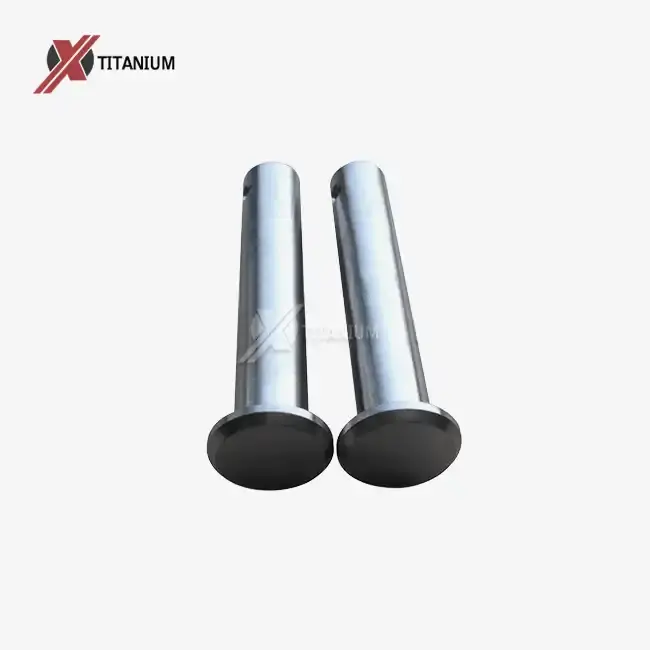
Understanding Titanium Clevis Pins: Properties and Benefits
What makes titanium clevis pins work so well is that they are made of alloys with special metal qualities. The tensile strengths of these screws range from 240 MPa for Grade 2 to 950 MPa for Grade 5. They also have a density that is about 40% lower than steel versions.
Superior Material Characteristics
Titanium clevis pins are very strong because they have a solid structure that makes them very resistant to wear and stress corrosion cracking. Titanium makes a protected oxide layer that heals itself when it gets broken, unlike regular steel pins that break down in marine settings because of chloride. This passive film keeps working well in salty environments, chemical plants, and remote platforms, where other materials would break down quickly in contact with water.
Titanium clevis pins keep their mechanical qualities at temperatures ranging from very cold (cryogenic) to very hot (400°C), which is another important benefit. This thermal stability is very important in aerospace uses where parts' temperatures change a lot during flying cycles. The low thermal expansion rate also keeps stress levels low in parts that are heated and cooled over and over again.
Comparative Performance Analysis
When compared to more standard options, titanium clevis pins show clear improvements in a number of performance areas. Even though steel pins are cheap at first, they need to be replaced often because they break down due to rust, especially in marine settings. Different materials made of aluminum are lighter, but they don't have the bending strength needed for heavy loads. Stainless steel has a middling resistance to rust, but it can still pit and crack when it's exposed to chloride.
Within marine settings, research by the American Society for Metals shows that titanium screws last three to five times longer than stainless steel ones. This longer operating lifespan means lower maintenance costs and more reliable systems. This is especially important for installations offshore, where limited access makes regular upkeep hard.
Titanium Clevis Pin Types and Specifications
Titanium clevis pins must be made in strict accordance with ASTM, ASME, and industry-specific standards. These standards make sure that the quality and performance are always the same. You can choose between Grade 2 and Grade 5 titanium depending on the needs of the application. Each grade has its own benefits for certain uses.
Grade Classifications and Properties
Grade 2 titanium, which is also known as commercially pure titanium, is very resistant to rust and easy to shape, but it is not very strong. These pins usually have yield strengths of 275 MPa and final tensile strengths of 345 MPa. This means they can be used in situations where corrosion protection is more important than maximum strength. Grade 2 pins work great in medical equipment, chemical processing equipment, and naval gear where biocompatibility is very important.
As the standard in the aerospace business, Grade 5 titanium alloy (Ti-6Al-4V) has much better strength properties thanks to the addition of aluminum and vanadium. It is possible for these pins to have yield strengths higher than 880 MPa while still performing well at high temperatures and against wear. Because they have better mechanical properties, Grade 5 pins are perfect for high-performance car uses, important aerospace parts, and heavy-duty industry equipment.
Manufacturing Processes and Quality Control
Precision making of titanium clevis pins includes several quality checks to make sure the dimensions are correct and the material is solid. The process usually starts with approved titanium bar stock that is tested for its chemical makeup and mechanical properties. Tolerances for key measurements are kept within ±0.05mm during CNC machining operations, and surface finishing operations get roughness levels below 1.6 μm.
To make Grade 5 pins stronger and more flexible, they are heated at 955°C for solution treatment and then cooled at 540°C. Ultrasonic screening and penetrant testing are two examples of non-destructive testing methods that check for internal flaws that could affect performance. To meet the standards for traceability, certification kits come with material test records, dimensional inspection reports, and chemical analysis data.
Application Scenarios and Performance Insights
The fact that titanium clevis pins are used in a wide range of industries shows how flexible and reliable they are in harsh working conditions. In these uses, titanium's unique mix of strength, resistance to rust, and light weight makes it a better choice than other materials.
Aerospace and Aviation Applications
Titanium clevis pins are used in vital flight control systems on both military and civilian airplanes because failure would have very bad results. These pins are pivot points in the aileron, elevator, and rudder assemblies. They pass control loads while keeping the assemblies precisely positioned at an angle. Titanium helps reduce weight, which leads to better fuel economy and more payload space.
Analysis of flight data from major aircraft makers shows that titanium clevis pins in control connections don't wear out much after 10,000 flight hours, while steel options start to break down after 5,000 hours. This longer service life cuts down on repair intervals and raises the availability rate of airplanes, which has a direct effect on how profitable it is for commercial operators to run their businesses.
Marine and Offshore Engineering
Titanium clevis pins are being used more and more by companies that make underwater tools for remotely operated vehicle (ROV) manipulator systems and subsea valve actuators. Seawater is very active, especially in deep-ocean places with high pressure and little air. This makes it easy for normal materials to break down quickly.
After five years of service, titanium pins in North Sea oil platforms have shown very little rust or mechanical wear, even when they are exposed to high-pressure seawater and hydrocarbon conditions. This makes the equipment last longer, so it doesn't need to be replaced as often and there is less chance that it will break down during important activities.
Industrial and Manufacturing Equipment
Titanium clevis pins have great shear strength and wear resistance, which makes them ideal for big machinery and processing equipment that is used under a lot of stress. Mining tools, where pins are loaded and unloaded over and over again in rough conditions, shows how useful titanium's better wear resistance is in real life.
Through case studies from mine operations, we can see that titanium pins in excavator bucket systems last 50% longer than hardened steel options. They also stay within tighter tolerances for longer. This improvement in performance cuts down on machine downtime and repair costs while making operations run more smoothly.
How to Choose the Right Titanium Clevis Pin for Your Needs
To choose the right titanium clevis pins, you need to carefully consider the needs of your application, such as the load conditions, the climate, and whether the pins will work with other gear. This evaluation method makes sure that the best performance is achieved while avoiding over-specification, which raises the cost of parts for no reason.
Load and Stress Analysis
The first step in figuring out the right pin size is to figure out the pin's highest shear loads and bearing stresses. The pin's diameter needs to have enough cross-sectional area to handle high loads with the right safety factors, which are usually between 2:1 and 4:1, based on how important the application is.
When there is dynamic pressure, fatigue life and stress peaks at the pin-to-bearing contact need to be thought about even more. Finite element analysis can help you find the best pin shape to keep stress concentrations to a minimum while still making sure there are enough strength gaps for cyclic loading. When working conditions call for maximum longevity, surface treatments like shot peening or nitriding can make fatigue resistance even better.
Environmental Considerations
Chemical contact, high temperatures, and galvanic interaction all have an effect on the type of material that is used and how it is treated on the outside. Grade 7 titanium, which contains palladium to improve rust resistance in harsh chemical environments, may be useful for uses that will be exposed to strong acids or reducing environments.
To avoid galvanic rusting, it's important to think about how different metals will touch each other, especially when titanium pins touch aluminum or steel parts. With the right isolation methods or suitable coatings, less valuable metals don't rust as quickly, and titanium's corrosion protection benefits are still present.
Supplier Qualification and Certification
Reliable suppliers have full quality management systems that are approved to AS9100, ISO 9001, or standards relevant to the industry. These systems make sure that the quality of the products is always the same and that they can be tracked. When a material is certified, its chemical makeup, mechanical properties, and compliance with relevant ASTM standards should all be checked.
When evaluating a supplier, you should look at their manufacturing skills, quality systems, delivery performance, and expert help resources. Established providers offer technical help for choosing materials, making custom changes, and giving advice based on an application that improves component performance while lowering costs over its lifetime.
Trusted Suppliers and Purchasing Guidance
The most important thing for getting high-quality titanium clevis pins that meet strict industry standards is building relationships with qualified sources. Because handling titanium is so specialized, it needs sources with a lot of metalworking knowledge and a track record of making things.
Supplier Selection Criteria
The biggest companies that make titanium fasteners keep full testing labs with spectrometers, tension testing equipment, and metallographic facilities to make sure the materials' qualities and the accuracy of their measurements. These abilities make it possible to quickly test new goods and give customers trust in the quality of the delivery.
Being close to big industrial areas helps with logistics by speeding up shipping and providing technical support. North American providers offer shorter wait times to customers in the United States while keeping enough product on hand to meet urgent needs quickly. You can also get special grades and custom setups that aren't available through normal routes of marketing through established supplier networks.
Quality Verification and Traceability
Titanium clevis pins that are approved come with full paperwork packages that include material certifications, dimensional inspection records, and chemical analysis data. For aircraft and medical uses, this paperwork helps with quality assurance and lets you track back to the original mill sources.
Testing services run by a third party can confirm what a seller says and give you more faith in the properties of materials and the quality of the manufacturing. Regular checks of suppliers make sure that quality standards are still being met and find ways to improve processes that help end users.
Baoji Chuanglian New Metal Material Co., Ltd. is a good example of a skilled titanium seller because it has been processing titanium for over ten years and can make a wide range of products. Based in Baoji City, which is also known as the "City of Titanium," Chuanglian has strict quality control methods in place from the time they buy the raw materials until they give the finished goods. Because they are committed to international standards and have a lot of experience with CNC machining, they can reliably offer fine titanium parts for tough industrial uses.
Conclusion
Titanium clevis pins are an improved way to fasten things together that meet the high performance needs of aircraft, marine, and industrial settings. Their high strength-to-weight ratio, greater resistance to rust, and longer service life make them clearly better than other materials. When choosing the right materials, taking into account the load needs and the surroundings, you can get the best performance at the lowest cost. Partnering with skilled providers who uphold strict quality standards and offer a wide range of testing services is key to the successful application of these advanced fastening systems.
FAQ
Q1: Why do titanium clevis pins outperform stainless steel alternatives?
A: Titanium clevis pins work better than stainless steel ones because they have a few key benefits. Grade 5 titanium has a strength-to-weight ratio that is about 40% higher than stainless steel. This means that lighter units can be made without lowering their load capacity. rust protection is especially useful in chloride settings, where stainless steel experiences pitting and crevice rust. Titanium, on the other hand, keeps its protective oxide layer forever.
Q2: Are titanium clevis pins suitable for marine applications without intensive maintenance?
A: Because they are so resistant to rust in seawater, titanium clevis pins are perfect for use in marine settings. Titanium pins don't need to be replaced or maintained like steel or stainless steel options do. Instead, they keep their mechanical qualities and dimensional stability over long periods of time. Titanium pins are great for important naval hardware because they don't cause galvanic corrosion when they are placed correctly.
Q3: How can I validate product certifications before purchasing titanium clevis pins?
A: To check the authenticity of titanium clevis pin approvals, full paperwork packages with material test certificates, chemical analysis records, and dimensional inspection data must be looked over. Legitimate providers keep quality management systems that are approved to meet industry standards and can be traced back to the original mill sources. When meeting specifications is still very important, independent confirmation through third-party testing services can confirm the features of the materials and the quality of the manufacturing process.
Contact Chuanglian for Premium Titanium Clevis Pin Solutions
With more than ten years of experience in cutting and grinding titanium, Chuanglian makes the best titanium clevis pins in the business. Our extensive CNC capabilities and strict quality control systems make sure that we always deliver precision screws that meet the strictest industry standards. We are in Baoji, which is known as the "City of Titanium," and we keep a large collection and can respond quickly to both standard and custom designs.
As a reliable titanium clevis pin provider, Chuanglian offers full technical support from choosing the material to delivering the finished product, making sure that the part works perfectly for your needs. Our methods for quality management are in line with international standards, and our skilled expert staff gives advice based on each application to make it more reliable and cost-effective. You can email our engineering team at info@cltifastener.com or djy6580@aliyun.com to talk about your titanium clevis pin needs and get full price quotes for your projects.
References
1. Boyer, R.R., "An Overview on the Use of Titanium in the Aerospace Industry," Materials Science and Engineering: A, Vol. 213, 1996.
2. Schutz, R.W., "Environmental Behavior of Beta Titanium Alloys," JOM: The Journal of the Minerals, Metals & Materials Society, Vol. 46, 1994.
3. American Society for Testing and Materials, "ASTM F467 Standard Specification for Nonferrous Nuts for General Use," ASTM International, 2018.
4. Donachie, M.J., "Titanium: A Technical Guide," ASM International Materials Park, Ohio, 2000.
5. Peters, M., "Titanium Alloys for Aerospace Applications," Advanced Engineering Materials, Vol. 5, 2003.
6. Cotton, J.D., "State of the Art in Beta Titanium Alloys for Airframe Applications," JOM: The Journal of the Minerals, Metals & Materials Society, Vol. 67, 2015.
Learn about our latest products and discounts through SMS or email