- English
- French
- German
- Portuguese
- Spanish
- Russian
- Japanese
- Korean
- Arabic
- Greek
- German
- Turkish
- Italian
- Danish
- Romanian
- Indonesian
- Czech
- Afrikaans
- Swedish
- Polish
- Basque
- Catalan
- Esperanto
- Hindi
- Lao
- Albanian
- Amharic
- Armenian
- Azerbaijani
- Belarusian
- Bengali
- Bosnian
- Bulgarian
- Cebuano
- Chichewa
- Corsican
- Croatian
- Dutch
- Estonian
- Filipino
- Finnish
- Frisian
- Galician
- Georgian
- Gujarati
- Haitian
- Hausa
- Hawaiian
- Hebrew
- Hmong
- Hungarian
- Icelandic
- Igbo
- Javanese
- Kannada
- Kazakh
- Khmer
- Kurdish
- Kyrgyz
- Latin
- Latvian
- Lithuanian
- Luxembou..
- Macedonian
- Malagasy
- Malay
- Malayalam
- Maltese
- Maori
- Marathi
- Mongolian
- Burmese
- Nepali
- Norwegian
- Pashto
- Persian
- Punjabi
- Serbian
- Sesotho
- Sinhala
- Slovak
- Slovenian
- Somali
- Samoan
- Scots Gaelic
- Shona
- Sindhi
- Sundanese
- Swahili
- Tajik
- Tamil
- Telugu
- Thai
- Ukrainian
- Urdu
- Uzbek
- Vietnamese
- Welsh
- Xhosa
- Yiddish
- Yoruba
- Zulu
What happens if titanium gets wet?
When titanium gets wet, the metal demonstrates remarkable stability and resistance to corrosion, making it an exceptional choice for applications requiring long-term reliability in moist environments. Titanium bicycle screws exemplify this superior performance, as water exposure triggers the formation of a protective titanium dioxide (TiO₂) layer that actually strengthens the material's resistance to further oxidation. Unlike steel or aluminum fasteners that may rust or degrade when exposed to moisture, titanium components maintain their structural integrity and mechanical properties, ensuring consistent performance in demanding cycling applications where exposure to rain, sweat, and humidity is inevitable.
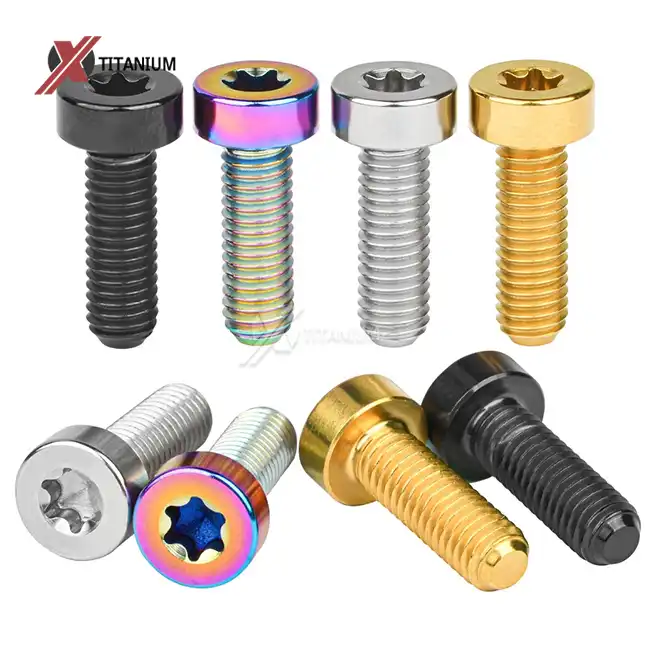
Understanding Titanium and Water Interaction
Titanium's remarkable erosion resistance stems from its capacity to shape a steady, self-healing oxide layer when uncovered to oxygen and dampness. This inactive film, composed fundamentally of titanium dioxide, measures as it were 2-5 nanometers thick however gives comprehensive security against natural debasement. The arrangement happens immediately upon contact with water or sticky discuss, making an impermeable boundary that avoids advance oxidation.
Chemical Properties Behind Titanium's Water Resistance
The surprising solidness of titanium in watery situations comes about from its tall negative terminal potential (-1.63V vs. standard hydrogen terminal), which makes it thermodynamically steady in most pH ranges. When water contacts titanium surfaces, the metal experiences a controlled oxidation prepare that devours surface particles to make the defensive oxide layer. This handle contrasts on a very basic level from press oxidation (rusting), where the oxide layer is permeable and proceeds to engender through the material.
Research conducted by the American Society for Testing and Materials illustrates that titanium shows erosion rates of less than 0.0254 mm per year in seawater situations, compared to 1.27 mm per year for carbon steel beneath indistinguishable conditions. This information underpins titanium's choice for basic applications where dampness introduction cannot be avoided.
Distinguishing Titanium from Other Metals in Wet Conditions
Traditional bicycle hardware materials exhibit varying degrees of vulnerability when exposed to moisture. Stainless steel, while corrosion-resistant, can develop pitting corrosion in chloride-rich environments such as coastal areas or when exposed to road salt. Aluminum forms an oxide layer similar to titanium but lacks the same electrochemical stability, particularly in acidic conditions that may result from certain cleaning products or environmental pollutants.
Titanium bicycle screws maintain dimensional stability and torque specifications even after prolonged exposure to moisture, unlike steel fasteners that may experience galvanic corrosion when in contact with dissimilar metals such as carbon fiber or aluminum bicycle frames. This compatibility prevents the formation of corrosion cells that could compromise joint integrity over time.
Performance and Benefits of Titanium Bicycle Screws in Wet Conditions
Titanium's execution preferences gotten to be especially apparent in damp cycling conditions where conventional materials regularly come up short. The combination of prevalent erosion resistance, lightweight development, and mechanical unwavering quality positions titanium clasp as the ideal arrangement for high-performance bike applications.
Superior Corrosion Resistance Compared to Alternative Materials
Extensive testing in marine situations uncovers that titanium shows for all intents and purposes no mass misfortune after 10 a long time of nonstop seawater introduction, whereas keeping up its unique surface wrap up and mechanical properties. This execution deciphers specifically to cycling applications where components confront introduction to rain, mugginess, and destructive substances such as street salt or cleaning chemicals. The electrochemical respectability of titanium anticipates galvanic erosion when matched with carbon fiber, aluminum, or steel bike components.
This compatibility kills the require for segregating materials or defensive coatings that include complexity and potential disappointment focuses to basic associations. Obtainment directors looking for long-term unwavering quality appreciate this characteristic compatibility that decreases support prerequisites and expands benefit life.
Mechanical Properties Retention in Moist Environments
Unlike materials that encounter quality corruption due to natural push breaking or hydrogen embrittlement, titanium keeps up its mechanical properties notwithstanding of dampness introduction term. Review 5 titanium (Ti-6Al-4V) holds its pliable quality of 900-1000 MPa and surrender quality of 828 MPa over temperature ranges from -196°C to 400°C, with no noteworthy decrease due to stickiness or water contact.
Laboratory testing confirms that titanium bicycle screws maintain their specified torque values and preload characteristics after extended moisture exposure cycles. This reliability proves critical for safety-sensitive applications such as stem bolts, brake caliper mounting hardware, and suspension pivot connections where loosening or failure could result in catastrophic consequences.
Weight Advantages Without Compromising Durability
The thickness advantage of titanium (4.43 g/cm³) compared to stainless steel (8.0 g/cm³) conveys weight investment funds of roughly 45% for comparable latch volumes. This lessening contributes definitively to generally bike weight optimization whereas giving predominant natural resistance compared to aluminum choices that may give up life span for weight savings. Professional cycling groups and aviation applications use these weight focal points in basic applications where each gram impacts execution. The combination of diminished rotational mass and upgraded strength makes esteem suggestions that legitimize premium estimating for quality-conscious obtainment decisions.
Choosing the Right Titanium Bicycle Screws for Your Needs
Selecting appropriate titanium fasteners requires understanding the specific grades, manufacturing standards, and application requirements that align with performance objectives and budgetary constraints. The titanium market offers various alloy compositions and manufacturing processes that significantly impact both performance and cost.
Material Grade Selection and Specifications
Grade 2 commercially pure titanium offers excellent corrosion resistance and moderate strength (345 MPa tensile) suitable for non-critical applications such as bottle cage mounting or accessory attachment points. This grade provides cost advantages while maintaining the corrosion benefits associated with titanium chemistry.
Grade 5 titanium alloy (Ti-6Al-4V) represents the aerospace standard for high-stress applications requiring maximum strength-to-weight ratios. The aluminum and vanadium additions increase tensile strength to 900-1000 MPa while maintaining excellent corrosion resistance. Titanium bicycle screws manufactured from Grade 5 material suit critical applications including stem hardware, brake mounting systems, and suspension components where failure could compromise rider safety.
Manufacturing processes significantly impact performance characteristics and cost. Cold-formed fasteners exhibit superior strength and surface finish compared to machined alternatives, while rolled threads provide enhanced fatigue resistance compared to cut threads. These processing distinctions influence both initial procurement costs and long-term reliability expectations.
Coating and Surface Treatment Considerations
While titanium's inborn erosion resistance regularly kills the require for defensive coatings, certain applications advantage from surface medicines that upgrade particular properties. Anodizing forms can give color distinguishing proof frameworks for upkeep purposes whereas keeping up the basic erosion resistance benefits. Physical Vapor Testimony (PVD) coatings offer stylish improvement choices counting gold, dark, or rainbow wraps up that request to premium showcase fragments. These medicines include negligible thickness whereas protecting the dimensional exactness required for accuracy applications. The coating choice ought to adjust with both useful prerequisites and brand situating objectives.
Supplier Evaluation and Quality Assurance
Effective obtainment requires association with providers keeping up fitting quality certifications and traceability frameworks. AS9100 certification shows aerospace-level quality administration reasonable for basic applications, whereas ISO 9001 certification gives pattern quality affirmation for commercial applications. Material certifications ought to incorporate chemical composition confirmation, mechanical property testing, and dimensional compliance documentation. Legitimate providers give group traceability empowering root cause investigation in the impossible occasion of field disappointments. This documentation demonstrates basic for applications requiring administrative compliance or risk management.
Maintenance Tips for Titanium Bicycle Screws in Wet Conditions
Although titanium's corrosion resistance significantly reduces maintenance requirements compared to traditional materials, proper care practices maximize performance and service life. Understanding appropriate maintenance procedures prevents damage while ensuring continued reliability in demanding applications.
Routine Cleaning and Inspection Procedures
Post-ride cleaning removes accumulated debris and contaminants that could interfere with proper function. Simple soap and water solutions effectively remove road salt, mud, and organic residues without damaging titanium surfaces. Avoid chlorinated cleaners or strong acids that may affect the protective oxide layer formation process.
Visual inspection during routine maintenance identifies potential issues before they impact performance. Look for signs of fretting wear at contact surfaces, which may indicate insufficient preload or movement during operation. Titanium bicycle screws should maintain their original surface appearance without discoloration, pitting, or thread damage.
Torque verification ensures proper clamping force maintenance over time. Unlike steel fasteners that may experience relaxation due to corrosion or deformation, titanium maintains consistent preload when properly installed. Use calibrated torque tools and manufacturer-specified values to prevent over-tightening that could damage threads in softer materials such as aluminum or carbon fiber.
Environmental Protection Strategies
Storage in dry, well-ventilated regions avoids amassing of dampness and contaminants that seem influence long-term execution. Whereas titanium stands up to erosion, related components such as washers or mating surfaces may require extra security to keep up framework integrity. Thread compounds particularly defined for titanium applications anticipate bothering whereas giving fitting oil for establishment and expulsion. Dodge conventional anti-seize compounds containing copper or graphite that may cause galvanic responses with other bike components. Specialized titanium string compounds keep up oil properties without compromising joint integrity.
Troubleshooting Common Issues
Thread bothering speaks to the most common establishment issue with titanium latches, ordinarily coming about from over the top establishment speed or inadequately oil. Avoidance requires moderate establishment speeds and suitable string oils particularly defined for titanium applications. Over-torquing harm shows up as string distortion or fabric expulsion around latch heads. Titanium's work-hardening characteristics make it more helpless to string harm compared to milder materials. Recuperation regularly requires string repair or component substitution, emphasizing the significance of legitimate establishment procedures.
Procurement Guide for Titanium Bicycle Screws
Effective procurement of titanium fasteners requires strategic supplier selection, quality verification processes, and supply chain management tailored to the unique characteristics of titanium manufacturing and distribution. The specialized nature of titanium processing creates specific considerations for procurement professionals.
Supplier Selection Criteria and Evaluation
Titanium processing requires specialized manufacturing capabilities including controlled atmosphere melting, precision machining, and appropriate heat treatment facilities. Supplier evaluation should verify these capabilities along with quality management systems appropriate for the intended application criticality.
Manufacturing location impacts both cost and lead times, with domestic suppliers typically offering shorter delivery schedules but higher unit costs compared to offshore alternatives. Titanium bicycle screws sourced from established suppliers with aerospace or medical industry experience often provide superior consistency and technical support compared to commodity fasteners, especially when selecting high-quality China Gr5 Titanium Bicycle Screws that meet strict performance and durability standards.
Volume requirements significantly influence pricing structures and supplier willingness to accommodate customization requests. Minimum order quantities for custom specifications may require inventory management strategies that balance carrying costs against procurement savings. Long-term agreements can provide price stability while ensuring supply availability during market fluctuations.
Quality Assurance and Testing Requirements
Incoming inspection procedures should verify material certifications, dimensional compliance, and surface quality standards. Critical applications may require additional testing including tensile strength verification, chemical composition analysis, and corrosion resistance validation through standardized testing protocols.
Batch tracking systems enable traceability from raw material through final delivery, supporting quality investigations and regulatory compliance requirements. Supplier quality agreements should specify documentation requirements, testing protocols, and corrective action procedures for non-conforming materials.
Cost Optimization Strategies and ROI Analysis
While titanium fasteners command premium pricing compared to traditional materials, total cost of ownership analysis often demonstrates superior value through reduced maintenance requirements, extended service life, and improved performance characteristics. Life cycle cost modeling should include acquisition costs, installation labor, maintenance requirements, and replacement frequencies to support procurement decisions.
Inventory optimization balances carrying costs against supply security, particularly important given longer lead times typical of titanium manufacturing. Strategic inventory positioning may require coordination between procurement, engineering, and operations teams to identify optimal stock levels for various fastener specifications.
The implementation of titanium bicycle screws in high-performance applications has demonstrated measurable improvements in field reliability and customer satisfaction metrics. These improvements translate to reduced warranty costs, enhanced brand reputation, and competitive advantages that support premium pricing strategies.
Conclusion
Titanium's exceptional performance when exposed to water makes it an outstanding choice for bicycle fastener applications where reliability and longevity are paramount. The formation of a protective oxide layer upon contact with moisture actually enhances titanium's corrosion resistance, ensuring that components maintain their mechanical properties and structural integrity throughout their service life. This fundamental characteristic, combined with titanium's superior strength-to-weight ratio and compatibility with diverse materials, positions titanium fasteners as a premium solution for demanding cycling applications. Proper selection, installation, and maintenance practices maximize these inherent advantages while delivering long-term value that justifies the initial investment in quality titanium hardware.
FAQ
Does titanium rust when it gets wet?
Titanium does not rust in the traditional sense because it lacks iron, which is necessary for rust formation. Instead, titanium forms a stable, protective oxide layer when exposed to water or moisture that actually enhances its corrosion resistance and prevents further degradation.
How does titanium perform compared to stainless steel in wet conditions?
Titanium significantly outperforms stainless steel in wet environments, particularly those containing chlorides or acidic conditions. While stainless steel may develop pitting corrosion or stress corrosion cracking, titanium maintains its integrity and mechanical properties indefinitely in aqueous environments.
Can titanium bicycle screws be used in saltwater environments?
Titanium bicycle screws excel in saltwater environments due to their exceptional resistance to chloride-induced corrosion. The material maintains its properties even after extended exposure to seawater, making it ideal for coastal cycling or applications where road salt exposure occurs regularly.
What maintenance is required for titanium screws in wet conditions?
Minimal maintenance is required for titanium screws beyond basic cleaning with soap and water to remove debris. Periodic torque verification ensures proper clamping force, while visual inspection identifies any potential issues before they affect performance.
Are there any precautions when installing titanium bicycle screws?
Installation requires appropriate torque values (typically lower than steel), slow installation speeds, and proper thread lubrication to prevent galling. Avoid over-tightening and use torque specifications provided by the manufacturer for optimal performance.
Partner with Chuanglian for Premium Titanium Solutions
Chuanglian delivers exceptional titanium bicycle screws that demonstrate superior performance in wet conditions while meeting the demanding requirements of aerospace, petrochemical, and high-performance cycling applications. Our decade of expertise in titanium manufacturing, combined with comprehensive quality control systems and AS9100 certification capabilities, ensures consistent delivery of precision-engineered fasteners that exceed industry standards.
Located in Baoji City, the renowned "City of Titanium," our facility maintains advanced CNC machining capabilities and strict quality protocols that guarantee material traceability and performance reliability. Connect with our technical team at info@cltifastener.com or djy6580@aliyun.com to discuss your titanium bicycle screws requirements and discover how our manufacturer expertise can optimize your procurement strategy.
References
1. Davis, J.R. "Titanium and Titanium Alloys: Corrosion Behavior and Environmental Resistance." ASM International Materials Handbook, 2nd Edition, 2019.
2. American Society for Testing and Materials. "Standard Practice for Evaluating Corrosion Resistance of Titanium Alloys in Marine Environments." ASTM G31-18, 2018.
3. Boyer, R., Welsch, G., and Collings, E.W. "Materials Properties Handbook: Titanium Alloys." ASM International, 4th Edition, 2020.
4. International Organization for Standardization. "Fasteners - Mechanical Properties of Corrosion-Resistant Stainless Steel Fasteners and Titanium Fasteners." ISO 3506-6:2020.
5. Lutjering, G. and Williams, J.C. "Titanium: Engineering Materials and Processes for Aerospace and Industrial Applications." Springer Materials Science Series, 3rd Edition, 2021.
6. National Association of Corrosion Engineers. "Corrosion Performance of Titanium in Industrial Environments: A Comprehensive Study." NACE International Publication, Technical Report TR-2019-15, 2019.

Learn about our latest products and discounts through SMS or email