- English
- French
- German
- Portuguese
- Spanish
- Russian
- Japanese
- Korean
- Arabic
- Greek
- German
- Turkish
- Italian
- Danish
- Romanian
- Indonesian
- Czech
- Afrikaans
- Swedish
- Polish
- Basque
- Catalan
- Esperanto
- Hindi
- Lao
- Albanian
- Amharic
- Armenian
- Azerbaijani
- Belarusian
- Bengali
- Bosnian
- Bulgarian
- Cebuano
- Chichewa
- Corsican
- Croatian
- Dutch
- Estonian
- Filipino
- Finnish
- Frisian
- Galician
- Georgian
- Gujarati
- Haitian
- Hausa
- Hawaiian
- Hebrew
- Hmong
- Hungarian
- Icelandic
- Igbo
- Javanese
- Kannada
- Kazakh
- Khmer
- Kurdish
- Kyrgyz
- Latin
- Latvian
- Lithuanian
- Luxembou..
- Macedonian
- Malagasy
- Malay
- Malayalam
- Maltese
- Maori
- Marathi
- Mongolian
- Burmese
- Nepali
- Norwegian
- Pashto
- Persian
- Punjabi
- Serbian
- Sesotho
- Sinhala
- Slovak
- Slovenian
- Somali
- Samoan
- Scots Gaelic
- Shona
- Sindhi
- Sundanese
- Swahili
- Tajik
- Tamil
- Telugu
- Thai
- Ukrainian
- Urdu
- Uzbek
- Vietnamese
- Welsh
- Xhosa
- Yiddish
- Yoruba
- Zulu
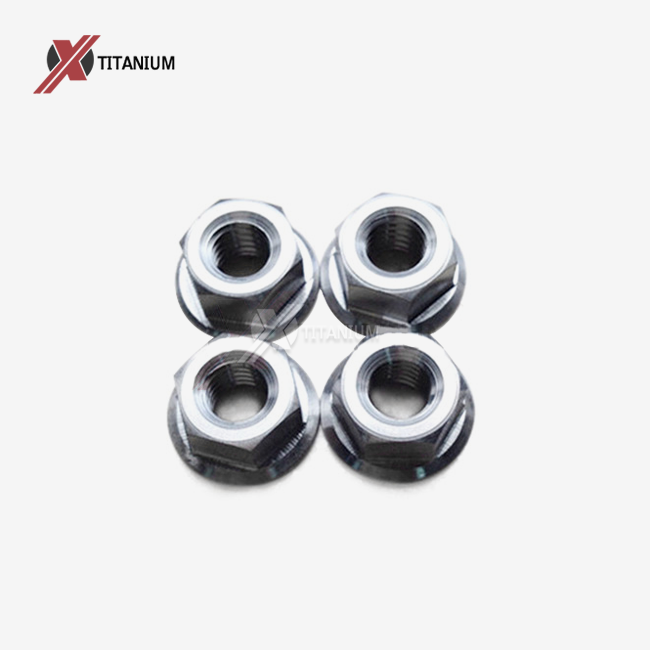
What is a flange nut?
A flange nut is a specialized fastener that combines a traditional threaded nut with an integrated, wide circular base called a flange. This innovative design eliminates the need for separate washers while distributing clamping force across a larger surface area. Titanium flange nuts represent the premium tier of these fasteners, offering aerospace-grade performance with exceptional strength-to-weight ratios and unmatched corrosion resistance. These high-performance components are engineered to withstand extreme temperatures, aggressive chemicals, and demanding mechanical stresses, making them indispensable in critical industrial applications where failure is not an option.
Understanding Flange Nuts: Basics and Benefits
Flange nuts recognize themselves from standard hex nuts through their coordinates washer-like base, which serves numerous designing purposes. The rib plan makes a broader contact surface that avoids harm to delicate materials such as aluminum, magnesium combinations, or carbon fiber composites commonly utilized in high-end fabricating applications.
Structural Design Advantages
The coordinates spine development offers noteworthy mechanical benefits over conventional nut-and-washer congregations. When clamping constrain is connected, the rib disseminates stretch consistently over the mating surface, diminishing point stacking that seem cause fabric misshapening or splitting. This plan guideline gets to be especially basic in vibration-prone situations where routine clasp might extricate over time.
Load Distribution Mechanics
Engineering investigation uncovers that rib nuts can disseminate loads over an zone roughly 3-4 times bigger than standard nuts of proportionate string estimate. This extended contact zone decreases bearing push on the substrate fabric, amplifying component life and keeping up joint astuteness beneath cyclic stacking conditions. The end of isolated washers moreover diminishes the add up to number of parts in an get together, disentangling stock administration and decreasing outside protest flotsam and jetsam dangers in delicate applications.
Material Performance Characteristics
Titanium flange nuts OEM excel in applications demanding superior performance across multiple parameters. Their exceptional strength-to-weight ratio makes them ideal for weight-sensitive applications, while their natural oxide layer provides outstanding corrosion resistance without additional surface treatments. These characteristics have made titanium variants increasingly popular in aerospace, medical device, and marine applications where material reliability directly impacts safety and operational success.
Titanium Flange Nut Properties and Specifications
The mechanical properties of titanium clasp stem from the interesting crystalline structure and alloying components utilized in their fabricate. Review 5 titanium amalgam (Ti-6Al-4V), commonly utilized for high-strength applications, conveys ductile qualities surpassing 895 MPa whereas keeping up a thickness of as it were 4.43 g/cm³.
Mechanical Performance Parameters
Titanium review determinations decide the mechanical properties and application appropriateness of rib nuts. Review 2 commercially unadulterated titanium offers fabulous erosion resistance and formability, making it reasonable for chemical preparing applications. Review 5 titanium amalgam gives higher quality characteristics basic for basic applications in aviation and car sectors. The versatile modulus of titanium (roughly 114 GPa) is generally half that of steel, permitting for way better stack dispersion over strung engagement zones. This characteristic contributes to prevalent weariness resistance, especially critical in applications encountering rehashed push cycles. Temperature execution remains steady over a wide working extend, from cryogenic conditions to around 400°C, without noteworthy debasement in mechanical properties.
Corrosion Resistance Superiority
Titanium's inactive oxide layer shapes suddenly when uncovered to oxygen, making a boundary that stands up to assault from chlorides, acids, and other forceful chemicals. This common security outperforms the execution of stainless steel in marine situations and chemical preparing applications. The non-galvanic nature of titanium too anticipates quickened erosion when matched with carbon fiber or other composite materials.
Industry Standards and Certifications
Manufacturing quality for titanium flange nuts follows stringent international standards including ASTM B348 for material specifications and ISO 2768-m for dimensional tolerances. Aerospace applications require adherence to AS9100 quality management standards, while medical applications demand compliance with ISO 13485 and FDA regulations. These certifications ensure consistent material properties and dimensional accuracy across production batches.
How to Choose the Right Flange Nut Material for Your Application?
Material choice for spine nuts includes assessing different variables counting mechanical prerequisites, natural conditions, and lifecycle taken a toll contemplations. Each fabric alternative presents unmistakable preferences and confinements that must be coordinated to particular application demands.
Comparative Material Analysis
The following analysis compares titanium performance against common alternatives across critical performance metrics:
• Titanium vs. Stainless Steel: Titanium offers 45% weight reduction with comparable strength, superior corrosion resistance, and non-magnetic properties essential for electronic applications
• Titanium vs. Aluminum: Higher strength and temperature resistance than aluminum, with better fatigue life and no stress corrosion cracking susceptibility
• Titanium vs. Brass: Eliminates dezincification concerns in marine environments while providing significantly higher strength and temperature capability
• Titanium vs. Carbon Steel: Non-corroding surface eliminates coating requirements, reduces maintenance costs, and prevents contamination in food and pharmaceutical applications
These material comparisons demonstrate why titanium flange nuts command premium pricing while delivering superior long-term value through extended service life and reduced maintenance requirements.
Application-Specific Considerations
Environmental components play a vital part in fabric determination choices. Chemical preparing applications advantage from titanium's resistance to chloride stretch erosion splitting, whereas aviation applications use the weight investment funds and temperature soundness. Restorative gadget applications require the biocompatibility that as it were titanium and select stainless steels can provide.
Customization Capabilities
Modern manufacturing techniques enable customization of flange geometry, thread specifications, and surface treatments to meet unique application requirements. Options include serrated flanges for enhanced grip, specialized coatings to prevent galling, and modified dimensions to accommodate space constraints or load requirements.
Procurement Guide for Titanium Flange Nuts
Successful procurement of titanium fasteners requires understanding supplier capabilities, quality systems, and market dynamics specific to this specialized industry segment.
Supplier Evaluation Criteria
Qualified titanium clasp providers must illustrate a few center competencies. Fabric traceability from process certification through last assessment guarantees compliance with aviation and restorative industry prerequisites. Fabricating capabilities ought to incorporate accuracy CNC machining, string rolling for upgraded weakness life, and different surface treatment options. Quality administration frameworks certification gives confirmation of steady fabricating forms. AS9100 certification shows aviation industry compliance, whereas ISO 9001 illustrates common quality administration competency. Therapeutic gadget applications require ISO 13485 certification and FDA enrollment where applicable.
Procurement Considerations
Minimum order quantities for custom titanium flange nut OEM orders typically range from 100 to 500 pieces, depending on complexity and supplier capabilities. Lead times vary from 4-12 weeks for standard configurations, with custom specifications potentially requiring longer development periods. Pricing structures often include setup charges for custom tooling and reduced unit costs for larger quantities.
Direct Manufacturer Benefits
Collaborating straightforwardly with producers empowers get to to designing bolster, custom details, and competitive estimating for volume buys. Coordinate connections moreover encourage quicker issue determination and need planning for pressing requirements.
Real-World Applications and Case Studies of Titanium Flange Nuts
Titanium fasteners have proven their value across demanding industrial applications where conventional materials fall short of performance requirements.
Aerospace Industry Applications
Commercial flying machine producers utilize titanium flange nuts broadly in motor mounting frameworks, where weight diminishment specifically impacts fuel proficiency. A major flying machine motor producer detailed 15% weight reserve funds in embellishment mounting frameworks by exchanging from steel to titanium latches, contributing to in general air ship effectiveness improvements. Flight test information from military air ship applications illustrates the prevalent weariness resistance of titanium latches in high-vibration situations. Components initially indicated with steel latches experienced untimely extricating beneath operational stretch, whereas titanium substitutions kept up torque details all through expanded flight test programs.
Marine Industry Success Stories
Offshore stage administrators have reported critical upkeep taken a toll diminishments through titanium clasp usage. One North Ocean stage administrator detailed disposing of planned latch substitutions on seawater-exposed hardware after changing over to titanium equipment, lessening support downtime and progressing operational reliability.
Medical Device Applications
Orthopedic embed producers depend on titanium latches for spinal combination equipment and joint substitution frameworks. The biocompatibility and MRI compatibility of titanium disposes of complications related with attractive materials whereas giving the quality required for load-bearing applications.
Conclusion
Flange nuts with integrated flanges represent advanced fastening technology that addresses critical engineering challenges across multiple industries. Titanium flange nuts specifically offer unmatched performance in weight-sensitive, corrosive, and high-stress applications where conventional materials prove inadequate. Their superior strength-to-weight ratio, exceptional corrosion resistance, and proven reliability make them the preferred choice for aerospace, medical, marine, and chemical processing applications. Understanding the properties, specifications, and application requirements enables informed procurement decisions that optimize both performance and lifecycle costs. The investment in titanium fastening technology delivers measurable benefits through reduced maintenance, extended service life, and enhanced operational reliability.
FAQ
What makes titanium flange nuts superior to steel alternatives?
Titanium flange nuts provide several critical advantages over steel variants. The 45% weight reduction compared to equivalent steel fasteners significantly benefits weight-sensitive applications like aerospace and automotive racing. The natural corrosion resistance eliminates the need for protective coatings while ensuring long-term reliability in harsh environments. Additionally, the lower elastic modulus of titanium provides better load distribution across threaded connections, resulting in superior fatigue life under cyclic loading conditions.
How do you prevent galling when installing titanium flange nuts?
Galling prevention requires proper lubrication and installation techniques. Apply anti-seize compounds specifically formulated for titanium applications, or specify nuts with specialized coatings such as DLC (Diamond-Like Carbon) or MoS2. Installation should proceed slowly with frequent backing off and re-advancing to distribute wear particles. Torque specifications should follow manufacturer recommendations rather than steel equivalents, as titanium requires different torque values due to its unique friction characteristics.
Are titanium flange nuts compatible with carbon fiber assemblies?
Titanium fasteners are the preferred choice for carbon fiber applications due to their position in the galvanic series, which minimizes galvanic corrosion risks. Unlike aluminum fasteners that can suffer accelerated corrosion when paired with carbon fiber, titanium maintains stable galvanic potential. The smooth flange option protects the carbon fiber surface finish while providing adequate clamping force for structural integrity.
Partner with Chuanglian for Premium Titanium Flange Nut Solutions
Baoji Chuanglian New Metal Material Co., Ltd. stands ready to fulfill your specialized fastener requirements with over ten years of titanium machining expertise. Our comprehensive quality control systems ensure every titanium flange nut meets the exacting standards demanded by aerospace, medical, and chemical processing applications. As a leading titanium flange nut manufacturer located in China's "City of Titanium," we combine advanced CNC capabilities with rigorous quality management to deliver consistent, traceable products that exceed industry expectations. Our engineering team provides technical support throughout the procurement process, from material selection to custom specifications. Contact our procurement specialists at info@cltifastener.com or djy6580@aliyun.com to discuss your titanium fastener requirements.
References
1. Boyer, R., Welsch, G., & Collings, E.W. (2019). Materials Properties Handbook: Titanium Alloys. ASM International Publications.
2. American Society for Testing and Materials. (2020). ASTM B348-20: Standard Specification for Titanium and Titanium Alloy Bars and Billets. ASTM International.
3. Lutjering, G. & Williams, J.C. (2018). Titanium Engineering Materials and Processes. Springer-Verlag Berlin Heidelberg.
4. International Organization for Standardization. (2021). ISO 4762: Socket Head Cap Screws - Dimensions and Technical Requirements. ISO Publications.
5. Aerospace Industries Association. (2019). AS9100D: Quality Management Systems Requirements for Aviation, Space and Defense Organizations. AIA Publications.
6. Donachie, M.J. (2020). Titanium: A Technical Guide, Second Edition. ASM International Materials Park.
Learn about our latest products and discounts through SMS or email