- English
- French
- German
- Portuguese
- Spanish
- Russian
- Japanese
- Korean
- Arabic
- Greek
- German
- Turkish
- Italian
- Danish
- Romanian
- Indonesian
- Czech
- Afrikaans
- Swedish
- Polish
- Basque
- Catalan
- Esperanto
- Hindi
- Lao
- Albanian
- Amharic
- Armenian
- Azerbaijani
- Belarusian
- Bengali
- Bosnian
- Bulgarian
- Cebuano
- Chichewa
- Corsican
- Croatian
- Dutch
- Estonian
- Filipino
- Finnish
- Frisian
- Galician
- Georgian
- Gujarati
- Haitian
- Hausa
- Hawaiian
- Hebrew
- Hmong
- Hungarian
- Icelandic
- Igbo
- Javanese
- Kannada
- Kazakh
- Khmer
- Kurdish
- Kyrgyz
- Latin
- Latvian
- Lithuanian
- Luxembou..
- Macedonian
- Malagasy
- Malay
- Malayalam
- Maltese
- Maori
- Marathi
- Mongolian
- Burmese
- Nepali
- Norwegian
- Pashto
- Persian
- Punjabi
- Serbian
- Sesotho
- Sinhala
- Slovak
- Slovenian
- Somali
- Samoan
- Scots Gaelic
- Shona
- Sindhi
- Sundanese
- Swahili
- Tajik
- Tamil
- Telugu
- Thai
- Ukrainian
- Urdu
- Uzbek
- Vietnamese
- Welsh
- Xhosa
- Yiddish
- Yoruba
- Zulu
Are titanium bolts rust proof?
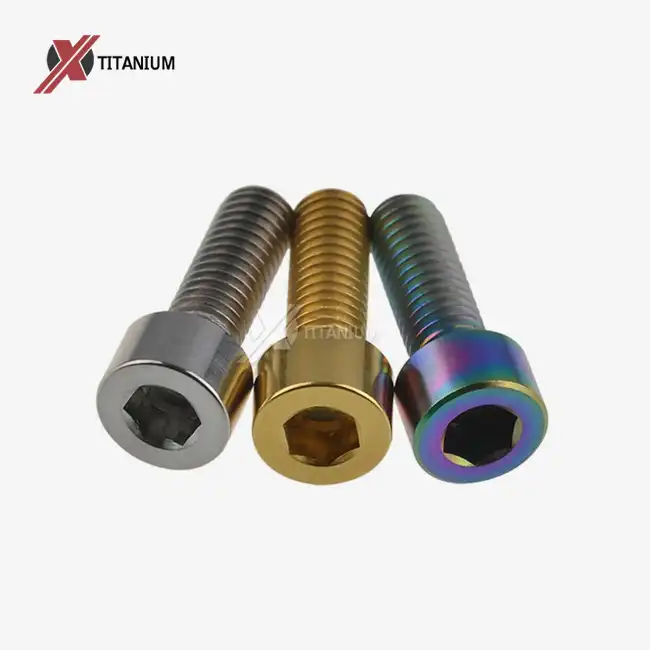
Titanium bolts are indeed rust proof, making them exceptional fasteners for high-performance applications across various industries. Unlike traditional steel bolts that corrode when exposed to moisture and oxygen, titanium forms a protective oxide layer that prevents rust formation entirely. This inherent corrosion resistance makes titanium bicycle bolts particularly valuable in cycling applications where exposure to sweat, rain, road salt, and harsh environmental conditions is common. The Grade 5 titanium alloy (Ti-6Al-4V) used in premium bicycle components demonstrates superior anti-corrosion properties while maintaining excellent strength-to-weight ratios, ensuring long-term reliability without the maintenance concerns associated with conventional fasteners.
Understanding Titanium Bicycle Bolts and Rust Resistance
Titanium bicycle bolts represent a significant advancement in cycling component technology, primarily manufactured from aerospace-grade Ti-6Al-4V (Grade 5) titanium alloy. These precision-engineered fasteners address critical performance requirements in modern bicycle manufacturing, where weight reduction and durability cannot be compromised.
The Science Behind Titanium's Corrosion Immunity
The extraordinary rust resistance of titanium stems from its one of a kind metallurgical properties. When uncovered to oxygen, titanium quickly shapes a lean, steady oxide layer (TiO2) that acts as an impermeable boundary against assist erosion. This inactive layer persistently recovers if harmed, giving lasting security against rust arrangement. Not at all like steel jolts that require defensive coatings or medicines, titanium keeps up its erosion resistance all through its operational lifespan.
Performance Characteristics in Cycling Applications
Modern titanium bicycle bolts manufactured by Chuanglian feature tensile strengths reaching 900 MPa while weighing approximately 40% less than comparable steel fasteners. This strength-to-weight optimization proves crucial in competitive cycling environments where every gram matters. The material's biocompatibility ensures safe contact with human skin during extended riding sessions, while its non-reactive nature prevents galvanic corrosion when paired with carbon fiber or aluminum components.
Environmental Durability Standards
Laboratory testing affirms titanium's uncommon execution in marine situations, where salt splash and mugginess quicken erosion in ordinary materials. Cycling applications uncover latches to comparative challenging conditions through street salt, sweat containing electrolytes, and shifting climate conditions. Titanium jolts keep up basic keenness and appearance indeed after a long time of introduction to these destructive components, disposing of the require for customary substitution or maintenance.
Comparing Titanium Bicycle Bolts With Other Materials
Material choice altogether impacts component execution, upkeep necessities, and add up to fetched of possession in bike fabricating. Understanding the comparative preferences of distinctive clasp materials empowers educated obtainment decisions.
Steel vs. Titanium Performance Analysis
Steel jolts offer tall ductile quality and lower starting costs but endure from noteworthy erosion defenselessness. Indeed stainless steel grades can involvement setting erosion in chloride-rich situations. Steel clasp regularly require defensive coatings that can wear off over time, uncovering the base fabric to rust arrangement. The weight punishment of steel gets to be especially articulated in execution cycling applications where turning mass straightforwardly influences speeding up and dealing with characteristics.
Aluminum Limitations in Critical Applications
Aluminum jolts give weight investment funds comparable to titanium but need the mechanical quality required for safety-critical applications. The lower weakness resistance of aluminum makes it unacceptable for high-stress associations such as stem caps, brake calipers, and derailleur mounts. Also, aluminum's helplessness to galvanic erosion when combined with divergent metals limits its application flexibility in advanced bike designs.
Stainless Steel Trade-offs
Stainless steel speaks to a compromise between erosion resistance and taken a toll, but falls brief of titanium's execution measurements. The higher thickness of stainless steel comes about in weight punishments that amass over different clasp. Moreover, certain stainless steel grades can involvement work solidifying amid establishment, possibly driving to string harm or disappointment beneath tall torque applications.
Procurement and Sourcing: What B2B Clients Should Know?
Successful obtainment of titanium bike components requires understanding provider capabilities, quality certifications, and long-term association potential. The specialized nature of titanium handling requests cautious merchant assessment and relationship management.
Supplier Qualification Criteria
Reputable titanium latch providers keep up certifications such as AS9100 for aviation applications, ISO 9001 for quality administration, and industry-specific guidelines for cycling components. These certifications guarantee steady fabricating forms, fabric traceability, and quality control strategies. Baoji Chuanglian Modern Metal Fabric Co., Ltd. embodies these benchmarks with over ten a long time of titanium handling encounter and comprehensive CNC machining capabilities.
Order Specifications and Customization Options
Titanium bicycle bolts are available in standard sizes from M3 to M12, with custom threading and head configurations possible through CNC machining. Surface treatments including polishing, anodizing, and nitriding provide additional functionality and aesthetic options. Color choices spanning natural titanium, gold, blue, green, purple, black, and rainbow finishes enable brand differentiation and product customization.
The following advantages make titanium fasteners particularly attractive for OEM applications:
• Weight optimization: 40% reduction compared to steel equivalents directly improves power-to-weight ratios in competitive cycling
• Corrosion immunity: Eliminates warranty claims related to rust and degradation in harsh environmental conditions
• Aesthetic versatility: Anodized color options support premium branding and visual differentiation strategies
• Biocompatibility: Safe for direct skin contact during extended use, particularly important for cockpit components
These performance characteristics translate directly into reduced maintenance costs, extended component lifecycles, and enhanced customer satisfaction metrics that justify the premium pricing of titanium fasteners.
Supply Chain Considerations
Titanium preparing requires specialized gear and ability, making provider unwavering quality significant for steady conveyance plans. Lead times for custom orders ordinarily run from 2-4 weeks depending on determinations and arrange amounts. Building up connections with providers who keep up satisfactory stock levels and adaptable generation capacity makes a difference relieve supply chain disturbances common in specialized materials markets.
Installation, Maintenance, and Best Practices for Titanium Bolts
Proper installation and maintenance procedures maximize the performance benefits and service life of titanium fasteners while preventing common installation errors that can compromise component integrity.
Torque Specifications and Installation Procedures
Titanium's special fabric properties require particular torque values to accomplish ideal clamping drive without string harm. By and large, titanium jolts require 10-15% lower torque values compared to steel reciprocals due to contrasts in string contact coefficients. Carbon fiber components especially advantage from titanium's controlled development characteristics, which avoid stretch concentrations that seem cause composite failure.
Preventing Galling and Thread Damage
Although titanium shows great erosion resistance, its propensity toward bothering requires cautious consideration amid establishment. Applying anti-seize compounds containing copper or molybdenum disulfide to strings avoids official and empowers legitimate torque application. This hone demonstrates particularly vital in applications where visit dismantling happens, such as movable components or benefit get to points.
Long-term Maintenance Protocols
The inherent corrosion resistance of titanium bicycle bolts minimizes routine maintenance requirements compared to conventional fasteners. Periodic cleaning with mild detergents removes accumulated dirt and debris without affecting the protective oxide layer. Visual inspections should focus on thread condition and proper seating rather than corrosion monitoring required with steel fasteners.
Addressing Common Concerns and Myths About Titanium Bolts
Several misconceptions persist regarding titanium fastener performance, often stemming from limited understanding of material properties or experiences with inferior products. Addressing these concerns builds confidence in titanium technology adoption.
Strength and Fatigue Resistance Validation
Tests done in a lab show that Review 5 titanium amalgam meets or beats the quality standards for all bicycle uses. Weariness tests under cycle stacking settings shows that it works about as well as aluminum and as well as high-grade steel. The amazing tiredness split growth resistance of the material makes it perfect for the rough building conditions found in bicycle applications.
Cost-Benefit Analysis Over Product Lifecycle
While titanium clasps are more expensive, the greater value of ownership often makes them better for demanding uses, especially when manufacturers offer titanium bicycle bolts free sample options that allow customers to evaluate quality and performance before large-scale purchasing. Getting rid of replacement costs, lowering support requirements, and guarantee claims all lower starting cost increases over the normal lifecycles of items. This cost benefit is especially clear in professional bicycle uses where the quality of the parts directly affects how well they do in competition.
Compatibility and Interchangeability
Modern titanium bicycle bolts maintain thread compatibility with existing aluminum and steel components, enabling straightforward upgrades without design modifications. The stable dimensions and controlled thermal expansion of titanium ensure reliable fits across temperature ranges encountered in cycling applications. However, proper torque specifications must be observed to account for material property differences.
Conclusion
Titanium bolts offer complete rust immunity through their self-healing oxide layer, making them superior to conventional fastener materials in corrosion resistance, weight optimization, and long-term reliability. The Grade 5 titanium alloy used in premium titanium bicycle bolts delivers exceptional performance characteristics that justify the investment for quality-focused manufacturers and performance-oriented cyclists. Understanding the material science behind titanium's corrosion resistance, proper installation techniques, and total cost of ownership benefits enables informed procurement decisions that enhance product competitiveness and customer satisfaction in demanding cycling applications.
FAQ
Are titanium bolts completely rustproof?
Titanium bolts are effectively rustproof due to their passive oxide layer that forms naturally and regenerates when damaged. Unlike steel which rusts through oxidation, titanium's oxide layer provides permanent protection against corrosion, making these fasteners ideal for harsh environmental conditions.
Can titanium bolts replace steel bolts directly?
Titanium nuts can still use threads that are compatible with steel uses, but the pressure requirements need to be changed because the material is different. The 10-15% less pressure than steel makes sure that the tightening force is right without damaging the threads.
What quality certifications should B2B buyers expect?
Suppliers you can trust should give you certifications for the materials they use, information about how to measure them, and proof that they follow a quality management system like ISO 9001 or AS9100. Traceability paperwork makes sure that materials are real and that performance is the same from one production batch to the next.
How do minimum order quantities affect procurement strategies?
Titanium fastener suppliers typically maintain MOQs based on machining setup costs and material utilization efficiency. Planning procurement cycles around project timelines and maintaining strategic inventory levels optimizes cost-effectiveness while ensuring supply availability.
Contact Chuanglian for Premium Titanium Bicycle Bolts
Chuanglian stands as your trusted titanium bicycle bolts manufacturer with over ten years of specialized experience in titanium processing and CNC machining. Our Grade 5 titanium fasteners deliver the corrosion immunity, weight optimization, and reliability demanded by aerospace, medical, and high-performance cycling applications. Located in Baoji City, the renowned "City of Titanium," we maintain comprehensive quality control systems and advanced manufacturing capabilities to meet your exact specifications.
Our engineering team provides technical consultation for material selection, custom threading, and surface treatment options including anodizing in multiple colors. Whether you require standard fasteners or custom solutions, Chuanglian delivers consistent quality with competitive lead times. Contact our procurement specialists at info@cltifastener.com or djy6580@aliyun.com to discuss your titanium fastener requirements and discover how our solutions enhance your product performance and customer satisfaction.
References
1. Boyer, R.R. "An Overview on the Use of Titanium in the Aerospace Industry." Materials Science and Engineering: A, vol. 213, no. 1-2, 1996, pp. 103-114.
2. Lutjering, G. and Williams, J.C. "Titanium: Engineering Materials and Processes." Springer-Verlag, 2nd Edition, 2007.
3. American Society for Testing and Materials. "Standard Specification for Titanium and Titanium Alloy Bars and Billets." ASTM B348-19, 2019.
4. Schutz, R.W. and Thomas, D.E. "Corrosion of Titanium and Titanium Alloys." ASM Handbook Volume 13B: Corrosion: Materials, 2005, pp. 252-299.
5. Peters, M. and Leyens, C. "Titanium and Titanium Alloys: Fundamentals and Applications." Wiley-VCH, 2003.
6. Donachie, M.J. "Titanium: A Technical Guide." ASM International, 2nd Edition, 2000.
Learn about our latest products and discounts through SMS or email