- English
- French
- German
- Portuguese
- Spanish
- Russian
- Japanese
- Korean
- Arabic
- Greek
- German
- Turkish
- Italian
- Danish
- Romanian
- Indonesian
- Czech
- Afrikaans
- Swedish
- Polish
- Basque
- Catalan
- Esperanto
- Hindi
- Lao
- Albanian
- Amharic
- Armenian
- Azerbaijani
- Belarusian
- Bengali
- Bosnian
- Bulgarian
- Cebuano
- Chichewa
- Corsican
- Croatian
- Dutch
- Estonian
- Filipino
- Finnish
- Frisian
- Galician
- Georgian
- Gujarati
- Haitian
- Hausa
- Hawaiian
- Hebrew
- Hmong
- Hungarian
- Icelandic
- Igbo
- Javanese
- Kannada
- Kazakh
- Khmer
- Kurdish
- Kyrgyz
- Latin
- Latvian
- Lithuanian
- Luxembou..
- Macedonian
- Malagasy
- Malay
- Malayalam
- Maltese
- Maori
- Marathi
- Mongolian
- Burmese
- Nepali
- Norwegian
- Pashto
- Persian
- Punjabi
- Serbian
- Sesotho
- Sinhala
- Slovak
- Slovenian
- Somali
- Samoan
- Scots Gaelic
- Shona
- Sindhi
- Sundanese
- Swahili
- Tajik
- Tamil
- Telugu
- Thai
- Ukrainian
- Urdu
- Uzbek
- Vietnamese
- Welsh
- Xhosa
- Yiddish
- Yoruba
- Zulu
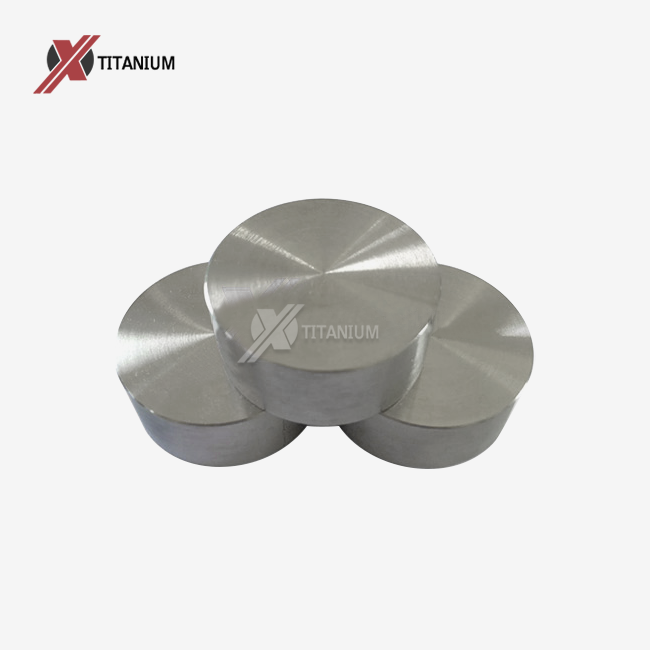
What Is a Titanium Disk Used For in Manufacturing?
When making a Titanium Disk, a strong metal part is first upset forged and then carefully cut. In the business world, it is made of Grade 2 Titanium or Grade 5 Titanium alloys like Ti-6Al-4V. Forged titanium disks are not the same as regular rolled plates. They are stronger against stress in multiple directions because they have smaller microstructures and better grain flow. These disks solve important problems in high-end manufacturing: they last forever in harsh chemical and marine environments, keep their mechanical properties even when temperatures change by up to 400°C, and are very good at supporting high-RPM rotating machinery even though they weigh almost half as much as steel. This is why titanium disks are important for making precise parts in harsh industrial settings, blanks for medical implants, airplane engines, and flanges for chemical processing.
Introduction
Today, it's becoming more and more important for materials to be able to work in difficult conditions without losing their reliability or efficiency. It is now best to use Titanium Disks in places where failure is not possible. Purchasing managers, process engineers, and OEM partners always have a hard time finding the best mix between the performance of materials, how much they cost, and the safety of the supply chain. It is smart to invest in titanium disks instead of just buying them because they are low in density, don't rust, and are very strong when they move.
Our tech teams have worked with companies that make medical devices, airplane parts, and other goods. All of them worry about the same thing: will the material stay the same from one crop to the next? Can the company ship goods by the due date without lowering the quality? Does shaping really make the metal stronger than plate stock when it comes to wear resistance? There is a lot at stake in industrial buying, and these questions show it. One problem with a material can lead to production delays, safety issues, or costly refunds.
This full guide addresses these worries by looking at what technically makes titanium disks better, where they really add value, and how to make sure you make smart buying decisions. Titanium disks have many benefits and uses. Knowing these will help you make better sourcing decisions and build stronger long-term relationships, whether you're looking at different materials for a new turbine design, trying to find parts that won't rust for offshore platforms, or getting to know suppliers of medical-grade blanks.
Understanding Titanium Disks and Their Key Properties
What Defines a Titanium Disk?
These are the ASTM B381 standards for forgings made of titanium and titanium alloy. A Titanium Disk is a special kind of semi-finished forging that meets these standards. Upset forging, which is also known as "pancaking," lines up the grains in a circular pattern. During the making process, this is what sets these parts apart from regular plate or bar stock. This spiral grain flow makes the material stronger and less likely to wear down when it moves horizontally. It can hold weight in ways that rolled things can't always do.
In business, the two most common grades are used in different ways. Grade 2 Titanium is very flexible and can stretch more than 20%. This makes it good for linings and other uses where it needs to be able to be bent. Most of the time, Grade 5 Ti-6Al-4V is used in high-stress conditions. Its yield strength is 828 MPa and its tensile strength is over 895 MPa. However, it is very light at 4.43 g/cm³. The needs of the job will determine which of these grades to use. It works best in places that are very acidic but not too stressed. Grade 5 can handle high temperatures and loads that would damage other materials.
Critical Material Properties
Because they are stronger than their weight, titanium disks work better in cases where weight is important. Titanium is about 60% less dense than steel, but it is just as strong or stronger than steel. Titanium parts make it easier to build structures because they don't need as much reinforcement. They also lower inertial loads in spinning assemblies and use less fuel in airplanes. Having less mass immediately improves fatigue life, which is especially helpful when making parts that will be under cyclical stress.
If titanium dioxide is put out in the air, it makes a uniform, continuous layer that keeps things from rusting. This film will heal itself right away if it gets broken. For this reason, it naturally doesn't rust, pit, or crack when exposed to salt, which is when other types of steel lose their strength. Titanium disks keep their form and mechanical properties in wet chlorine, seawater, and strong acids, which break down other materials quickly. This makes them very useful in chemical processing plants and marine applications.
Manufacturing Process and Quality Assurance
The first step in making good titanium disks is vacuum arc remelting (VAR). This step gets rid of any flaws and makes sure that the whole ingot is made of the same stuff. Casting is the next step. This is done at carefully controlled temperatures to make the grain that is needed. The metal should be strong and flexible because this substructure should have equal or bimodal Alpha-Beta phases. To keep the atmosphere under tight control during heating and forging, Alpha-case development (a top layer that is weak and full of oxygen) can be avoided. These are the things that make elite companies different from average ones.
Standards for certification are important for making sure that purchases are real. Rules for forging are set by ASTM B381, rules for airplanes are set by AMS 4928, and rules for medical implants are set by ASTM F136. Companies that have ISO 9001, AS9100, or medical device certifications show that they have a way to check the quality of their products all the way through the production process, from making sure the raw materials are correct to making sure the finished products are the right size. When working with providers, it's important to have records that link particular disk lot numbers to process factors, melt certifications, and mechanical test results. And this is because the reliability of your production from batch to batch affects how stable it is.
Common Applications of Titanium Disks in Manufacturing
Aerospace Rotational Components
Jet engine builders use Titanium Disks as starting pieces for compressor blades, turbine rotors, and other parts that spin quickly and are subjected to strong pressures. Parts made of Ti-6Al-4V can work well at temperatures close to 400°C because the material is very strong against creep and wear at high temperatures. When engineers figure out how long a part will last, they compare how light titanium rotors are to steel ones. This means that titanium rotors have lower bearing loads, lower sound amplitudes, and longer service times between overhauls.
During these times of change, the direction of grain flow that can be achieved through upset forging is very important. It lines up the best crystallographic directions of the material so that they are perpendicular to the main stress vectors it faces when it is spun at high speeds. This is called radial grain alignment. When you optimize the microstructure, you get safety gaps that you can't get with rolled or machined-from-bar choices. This is why airplane standards say that mission-critical spinning parts must be made from forged blanks.
Chemical and Petrochemical Components
Plants that handle chloro-alkali, desalination, and remote data are all made with large titanium disks that hold heat exchanger tube sheets, reactor tank blinds, and flanges in place. Parts are exposed to very dangerous chemicals in these situations, such as wet chlorine, hot brines, and acidic condensates. The stainless steel starts to char and break after a few months. The inactive titanium oxide layer can always handle these tough conditions, so there are no more unplanned shutdowns or costly repairs needed to fix problems caused by corrosion.
It's easy for process engineers to work with titanium because it doesn't change size much when the temperature does. Titanium doesn't expand or contract much when it gets hot or cold, so the cover stays tight even when the temperature changes a lot. Important process equipment usually pays for itself in the same amount of time as two or three replacements made of stainless steel. This is because the extra money you spend on titanium parts usually covers themselves in the same amount of time. You also don't have to worry about the delays in production that come with fixing things quickly.
Medical and Dental Applications
In the medical device business, smaller titanium disks (about 98 mm) are used as blocks for CAD/CAM cutting of parts for surgery implants, tooth bridges, and crowns. ASTM F136 Grade 23 (Extra Low Interstitial Ti-6Al-4V) is biocompatible and osseointegrates well, so it can be used for permanent implantation. For each production run, the cast microstructure makes sure that the qualities for cutting stay the same. This gets rid of the problems that can cause an implant to last less time.
To follow the rules, dental labs and implant makers like the tracking paperwork that comes with medical-grade disks. This is because they need to be able to link specific inserted parts to material approvals and processing records. As this is a very regulated field, partners are often picked from suppliers who can show this much paperwork and proof that their goods meet ISO 13485 medical device standards.
Comparing Titanium Disks to Other Materials for Manufacturing Use
Titanium Versus Stainless Steel
It depends on what you need them for when you compare Titanium Disks and stainless steel types. Because it costs less to make and is easier to work with in a machine shop, stainless steel is a good choice for parts that will be used in safer places. Titanium disks cost more, but they work better when the price is worth it because they don't rust, they're lighter, or they can handle high temps.
The biggest change can be seen in places where chlorine is present. It is above normal temperatures when chloride is present that austenitic stainless steels crack from stress corrosion, but titanium is not affected by chloride, no matter the temperature or concentration. It is always best to use titanium because it is the most durable material when used in coastal environments, chemical processing streams with halides, and geothermal settings. Even though it costs more, titanium is a good choice for uses where weight is important, like in airplanes and high-performance cars. This is because titanium is stronger than steel. This means that the system needs less support and works better overall.
Titanium Versus Aluminum Alloys
Titanium and aluminum metals are both good choices when weight is important. They are about a third as dense as steel, which is even less than steel. Aluminum with a high strength can sometimes get close to the specific strength of titanium. This makes metal a good material for buildings that will be used in normal weather and won't get rusty very often. When aluminum is heated above 150°C, its strength drops quickly. Its flaws are also clear when it is in chemical or sea environments, where galvanic rust and cracking weaken it over time.
The mechanical properties of titanium disks stay the same across a bigger temperature range. They also don't rust because they don't need protection coatings or anodizing treatments, which make the process more difficult. Titanium costs more up front, but it usually ends up being cheaper in the long run when you add up how much it costs to fix things, refinish them, and replace parts more often.
Material Selection Guidance
To pick between titanium types and other materials, you need to think about how each one can be used in different situations. Commercial Grade 2 Titanium is best for uses that need to protect against rust well while only putting light mechanical loads on it. Other types of metal don't hold up as well in places with reducing acids, so this type of metal works best there. Grade 5 Ti-6Al-4V is used when there is a lot of stress and the strength needs to be kept up at high temperatures. It doesn't protect against rust as well as pure grades, though.
Getting sources involved early in the planning stage helps teams that buy things make the best material choices. When people talk about stress levels, the environment, temperature ranges, and the needed service life, they can make ideas for materials that are both cost-effective and good at what they do. It's more useful to have suppliers who can help with application engineering and metallurgy than just parts, especially when making new goods or moving from old materials.
How to Choose and Procure Titanium Disks for Your Manufacturing Needs?
Evaluation Criteria for Material Quality
There are more things to look at when picking Titanium Disks than just the basic size needs. The grade standards should be met for the chemicals, the tensile qualities should be at least what's needed, and the microstructural study should show that the right phase balance is present without any dangerous parts. Alpha-case thickness readings make sure that the top layers meet military or medical standards. When ultrasonic inspection papers are used, they check that the inside of a part is sound. This is very important for parts that will be stressed or put under pressure.
Buyer's guides should make it clear which ASTM standards apply and if there are any industry-specific needs, such as AMS rules for airplanes or ASTM F136 for medical uses. It is important for providers to keep process controls in place instead of just relying on final review. Certification to well-known quality systems like ISO 9001 for general quality, AS9100 for aerospace, and ISO 13485 for medical keeps them on track.
Supplier Assessment Considerations
Evaluating potential titanium disk providers extends beyond pricing comparisons to encompass technical capability and operational reliability. Production capacity matters when scaling from prototype to production volumes, as many forging operations struggle to maintain consistency when increasing batch sizes. Lead time claims need to take into account the supplier's backlog and capacity limits. This is especially important when demand rises in both chemical and airplane processes at the same time.
The main difference between strategic partners and product providers is that strategic partners can offer professional support. Engineering teams can suggest the best grades for certain uses, changes that can be made to plans to make them easier to make, or ways to fix issues with cutting. Companies that want to keep working with the same suppliers for a long time gain when their suppliers stay up to date on metals and application knowledge in all of their target industries.
Geographic considerations influence supply chain resilience. While Baoji, China has emerged as a global titanium production hub with deep technical expertise and competitive pricing, procurement strategies should evaluate supply chain risks including lead times, logistics reliability, and geopolitical factors. Diversifying suppliers across regions or maintaining strategic inventory buffers helps manage these risks without sacrificing the cost advantages of direct factory relationships.
Procurement Channels and Strategies
It is better to deal directly with the makers than with wholesalers because you can get better prices, make changes, and talk about technical problems. When you buy from the plant, you skip the markups that come from brokers and can talk to experts in production about the best specs and how the process can work. When making disks of different sizes, alloys, or certifications that aren't the average, this direct touch is very helpful.
Frame deals and big order tactics help keep prices stable and shipping first when the market is tight. Producers can plan their work and get the materials they need in the most efficient way if they agree to annual output forecasts. This often saves them money and makes up for the loss of freedom. Build-to-order plans are a good compromise between the time it takes to make a product and the cost of having it in stock. This works really well in industries with a lot of value where projects are used to decide what to buy.
Benefits and Value of Using Titanium Disks in Manufacturing
Lifecycle Cost Advantages
The higher price of Titanium Disks makes sense when you think about how much it will cost to own everything over the lifetimes of all the parts. Materials that are resistant to corrosion last longer, so you don't have to pay extra for new ones that aren't as resistant. It is said that titanium heat exchanger parts don't break down for 15 to 20 years, but stainless steel parts need to be changed every 3 to 5 years. Repairs that happen less often mean lower labor costs, fewer shutdowns, and better output consistency.
When it comes to airplanes and spinning gear, lowering the weight helps the whole system. When turbine blades are lighter, they can have smaller bearing systems, less structural support, and less inertial load when the machine is going up and down. Because they aren't under as much stress while the system is running, these chain effects help the whole thing work better and parts last longer between service calls.
Performance and Reliability Enhancement
There are several ways that using titanium disks makes things work better. Rotating units can go faster before they hit the limits of what the material can handle. These changes make turbomachinery and rotating processing tools more useful in more scenarios. Stress vessels made of titanium can handle higher temps or pressures than steel vessels of the same thickness because they have titanium lips and blinds. This makes the process work better in heat exchangers and chemical reactions.
Making the product more reliable shields its image and lowers the chance of guarantee claims. When medical device makers use titanium disks that have been cleared, implants are less likely to fail because the materials are more uniform. To meet strict quality standards, companies that make aerospace parts ask for forged titanium disks to be used in places where regular disks won't last. This keeps the flaws that are sometimes found in rolled plate stock from showing up.
Sustainability Considerations
As a green business, titanium can be recovered, which is in line with the circular economy ideas. For instance, metal scrap from cutting can be melted down again and again to make new ingots. The metal will not lose any of its qualities. This is not the same as mixed materials or treated metals, which become less useful after being recovered. Titanium parts don't need to be changed as often as parts made of materials that do, so they use less raw materials and energy to make over their whole life.
Energy consumption during titanium extraction and processing remains higher than steel or aluminum production, representing the material's primary environmental consideration. This initial energy investment amortizes across decades of service life in well-designed applications, resulting in favorable lifecycle energy balances when replacement frequency factors into calculations. Companies publishing environmental product declarations increasingly recognize these lifecycle perspectives, crediting durable materials appropriately rather than penalizing initial production energy alone.
Conclusion
Titanium Disks are materials that companies that work in harsh conditions and lose materials quickly need to buy in large quantities. It works well in a lot of different temperatures and has a high strength-to-weight ratio. This makes it perfect for cases where other materials can't fully solve the problem. When companies buy things, they can stay ahead of the competition in the long run by considering more than just the original cost. Lifecycle value, supply chain security, and the quality of the technical connection should also be taken into account when making these choices. If the buying and engineering teams read this guide and understand the qualities, uses, and sourcing problems it talks about, they will be able to pick materials that are better for both the performance of the product and the efficiency of the business.
FAQ
Q1: What makes titanium disks superior to other metal disks in manufacturing?
A: Titanium Disks are about 60% stronger than steel, so they can be used in lighter designs without losing their mechanical integrity. They also don't corrode because an oxide layer forms on their own, which stops degradation in chloride and acidic environments. Finally, they are thermally stable, meaning their properties don't change from very cold temperatures to 400°C. When used for moving parts or tasks that are loaded and emptied a lot, the forged microstructure with radial grain flow protects against wear better than plate stock.
Q2: How do I select the appropriate titanium grade for my specific application?
A: Choosing the right grade means matching what the machine needs with what the environment has to offer. Grade 2 pure titanium for business use doesn't rust and is very flexible. It can be used to make chemicals, in the navy, and for shaping. It is better for aircraft parts, high-stress structural uses, and situations where strength needs to be kept up above 200°C because it can handle higher temps and is stronger. To find the best marks, you can talk to sources about levels of stress, working temperatures, and corrosion exposure.
Q3: What should I verify when choosing a titanium disk supplier?
A: Full mill test reports from reliable suppliers include chemistry, mechanical properties, and microstructure. They also keep quality certifications that are relevant to your industry, such as AS9100 aerospace and ISO 13485 medical. Reliable suppliers also offer metallurgical advice to help you choose materials, show that they have the production capacity to meet your volume needs, and set realistic lead times and a history of on-time delivery. Before you cut ties with a seller, check the registrar's records to make sure the certification is real and ask for examples of customers who have used similar products.
Partner with Chuanglian for Premium Titanium Disk Solutions
Baoji Chuanglian New Metal Material Co., Ltd. can help you with your business issues because they have been making titanium for many years. Our company in China's "City of Titanium" makes Titanium Disks. To make sure the quality is good, we have ISO 9001 approval and full paperwork that shows how the raw materials were used all the way through to the final review. When we use CNC cutting, you can give us specific width and thickness measurements. We also have strict testing processes that make sure every batch works the same way.
Our engineering team uses their knowledge of metals to give you advice that is specific to your needs, whether you need aerospace-grade Ti-6Al-4V disks that meet AMS standards, medical-grade ASTM F136 blanks, or parts that won't rust for chemical processing. You can talk to our technical sales experts about your project needs, get material certifications, or get cheap quotes for your next titanium disk buy by emailing info@cltifastener.com or djy6580@aliyun.com.
References
1. Boyer, R., Welsch, G., & Collings, E.W. (1994). Materials Properties Handbook: Titanium Alloys. ASM International.
2. Donachie, M.J. (2000). Titanium: A Technical Guide, 2nd Edition. ASM International.
3. Lütjering, G. & Williams, J.C. (2007). Titanium: Engineering Materials and Processes, 2nd Edition. Springer-Verlag Berlin Heidelberg.
4. ASM Handbook Committee (1990). ASM Handbook Volume 2: Properties and Selection—Nonferrous Alloys and Special-Purpose Materials. ASM International.
5. Schutz, R.W. & Thomas, D.E. (1987). "Corrosion of Titanium and Titanium Alloys," ASM Handbook Volume 13: Corrosion, ASM International, pp. 669-706.
6. Peters, M., Kumpfert, J., Ward, C.H., & Leyens, C. (2003). "Titanium Alloys for Aerospace Applications," Advanced Engineering Materials, Volume 5, Issue 6, pp. 419-427.
Learn about our latest products and discounts through SMS or email