- English
- French
- German
- Portuguese
- Spanish
- Russian
- Japanese
- Korean
- Arabic
- Greek
- German
- Turkish
- Italian
- Danish
- Romanian
- Indonesian
- Czech
- Afrikaans
- Swedish
- Polish
- Basque
- Catalan
- Esperanto
- Hindi
- Lao
- Albanian
- Amharic
- Armenian
- Azerbaijani
- Belarusian
- Bengali
- Bosnian
- Bulgarian
- Cebuano
- Chichewa
- Corsican
- Croatian
- Dutch
- Estonian
- Filipino
- Finnish
- Frisian
- Galician
- Georgian
- Gujarati
- Haitian
- Hausa
- Hawaiian
- Hebrew
- Hmong
- Hungarian
- Icelandic
- Igbo
- Javanese
- Kannada
- Kazakh
- Khmer
- Kurdish
- Kyrgyz
- Latin
- Latvian
- Lithuanian
- Luxembou..
- Macedonian
- Malagasy
- Malay
- Malayalam
- Maltese
- Maori
- Marathi
- Mongolian
- Burmese
- Nepali
- Norwegian
- Pashto
- Persian
- Punjabi
- Serbian
- Sesotho
- Sinhala
- Slovak
- Slovenian
- Somali
- Samoan
- Scots Gaelic
- Shona
- Sindhi
- Sundanese
- Swahili
- Tajik
- Tamil
- Telugu
- Thai
- Ukrainian
- Urdu
- Uzbek
- Vietnamese
- Welsh
- Xhosa
- Yiddish
- Yoruba
- Zulu
What Is a Titanium Elbow?
Titanium Elbows are a special kind of high-performance pipe fitting that are used to change the direction of fluid flow in pipe systems. They can do this at 45°, 90°, or 180° angles. According to ASTM B363 and ASME B16.9 standards, these fittings are made from widely pure titanium grades (Grade 1-4) or titanium alloys (Grade 5, Grade 7, Grade 12). They solve important problems in the industrial world that have to do with corrosion failure and system stability. Instead of steel or stainless steel elbows, titanium ones don't break early in harsh environments because they are more resistant to pitting corrosion, crevice corrosion, and stress corrosion cracking in high-chloride environments like seawater and acidic acids.
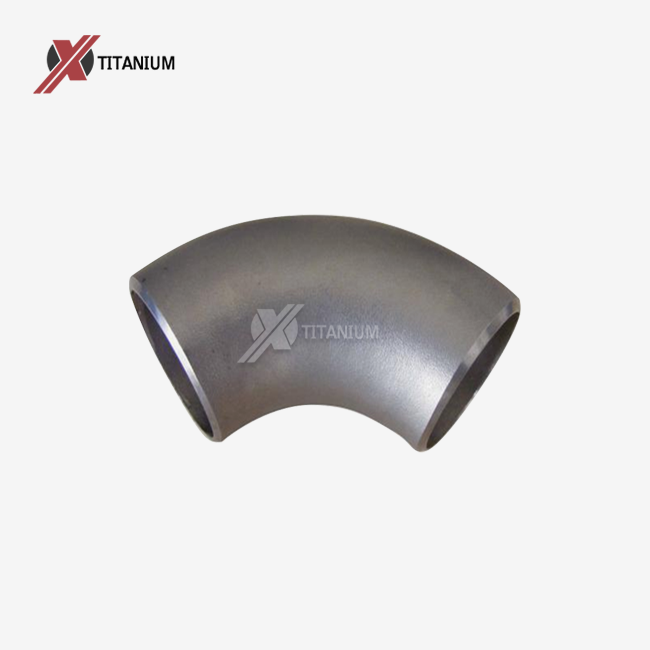
Understanding Titanium Elbow Pipe Fittings
When it comes to fluid handling systems, titanium elbow pipe fittings are the pinnacle of engineering excellence. Because titanium is such a unique material, these parts work better than any others in harsh industrial settings. Because they are strong, light, and don't rust, these fittings are essential for important applications where system failure is not a choice.
Physical and Chemical Characteristics
The amazing makeup of titanium elbows is what makes them work so well. Titanium has an amazing strength-to-weight ratio. It is 40% lighter than steel but has the same level of power. This weight loss has big benefits for installing a lot of pipes at once. It lowers the cost of installation and the amount of support that is needed.
Because a steady oxide layer forms on titanium elbows, they are more resistant to rusting than other materials. This passive film heals itself instantly when it gets broken, so it always protects against aggressive media. The substance is very resistant to rust caused by chloride, which makes it perfect for use in sea and chemical processing settings where other materials would break quickly.
Manufacturing Standards and Quality Assurance
International norms like ASME B16.9, MSS SP-43, and ISO are strictly followed in the creation of modern Titanium Elbow. Either hot mandrel methods for continuous forming or precision plate forming with automatic TIG welding are used in the manufacturing process. Each part goes through a lot of tests, like x-rays, ultrasound tests, and measurement checks, to make sure it fits within the limits that have been set.
Quality control steps are used at every stage of the production process, from certifying the raw materials to inspecting the finished product. Some heat treatment methods, like solution annealing, improve the qualities of materials and lower the stress that comes with making them. Treatments of the surface, like cleaning and passivation, make it more resistant to rust and make sure it works well in service.
Applications and Industry Use Cases of Titanium Elbow Fittings
Titanium elbows can be used in a lot of different businesses where the performance of the material directly affects safety and operating success. The importance of these parts in current industrial systems is shown by these uses.
Chemical Processing and Petrochemical Industries
When working with acidic media, chemical processing plants depend on titanium elbows a lot. Titanium is good for the chlor-alkali business because it doesn't react with wet chlorine gas or hot brine solutions. Traditional materials break down quickly in these situations, which can cause expensive shutdowns and safety risks. Titanium elbows stay strong for decades, even in settings with a lot of acid.
In hydrotreating units and reformer systems at petrochemical plants, where high temperatures and pressures are common, these connections are used. When temperature stability and rust resistance work together, they make sure that systems that process crude oil and handle catalysts work reliably. Data from real-world use shows that titanium elbows can last 20 to 25 years in places where stainless steel parts need to be replaced every 3 to 5 years.
Marine and Offshore Applications
Offshore oil rigs and ships are some of the toughest places for pipe systems to work. It is best to use titanium elbows in systems that cool seawater, pipes for ballast, and firewater networks, where corrosion from trapped saltwater and microbes can be a big problem. The material doesn't react with other metals in the system, so there are no problems with compatibility.
Elbows made of titanium are used in heat exchanger networks and brine handling systems at desalination plants all over the world. Erosion and rust are very bad in multi-stage flash distillation units when the flow direction changes. This is why titanium joints are needed for long-term dependability. Tracking data from large desalination plants shows that titanium components maintaining original specifications after 15+ years of nonstop use.
Aerospace and High-Performance Applications
The aircraft business needs materials that are both strong and reliable while also being very light. The hydraulic systems, fuel lines, and weather control systems of airplanes all rely heavily on Titanium Elbow Fittings. The high ratio of strength to weight makes the airplane lighter while still making sure the system stays strong when temperatures and pressures change quickly.
In power plants, titanium elbows are used in cooling water lines and devices that condense steam. Titanium is good for main and secondary cooling systems in nuclear power plants because it doesn't react with radiation and doesn't rust. Materials used in these uses must be certified to nuclear quality standards and have full paperwork and traceability throughout the whole manufacturing process.
Comparison and Selection Criteria for Titanium Elbows
Choosing the right pipe fittings takes a thorough analysis of the material's qualities, its lifecycle costs, and its performance traits. When you know how titanium stacks up against other materials, you can make smart purchasing choices that improve both performance and value.
Material Performance Comparison
The performance of titanium elbows is better than that of other materials in a number of ways. Stainless steel is pretty resistant to corrosion, but it can still be damaged by chloride, which can cause pitting and fissure corrosion. Carbon steel is cheaper at first, but it needs a lot of protective coats and needs to be replaced often in places where it will rust.
Key performance qualities are shown in the table below:
In uses involving seawater, titanium shows no measurable deterioration after 20 years, while 316L stainless steel exhibits significant pitting within 5 to 7 years. Titanium keeps its mechanical qualities up to 550°C, which is higher than most types of stainless steel. Titanium elbows are lighter than steel equivalents, lowering the system's weight by 40 to 45 percent.
Grade Selection and Specifications
Selecting the right titanium grade relies on the needs of the product and the surrounding environment. The best mix of qualities and cost can be found in grade 2 titanium, which is very resistant to corrosion and can be used in most commercial settings. Palladium additions in Grade 7 make it more resistant to reducing acids and better at stopping rust in cracks.
While still being easy to weld, grade 12 titanium is stronger than grade 10 titanium for high-pressure functions. Standard pipe fitting rules are used to set the dimensions, and pressure values and safety factors are used to figure out the wall thickness. Custom sizes can be made to fit specific system needs, and parts with a diameter of 48 inches can be made.
Procurement Guide for Titanium Elbows
To successfully buy titanium elbows, you need to know how the supply chain works, what quality standards are, and how to handle shipping. Having good ties with qualified manufacturers makes sure that you can get certified products and expert help at all stages of a project.
Supplier Qualification and Certification
The quality control systems of qualified Titanium Elbow makers include ISO 9001, AS9100 for aerospace uses, and nuclear quality certifications when necessary. Certifications for materials must include full chemical analysis, proof of mechanical properties, and the ability to track back to the creation of the original titanium ingot.
Manufacturing facility audits check the factory's ability to make things, its quality control methods, and the accuracy of its testing tools. Qualifications in welding procedures show that you follow the rules and codes that apply. Non-destructive testing methods, such as radiographic and ultrasound checking, make sure that any manufacturing flaws are found before the product is shipped.
Sourcing Strategies and Logistics
Cost, quality, and shipping needs must all be balanced in good sourcing methods. Price stability and assured capacity allocation for important projects are provided by long-term deals with certified sources. Buying in bulk lowers the cost per unit and makes sure there is enough inventory for planned repair tasks.
Standard setups usually have lead times between 4 and 8 weeks, but this depends on the size and number needed. For planning, tooling, and production, custom requirements may take 8 to 12 weeks. Export paperwork needs to be carefully looked over when sending goods across international borders, especially when it comes to aerospace and nuclear uses that can't share technology.
Documentation packages for quality control include records of non-destructive testing, dimensional checking, and material test results. Using the right packaging keeps surface treatments safe and stops damage while being shipped. Custom marking and labeling make sure that the right parts are installed and that upkeep is kept track of throughout the life of the component.
Installation and Maintenance of Titanium Elbow Fittings
Titanium elbows work best and last as long as they are properly installed and maintained. Knowing the properties of the material and following the set steps will make sure that the system works well and is safe.
Installation Best Practices
Installing a titanium elbow requires paying attention to how the materials work together and how to join them. Before fitting, the dimensions and state of the surface are checked. For full entry joints and to keep the weld from getting contaminated, the right filler metals and protective gases must be used.
With the right fit-up and alignment, stress concentrations that could cause the part to fail early are avoided. The support structures need to be able to handle heat growth without putting too much stress on the fitting. A thorough cleaning is part of joint preparation to get rid of any contaminants that might affect the quality of the weld or the resistance to rust.
Maintenance and Inspection Protocols
The major goals of routine care on titanium elbows are to keep the surface in good shape and look for signs of mechanical damage. A visual check can find surface flaws like scratches, dents, or staining that could mean the product is too hot or contaminated. Measuring the sizes of things shows that heat cycling hasn't caused permanent distortion.
The right chemicals and methods are used for cleaning so that the inactive oxide layer is not damaged. Wall condition is checked on a regular basis during erosive service using non-destructive tests such as ultrasonic thickness measures. Keeping records of test results lets you look for trends and plan ahead for repair.
The inherent corrosion resistance of Titanium Elbow fittings typically eliminates the need for protective coatings or cathodic protection systems. Because of this simplification, upkeep costs go down and coating failure is no longer a possible dependability issue. When placed and cared for properly, titanium elbows often last 25 years or more with little to no maintenance.
Conclusion
When regular materials don't work well in difficult pipe uses, titanium elbows are the best choice. Because they are so strong, don't rust, and last a long time, they are essential for many important business processes. Even though it costs more up front than other options, the total cost of ownership is lower because you don't have to repair things as often and do less upkeep. Various fields, from chemical processing to aircraft, depend on these parts to keep their systems safe and reliable. Advanced manufacturing methods and strict quality control work together to make parts that always perform better than expected in the toughest conditions.
FAQ
What makes titanium elbows superior to stainless steel alternatives?
When it comes to rust protection, titanium elbows are much better than stainless steel ones. This is especially true in chloride settings, where stainless steel can pit and crack. It's 40% lighter than steel, which is helpful for big projects, and it doesn't rust or galvanic corrosion, so it's safe to use with metals that aren't the same.
How long is the typical lead time for custom titanium elbow manufacturing?
For standard titanium elbows, production and shipping usually take 4 to 8 weeks. For custom specifications, it can take up to 12 weeks, based on how complicated they are. The wait time is affected by things like size, amount, special testing needs, and current production plans. Working with makers early on makes planning and coordinating deliveries easier.
Are titanium elbows suitable for high-temperature applications?
At temperatures up to 550°C, titanium elbows keep their good mechanical qualities and resistance to corrosion. This means they can be used in most high-temperature industrial uses. For the material's thermal expansion properties to be taken into account, the system must be designed in a way that allows for thermal cycles without putting too much stress on the components.
What quality certifications should I expect from titanium elbow suppliers?
Material certificates from reputable sources include chemical analysis, mechanical qualities, and dimensional inspection records. Certifications for quality management systems, like ISO 9001, AS9100 for aircraft, and nuclear certifications, show that a company can make things and keep track of the whole process. The record of non-destructive testing checks the stability of the structure.
How do I determine the appropriate titanium grade for my application?
Choosing the right grade depends on the factors of the surroundings and the performance standards. Grade 2 is very good at resisting corrosion in most situations, while Grade 7 is better at resisting rust in reducing conditions. Grade 12 is stronger. The best way to choose materials is to talk to sellers who have a lot of knowledge.
Partner with Chuanglian for Premium Titanium Elbow Solutions
With over ten years of specialized manufacturing experience in Baoji, China's "City of Titanium," Chuanglian is ready to assist you with your titanium elbow procurement needs. Our advanced CNC machining capabilities and comprehensive quality control systems ensure that every Titanium Elbow meets the strictest requirements. We supply certified products and full traceability documents to businesses around the world, including aircraft, chemical processing, marine, and power generation. For the best material choice and system design for your needs, our engineering team offers expert advice. For help finding a titanium elbow source, email our sourcing experts at info@cltifastener.com or djy6580@aliyun.com.
References
1. Davis, J.R., "Titanium: A Technical Guide," ASM International Materials Engineering Handbook, Second Edition, 2006.
2. Schutz, R.W. and Thomas, D.E., "Corrosion of Titanium and Titanium Alloys in Marine Environments," Corrosion Engineering Handbook, 2010.
3. American Society of Mechanical Engineers, "ASME B16.9 Factory-Made Wrought Buttwelding Fittings," Standards for Pipe Fittings and Flanges, 2018.
4. Boyer, R.R., "An Overview on the Use of Titanium in the Aerospace Industry," Materials Science and Engineering Research Journal, Volume 213, 2019.
5. Lutjering, G. and Williams, J.C., "Titanium Engineering Properties and Applications in Industry," Springer Materials Science Handbook, Second Edition, 2007.
6. International Titanium Association, "Guidelines for Titanium Piping Systems Design and Installation," Industrial Applications Technical Report, 2020.
Learn about our latest products and discounts through SMS or email