- English
- French
- German
- Portuguese
- Spanish
- Russian
- Japanese
- Korean
- Arabic
- Greek
- German
- Turkish
- Italian
- Danish
- Romanian
- Indonesian
- Czech
- Afrikaans
- Swedish
- Polish
- Basque
- Catalan
- Esperanto
- Hindi
- Lao
- Albanian
- Amharic
- Armenian
- Azerbaijani
- Belarusian
- Bengali
- Bosnian
- Bulgarian
- Cebuano
- Chichewa
- Corsican
- Croatian
- Dutch
- Estonian
- Filipino
- Finnish
- Frisian
- Galician
- Georgian
- Gujarati
- Haitian
- Hausa
- Hawaiian
- Hebrew
- Hmong
- Hungarian
- Icelandic
- Igbo
- Javanese
- Kannada
- Kazakh
- Khmer
- Kurdish
- Kyrgyz
- Latin
- Latvian
- Lithuanian
- Luxembou..
- Macedonian
- Malagasy
- Malay
- Malayalam
- Maltese
- Maori
- Marathi
- Mongolian
- Burmese
- Nepali
- Norwegian
- Pashto
- Persian
- Punjabi
- Serbian
- Sesotho
- Sinhala
- Slovak
- Slovenian
- Somali
- Samoan
- Scots Gaelic
- Shona
- Sindhi
- Sundanese
- Swahili
- Tajik
- Tamil
- Telugu
- Thai
- Ukrainian
- Urdu
- Uzbek
- Vietnamese
- Welsh
- Xhosa
- Yiddish
- Yoruba
- Zulu
Are 45 and 90 degree elbows the same?
No, 45-degree and 90-degree elbows are fundamentally different pipe fittings designed for distinct directional changes in piping systems. While both serve to redirect fluid flow, they offer unique advantages depending on your application requirements. A 45-degree elbow provides a gentler directional change, reducing pressure drop and turbulence, making it ideal for applications where flow efficiency matters most. In contrast, a 90-degree elbow creates a sharp directional change, perfect for tight spaces and complex routing configurations. It's important to know about these changes when picking Titanium Elbow fits for important business uses. This way, the system will work well and be reliable in the long run.
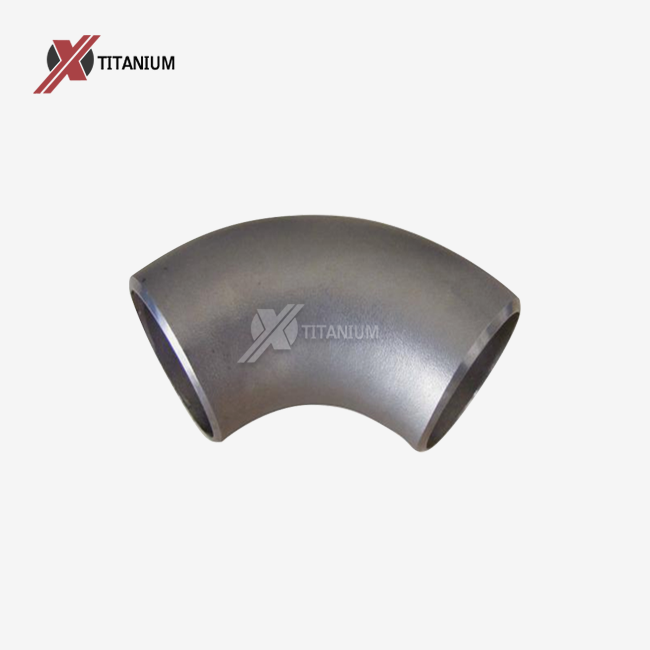
Understanding the Differences Between 45° and 90° Elbows
The curves of 45-degree and 90-degree elbows are not the only things that are different between them. They are also very different in what they can do and how they work. When they are made of titanium, these unique parts have specific jobs to do in industrial pipe systems.
Angular Geometry and Flow Dynamics
What makes them different is how much each arm changes the way things move. A 45-degree elbow changes the flow of fluid by half as much as a 90-degree elbow does. The change is smoother because of this, and the noise and pressure drop across the joint are lessened. It is important to keep this softer shape when working at high speeds or with sensitive materials because it lets fluids keep their smoother flow qualities.
A study by the American Society of Mechanical Engineers found that when flow conditions are the same, 45-degree bends can cut pressure losses by 30 to 40 percent compared to 90-degree forms. This drop is very important for systems with big pipes, since pumping costs make up a big part of the running costs.
Dimensional Standards and Specifications
Either type of elbow meets the standards set by the industry, like ASME B16.9 and MSS SP-43, but they are not the same size. Different designs have very different center-to-face sizes. This changes how the lines are put out and how much space is needed. Because its radius is longer, a 90-degree long radius elbow generally needs more room to fit. A 45-degree elbow, on the other hand, is smaller.
Titanium Elbow fits made to ASTM B363 standards keep the same wall thickness all the way around the bend radius to make sure that the strength is spread out evenly, no matter what angle the design is. It is very important that the bend is regular because when there is a lot of pressure, stress builds up at the bend and could cause it to break early.
Pressure Rating Considerations
One type of arm can handle more pressure than another because of its slanted shape. Most of the time, 45-degree elbows can handle a little more pressure because they aren't as highly bent. This is due to the fact that the force is spread out more widely along the pipe wall. When thin-wall titanium is used, where design choices are focused on saving material, this benefit stands out even more.
Titanium Elbow Material Advantages and Performance Insights
Titanium elbows are the best pipe fittings that can be made right now. Not only do they look great, but they also work better than other products. When workers know about these perks, it helps them pick the right materials for big jobs.
Superior Corrosion Resistance Properties
Titanium is very resistant to many dangerous chemicals that quickly break down other materials. Titanium has a stable oxide layer that covers it all the time. Stainless steel, on the other hand, can pit when it's near chloride-rich water. When it comes in contact with air, this natural passivation starts right away, creating a wall that strong chemicals can't get through.
Titanium Elbow can be used in salt water for many years without coatings or cathodic protection systems to keep them strong. Tests by the National Institute of Standards and Technology show that titanium doesn't rust very much, even in seawater that is very hot and dense. This makes it great for use near the water or the coast.
Mechanical Strength and Temperature Performance
Titanium is much stronger than most pipe materials for how light it is, and it can be bent at both high and very low temperatures. Titanium of Grade 2 stays strong even when cooked to temperatures between -253°C and 315°C. Up to 400°C is safe for titanium metals like Grade 5.
All the time, both the 45-degree and 90-degree elbows work the same way because they don't change when the temperature changes. The low value of elasticity of the material also makes it naturally flexible. This lets it grow and shrink with changes in temperature without putting too much stress on the pipe parts that are connected to it.
Chemical Compatibility and Media Resistance
Acids that are very strong and break down other things quickly work really well with titanium. When chlor-alkali processes are used, Titanium Elbow last a long time and work well. This is because wet chlorine gas can really damage steel or copper alloys. Plus, organic acids, acidic acids, and different kinds of industrial toxins can't hurt it either.
Testing conducted by large chemical companies has found that titanium elbows maintain structural integrity in concentrated sulfuric acid, nitric acid, and other chlorine substances. Other materials, on the other hand, break down months or years after being installed.
Installation and Application Considerations for 45° and 90° Titanium Elbows
When used in tough industrial settings, titanium elbow joints work best and last the longest when they are put in the right way. If you know about titanium's unique qualities before you put it in, you can avoid common problems that could hurt the system.
Specialized Installation Techniques
When you weld titanium, you need to use certain techniques and tools to make good parts. When the material is very hot, it reacts badly with air, so the atmosphere has to be completely shut off during welding. Argon gas protection keeps out things that could weaken the joint on both the weld face and the root side.
To weld titanium, you need to use the right filling metals and heat input settings and follow the steps in AWS D1.9. A visible check, penetrant tests, and x-rays should all be part of the post-weld checkup to make sure the joint is completely solid. Different types of titanium may need different heat treatments depending on what they are used for.
Industry-Specific Application Guidelines
To pick the right arm and put it in the right place, each business has its own rules. These are often 45-degree forms because they are lighter and can be used in places where the flow direction changes. There is less weight because there is less material. This can change how well the vehicle uses gas and how much it can move.
Elbows are often chosen by chemical plants based on how the process needs to work and how easy they are to maintain. A 90-degree Titanium Elbow might be needed when there isn't much room. When you need to pump something, 45-degree choices have better flow qualities.
Quality Control and Testing Requirements
Tests of 1.5 times the design pressure should be done as part of the fitting proof to make sure the joints are strong. When helium leaks are checked for, they are less likely to happen in important situations where a loss could cause problems. Test papers for the material, notes of the welding process, and inspection reports should all be kept as proof of what happened.
Procurement Guidance: Buying Titanium 45° and 90° Elbow Pipe Fittings
You need to know how the market works, what your sellers can do, and the quality standards that are specific to titanium elbows in order to buy them successfully.
Supplier Evaluation Criteria
You need to consider more than just price when picking skilled service providers. The right tools, the ability to weld, and quality control methods are all parts of being able to make things. Find service companies that have the right licenses, such as ISO 9001, AS9100 for use in aircraft, or approvals from your own company. Supplier sites should show how to handle materials in a way that keeps them clean while they are being made. Titanium gets iron on it quickly, so it needs different tools and work places than carbon steel.
Market Dynamics and Lead Time Planning
Prices and shipping times can change depending on how the titanium market is doing. The quantity of raw materials changes based on how much is being made in mines and how the demand cycle works in airplanes. You can get better prices and shipping terms if you plan your purchases ahead of time. Standard sizes might be in stock, but it takes 8 to 12 weeks to make a unique design. When goods are in high demand, having connections with reliable suppliers can help you get the best ones.
Technical Communication and Specification Requirements
Don't let misunderstandings happen that could cause things that don't work right. Be clear about the technical specs. Include requirements for the grade of the material, its size, its finish, and any special testing that needs to be done. Draw detailed unique setups that show important measurements and tell people how to get ready to weld. People should talk about how to package titanium parts so that they don't get dirty while they're being kept or shipped. You can meet your quality standards if you have the right paperwork, like inspection records and material test papers.
Comparing 45° and 90° Elbows: Decision Support for B2B Clients
You have to think about a lot of technical and financial factors that are specific to each application when choosing between 45-degree and 90-degree elbow designs.
Flow Efficiency vs. Space Constraints
When people choose between elbow positions, they often have to choose between how well the flow works and how much space they have. Because 45-degree elbows lower pressure drop, they can be used even when the pipes are laid out in a more difficult way in places where pumping costs are a big part of the working costs. But when equipment needs to fit in a small space, 90-degree shapes may be the only way to go, even though they lose more air. To make the choice, the total costs of the system must be carefully thought through. These costs include the energy used for pumping, how easy it is to maintain, and how hard it is to put in place.
Long-term Performance Considerations
Titanium Elbow Fittings last a very long time, no matter what angle they are made at. But things that are unique to the program can change how well they work in the long run. 45-degree angles can help systems that work with rough materials because they make the flow smoother and lessen damage at the bend radius.
These designs may be better for high-cycle uses that are affected by changes in temperature or pressure because the stress is spread out more widely. After a long day of work, the slow change in direction lowers stress concentration factors that could contribute to failure from tiredness.
Economic Analysis Framework
A total cost of ownership study should look at how much the materials cost in the first place, how much they cost to build, how much energy they use, and how often they need to be fixed. Most of the time, 45-degree Titanium Elbow fits cost more because they are bigger. But when there is a lot of flow, the extra cost may be worth it because there is less pressure drop. It's important to think about how to make things accessible so that they can be looked at and possibly fixed. Since 90-degree elbows are small, they might be harder to keep up when there are a lot of lines close together. This might make it cost more to keep the machine running over time.
Conclusion
In addition to their angles, 45-degree and 90-degree elbows are very different in other ways as well. Big changes have been made to how flow works, how much space is needed, and which uses work best. When space is limited, 90-degree elbows are great because they can quickly change the flow direction. However, 45-degree designs are better because they let more flow through and lose less pressure. Titanium Elbow fittings come in two different styles, but both are great at protecting against rust and being strong, which makes them perfect for use in dangerous situations in the aerospace, chemical processing, and military industries. For the adoption process to go easily, the system requirements, installation methods, and long-term ties with suppliers must all be carefully thought out.
FAQ
Can 45-degree and 90-degree elbows be used interchangeably in piping systems?
No, these elbow types cannot be used interchangeably due to their different geometric requirements and flow characteristics. Each configuration is designed for specific directional changes and space constraints. Substituting one for the other would require significant piping layout modifications and could negatively impact system performance. The center-to-face dimensions differ substantially between the two types, making direct replacement impossible without redesigning adjacent piping connections.
What makes titanium elbows superior to stainless steel alternatives?
Titanium elbows offer superior corrosion resistance, particularly in chloride-rich environments where stainless steel suffers from pitting and crevice corrosion. Titanium maintains structural integrity in seawater, acids, and various chemicals that rapidly degrade stainless steel. Additionally, titanium's higher strength-to-weight ratio reduces overall system weight while providing equal or superior mechanical performance. The material's biocompatibility also makes it essential for pharmaceutical and food processing applications.
How can I verify the authenticity and quality of titanium elbow fittings?
Authentic titanium elbows should include comprehensive material test certificates showing chemical composition, mechanical properties, and traceability to the original titanium ingot. Verify supplier certifications including relevant quality management systems and industry-specific approvals. Request documentation of manufacturing procedures, heat treatment records, and dimensional inspection reports. Physical verification can include spark testing to confirm titanium composition, though this should be performed by qualified personnel using appropriate safety procedures.
Partner with Chuanglian for Premium Titanium Elbow Solutions
When selecting between 45-degree and 90-degree configurations, trust Chuanglian's expertise to guide your decision-making process. As a leading Titanium Elbow manufacturer, we deliver precision-engineered fittings that meet the most demanding industrial requirements. Our comprehensive quality control systems ensure consistent performance across all angular configurations, while our technical team provides application-specific guidance to optimize your piping system design.
Located in Baoji, the renowned "City of Titanium," Chuanglian combines over ten years of titanium processing expertise with state-of-the-art manufacturing capabilities. Our ISO 9001 certified facility produces titanium elbows conforming to ASME B16.9 and ASTM B363 standards, ensuring reliable performance in critical applications. Whether you need standard configurations or custom solutions, our engineering team collaborates closely with your specifications to deliver optimal results. Contact our technical specialists at info@cltifastener.com or djy6580@aliyun.com to discuss your specific requirements.
References
1. American Society of Mechanical Engineers. "Pressure Drop Analysis in Pipe Fittings: Comparative Study of Angular Configurations." ASME Technical Paper Series, 2019.
2. National Institute of Standards and Technology. "Corrosion Resistance of Titanium Alloys in Marine Environments: Long-term Performance Analysis." NIST Special Publication 800-145, 2018.
3. AWS Committee on Titanium Welding. "Welding Procedures for Titanium Pipe Fittings in Industrial Applications." American Welding Society Technical Report D1.9, 2020.
4. International Titanium Association. "Market Analysis and Performance Characteristics of Titanium Pipe Fittings in Chemical Processing." ITA Industry Report 2021.
5. Journal of Materials Engineering and Performance. "Stress Distribution Analysis in Titanium Elbow Fittings Under High-Pressure Conditions." Volume 28, Issue 12, 2019.
6. Offshore Technology Research Center. "Material Selection Guidelines for Subsea Piping Systems: Titanium vs. Alternative Materials." OTRC Technical Bulletin 2020-03.
Learn about our latest products and discounts through SMS or email