- English
- French
- German
- Portuguese
- Spanish
- Russian
- Japanese
- Korean
- Arabic
- Greek
- German
- Turkish
- Italian
- Danish
- Romanian
- Indonesian
- Czech
- Afrikaans
- Swedish
- Polish
- Basque
- Catalan
- Esperanto
- Hindi
- Lao
- Albanian
- Amharic
- Armenian
- Azerbaijani
- Belarusian
- Bengali
- Bosnian
- Bulgarian
- Cebuano
- Chichewa
- Corsican
- Croatian
- Dutch
- Estonian
- Filipino
- Finnish
- Frisian
- Galician
- Georgian
- Gujarati
- Haitian
- Hausa
- Hawaiian
- Hebrew
- Hmong
- Hungarian
- Icelandic
- Igbo
- Javanese
- Kannada
- Kazakh
- Khmer
- Kurdish
- Kyrgyz
- Latin
- Latvian
- Lithuanian
- Luxembou..
- Macedonian
- Malagasy
- Malay
- Malayalam
- Maltese
- Maori
- Marathi
- Mongolian
- Burmese
- Nepali
- Norwegian
- Pashto
- Persian
- Punjabi
- Serbian
- Sesotho
- Sinhala
- Slovak
- Slovenian
- Somali
- Samoan
- Scots Gaelic
- Shona
- Sindhi
- Sundanese
- Swahili
- Tajik
- Tamil
- Telugu
- Thai
- Ukrainian
- Urdu
- Uzbek
- Vietnamese
- Welsh
- Xhosa
- Yiddish
- Yoruba
- Zulu
Exploring the Strength and Durability of Titanium Coil Wire
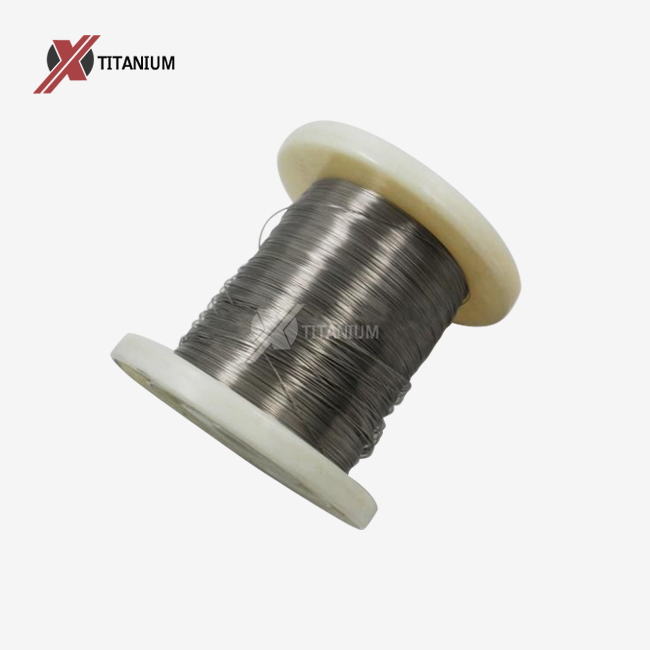
Titanium coil wire is a huge step forward in technology for continuously moving materials, and it was designed to work best in automatic high-volume industrial processes. This special format gets rid of the downtime that comes with replacing materials in automatic welding systems, Wire Arc Additive Manufacturing (WAAM), and precision manufacturing. Through vacuum arc remelting and precise drawing processes, titanium coil wire achieves high strength-to-weight ratios and maintains consistent diameter tolerances from 0.8mm to 6.35mm. This makes it an essential material for aerospace, medical, and petrochemical applications that can't risk reliability.
Introduction
This detailed guide tells purchasing managers, engineers, and industrial buyers everything they need to know about using titanium coil wire in tough environments. When you know about the special features and performance benefits of titanium wire goods, you can make smart choices about where to buy them that balance low costs with reliable operations. The continuous format solves important production problems and provides better mechanical properties needed for aircraft parts, medical devices, and chemical processing equipment.
Materials used in modern industry need to be able to survive harsh conditions while still staying stable in size and not rusting. Titanium wire technology meets these needs by using advanced metals and precise manufacturing methods that make sure the quality of each production batch is the same.
Understanding Titanium Coil Wire – Properties and Benefits
Exceptional Mechanical Properties and Material Composition
The tensile strength of titanium wire goods is very high. It ranges from 240 MPa for Grade 1 commercially pure titanium to over 900 MPa for Grade 5 titanium alloys (Ti-6Al-4V). The continuous coil format keeps these mechanical qualities and lets automatic feeding systems keep working without stopping. The material is very resistant to rust because when it comes in contact with air, it forms a protective oxide layer. Because of this, titanium coil wire is perfect for use in sea areas, chemical processing, and medical settings where breaking down the material could make things less safe or effective.
Weight Advantages and Structural Benefits
Titanium's density of about 4.5 g/cm³ makes it much lighter than stainless steel options while still having better strength properties. This benefit is especially useful in flight, where every gram affects how much fuel is used and how much weight can be carried. The precise winding method used to make coils keeps the stress under control even when the coils are being fed quickly. Level wrapping methods avoid the tangling problems that come up with softer titanium grades, which makes automatic processes reliable in important situations.
Comparing Titanium Coil Wire with Other Metals for Procurement Decisions
Performance Characteristics Across Material Types
When evaluating material options for demanding uses, titanium wire regularly performs better than traditional alternatives in key performance measures. Even though stainless steel wire is cheaper, titanium wire is better at resisting corrosion in harsh chemical conditions and naval settings. While nickel-based metals work well at high temperatures, they are not as strong as titanium and are not biocompatible enough for medical use. Copper wire is better at conducting electricity than other materials, but it doesn't have the structural integrity required for load-bearing applications in aircraft and industry settings.
Grade Selection for Specific Applications
Based on their alloy makeup and mechanical features, different grades of titanium meet different industry needs. For anodizing racks and springs, Grade 1 titanium is the most flexible. For general industrial use, Grade 2 titanium is the best mix of strength and flexibility. Grade 5 titanium alloy is very strong and is used to make aircraft bolts and structural parts that are put under a lot of stress. Aluminum and vanadium are alloying elements that improve mechanical qualities while keeping rust resistance, which is important for long-term dependability.
Technical Specifications and Manufacturing Processes
Advanced Production Techniques and Quality Control
The first step in making something is vacuum arc remelting titanium sponge to make sure it is chemically pure and free of any impurities that could damage the material's qualities. During multiple drawing processes, the width is shrunk while the material is worked harder to meet the strength requirements. Vacuum annealing methods keep the amount of hydrogen below 150 ppm to keep hydrogen from weakening materials in high-stress situations. This important step makes sure that the product will work reliably for a long time in medical and military settings where a material failure could be very bad.
Dimensional Tolerances and Surface Treatments
For most uses, precision drawing processes can keep circumference tolerances within ±0.05mm. Tighter tolerances can be achieved for specific needs. Acid-pickled finishes are good for general use, while smooth surfaces keep friction to a minimum in automatic feeding systems. Quality certificates, such as ISO 9001, AS9100 for aircraft uses, and medical device certifications, make sure that products can be tracked and meet industry standards. These approvals give buying teams faith in the consistency of materials and that they are following the rules.
Procurement Guide – Finding and Buying Titanium Coil Wire
Supplier Evaluation Criteria and Sourcing Strategies
To find trustworthy titanium wire suppliers, you need to carefully look at their production skills, quality control systems, and expert support services. Established companies that have vacuum freezing facilities and a wide range of testing tools can give you more confidence in the stability of the materials and their compliance with regulations. Because processing titanium is so specialized and purchases usually take a long time in medical and military uses, supply chain stability is very important. Suppliers with good inventory management and a history of getting raw materials show the dependability that is needed for important projects.
Pricing Dynamics and Customization Options
Titanium coil wire prices depend on the cost of raw materials, how hard the process is, and the specifics of the order. When you buy in bulk, you usually save money and make sure you always have what you need for your business. Special alloy compositions, surface treatments, and packing choices can be made to order to meet the particular needs of each application. Lead times depend on the type of material, the size, and the finish applied to the surface. For normal requirements, they usually range from 4 to 12 weeks. There may be choices for faster delivery for pressing needs, but the prices tend to be higher for faster production plans.
Application Scenarios and Case Studies Demonstrating Strength and Durability
Aerospace Applications and Performance Validation
When weight savings and corrosion protection are important, commercial airplane makers use titanium coil wire for automatic welding of structural parts. The constant style gets rid of the starts and stops of welds that could weaken important structures. Manufacturers of engine parts rely on titanium wire for producing fasteners and brackets that can handle changing temperatures and exhaust gases that are very corrosive. Certification and being able to track materials make sure that strict military quality standards are met.
Medical Device Manufacturing Excellence
Medical device makers use titanium wire for producing internal parts that need to be biocompatible and resistant to rust to keep patients safe. The inert nature of the material keeps tissue reactions from happening and keeps the structure strong for decades after insertion. Spring manufacturing applications benefit from titanium's elastic properties and corrosion resistance in medical instruments that are sterilized and come into contact with body fluids. The continuous style makes it possible to make a lot of things at once while keeping the mechanical qualities the same throughout the whole process.
Conclusion
Titanium coil wire is a major step forward in the science and technology of materials. Its strength, longevity, and resistance to rust make it ideal for use in harsh industrial settings. The continuous style solves important problems in manufacturing and provides better performance qualities needed in aircraft, medical, and chemical processing settings. To get the best results for important uses, purchasing choices should think about more than just the properties of the material. They should also look at the skills of the provider, quality certifications, and the stability of the supply chain over the long term.
FAQ
What surface treatments are available for titanium coil wire?
Titanium wire surfaces can be supplied with acid-pickled finishes that give them a matte gray look that works well in most situations, or they can be supplied with shiny or bright finishes that make automatic feeding systems work better and keep precision welding jobs clean.
How does coil winding prevent feeding problems in automated systems?
Precision level wrapping methods keep the tension constant and stop tangling during high-speed reward operations. The cast and helix properties are put through a lot of tests to make sure that the wire feeding goes smoothly and that birds don't get stuck in the randomly wound coils.
What certifications should buyers require for aerospace applications?
For aerospace uses, welding wire must be certified according to AWS A5.16, the AS9100 quality system, and the material must have test papers that show its chemical make-up, mechanical properties, and the ability to be tracked back to its original melt records.
How is hydrogen content controlled to prevent embrittlement?
Using vacuum annealing to get rid of hydrogen that was collected during production keeps amounts below 150 ppm. To keep stressed parts working in important situations from breaking down too slowly, inert gas fusion testing checks the amount of hydrogen present.
Partner with Chuanglian for Premium Titanium Coil Wire Solutions
You can trust Chuanglian to make high-quality titanium coil wire. They have over ten years of experience and state-of-the-art production facilities in Baoji, China, which is known as the "City of Titanium." Our thorough quality control methods make sure that every product meets the strict needs of medical, industrial, and aircraft uses. We make titanium wire goods that are more consistent and reliable than the industry standard thanks to state-of-the-art CNC tools and strict testing procedures. Get in touch with our expert team at info@cltifastener.com or djy6580@aliyun.com to talk about your unique needs and see how Chuanglian can help you make precision titanium products.
References
1. American Welding Society. "Specification for Titanium and Titanium Alloy Bare Welding Rods and Electrodes." AWS A5.16/A5.16M:2013.
2. ASTM International. "Standard Specification for Titanium and Titanium Alloy Wire." ASTM B863-19.
3. Boyer, R.R., Welsch, G., and Collings, E.W. "Materials Properties Handbook: Titanium Alloys." ASM International, 1994.
4. Leyens, C. and Peters, M. "Titanium and Titanium Alloys: Fundamentals and Applications." Wiley-VCH, 2003.
5. Lutjering, G. and Williams, J.C. "Titanium: Engineering Materials and Processes." Springer-Verlag, 2007.
6. SAE International. "Aerospace Material Specification for Titanium Alloy Wire." AMS 4954M-2019.
Learn about our latest products and discounts through SMS or email