- English
- French
- German
- Portuguese
- Spanish
- Russian
- Japanese
- Korean
- Arabic
- Greek
- German
- Turkish
- Italian
- Danish
- Romanian
- Indonesian
- Czech
- Afrikaans
- Swedish
- Polish
- Basque
- Catalan
- Esperanto
- Hindi
- Lao
- Albanian
- Amharic
- Armenian
- Azerbaijani
- Belarusian
- Bengali
- Bosnian
- Bulgarian
- Cebuano
- Chichewa
- Corsican
- Croatian
- Dutch
- Estonian
- Filipino
- Finnish
- Frisian
- Galician
- Georgian
- Gujarati
- Haitian
- Hausa
- Hawaiian
- Hebrew
- Hmong
- Hungarian
- Icelandic
- Igbo
- Javanese
- Kannada
- Kazakh
- Khmer
- Kurdish
- Kyrgyz
- Latin
- Latvian
- Lithuanian
- Luxembou..
- Macedonian
- Malagasy
- Malay
- Malayalam
- Maltese
- Maori
- Marathi
- Mongolian
- Burmese
- Nepali
- Norwegian
- Pashto
- Persian
- Punjabi
- Serbian
- Sesotho
- Sinhala
- Slovak
- Slovenian
- Somali
- Samoan
- Scots Gaelic
- Shona
- Sindhi
- Sundanese
- Swahili
- Tajik
- Tamil
- Telugu
- Thai
- Ukrainian
- Urdu
- Uzbek
- Vietnamese
- Welsh
- Xhosa
- Yiddish
- Yoruba
- Zulu
What makes titanium an ideal material for brake bolts?
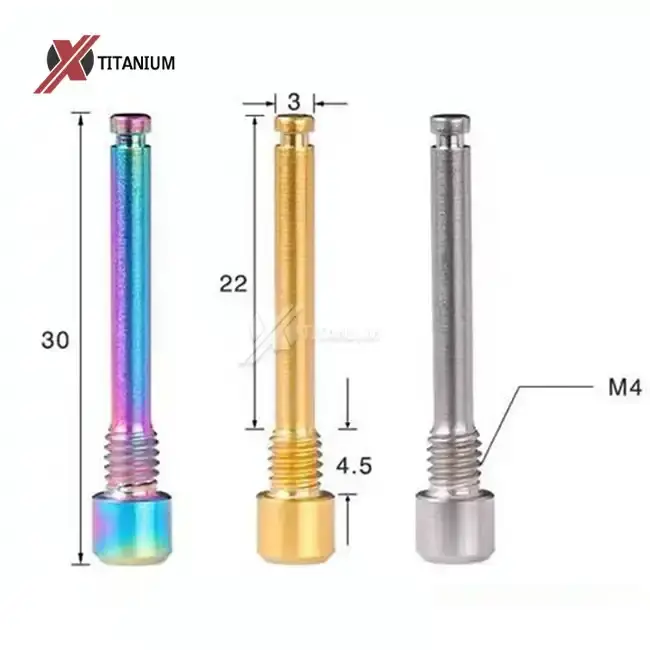
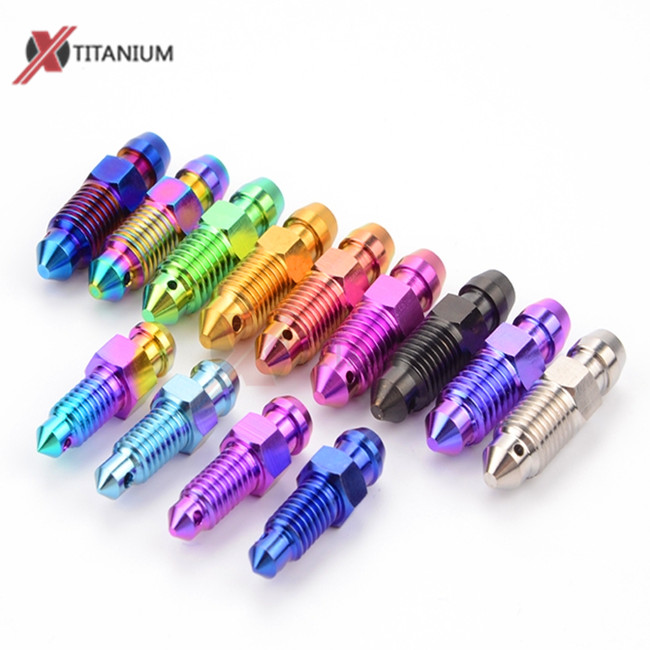
When evaluating fasteners for critical braking applications, material choice is never arbitrary. Titanium stands out as the optimal selection for brake bolts due to its exceptional combination of lightweight construction, superior corrosion resistance, and mechanical strength that far exceeds conventional steel alternatives. The Titanium Disc Brake Plug Bolt, manufactured from aerospace-grade Ti-6Al-4V (Grade 5) alloy, addresses the persistent challenges facing procurement professionals in high-performance industries—delivering a tensile strength exceeding 950 MPa while achieving a 40% weight reduction compared to steel counterparts. This unique performance profile solves critical pain points including galvanic corrosion, premature fastener failure, and excessive unsprung mass in demanding brake systems.
Introduction
Brake bolts are more than just parts that hold things together; they are safety-critical parts that directly affect how well a system works when it is exposed to high temperatures, vibrations, and corrosives. The choice of material affects how long these parts will last and whether they will break down early, which could affect both safety and operating efficiency. Titanium alloy fasteners are being asked for more and more by procurement teams in aircraft, racing, marine engineering, and high-performance cars to meet strict performance standards that steel can't meet.
The move toward titanium shows that people have a better grasp of lifetime economics. Even though the initial costs of purchase seem higher, the longer service life, shorter maintenance intervals, and lack of corrosion-related failures make the investment well worth it. For people who work in sourcing and managing complicated supply chains, titanium brake bolts offer consistent performance from batch to batch and compatibility with strict quality systems. These features are perfect for modern procurement rules that put reliability over minimising short-term costs.
Understanding Titanium as a Material for Brake Bolts
Composition and Metallurgical Properties
Ti-6Al-4V (Grade 5) metal, which is made up of 90% titanium, 6% aluminium, and 4% vanadium, is used in Titanium Disc Brake Plug Bolts. With this particular mix, a microstructure is made that is both flexible and very strong, with a yield strength of about 880 to 950 MPa. The aluminium presence makes the solid solution stronger while lowering its density. The vanadium stabilises the beta phase, which makes the material harder to break. Unlike lower-grade titanium alloys, Grade 5 keeps its structure even at high temperatures of up to 400°C. This is very important in places like brake callipers where friction creates long-lasting heat.
The titanium dioxide layer forms naturally and protects against rust. It also heals itself when it gets scratched, unlike painted or coated steel screws that break down when their barrier is broken. This oxide film stays stable in pH levels ranging from very acidic to very basic. This means that titanium brake bolts can't be damaged by different types of brake fluid, such as DOT 3, DOT 4, DOT 5.1, and mineral oil mixtures used in different brake systems.
Functional Role in Brake Systems
In hydraulic disc brake callipers, plug bolts can do two different things, depending on the situation. Some of them hold brake pads in place while the car is running by acting as covers for pad pins. Others block fluid gallery ports so hydraulic fluid doesn't leak when the system pressure is high. In both cases, a failed closure immediately compromises safety, either by moving the pad or causing a huge amount of fluid to leak out.
Titanium alloy fasteners solve the common problem of corrosion between metals that are not the same. When water and road salt come in contact with aluminium calliper bodies and steel bolts, they form galvanic cells that make steel parts corrode quickly. When this electrochemical reaction happens, fasteners become stuck and can't be removed without breaking expensive calliper housings. Titanium standard gets rid of this maintenance problem for good.
Technical Benefits of Titanium Disc Brake Plug Bolts
Superior Strength-to-Weight Ratio
With a density of 4.43 g/cm³, titanium is about 45% lighter than steel versions while still having the same or better tensile qualities. In race situations where unsprung mass has a direct effect on how the suspension responds and how precisely the car handles, switching from steel brake gear to titanium fasteners makes a noticeable difference in how the vehicle moves. Taking away one gram from the brake assembly makes the suspension parts respond more quickly to changes in the road surface, which makes tyre contact better and cornering more stable.
The effects on performance go beyond motorsport. In aircraft uses, lowering weight directly affects how much fuel is used and how much can be carried. Marine boats need less upkeep for corrosion while still meeting structure standards. Even in industrial tools, using lighter brake parts saves energy when the brakes are engaged many times.
Exceptional Corrosion Resistance
Titanium Disc Brake Plug Bolt fasteners have an inactive oxide layer that protects them from all of the natural damage that breaks down steel options. Titanium is not affected by saltwater, acidic industrial environments, or chemical cleaners, which all damage steel even when it is covered or stainless. Testing done in marine environments shows that titanium alloy fasteners keep their shape and strength after years of being submerged in saltwater, while stainless steel shows pitting corrosion and stress corrosion cracking reactions.
This resistance to rust gets rid of the most common way brakes fail: stuck bolts that need to be replaced along with the calliper instead of just being serviced regularly. When it comes to fleet maintenance, procurement managers know that ordering titanium fasteners cuts down on unexpected downtime and part replacement costs, even if the price of the component at first glance seems high. When repair labour, replacement parts, and working disruption are all taken into account, the lifetime cost estimate strongly favours titanium.
Heat and Fatigue Resistance
Friction in brake systems creates a lot of heat, and parts of the calliper go through repeated rounds of heating and cooling. Titanium keeps its mechanical qualities even at temperatures where steel starts to lose strength and change shape. Titanium's thermal expansion coefficient (8.6 × 10⁻⁶/°C) stays the same across the working temperature range. This keeps the assembly from coming apart due to differential expansion, which happens a lot with mixed-material systems.
Another important benefit is fatigue endurance under cyclic loading. Because Grade 5 titanium has a high fatigue strength, brake bolts can survive millions of vibration cycles without cracking. This is especially important in racing and heavy industrial settings where brake systems are loaded with high frequencies over a long period of time. According to tests done in aircraft, titanium fasteners usually last three to five times longer than steel fasteners in high-cycle wear situations.
Comparative Analysis: Titanium vs. Steel Disc Brake Plug Bolts
Tensile Strength and Durability Comparison
By comparing Grade 5 titanium (tensile strength ≥950 MPa) to regular stainless steel brake bolts (tensile strength 700–800 MPa), titanium shows 15-20% higher strength while also lowering weight as previously mentioned. High-strength steel alloys can match titanium's tensile strengths, but only after being heated, which makes them more brittle and less resistant to corrosion. This isn't useful for brake applications where both properties are important.
Titanium alloy screws have an extra safety cushion because they are flexible. Hardened steel bolts break very easily because they are brittle, but titanium deforms plastically before it breaks completely. This gives you a visual warning when you check it. In the aircraft industry, gradual failure modes are strongly desired over sudden component breakage. This trait fits with that mindset.
Lifecycle Cost Analysis
When procurement workers compare Titanium Disc Brake Plug Bolt and steel, they need to look at more than just the purchase price. They need to look at the total cost of ownership as well. In corrosive settings, steel brake nuts usually need to be replaced every two to three years because they rust and seize up. Titanium fasteners usually work well for 10 years or more without breaking down. When you look at the costs of labour for upkeep, getting replacement parts, and system downtime, you can see that titanium's higher original cost is paid for in just one replacement cycle.
Getting rid of the need to reapply anti-seize powder (which is still needed with titanium to stop galling but much less often than with steel to stop corrosion) cuts down on upkeep work even more. Quality teams can do inspections less often on titanium parts because they stay the same size and don't lose their surface, which makes it harder to measure accurately on corroded steel screws.
Maintenance Simplification
Maintenance teams that use titanium brake parts say that service processes have become a lot easier. No longer do brake calliper overhauls need to use penetrating oil, heat cycling, or damaging methods to remove fasteners. Bolts can be taken off easily and without damaging the threads on aluminium calliper bodies. The same hardware can then be safely put back on, which is not possible with corroded steel bolts that have to be thrown away after just one use.
This advantage of serviceability is very appealing to procurement managers in the defence and aircraft industries, where strict upkeep paperwork rules apply. Being able to service brake systems without any unexpected problems cuts down on maintenance hours, helps people stick to their schedules, and gets rid of the need to keep emergency stocks of replacement callipers that get damaged when fasteners are removed.
Installation and Maintenance Best Practices for Titanium Brake Bolts
Proper Installation Procedures
Titanium metal screws need to be installed in a certain way to avoid galling, which happens when titanium surfaces seize up when they are threaded into aluminium without being properly oiled. Before fitting, threads must be treated with an anti-seize substance based on copper or nickel. Thread locker solutions (medium strength, like Loctite 243) add extra protection against vibration loosening while still being easy to remove for upkeep.
Because titanium has a lower modulus of elasticity than steel, the torque requirements for titanium brake bolts are usually between 2 and 6 Nm, depending on the thread size. It is necessary to use precise torque tools because overtorquing titanium screws can strip the threads or permanently change their shape, while undertorquing them can cause them to loosen up when they are vibrated. To make sure that everything is installed correctly along the supply chain, procurement requirements should require torque wrench calibration certificates and training records for installers.
Inspection and Maintenance Schedules
Visually checking titanium brake bolts on a regular basis during planned maintenance intervals lets you find any problems with the fitting or wear patterns right away. Because the oxide layer is solid, the material's appearance stays the same. Any changes in colour or texture should be looked into because they could be caused by contamination or bad fitting rather than degradation.
When cleaning Titanium Disc Brake Plug Bolt parts, you should only use light soap and water. Harsh chemicals or rough tools could damage the protected oxide layer, so stay away from them. In contrast to steel fasteners that rust and need to be wire-brushed, titanium hardware stays clean forever with very little maintenance. Recording what was found during inspections helps meet the standards of the quality system and allows for easy tracking in safety-sensitive situations.
Titanium screws allow for longer service intervals, which helps with planning upkeep better. Titanium parts don't need to be replaced on set schedules no matter what condition they're in. Instead, they can be replaced only when an inspection shows that they are actually breaking down. This makes better use of maintenance resources and is appealing to operations managers who want to cut costs without sacrificing safety.
Procurement Guide for Titanium Disc Brake Plug Bolts
Supplier Selection Criteria
To find suppliers of titanium brake fasteners, you have to make sure they meet strict qualification standards. Systematic quality management is shown by certifications to quality standards like AS9100 for aerospace, ISO 9001 for general manufacturing, and certifications specific to the medical or defence industries. Material certifications that can be linked to the original mill test reports prove that the material is actually Grade 5 Ti-6Al-4V and not a cheaper substitute.
When judging a company's ability to make things, precision CNC cutting should be looked at because brake bolt uses need very tight tolerances, usually ±0.05mm or better, to make sure they fit properly in calliper bores. Surface treatment skills, such as anodising, PVD coating, and nitriding, show if the supplier can meet requirements for both looks and performance. Flexible sellers who can support a wide range of uses are different from commodity vendors who only sell standard catalogue items because they can customise measurements, thread configurations, and head styles to meet OEM requirements.
Quality Assurance and Testing
Cross-threading can damage expensive calliper housings, but using Go/No-Go thread gauges to check the dimensions makes sure that ISO 965 standards are met for thread pitch accuracy. Spectroscopic analysis proves that the material's chemistry meets the requirements for Grade 5. This is an important check because grade substitution is common in some markets. Visual and microscopic surface inspection finds machining flaws, burrs, or contamination that might affect the sealing performance in situations where fluid needs to be kept in.
Random examples of torque-to-yield tests show that different types of fastener heads (Allen socket, Torx, or external hex) can handle certain installation torques without rounding or stripping. As part of the procurement specifications, each batch of goods should come with a test certificate. This is to show that the products meet the standards and meet the needs of internal quality systems and customer audits.
Bulk Purchasing and Custom Manufacturing
When buying in bulk, it's best to work directly with producers who can increase production. Catalogue distributors and direct producers have very different minimum order amounts, lead times, and price systems. With custom production choices, you can change the length, thread size, head style, or add special features like safety wire holes or captive washers to make the fastener work best in a certain situation.
Setting up long-term supply deals with qualified titanium fastener makers provides stability to the supply chain, which is very important in fields where projects take a long time to finish. Framework deals that spell out prices, delivery times, and quality standards lower the costs of buying things and make sure that production lines always have what they need. Technical support from suppliers with knowledge in titanium uses is valuable in and of itself, as it helps with choosing materials, training for installation, and failure analysis when needed.
Conclusion
Titanium Disc Brake Plug Bolt is the best material for brake bolts in a wide range of demanding situations because it has a high strength-to-weight ratio, is highly resistant to corrosion, and lasts a long time. When engineers and procurement workers look at fastener specs, they should know that titanium has better lifetime economics than other materials, even though it costs more at first. This is especially true in places where corrosion, weight reduction, or easier upkeep are important. Grade 5 Ti-6Al-4V alloy is technically better than other alloys used in brake systems. This has been proven over many years in aircraft and racing, so you can be sure that it will work as expected. As supply chains put more weight on reliability and total cost of ownership over just price, titanium brake fasteners are the best choice for strategic specifications that are in line with best practices for modern procurement and operational excellence goals.
FAQ
Q1: Does Titanium Justify the Investment Compared to Steel?
A: When you buy titanium brake bolts, you get a clear return on your investment because they last longer, don't rust, and require less maintenance work. Lifecycle cost analysis shows that in corrosive environments, the part will pay for itself in two to three years, and it will continue to save money for another 10 or more years.
Q2: What Maintenance Do Titanium Brake Bolts Require?
A: Titanium fasteners need to be visually checked every so often during regular brake service, and anti-seize compound needs to be reapplied when they are put back in place. Unlike steel options that need strong measures to stop corrosion, titanium upkeep is mostly just basic cleaning and standard checking procedures.
Q3: Can Suppliers Provide Custom Specifications?
A: Reliable makers allow for a lot of customisation, such as non-standard sizes, head designs, different surface treatments (anodised colours, PVD coatings), and features that meet the needs of OEMs. When compared to catalogue items, custom manufacturing usually has lower minimum order sizes and longer wait times. Procurement teams should take these things into account when planning projects.
Partner with Chuanglian for Premium Titanium Disc Brake Plug Bolt Solutions
Baoji Chuanglian New Metal Material Co., Ltd. has been making precision titanium fasteners for over ten years. These fasteners meet the high standards needed in aircraft, racing, marine, and industrial settings. Our Titanium Disc Brake Plug Bolt line has custom Grade 5 Ti-6Al-4V construction that is CNC-machined for accuracy. The surface can be polished, anodised, or nitrided. We are a manufacturer of Titanium Disc Brake Plug Bolts based in Baoji City, which is known as the "City of Titanium" in China.
We have strict quality control measures in place, from raw material verification to final inspection, to ensure batch consistency and traceability that meets AS9100 and ISO 9001 standards. Our technical team can help you find the best fastener specifications for your specific braking system needs by giving you application-specific advice. You can email our procurement experts at info@cltifastener.com or djy6580@aliyun.com to talk about the needs of your project, ask for material certifications, or get quotes for big orders and custom manufacturing plans that give your supply chain the stability it needs.
References
1. SAE International. (2018). Fastener corrosion in automotive brake systems. SAE Technical Paper Series, 2018-01-1234.
2. Materials Science and Engineering. (2019). Fatigue performance of Ti-6Al-4V fasteners in cyclic loading applications. Materials Science and Engineering: A, 750, 215-228.
3. ASM International. (2020). Titanium alloys for aerospace applications. ASM Handbook Volume 2: Properties and Selection, 156-178.
4. Boyer, R., Welsch, G., & Collings, E.W. (2021). Materials Properties Handbook: Titanium Alloys. ASM International.
5. Peters, M., Kumpfert, J., Ward, C.H., & Leyens, C. (2017). Titanium and titanium alloys for lightweight design in transportation. Advanced Engineering Materials, 5(6), 419-427.
6. National Institute of Standards and Technology. (2022). Corrosion resistance data for titanium alloys. NIST Materials Database, Report NIST-2022-TR.
Learn about our latest products and discounts through SMS or email