- English
- French
- German
- Portuguese
- Spanish
- Russian
- Japanese
- Korean
- Arabic
- Greek
- German
- Turkish
- Italian
- Danish
- Romanian
- Indonesian
- Czech
- Afrikaans
- Swedish
- Polish
- Basque
- Catalan
- Esperanto
- Hindi
- Lao
- Albanian
- Amharic
- Armenian
- Azerbaijani
- Belarusian
- Bengali
- Bosnian
- Bulgarian
- Cebuano
- Chichewa
- Corsican
- Croatian
- Dutch
- Estonian
- Filipino
- Finnish
- Frisian
- Galician
- Georgian
- Gujarati
- Haitian
- Hausa
- Hawaiian
- Hebrew
- Hmong
- Hungarian
- Icelandic
- Igbo
- Javanese
- Kannada
- Kazakh
- Khmer
- Kurdish
- Kyrgyz
- Latin
- Latvian
- Lithuanian
- Luxembou..
- Macedonian
- Malagasy
- Malay
- Malayalam
- Maltese
- Maori
- Marathi
- Mongolian
- Burmese
- Nepali
- Norwegian
- Pashto
- Persian
- Punjabi
- Serbian
- Sesotho
- Sinhala
- Slovak
- Slovenian
- Somali
- Samoan
- Scots Gaelic
- Shona
- Sindhi
- Sundanese
- Swahili
- Tajik
- Tamil
- Telugu
- Thai
- Ukrainian
- Urdu
- Uzbek
- Vietnamese
- Welsh
- Xhosa
- Yiddish
- Yoruba
- Zulu
Which Custom Titanium Bicycle Parts Improve Performance and Comfort?
When riders and brand developers ask which custom titanium bicycle parts make the biggest difference, the answer covers more ground than most expect. From precision-machined frames and seat posts to titanium fasteners and handlebars, each component contributes measurable gains in weight savings, vibration absorption, and long-term durability. Grade 5 Ti-6Al-4V titanium—with a tensile strength of 930 MPa and a density of just 4.43 g/cm³—delivers a strength-to-weight ratio that aluminum and steel simply cannot match. For OEM brands building bicycles priced at $3,000 and above, these components are not optional upgrades; they are the foundation of product differentiation.
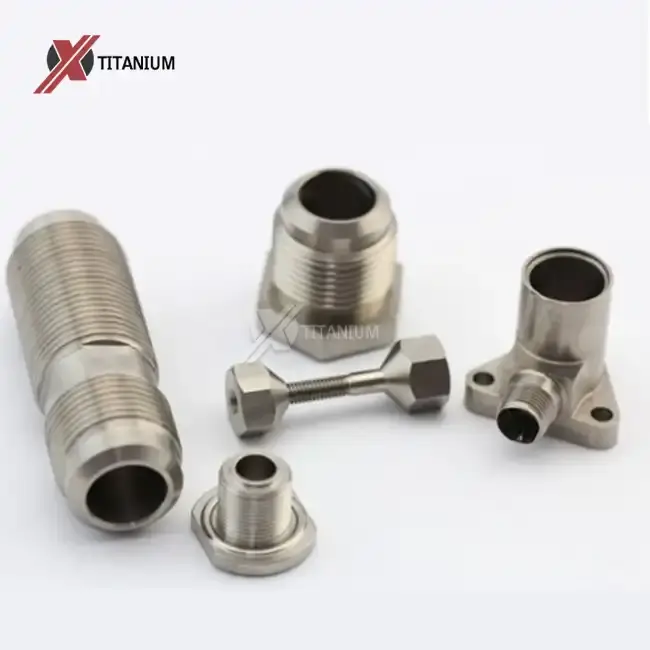
Understanding Custom Titanium Bicycle Parts and Their Unique Advantages
What Sets Titanium Apart at the Material Level?
Titanium Grade 5 (Ti-6Al-4V) has an inactive layer of titanium dioxide (TiO₂) that forms on its surface. This layer fixes itself and keeps chemicals like sweat, saltwater, and road grime from getting to the metal. Because it is elastically stiff at about 110 GPa, it naturally bends in ways that steel and carbon fiber don't. The material bends a little when it's loaded, so it doesn't send shock waves straight to the user.
Corrosion Resistance in Real-World Conditions
After being exposed to salt for a long time, aluminum loses some of its mechanical properties. Carbon fiber, on the other hand, loses these properties when it is hit by things or exposed to UV light. This is very important for brands that sell to people who live near the coast or to riders who train all year on salty, wet roads. It doesn't need a coating to guard against oxidation.
Design Freedom Through Precision Machining
Titanium parts that are CNC-machined can be made in forms that aren't possible with metal parts. Three- to five-axis machining lets you make complicated curved surfaces, features for running cables inside, and thread profiles that aren't the norm. You can get natural titanium, gold, blue, green, purple, black, and rainbow colors at Chuanglian. They also offer surface processes like grinding, anodizing, and nitriding. This means that OEM designers can decide how the construction looks and how strong it is. Custom titanium bicycle parts are the SKU category where this design freedom matters most.
Top Custom Titanium Bicycle Parts That Significantly Improve Performance and Comfort
Titanium Frames and Frame Hardware
A titanium frame that is made just for the rider can lower both weight and road noise at the same time, which an aluminum frame can't do. With custom head tubes, bottom bracket shells (that can have either T47 or BSA threading), and precision dropouts, frame makers can set the exact specs they need. Fatigue tests show that titanium has an infinitely long fatigue life when it is loaded below its break point. Aluminum, on the other hand, doesn't really have a wear limit.
Seat Posts, Saddle Rails, and Clamps
Titanium seat posts and saddle rails are some of the best upgrades you can make if you ride a bike. Due to its flexibility, the material blocks out road noise over long distances. This keeps your lower back from getting sore on long rides. The Grade 5 titanium used to make custom seat tube clamps is very light and strong enough to hold carbon seat posts in place. Firms that make endurance road or dirt bikes always list these parts as high-value additions.
Handlebars, Stems, and Cockpit Components
Handlebars and stems made of titanium are easy to control and don't break easily like carbon fiber ones do. Titanium stems can be made with rise and reach sizes that aren't found in any parts list. This makes the cabin specs for OEM brands truly one-of-a-kind. Vibrations from the road that go through the fork are partly absorbed by the material before they get to the rider's hands. It is known that this makes touring and racing over long distances more comfortable.
Fasteners, Cranksets, and Pedal Axles
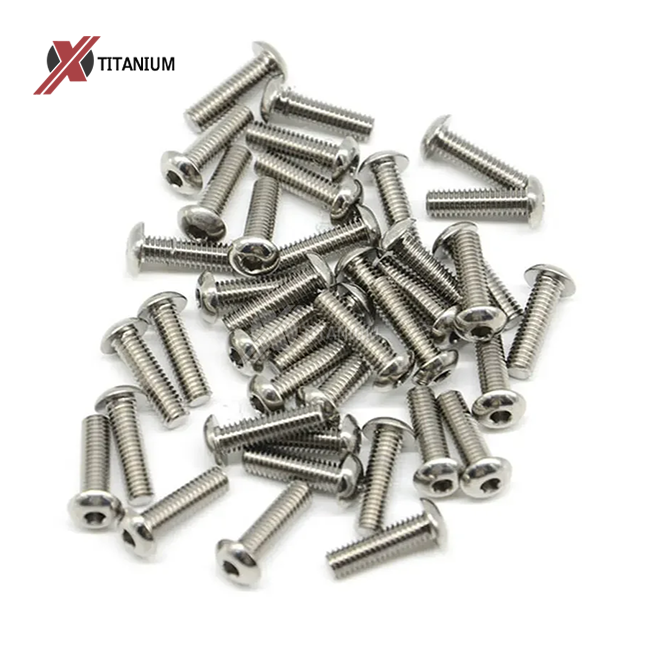
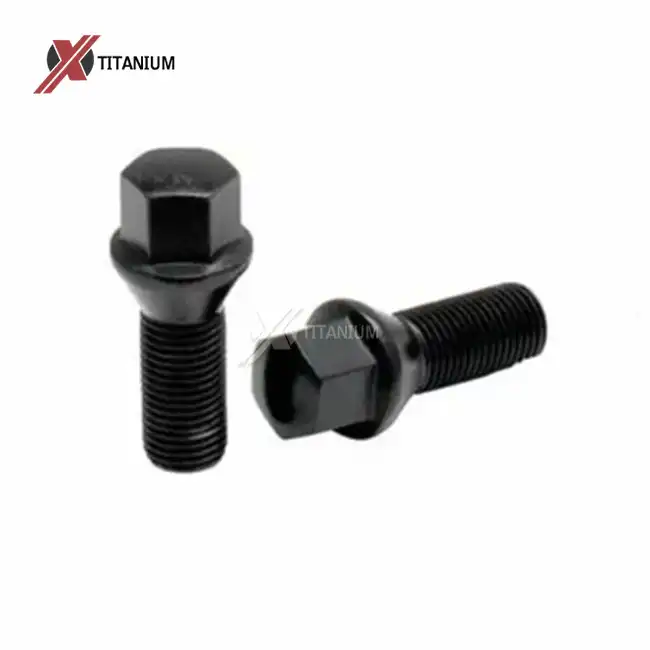
Small titanium screws called bottle cage bolts, gear bolts, and stem face-plate bolts can help a fully equipped bike weigh 30 to 60 grams less. At this level, each gram is important. Grade 5 titanium is used for the pedal axles and crankset gear because it can handle high torque loads that wear out aluminum threads over time. Custom torque arms made from Grade 5 titanium can handle high wattage loads that would weaken regular alloy parts. This makes them perfect for use in the drivetrains of electric bikes. Custom titanium bicycle parts are the category where this combination of weight saving and load capacity matters most.
Comparing Titanium with Other Bicycle Materials: Performance, Durability, and Cost
Titanium vs. Aluminum
When it's just a sheet, aluminum is lighter, but it breaks after a certain number of stress cycles, which for most people means 5 to 7 years of daily riding. Titanium doesn't have any trouble with this. Titanium costs less to maintain over its lifetime because it doesn't wear down as quickly and doesn't crack under stress as often. There is a direct link between this difference and the number of warranty claims and the brand's image among OEM clients that make goods with a lifetime warranty.
Titanium vs. Carbon Fiber
When it comes to making tubes, carbon fiber is lighter than titanium. However, it has some risks that titanium doesn't have. For instance, it can break quickly if hit without any clear notice, it can't be changed on the job site, and UV damage over time makes resin bonding less strong. Titanium, on the other hand, bends before it breaks, which means it is about to break. Companies that worry about product risk in off-road or adventure areas should pay attention to this difference in behavior.
Titanium vs. Steel
Frames are still often made from steel because it is cheap and simple to make. But steel parts that are the same strength as titanium parts weigh about 45% more because they are denser (7.8 g/cm³). Also, titanium isn't as stiff as steel. People who buy high-end road and gravel bikes often choose frames made of titanium because they feel springy. This is because rider fatigue during multi-day events directly affects buying decisions.
Procurement Insights: Ordering and Maintaining Custom Titanium Bicycle Parts
Evaluating Supplier Capability
Three technical things that OEM procurement managers should look for in a custom titanium bicycle parts manufacturer are that they can use multi-axis CNC, that they can trace materials using XRF spectrometry (PMI testing), and that they can confirm dimensions using a CMM (Coordinate Measuring Machine) inspection with ±0.005mm tolerances for bearing seats and press-fit interfaces. Following simple rules like ISO 9001 approval and ASTM/AMS compliance doesn't make a business stand out.
Prototyping Timeline and Small-Batch Production
A dependable provider will finish first-article CNC samples in 3 to 5 weeks if you agree with the plans. It is usual for small production runs of 50 to 200 pieces to be made while a new product is being planned. OEM clients can get help from Chuanglian with all stages of development, such as DFM (Design for Manufacturability) review, FEA structural analysis, prototype, iterative testing, and mass production. OEM clients sign agreements not to share technical drawings before they are given to others.
Maintenance and Long-Term Care
Parts made of titanium don't need much care. To prevent galling, which happens only when titanium hits titanium, threaded surfaces need an anti-seize compound during assembly. This can be a nickel-based compound or a copper paste. The material doesn't need to be painted, anodized, or treated with a protective covering every season after this because the oxide layer is no longer active.
Case Studies & Industry Trends: Why OEM Brands Prefer Custom Titanium?
Road and Gravel Brand Differentiation
Top-of-the-line bikes from a number of mid-size road and gravel brands in the US and Europe come with full titanium cockpit hardware as standard. These bikes cost between $5,000 and $10,000. At the point of sale, the fact that anodized titanium bolts and stems look different and weigh less than other materials backs up the story that they cost more.
Growing Demand in E-Bike Applications
E-bikes put more stress on drivetrains than normal alloy gear can handle because of the torque loads they come with. Aluminum parts thread-stripping under long-term motor load has been a problem for some OEM e-bike brands. These brands are using special Grade 5 titanium torque arms and freehub bodies more and more. This kind of app is becoming more popular, and the number of sales is likely to keep going up until 2027.
Additive Manufacturing and Future Production
Ti powder can now be used to make hollow lattice shapes inside stems and crank arms with Selective Laser Melting (SLM), which wasn't possible before. As the price of SLM units drops, OEM brands are asking for parts that are a mix of SLM and CNC finishing on the outside and an interior grid made with SLM. This method will be used to make the next generation of weight-optimized parts.
Conclusion
Titanium is the best material for OEM brands that make fast bikes because it is light, doesn't rust, and can be shaped in over 100 different ways. Whether the specs call for a machined bottom bracket shell, a cockpit made of anodized titanium, or Grade 5 bolts all over, each part is worth the extra money because it improves speed and longevity. The right titanium producer is more than just a tool for buying teams that want to work with them for a long time. They also work with you to make products. Custom titanium bicycle parts are the category where this supplier relationship pays off most.
FAQ
Is Grade 5 titanium worth the cost premium over Grade 9 for machined parts?
Yes. Grade 5 (Ti-6Al-4V) delivers tensile strength of 930 MPa versus approximately 620 MPa for Grade 9, making it the correct specification for CNC-machined structural components like axles, bolts, and cassette bodies. Grade 9 is better suited to tube bending applications such as handlebars.
How does titanium perform in extreme weather conditions?
Titanium is stable from sub-zero temperatures up to 500°C (932°F) and resists saltwater, acids, and alkalis. Riders in coastal, winter, or humid tropical environments experience no measurable corrosion degradation over time.
What is the minimum order quantity for custom OEM titanium parts?
Most credible suppliers, including Chuanglian, accommodate 50 to 200 pieces during development phases, scaling to higher volumes after design validation.
Can titanium threads be repaired if damaged?
Yes. Titanium deforms plastically rather than fracturing, so damaged threads can often be re-tapped. This repairability advantage over carbon fiber is significant in field maintenance scenarios.
How is intellectual property protected during OEM development?
A reputable supplier signs an NDA before receiving any technical drawings or CAD files. Chuanglian follows this practice as standard procedure for all custom development projects.
Partner with Chuanglian for Custom Titanium Bicycle Parts
Chuanglian is a reliable business that makes titanium bike parts to order. Their home base is Baoji, China, which is known as the best place in the world to make titanium parts. For more than ten years, they have been making OEM parts. We can give you Grade 5 CNC-machined parts that are quality controlled by ISO 9001 and have different surface finishes, like nitriding, polishing, and anodizing. You can also fully trace the parts back to the raw materials. We can take orders for both small and big amounts. To talk about your project, you can email our team at info@cltifastener.com or djy6580@aliyun.com.
References
1. Lütjering, G., & Williams, J. C. Titanium. Springer, 2007.
2. ASTM International. ASTM B348: Standard Specification for Titanium and Titanium Alloy Bars and Billets. ASTM International, 2021.
3. Boyer, R., Welsch, G., & Collings, E. W. Materials Properties Handbook: Titanium Alloys. ASM International, 1994.
4. Cycling Industry News. Material Trends in High-End Bicycle Manufacturing. Cycling Industry News, 2023.
5. Peters, M., Kumpfert, J., Ward, C. H., & Leyens, C. "Titanium Alloys for Aerospace Applications." Advanced Engineering Materials, 2003.
6. BikeBiz. OEM Component Sourcing Strategies for Premium Bicycle Brands. BikeBiz, 2022.
Learn about our latest products and discounts through SMS or email