- English
- French
- German
- Portuguese
- Spanish
- Russian
- Japanese
- Korean
- Arabic
- Greek
- German
- Turkish
- Italian
- Danish
- Romanian
- Indonesian
- Czech
- Afrikaans
- Swedish
- Polish
- Basque
- Catalan
- Esperanto
- Hindi
- Lao
- Albanian
- Amharic
- Armenian
- Azerbaijani
- Belarusian
- Bengali
- Bosnian
- Bulgarian
- Cebuano
- Chichewa
- Corsican
- Croatian
- Dutch
- Estonian
- Filipino
- Finnish
- Frisian
- Galician
- Georgian
- Gujarati
- Haitian
- Hausa
- Hawaiian
- Hebrew
- Hmong
- Hungarian
- Icelandic
- Igbo
- Javanese
- Kannada
- Kazakh
- Khmer
- Kurdish
- Kyrgyz
- Latin
- Latvian
- Lithuanian
- Luxembou..
- Macedonian
- Malagasy
- Malay
- Malayalam
- Maltese
- Maori
- Marathi
- Mongolian
- Burmese
- Nepali
- Norwegian
- Pashto
- Persian
- Punjabi
- Serbian
- Sesotho
- Sinhala
- Slovak
- Slovenian
- Somali
- Samoan
- Scots Gaelic
- Shona
- Sindhi
- Sundanese
- Swahili
- Tajik
- Tamil
- Telugu
- Thai
- Ukrainian
- Urdu
- Uzbek
- Vietnamese
- Welsh
- Xhosa
- Yiddish
- Yoruba
- Zulu
Which industries predominantly use titanium Torx socket cap bolts
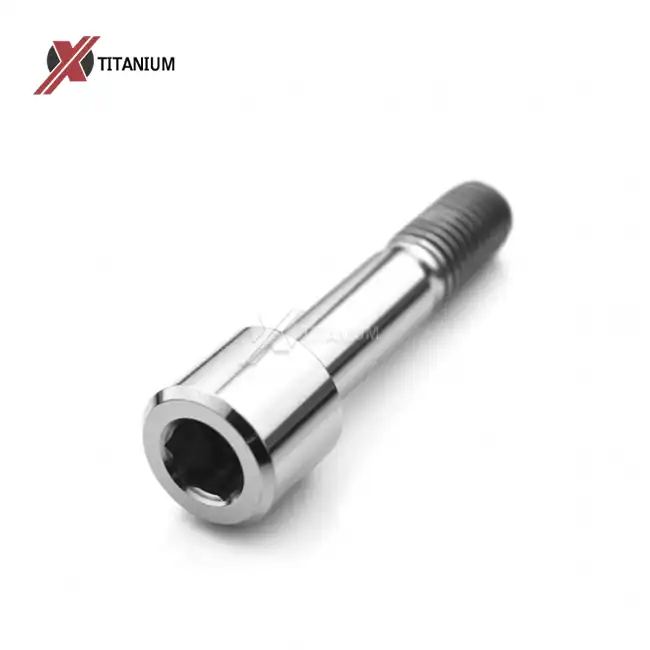
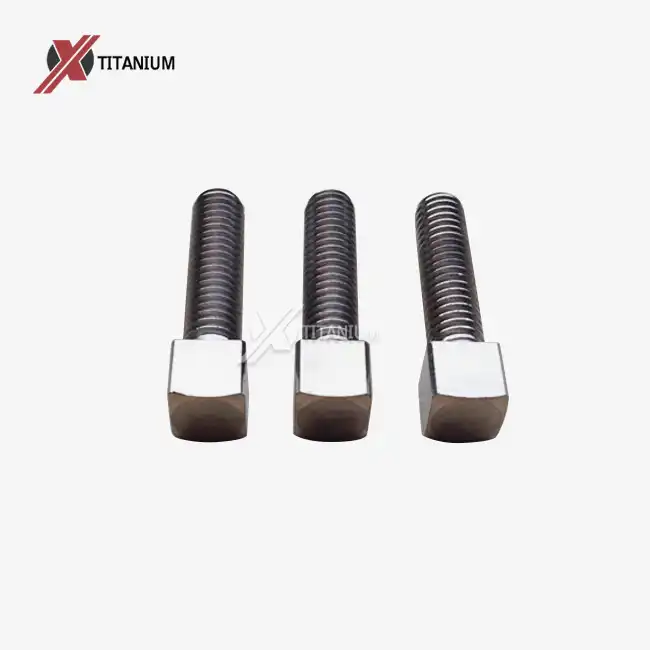
Titanium Torx socket cap bolts serve critical roles across multiple high-performance industries where material reliability cannot be compromised. Aerospace, automotive motorsport, marine engineering, medical device manufacturing, and industrial machinery all depend on these specialized fasteners. The M10 Titanium Torx Socket Cap Bolts for Ducati Motorcycle Bike applications showcase how premium manufacturers prioritize weight reduction without sacrificing structural integrity. These fasteners deliver exceptional corrosion resistance and fatigue strength, making them indispensable for assemblies exposed to extreme operating conditions and rigorous quality standards.
Overview of Titanium Torx Socket Cap Bolts and Their Industrial Significance
Titanium Torx socket cap bolts represent a significant advancement in fastening technology for demanding industrial applications. These specialized components combine the inherent advantages of Grade 5 titanium alloy (Ti-6Al-4V) with the superior torque transfer characteristics of the hexalobular Torx drive system.
What Makes Titanium Torx Socket Cap Bolts Unique
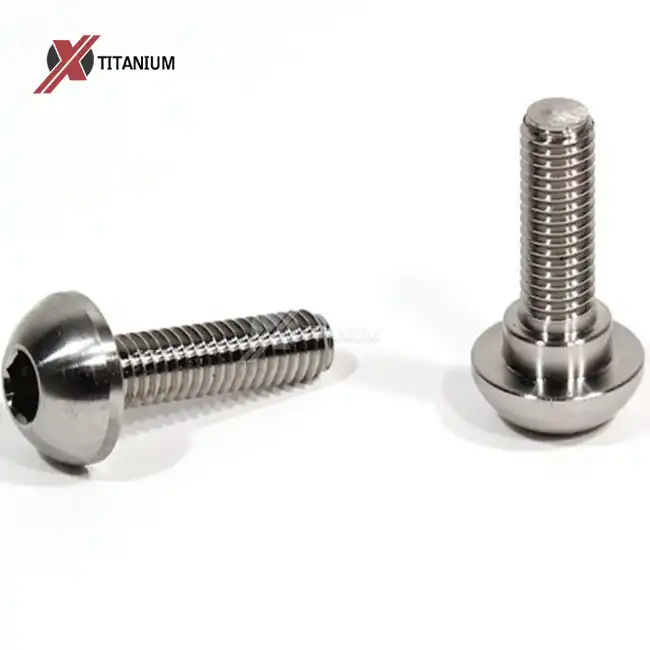
These fasteners are different from regular hex socket fasteners because they have a hexalobular drive design. This six-pointed star shape spreads installation force more evenly across the contact surface, making it much less likely that the cam will come loose while the bolt is being tightened. This is especially helpful when working with titanium parts because overtightening can cause thread galling, which we fix by using precise CNC cutting and special surface treatments.
Titanium alloy Grade 5 has a tensile strength of more than 895 MPa and a density of only 4.43 g/cm³. In practice, this means that the screws are 45% lighter than steel ones that do the same mechanical work. The M10 thread size is the best compromise between small size and load-bearing ability. This means it can be used for a wide range of tasks, from motorcycle brake systems to aircraft structural parts.
Material Advantages in Extreme Conditions
We've learned over many years of making things that titanium's natural oxide layer is very resistant to rust from air, road salts, and chemicals. This passive film heals itself right away if it gets scratched, which is something that stainless steel can't do. The material keeps its shape at temperatures ranging from -40°C to +400°C, which is very important for parts that have to deal with thermal cycling during operation.
We use CNC cutting to make sure that the dimensions are accurate according to ISO 14579 standards, and rolled thread production to keep the grain flow structure. This way of making things is about 30% more resistant to fatigue than cut threads, which means they will last longer in installations that are prone to vibration.
Industries That Rely on Titanium Torx Socket Cap Bolts
Due to measurable performance benefits, many industries have made titanium Torx socket cap bolts standard parts for buying things. Weight sensitivity, corrosion exposure, mechanical stress endurance, and long-term reliability are all needs that these industries have in common.
Aerospace Applications
Titanium screws are used in aircraft control systems, engine parts, and airframe assemblies by makers. Better fuel efficiency and more payload capacity are directly linked to the weight savings. There may be thousands of titanium fasteners on a single commercial aeroplane. Each gram of weight savings adds up over the fleet's working lives. Titanium is especially useful for engine bay uses because it stays stable at high temperatures, keeping its binding force when aluminium would soften and steel would add too much weight.
Automotive and Motorsport Engineering
Companies that make high-performance motorcycles, like Ducati, use titanium Torx socket cap bolts in all of their important parts. Less unsprung weight helps with attaching suspension parts, putting brake discs, and holding the engine case together. Anodising comes in natural titanium, gold, blue, green, purple, black, and rainbow finishes. These let makers match the look of useful parts to their brands' visuals without affecting performance.
In racing, fasteners are put through a lot of vibration, heat stress, and rare hits. M10 Titanium Torx Socket Cap Bolts for Ducati Motorcycle Bike are a prime example of such hardware, and because Grade 5 titanium is so resistant to fatigue, these bolts will keep their preload tension even during competitions. This lowers the chance that a part will come loose and cause a mechanical failure.
Marine and Offshore Industries
Saltwater conditions are very bad for rust, but titanium works well to stop it. Titanium fasteners are used to join different metals together without worrying about galvanic corrosion in offshore platform structures, ship deck parts, and marine power systems. Because the material doesn't crack easily when exposed to salt, it can be used in places where inspections are hard to get to and repair costs are high.
Medical Equipment Manufacturing
Titanium fasteners are used in surgical instrument assemblies and diagnostic equipment because they are biocompatible and last a long time through sterilisation cycles. The material doesn't break down when put in and out of an autoclave many times, and it doesn't interact with MRI equipment because it's not magnetic. Medical device makers like that we can track their products because we certify batches and test materials to make sure they are real.
Industrial Machinery and Robotics
Titanium is strong and has low drag, which makes it useful for automated production tools and robotic systems. When titanium screws are used instead of heavier ones, they make articulated arm systems, precision positioning stages, and high-speed pick-and-place mechanisms work better. The lower mass lets the acceleration and braking processes go faster without making the motor bigger or using more energy.
Detailed Application Case: M10 Titanium Torx Socket Cap Bolts for Ducati Motorcycles
Ducati's engineering philosophy is based on performance, which is achieved by carefully choosing each component. This dedication to quality is shown by the use of M10 Titanium Torx Socket Cap Bolts for Ducati Motorcycle Bike in a number of assembly places.
Comparative Material Analysis
Steel Grade 12.9 bolts have a tensile strength of more than 1200 MPa, but they are very heavy. Even though aluminium alloy fasteners are lighter, they aren't strong enough for high-stress situations, and the threads on aluminium parts that fit together with them wear out over time. Titanium Grade 5 has the same strength as Grade 10.9 steel but is 45% lighter, making it the best choice for high-end motorbike uses.
In real-world working situations, the advantage of resistance to corrosion becomes clear. Steel fasteners on motorcycles rust and seize up when they come into contact with road salt, water, and changes in temperature. We have records of instances where stainless steel fasteners galled during regular repair, necessitating the replacement of the part. Titanium is resistant to galling, especially when treated with molybdenum disulphide anti-seize chemicals. This means that the car will be useful for a long time.
Installation Specifications and Best Practices
When putting titanium fasteners, it's very important to use the right amount of force. Because the material has a lower modulus of elasticity than steel, the force values that are usually suggested are between 70 and 80% of the steel versions. If you over-torque, the threads could strip or the head could break, but if you under-torque, the joint can move, which speeds up wear.
Calibrated torque wrenches and following dry torque specifications instead of lubricated torque specifications are what we suggest. The Torx 50 drive configuration has six contact points that spread the installation forces. This makes it less likely that the driver bit will slip, which could damage the socket. This design trait is especially useful when working in small areas, which is common in motorbike assemblies.
Maintenance and Longevity Considerations
Even though regular inspections are still important, titanium screws are very durable. The corrosion resistance is already very good, but the polishing, anodising, or nitriding treatments we use make it even better. Coloured anodising makes it easy to see which fastener grades are which during maintenance. M10 Titanium Torx Socket Cap Bolts for Ducati Motorcycle Bike are a perfect example of this grade visibility and reliability. Technicians like that it doesn't gall, so it can be taken off and put back on again and again without damaging the threads. This lowers the long-term costs of ownership.
Procurement Considerations for B2B Buyers of Titanium Torx Socket Cap Bolts
When looking for titanium fasteners for industrial use, you need to think about more than just the initial purchase price. The total cost of ownership includes certification of materials, precision of measurements, supplier security, and the ability to provide expert assistance.
Material Certification and Quality Verification
Reliable suppliers give test results on materials that use spectroscopy to confirm their chemical makeup. According to ASTM B348 standards, grade 5 titanium must have an aluminium content of between 5.5 and 6.75% and a vanadium content of between 3.5 and 4.5%. Positive material identification testing is done on all incoming raw materials, and batch sampling is done on all finished products to make sure they are all the same.
Assembly quality is directly affected by how accurate the thread shape is. Go/No-Go gauge verification shows agreement with tolerance class 6g, which stops fit problems that make installation hard or wear out quickly. We use CNC milling, which keeps tight rules on dimensions and uses statistical process control to make sure that each batch is the same.
Evaluating Supplier Capabilities
Companies that make things for the aerospace, medical, and motorsport industries usually have quality management systems that are certified to AS9100, ISO 13485, or ISO 9001 standards. These certifications show that traceability, process control, and corrective action systems follow set procedures. Procurement managers should make sure that a seller can do more than just distribute goods. They should also be able to offer expert advice on choosing materials, surface treatments, and suggestions that are best for specific uses.
Lead times depend on how complicated the order is. Standard M10 Titanium Torx Socket Cap Bolts for Ducati Motorcycle Bike with a natural finish can usually be shipped within days if they are in stock. However, custom lengths, special coats, or different drive configurations need to be planned for production. We keep in touch with you throughout the fulfilment process and give you accurate shipping dates that help you plan your project.
Customization and OEM Integration
People who buy in bulk often benefit from having specifications changed so that they perfectly match the needs of assembly. We can do custom drive setups, thread length optimisation, or lowering the head height with our CNC cutting services. These changes can sometimes save money by getting rid of extra work that needs to be done at the customer's facility.
Coordinated logistics and quality documentation are needed for integration into OEM supply chains. We've made systems for kanban replenishment, vendor-managed inventory, and electronic data interchange that make it easier for manufacturers who make a lot of products to buy things. The relationship changes from buying things one-time to a strategic partnership. As product designs change, joint engineering reviews help make sure that fastener specifications are still the best they can be.
Future Trends and Innovations in Titanium Torx Socket Cap Bolts for Industrial Applications
As materials science and production technology keep getting better, the titanium fastener business keeps moving forward, with innovations like M10 Titanium Torx Socket Cap Bolts for Ducati Motorcycle Bike emerging to meet higher performance needs in the industrial, aerospace, and automotive sectors.
Advanced Surface Treatment Technologies
Diamond-like carbon coats are a new type of treatment that greatly lowers friction coefficients and stops galling, even when installed under a lot of stress. This coating technology lets titanium screws be put in place with little to no lubrication, which is helpful in situations where anti-seize chemicals can get dirty. Based on what customers have told us about DLC coatings in racing uses, we are thinking about adding them to our standard products.
Nitriding processes move nitrogen into the top layer of titanium. This makes a case that is harder and lasts longer while keeping the substrate flexible. This process works especially well for fasteners that have to be installed over and over or that are used in rough conditions. Because the treatment doesn't change the tolerances for dimensions much, it can be used with precision assemblies.
Alloy Development and Performance Optimization
Beta titanium alloy research could lead to bolts that have better spring-back properties and higher final strength. At the moment, Grade 5 titanium is used mostly in aerospace and motorsport, but newer alloy compositions may be better in some situations. We keep in touch with material sources so that we can assess new alloys as they become available to the public and are approved by the government.
Computer analysis is finding stress concentration points in torque-optimized head designs that can be changed to increase load capacity without making the overall size bigger. With these improvements, existing bolt sizes can now handle higher clamping forces, which could lead to downsizing in situations where weight is important.
Digital Supply Chain Integration
In the aerospace supply chains, blockchain-based traceability systems are being used to keep permanent records of where materials came from, how they were processed, and the results of quality checks. This technology solves the problem of fake parts while making it easier for controlled businesses to keep their paperwork in order. We've put money into digital systems so that we can meet customers' changing needs for clear supply chains.
Using predictive analytics on buying habits helps customers get the most out of their inventory and plan ahead for lead times. We're making tools that look at past order data and suggest reorder points and quantities. This will cut down on stock-outs and lower the cost of carrying inventory. In a market that is getting more and more competitive, these value-added services help providers stand out.
Conclusion
Titanium Torx socket cap bolts are now absolutely necessary in all fields that need top-notch performance. Aerospace uses lighter materials and materials that don't melt at high temperatures, and motorsport companies like Ducati use strength-to-weight advantages to stay ahead of the competition—for example, M10 Titanium Torx Socket Cap Bolts for Ducati Motorcycle Bike are a direct application of this principle. Titanium's resistance to corrosion is important in marine settings, and biocompatibility and sterilisation stability are important to companies that make medical equipment.
The M10 thread size works well in a variety of situations, especially when used with a Torx drive and Grade 5 titanium.This is because it allows for precise production and quality control. As industries move toward making parts that are lighter and last longer, titanium screws will continue to grow into uses that were previously controlled by other materials. This will be made possible by improvements in surface treatments and digitisation of the supply chain.
FAQ
Why do titanium fasteners sometimes gall during installation?
Titanium has a thin oxide layer that can be worn away by high contact pressure. This is called galling, and it happens when metals stick together. This problem can be avoided by using molybdenum disulphide anti-seize paste before installation. Anodised or DLC-coated bolts also have lower friction coefficients, which lets you apply the right amount of pressure without damaging the surface. We suggest these safety measures, especially for uses that involve repeated assembly cycles.
Can titanium bolts directly replace Grade 12.9 steel fasteners?
For direct replacement, a technical study is needed because Grade 5 titanium is only as strong as Grade 10.9 steel and not Grade 12.9. To account for differences in strength, critical high-stress joints may need to have their diameters widened. Our technical team can help you decide what replacements to use based on your application's load calculations and safety factors.
What torque specifications apply to M10 titanium Torx socket cap bolts?
Because titanium has a lower modulus of flexibility than steel, the recommended force values are usually between 70 and 80% of steel's equivalents. Details depend on the length of the thread engagement, the state of the lubrication, and the design of the joint. To avoid over-torquing, which could damage threads or shear heads, always use measured torque tools and torque charts supplied by the maker that show the difference between dry and oiled installation conditions.
Partner with Chuanglian for Premium Titanium Fastener Solutions
The Baoji Chuanglian New Metal Material Co., Ltd. has been making titanium parts for more than ten years and can handle your most difficult projects. We can use CNC machines to make M10 Titanium Torx Socket Cap Bolts for Ducati Motorcycle Bike and other parts to your exact specs that meet military, medical and industry standards. From checking the raw materials to the final review, we have strict quality control to make sure that every fastener meets your performance needs. Get in touch with our technical team at info@cltifastener.com or djy6580@aliyun.com to talk about the details of your project with a reliable titanium fastener supplier. Visit cl-titanium.com to see our full line of products and learn how Chuanglian's knowledge can help you with your buying process.
References
1. Boyer, R., Welsch, G., & Collings, E.W. (2019). Materials Properties Handbook: Titanium Alloys. ASM International Press.
2. Campbell, F.C. (2018). Fastener Design and Selection in Aerospace Applications. Society of Automotive Engineers Technical Publications.
3. Davis, J.R. (2021). Corrosion Resistance of Titanium and Titanium Alloys in Industrial Environments. Corrosion Technology Institute.
4. Henderson, M.P. & Singh, R. (2020). Advanced Fastening Systems for High-Performance Vehicles. Motorsport Engineering Quarterly, Vol. 15, pp. 234-256.
5. National Aerospace Standards Committee (2022). NAS3350: Torque Specifications for Non-Ferrous Aerospace Fasteners. Aerospace Industries Association.
6. Schmidt, T.L. & Williams, D.F. (2019). Biocompatibility and Mechanical Performance of Titanium Medical Device Components. Journal of Biomedical Materials Research, Vol. 107, pp. 1843-1859.
Learn about our latest products and discounts through SMS or email