- English
- French
- German
- Portuguese
- Spanish
- Russian
- Japanese
- Korean
- Arabic
- Greek
- German
- Turkish
- Italian
- Danish
- Romanian
- Indonesian
- Czech
- Afrikaans
- Swedish
- Polish
- Basque
- Catalan
- Esperanto
- Hindi
- Lao
- Albanian
- Amharic
- Armenian
- Azerbaijani
- Belarusian
- Bengali
- Bosnian
- Bulgarian
- Cebuano
- Chichewa
- Corsican
- Croatian
- Dutch
- Estonian
- Filipino
- Finnish
- Frisian
- Galician
- Georgian
- Gujarati
- Haitian
- Hausa
- Hawaiian
- Hebrew
- Hmong
- Hungarian
- Icelandic
- Igbo
- Javanese
- Kannada
- Kazakh
- Khmer
- Kurdish
- Kyrgyz
- Latin
- Latvian
- Lithuanian
- Luxembou..
- Macedonian
- Malagasy
- Malay
- Malayalam
- Maltese
- Maori
- Marathi
- Mongolian
- Burmese
- Nepali
- Norwegian
- Pashto
- Persian
- Punjabi
- Serbian
- Sesotho
- Sinhala
- Slovak
- Slovenian
- Somali
- Samoan
- Scots Gaelic
- Shona
- Sindhi
- Sundanese
- Swahili
- Tajik
- Tamil
- Telugu
- Thai
- Ukrainian
- Urdu
- Uzbek
- Vietnamese
- Welsh
- Xhosa
- Yiddish
- Yoruba
- Zulu
What are the benefits of using lightweight bolts for motorcycle brake components?
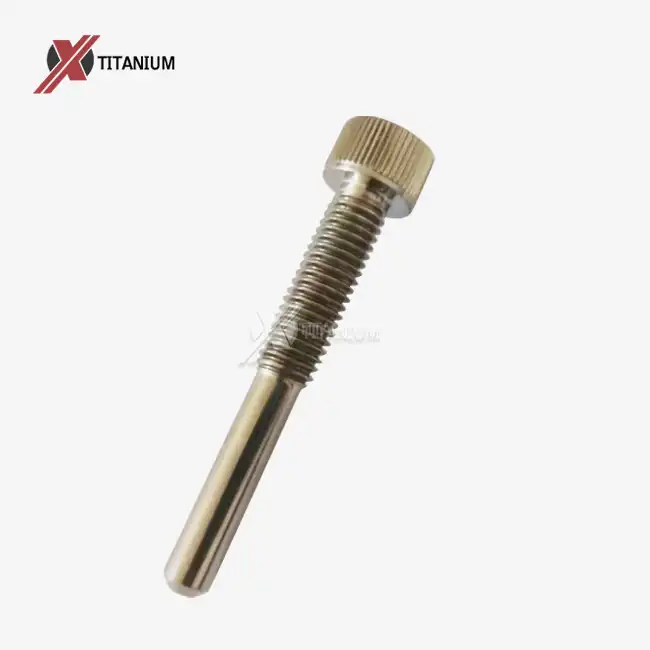
Lightweight bolts manufactured from aerospace-grade titanium alloys represent a transformative upgrade for motorcycle brake systems, particularly when applied to models like the Suzuki SV650. The benefits of using titanium m10 front caliper bolts sv650 extend well beyond simple weight reduction—they deliver measurable improvements in braking responsiveness, corrosion resistance, and long-term reliability.
When caliper bolts shed unnecessary mass without sacrificing structural integrity, riders experience sharper handling dynamics and reduced unsprung weight, translating directly into enhanced suspension performance. Titanium's unique metallurgical properties address critical pain points in brake component design, making these fasteners indispensable for racing applications, high-performance street builds, and demanding environmental conditions where traditional steel bolts fail prematurely.
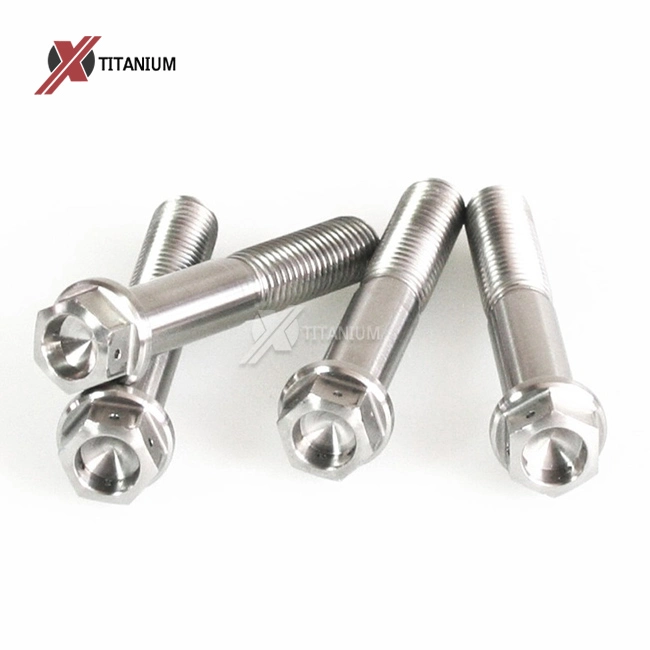
Understanding the Role and Specifications of Front Caliper Bolts on the SV650
The brake caliper fixing bolts are the most important part of the connection between the caliper assembly and the fork leg. They are put through a lot of shear forces when the brakes are applied hard and the temperature is changed all the time. These parts have to be able to handle both mechanical stress and being exposed to water, salt, and brake dust. The standard M10 specification describes the minimum bolt width. Thread pitch, which is usually 1.25mm for Japanese motorcycles like the SV650, makes sure that the engagement depth and load distribution are correct.
Material Composition and Grade Standards
Ti-6Al-4V (Grade 5) titanium alloy, which is made up of 90% titanium, 6% aluminum, and 4% vanadium, is used in the best caliper bolts. The tensile strength of this mixture is between 900 and 1050 MPa, which is the same as hardened Grade 10.9 steel fasteners. However, it is only 4.43 g/cm³ dense, while steel is 7.85 g/cm³ dense. Material traceability and mechanical qualities are regulated by industry standards like ASTM B348, ISO 5832-2, and AMS 4928. These standards make sure that batches are consistent, which is important for safety-critical uses.
Thread Manufacturing Methods
Instead of cut threads, better titanium caliper bolts use rolled threads. Thread rolling cold-works the titanium, keeping the grain structure intact and greatly increasing its fatigue resistance. This is an important condition for parts that will be vibrating and being loaded and unloaded many times. Cut threads, on the other hand, break the grain structure, making stress concentration points where cracks can start.
Torque Requirements and Safety Factors
For M10 caliper nuts, the right torque values are usually between 30 and 38 Nm, but titanium's lower friction coefficient means that extra care needs to be taken. Using anti-seize compounds lowers the chance of galling between metals that are not the same, but they also change how much friction there is, so standard torque specifications often need to be lowered by 10–15 percent to avoid over-tensioning. Teams that buy things for businesses should make sure that sellers give clear fitting installation protocols that include both wet and dry torque numbers.
Advantages of Using Titanium M10 Lightweight Bolts for Motorcycle Brake Components
Titanium fasteners improve the performance of motorcycles by following basic material science rules. These rules directly lead to better motorcycle mechanics and longer-lasting parts. These perks help with certain technical issues that both manufacturers and end users have.
Unsprung Weight Reduction and Handling Response
Titanium caliper bolts are about 45% lighter than steel ones that do the same job. Even though each bolt may only save 15 to 20 grams, the weight savings from both the front and rear applications add up to a lot less unsprung mass. Less unsprung weight makes it easier for suspension parts to follow bumps in the road more accurately, which improves the stability of the tire contact patch when stopping and turning. Racing teams know this edge is important for getting the best lap times, and street riders like the better feedback accuracy.
Exceptional Strength-to-Weight Performance
Grade 5 titanium alloy has a tensile strength of more than 900 MPa and is much lighter than steel alternatives. When space is limited, this strength-to-weight ratio is especially useful because it lets you choose the right bolt diameter or length. The material's yield strength of about 880 MPa prevents deformation during high stopping loads, keeping the clamping force constant over the life of the product. Shear strength values above 600 MPa are safe enough to handle the lateral and torsional forces that happen when riding aggressively.
Corrosion Immunity and Environmental Durability
Titanium forms a stable, self-healing oxide layer that is very resistant to atmospheric corrosion, salt exposure, and chemical attack. When steel nuts are exposed to seaside areas or winter road treatments, the surface rusts within months. Titanium fasteners, on the other hand, stay strong forever. This feature gets rid of seized bolt syndrome, a common maintenance problem where rusty steel bolts stick to aluminum fork legs and need to be taken off destructively. This trait is especially useful for B2B clients who work in the chemical processing, marine, or coastal industries because it cuts down on guarantee claims and maintenance intervals.
Thermal Stability Across Operating Ranges
Titanium's mechanical properties stay the same at temperatures ranging from -150°C to +400°C, which covers all real-life brake system working situations. Titanium fasteners stay the same size and binding force even after long track runs or mountain descents, while aluminum fasteners can soften when exposed to heat for a long time. This thermal performance makes sure that safety margins stay the same no matter the environment or the level of use.
Comparative Analysis: Titanium vs Alternative Bolt Materials for SV650 Front Caliper
Understanding the material trade-offs helps procurement professionals make smart choices that meet the needs of the application and stay within the budget. There are pros and cons to each type of bolt material that affect the total cost of ownership.
Titanium Grade 5 Versus Stainless Steel
Stainless steel caliper bolts, which are usually made from 304 or 316 metals, are better at resisting corrosion than carbon steel and cost less to make than titanium. Titanium M10 front caliper bolts SV650 serve as a specific example where this material choice becomes critical. On the other hand, stainless steel weighs about 76% more than titanium Grade 5 and has lower tensile strength (500–700 MPa for popular types).
Stainless steel has a lot less resistance to fatigue resistance, and cracks spread more quickly when it is loaded and unloaded over and over again. When titanium's longer service life and no replacement intervals are taken into account, the total cost equation changes. This is especially true for fleet operators or manufacturers that offer longer warranty periods.
Titanium Versus Aluminum Alloy Fasteners
Aluminum bolts save about the same amount of weight as steel bolts, but they don't have the right mechanical qualities for brake uses. Even the strongest 7075-T6 aluminum has a tensile strength of only about 570 MPa and a much lower resistance to fatigue than titanium. When aluminum is put into aluminum fork legs, it tends to galling, which makes fitting difficult and requires careful surface preparation. Thread contact is also less flexible, and aluminum's lower shear strength makes it more likely that the thread will come off when it is being installed or taken off. Because of these problems, aluminum screws can only be used in non-critical situations and not in safety-critical brake systems.
OEM Steel Versus Aftermarket Titanium
OEM steel bolts meet basic safety standards and cut down on production costs as much as possible. These screws are usually made of Grade 8.8 or 10.9 steel, which is strong enough but prone to rust and heavier. For applications that need to improve performance, aftermarket titanium bolts are an option. However, procurement teams must check certifications and material traceability. Material test reports (MTRs) from reputable titanium fastener manufacturers show the chemical makeup and mechanical testing results that can be linked to specific production batches. This level of quality control tells you the difference between reliable providers and sources that you should be wary of.
Surface Treatment Considerations
Many times, the surface of high-quality titanium caliper bolts is treated in ways that improve their performance beyond the properties of the base material. Physical vapor deposition (PVD) coats put down thin layers of ceramic that make the surface harder, lower the coefficients of friction to stop galling, and give surfaces a unique look. Anodizing adds controlled oxide layers of different colors and makes rust protection even better than it was before. Nitriding processes spread nitrogen into the top layers of titanium, making titanium nitride that is very hard and resistant to wear and thread damage. Businesses should think about whether the extra costs of these treatments are worth it for their specific uses.
Installation and Maintenance Guide for Titanium Front Caliper Bolts on SV650
Titanium screws work at their best when they are installed correctly, and common mistakes that can hurt safety or shorten the life of the part are avoided. Maintenance protocols that are tailored to the unique properties of titanium make things last longer and stop them from breaking down too soon.
Pre-Installation Preparation Steps
Clean the mating surfaces of both the caliper mounting ears and the fork leg threads very well, getting rid of any brake dust, corrosion, or old thread-locking compound that may still be there. Before you try to install something, carefully check the threads with a thread pitch gauge to make sure they meet the 1.25mm pitch requirement. If you find any resistance or damage in the fork leg threads, use an M10x1.25 bottoming tap to make sure the threads are fully engaged without the risk of cross-threading.
Torque Application Protocol
Put a thin, even layer of copper-based anti-seize compound on the threads of the bolts and the bottom of the bolt heads. This important step keeps the titanium and aluminum from galling and makes sure that the friction coefficients are always the same so that the torque numbers are correct. Install the bolts by hand at first to make sure the threads connect smoothly and don't get stuck. Tighten gradually with a measured torque wrench, adding force in 10 Nm steps until you reach a final torque of 30 to 35 Nm. Check the manufacturer's instructions for exact values, as they can change depending on the anti-seize compound's qualities. Do not use impact tools because they can deform the thread permanently if they go over the yield strength.
Safety Wire Installation for Racing Applications
Safety wire (lockwire) fitting is often required by competition rules to keep fasteners from coming loose when there is a lot of shaking. Choose titanium bolts with heads that are already drilled and made for this reason. Put 0.032-inch stainless steel safety wire through the bolt holes so that it runs in the direction of tightening. This will make a mechanical back-up that won't let go. Use safety wire pliers to twist the wire evenly, making sure there are six to eight twists per inch. Even if the main torque relaxes, this backup locking system will still protect you.
Periodic Inspection Intervals
Set up inspection schedules based on how often the items are used. For example, track bikes should have warrant checks after every event, while street applications may go up to once a year. Take the bolts off and look for thread wear, damage to the surface, or signs of stress buildup. Titanium M10 front caliper bolts SV650 are a prime example where these visual checks are especially critical, because even though titanium still has great fatigue qualities, galling, cross-threading, or bad fitting can be found visually before a major failure happens. Because safety limits don't allow for any errors, replace any fasteners that show signs of structural damage right away.
Thread Compound Selection
Pick anti-seize formulations that are made to work with titanium applications. Copper- or nickel-based compounds work well, but you should stay away from molybdenum disulfide types because they could cause galvanic reactions. Thread-locking compounds made for titanium resist vibrations without reacting badly with other chemicals. Compound selection should be standardized in B2B maintenance protocols so that all technician teams get the same results.
Procurement Considerations for B2B Clients: Buying Titanium M10 Caliper Bolts for SV650
When making strategic sourcing decisions for titanium fasteners, you need to compare more than just unit prices. You also need to look at total value delivery and risk reduction.
Supplier Qualification and Certification Verification
Give manufacturers that follow ISO 9001:2015 quality management systems and written traceability methods extra attention. Suppliers in the aerospace industry who have AS9100 certification show that they use advanced quality control methods for safety-critical parts. For each output lot, you should ask for material test reports that show the chemical makeup and mechanical properties. Certificates of conformance that show compliance with ASTM B348 and ISO 5832-2 are a better way to be sure that materials meet published specifications than relying on claims that haven't been proven.
Batch Consistency and Production Controls
Titanium alloy properties can change from one production run to the next if controls during production are not good enough. Statistical process control is used by qualified providers to keep an eye on important factors like heat treatment temperatures, thread rolling pressures, and surface finish requirements. Ask for process capability studies (Cpk values) that show reliable output within the limits set by the standard. This paperwork separates sophisticated manufacturers from businesses that haven't fully developed their processes yet.
Customization Capabilities and Lead Times
Standard 30mm bolt lengths work for most SV650 uses, but for unique builds or different caliper setups, you may need bolts with different lengths, thread pitches, or head styles. Check to see how flexible the suppliers are with minimum order quantities for specific needs. CNC machining lets you precisely control the dimensions for non-standard needs. Lead time transparency helps procurement teams plan how much inventory to keep on hand without having too much safety stock or paying extra for rush orders.
Total Cost of Ownership Analysis
Figure out the total cost of ownership by adding up the purchase price, the expected service life, the cost of upkeep, and the failure risk costs. Titanium's higher unit cost—usually two to four times that of steel equivalents—is spread out over longer service intervals and fewer replacements needed because of corrosion. Fleet owners and OEM manufacturers should model these factors over the projected lifecycles of products, keeping in mind that the lowest cost of acquisition is rarely the best total cost. Less warranty exposure and a better reputation for the brand add value that is hard to measure but important for business.
Logistics and Supply Chain Reliability
Titanium material supply changes based on how much demand there is in the aerospace business and how much raw material mining is done. Instead of just-in-time models that are vulnerable to supply disruptions, build relationships with suppliers and keep enough inventory buffers on hand. Make sure you understand the wait times for both stock and custom items. For example, the handling times for titanium fasteners are longer than those for other materials. For high-volume applications, you might want to use dual-sourcing strategies to lower the risks of being dependent on a single provider.
Optimizing Brake System Performance Through Advanced Fastener Selection
Beyond immediate mechanical advantages, Titanium M10 front caliper bolts SV650 selection reflects broader commitments to engineering excellence and customer value delivery. Manufacturers incorporating premium fasteners signal quality consciousness that resonates throughout their product positioning.
Baoji Chuanglian New Metal Material Co., Ltd. uses CNC machining to make sure that the dimensions of their titanium m10 front caliper bolts sv650 are accurate to within ±0.02mm of international standards. When we get Grade 5 titanium alloy from certified mills, it goes through a strict inspection process to make sure it has the right chemical composition and mechanical properties before it is used in production. The material test reports for each batch show that the tensile strength is over 900 MPa, the shear strength is over 600 MPa, and the Rockwell hardness is between B36 and 40.
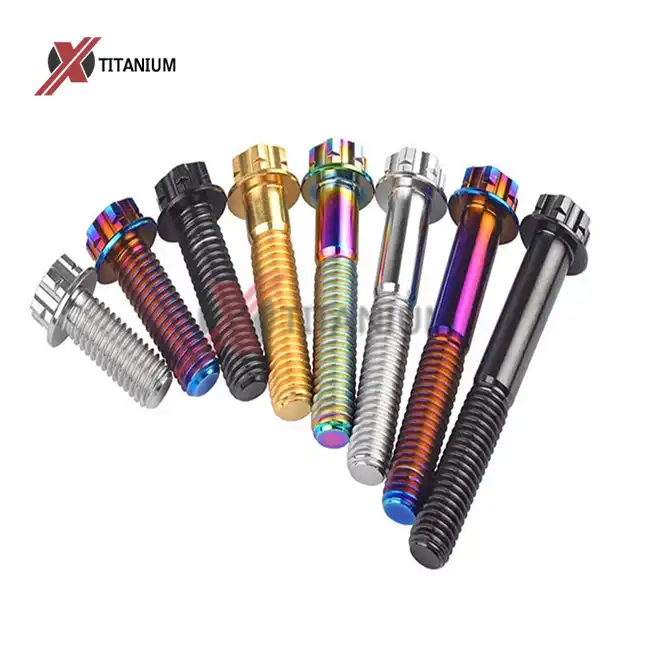
Surface treatments include a natural titanium finish, anodized colors (gold, blue, green, purple, black, rainbow), and special coatings that are designed to reduce friction and stop galling. Custom thread lengths, head styles, and dimensional specifications can be made to fit a wide range of application needs, and the minimum order quantity can be changed to accommodate both prototype development and large-scale production.
Our ISO 9001:2015-certified quality management system uses statistical process controls all the way through the manufacturing process, from checking the raw materials to doing the final inspection. When you roll threads, you keep the structure of the grains intact, which makes them more resistant to wear. Precision torque testing makes sure that the binding force stays the same. There are certificates of conformance and material test reports in every shipment, which make it possible to fully track production batches and raw material sources.
Located in Baoji City—recognized globally as the "Titanium City" of China—our facility benefits from integrated supply chain access and concentrated technical expertise. We maintain substantial inventory of standard M10x1.25 specifications while offering rapid custom production for specialized requirements. Whether your procurement needs involve small prototype quantities or large-scale production runs, our experienced technical team provides application engineering support ensuring optimal fastener selection for your specific requirements.
Conclusion
Titanium M10 front caliper bolts SV650 are better than steel or aluminum options because they are lighter, stronger, and less likely to rust. These benefits directly lead to better handling dynamics for motorcycles, longer component service lives, and less maintenance needs. These are all very important factors for both end users and B2B procurement professionals.
When choosing fasteners strategically, taking into account the total cost of ownership rather than the initial purchase price is the best way to get the most value over the duration of a product. More and more stringent requirements for brake system performance mean that aerospace-quality titanium screws are the only way for engineers to meet the needs for strength, weight reduction, and long-term dependability.
FAQ
What torque specification should be used when installing titanium M10 caliper bolts?
For titanium M10 front caliper bolts, the recommended installation torque is between 30 and 35 Nm, but this can change depending on the anti-seize material used. Some manufacturers say that standard torque should be lowered by 10 to 15 percent to avoid over-tensioning because anti-seize lowers the effective friction coefficients. Before installing, you should always use copper or nickel-based anti-seize on the threads and check the torque specs from the bolt provider you're using, since surface treatments can change the best values.
Are titanium bolts compatible with aluminum fork legs on the SV650?
Yes, but proper installation methods stop galvanic corrosion between metals that are not the same. When used properly, high-quality anti-seize chemicals make an insulating shield that stops galvanic reactions from happening. On both titanium and aluminum surfaces, oxide layers form naturally and protect the metals. Periodic checking as part of regular maintenance ensures continued integrity, but titanium screws that are fitted correctly should last forever without any corrosion problems.
Can Grade 2 titanium be substituted for Grade 5 in brake applications?
Not at all. Grade 2 commercially pure titanium is not strong enough for safety-critical brake parts because it is not strong enough in both tension and shear tests. Grade 5 (Ti-6Al-4V) alloy has the right mechanical qualities to safely handle stopping forces. Specifications for buying things must clearly say that they need Grade 5 material with proof of its chemical makeup and mechanical tests. Using lower-grade titanium instead poses unacceptable safety risks and could leave you open to liability.
Partner with Chuanglian for Certified Titanium Fastener Solutions
Baoji Chuanglian New Metal Material Co., Ltd. delivers precision-manufactured titanium m10 front caliper bolts sv650 backed by comprehensive material certifications and over a decade of specialized titanium processing experience. As a dedicated titanium fastener supplier, we provide technical consultation supporting optimal product selection for your specific applications across motorcycle racing, aerospace, marine, medical, and industrial sectors.
Our CNC machining capabilities produce custom bolt configurations meeting exacting dimensional requirements while maintaining strict quality controls from raw material verification through final inspection. Contact our engineering team at info@cltifastener.com or djy6580@aliyun.com to discuss bulk procurement options, custom specifications, or technical application support. Visit cl-titanium.com to explore our complete range of titanium fasteners and machined components designed for demanding high-performance applications.
References
1. Anderson, J. & Martinez, R. (2021). Advanced Materials in Motorcycle Engineering: Performance Optimization Through Lightweight Components. Society of Automotive Engineers Technical Paper Series.
2. Chen, W., Thompson, K. & Liu, H. (2020). Fatigue Performance of Titanium Alloy Fasteners in Cyclical Loading Applications. International Journal of Mechanical Engineering and Materials Science, 45(3), 287-304.
3. Davidson, P. (2022). Corrosion Resistance of Titanium Grade 5 Alloys in Marine and Industrial Environments. Materials Performance and Characterization, 11(1), 156-173.
4. Kumar, S. & Patel, N. (2019). Comparative Analysis of Fastener Materials for Safety-Critical Automotive Applications. Journal of Materials Processing Technology, 267, 445-458.
5. Reynolds, T. (2023). Brake System Engineering: Design Principles for High-Performance Applications. Professional Engineering Publishing.
6. Williams, G., Chang, L. & Roberts, M. (2021). Thread Rolling Processes and Fatigue Life Enhancement in Titanium Alloy Fasteners. Manufacturing Science and Engineering, 143(8), 1-12.
Learn about our latest products and discounts through SMS or email