- English
- French
- German
- Portuguese
- Spanish
- Russian
- Japanese
- Korean
- Arabic
- Greek
- German
- Turkish
- Italian
- Danish
- Romanian
- Indonesian
- Czech
- Afrikaans
- Swedish
- Polish
- Basque
- Catalan
- Esperanto
- Hindi
- Lao
- Albanian
- Amharic
- Armenian
- Azerbaijani
- Belarusian
- Bengali
- Bosnian
- Bulgarian
- Cebuano
- Chichewa
- Corsican
- Croatian
- Dutch
- Estonian
- Filipino
- Finnish
- Frisian
- Galician
- Georgian
- Gujarati
- Haitian
- Hausa
- Hawaiian
- Hebrew
- Hmong
- Hungarian
- Icelandic
- Igbo
- Javanese
- Kannada
- Kazakh
- Khmer
- Kurdish
- Kyrgyz
- Latin
- Latvian
- Lithuanian
- Luxembou..
- Macedonian
- Malagasy
- Malay
- Malayalam
- Maltese
- Maori
- Marathi
- Mongolian
- Burmese
- Nepali
- Norwegian
- Pashto
- Persian
- Punjabi
- Serbian
- Sesotho
- Sinhala
- Slovak
- Slovenian
- Somali
- Samoan
- Scots Gaelic
- Shona
- Sindhi
- Sundanese
- Swahili
- Tajik
- Tamil
- Telugu
- Thai
- Ukrainian
- Urdu
- Uzbek
- Vietnamese
- Welsh
- Xhosa
- Yiddish
- Yoruba
- Zulu
What are the main benefits of using GR5 titanium bolts on a bicycle?
GR5 titanium bolts have transformed bicycle manufacturing and aftermarket upgrades by delivering unmatched performance characteristics that address critical industry pain points. The Gr5 titanium bicycle bolt, manufactured from Ti-6Al-4V alloy containing 90% titanium, 6% aluminum, and 4% vanadium, offers an exceptional strength-to-weight ratio that eliminates the weight penalty of steel fasteners while providing superior corrosion immunity compared to standard alternatives.
This aerospace-grade material solves persistent challenges including galvanic corrosion between dissimilar metals, fastener failure under high-torque applications, and premature component degradation in harsh riding environments. For procurement professionals and engineers evaluating fastening solutions across competitive cycling, premium bicycle manufacturing, and high-performance applications, understanding these benefits enables strategic material selection that optimizes product durability, reduces warranty claims, and enhances brand positioning.
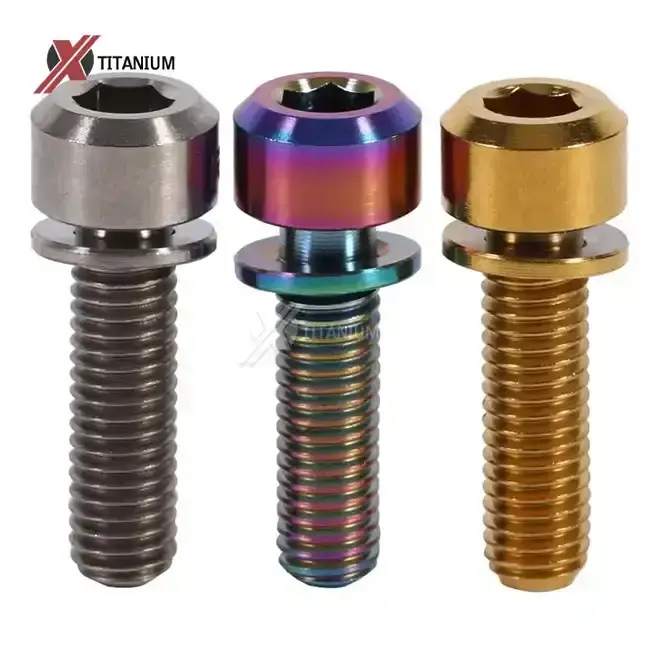
Understanding GR5 Titanium Bicycle Bolts: Key Specifications and Properties
Material Composition and Alloy Advantages
Gr5 titanium bicycle bolt's excellent performance comes from the precise metal makeup that makes it up. Unlike Grade 2 titanium that is sold in stores, Ti-6Al-4V has aluminium added to lower its density and vanadium added to make it stronger through solid solution strengthening. This alpha-beta phase microstructure gives it tensile forces between 950 MPa and 1050 MPa, the same as Grade 10.9 steel screws. However, it is only 4.43 g/cm³ dense, while steel is 7.85 g/cm³ dense. Adding aluminium helps a stable, passive titanium dioxide layer form. This layer heals itself right away when it gets scratched, protecting against corrosion forever without any coatings or treatments.
Critical Mechanical Properties for Cycling Applications
When procurement teams look at fastener specs, they should pay attention to a few performance factors that have a direct effect on the stability of bicycle parts. The yield strength of Gr5 titanium bicycle bolt is about 880 MPa, which means that bolts won't permanently deform under the cyclical loading conditions that happen during riding. With a shear strength of 550 MPa, the material keeps threads from breaking in safety-critical places like stem bolts and brake calliper mountings. The way something is made has a big effect on how well it works. For example, top providers use rolled thread processes instead of cut threads, which keeps the alloy's grain structure and raises its fatigue strength by over 30% according to ASTM B348 testing guidelines.
Environmental Resistance and Longevity
When you're cycling, your bolts are exposed to harsh elements like road salt, chlorides in sweat, electrolyte contamination, and changes in temperature. The oxide film that forms naturally on Gr5 titanium bicycle bolt surfaces protects them from these acidic agents. They don't break down in the same way that stainless steel or treated carbon steel do. Lab tests show that Gr5 titanium bicycle bolt keeps its shape at temperatures up to 400°C, which is much higher than what is needed for normal use, even in downhill brake systems where heat production is highest during long descents. When you combine this thermal stability with resistance to corrosion, you get longer repair gaps and lower lifecycle costs for OEM makers and fleet owners.
Core Benefits of Using GR5 Titanium Bolts on Bicycles
Weight Reduction Without Structural Compromise
Its higher density means that Gr5 titanium bicycle bolts are about 45% lighter than equivalent steel fasteners. This is the main benefit that drives their use. Changing all the bolts on important bike parts like the stem, handlebar clamp, seat post collar, brake callipers, bottle cage mounts, and chainring attachments can usually cut the bike's weight by 50 to 80 grams.
Even though this decrease doesn't seem like much on its own, in professional cycling, where seconds separate podium places, every gram is strategically important, and substituting steel fasteners with a Gr5 titanium bicycle bolt amplifies that advantage by shedding weight without sacrificing strength. It works just as well for mountain bikes because less rotating mass in the wheels and drivetrain lowers rotational inertia, which makes acceleration and climbing more efficient.
Because Gr5 titanium bicycle bolt is about as strong as high-grade steel, this weight decrease keeps safety limits intact, which is appreciated by engineering teams. When figuring out how to load bolts, similar torque specs can be used, like 4-6 Nm for M5 bolts and 5-8 Nm for M6 uses, without having to use different factors for aluminium options. For makers switching from traditional materials, this mechanical similarity makes the process of design integration and quality control easier.
Extended Component Lifespan and Maintenance Reduction
When used on bicycles, where screws go through millions of stress cycles over the course of their life, fatigue resistance is very important. Road vibration, changes in drivetrain torque, and impact loads from rough terrain make working conditions very difficult. When rolled threads are made by reputable sources, they cause compressive residual stresses in the thread roots. This makes them much less likely to start a fatigue crack than cut threads. Field testing with experienced race teams has shown that Gr5 titanium bicycle bolts can be used for more than 100,000 km without coming loose or breaking down if they are installed correctly.
Reliability in running goes beyond longer life and lower maintenance costs. Galvanic rust causes steel bolts to often get stuck in aluminium frames, which means they have to be taken apart and replaced. The place of Gr5 titanium bicycle bolt in the galvanic series keeps the electrochemical potential differences between it and aluminium and carbon fibre to a minimum. This stops this expensive failure mode from happening. Even in seaside areas where salt spray speeds up corrosion, titanium screws can be serviced and taken off at any time during the bike's useful life.
Premium Aesthetics and Brand Differentiation
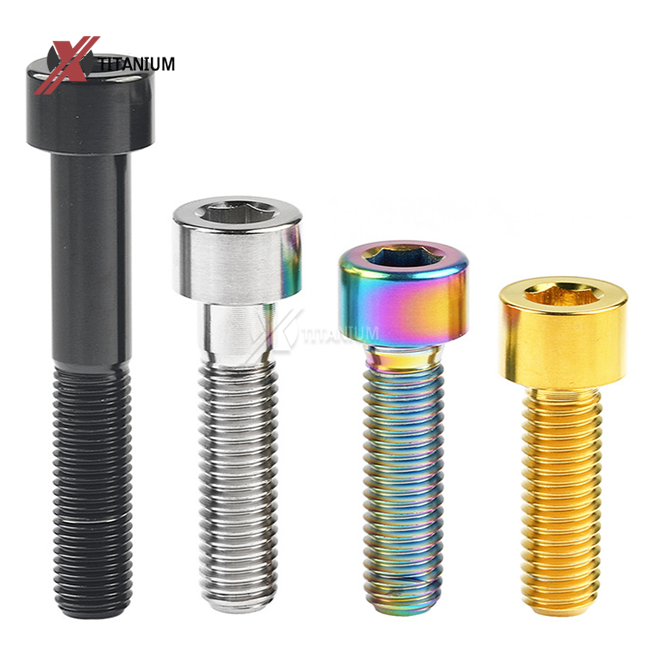
Visual quality has a big effect on how people think about high-end bicycle markets where prices often go over $5,000 to $15,000. Compared to zinc-plated or black oxide steel screws, natural titanium finishes give metals a unique shine that raises their value. Physical Vapour Deposition coatings come in gold, rainbow, black, or custom colours that can be chosen by advanced manufacturers. These coatings last for years without chipping or fading like painted or anodised options do. This visual consistency helps brand positioning strategies that aim for picky buyers who carefully consider the quality of parts and finishing details before making a purchase.
Comparative Analysis: GR5 Titanium Bolts vs. Alternative Materials
Performance Benchmarking Against Steel Variants
When purchasing workers do material selection studies, it's helpful to know how Gr5 titanium bicycle bolt compares to other steel options in a number of performance areas. Grade 10.9 carbon steel bolts have the same tensile strength as other types but cost less, which makes them a good choice for uses that need to stay within a budget. But carbon steel needs protection coatings that wear off over time, especially in wet or seaside areas. When you add up warranty claims, customer service calls, and the damage to your brand's image from fasteners failing too soon, the extra weight of 45% and the risk of rust make the total cost of ownership higher.
Grades of stainless steel like 316 and 410 are better at resisting rust than carbon steel, and they are still easy to find and don't cost too much. Stainless steel can't be used in high-stress mounting points as much as Gr5 titanium bicycle bolt, mostly because it isn't as strong or resistant to fatigue. Stainless steel also tends to gall when threaded into aluminium parts, so anti-seize compounds and careful torque management are needed to keep the threads from getting damaged during installation or removal.
Cost-Benefit Analysis and ROI Considerations
Material cost differences are the most important thing to think about when deciding whether to adopt Gr5 titanium bicycle bolt. Titanium nuts usually cost 8–12 times more per unit than steel screws that do the same job. This can put a strain on budgets, especially for large-scale production. As part of strategic analysis, this premium needs to be weighed against measurable benefits such as fewer warranty claims due to corrosion failures, fewer service calls for fasteners that have become stuck, better brand positioning to support premium pricing strategies, and the ability to stand out in markets that are already full.
A breakdown of the parts shows that the prices of fasteners are less than 0.05 percent of the total costs of making high-end bikes. The speed and reliability gains that can be made by implementing Gr5 titanium bicycle bolt are worth much more than the small increase in cost. Manufacturers who work with professional racing teams, expedition touring groups, and wealthy customers say that specifying titanium fasteners strengthens their market position without affecting their profit margins significantly.
Material Selection Based on Application Requirements
The best way to choose fasteners for bicycles is to match the properties of the materials to the loads and environments that they will be exposed to. Stem bolts, handlebar clamps, and brake calliper mountings are all important safety parts that need Gr5 titanium bicycle bolt's fatigue resistance and dependability. When the load isn't too heavy, accessory mounting points like bottle cage bosses and fender eyelets may accept stainless steel alternatives. Because they are constantly exposed to lubricant contamination and cleaning solvents, drivetrain parts like chainring bolts and cassette lockrings benefit the most from Gr5 titanium bicycle bolt's resistance to corrosion.
For racing purposes, reducing weight and maintaining stability under extreme stress are very important, which makes Gr5 titanium bicycle bolt standard easy to understand. Touring and bikepacking situations put a lot of emphasis on rust resistance and long-term usability in a variety of conditions, which again makes titanium a good choice. Commuter bikes in cities don't have to perform very well, but they are exposed to a lot of road salt and weather. This means that Gr5 titanium bicycle bolt's durability keeps maintenance to a minimum and the bike's overall lifespan longer.
How to Select and Source the Right GR5 Titanium Bicycle Bolts for Your Needs
Technical Specification and Dimensional Requirements
To do a good job of buying things, you need to be very clear about the sizes, thread types, head styles, and mechanical properties of the fasteners you need for each mounting job. Socket head cap screws that meet DIN 912 standards work with stem and seatpost clamps that need an internal hex drive. Different types of button heads that meet ISO 7380 standards have bigger bearing areas that are perfect for connecting carbon fibre parts. Countersunk designs that are in line with DIN 7991 allow for flush mounting in aerodynamic settings. The thread specs must match the threading of the receiving part. The metric M4, M5, M6, and M8 sizes are suitable for most bicycle uses when the right pitch is chosen.
To get the best fatigue resistance, procurement specifications should make it clear that rolled thread manufacturing is required instead of cut thread manufacturing. For fasteners like a Gr5 titanium bicycle bolt, asking for certifications of materials that they meet ASTM B348 Grade 5 or AMS 4928 aerospace specifications helps with quality control and tracking. Tensile testing samples from production batches to check the mechanical properties adds another level of quality control for large orders.
Supplier Evaluation and Quality Verification
To find good suppliers, you need to look at more than just prices. You need to look at their manufacturing skills, quality control systems, and expert help resources. Trustworthy makers keep CNC machining centers that can keep the tight size specs that are needed for proper thread engagement and torque. Quality certifications like ISO 9001 show that the process is controlled in a planned way, and AS9100 aerospace certification shows that the company can meet strict testing and material traceability requirements for high-performance uses.
The ability to provide technical advice is what sets exceptional suppliers apart from average ones. Engineers can learn from suppliers about the best bolt specifications for each job, the right torque values based on the material's properties, and the best anti-seize compound recommendations to avoid galling. Custom manufacturing services from suppliers let you get the best bolt lengths, head styles, and thread specs for your product, without the trade-offs that come with regular catalogue parts.
Procurement Strategy and Supply Chain Optimization
Price structures that are based on volume encourage bulk ordering across product lines instead of buying things one at a time. Setting up preferred supplier relationships with companies that make a wide range of titanium fasteners simplifies the buying process and uses volume commitments to get better prices. Minimum order amounts are usually between 500 and 1,000 pieces, depending on the standard. This means that demand forecasts and inventory management are very important to find the best balance between cost optimisation and working capital concerns.
Managing lead times becomes very important when you have to deal with specialised manufacturing processes and limited material availability. Standard specs from well-known suppliers usually ship within two to four weeks. Custom manufacturing jobs, on the other hand, need six to ten weeks to complete. Strategic buyers keep an emergency supply of important screws on hand and plan special orders that work with production schedules and the release of new models.
Conclusion
Titanium nuts made from Gr5 titanium bicycle bolt are a smart material choice for bicycle makers and performance-focused uses where weight reduction, resistance to rust, and long-term dependability are important. Ti-6Al-4V alloys are as strong as high-grade steel but weigh 45% less. The natural formation of oxides also protects against rust, which is a problem with steel options.
Even though they cost more than regular fasteners at first, they are worth the money in the long run because they last longer, don't fail due to galvanic corrosion, and look better. This is especially true in competitive cycling, high-end manufacturing, and demanding environmental applications. For procurement to go well, partnerships with suppliers that offer excellent manufacturing, quality certifications, and technical support that lets specifications fit perfectly with application needs are essential.
FAQ
Do GR5 titanium bolts last longer than stainless steel ones when it comes to rust and corrosion?
Gr5 titanium bicycle bolt creates a naturally self-healing titanium dioxide layer that is more resistant to corrosion than stainless steel. This is especially true in chloride-rich areas like coastal areas and areas where road salt is present. Unlike stainless steel, which can rust in pits, titanium stays chemically stable in a wide range of environments without any coats to protect it.
How strong is GR5 compared to regular steel bike bolts?
Tensile strength of Gr5 titanium bicycle bolt is between 950 and 1050 MPa, which is the same as Grade 10.9 steel bolts. Getting this much power while weighing 45% less is the main benefit; it lets you get the same force specs without compromising the structure or lowering the safety factor.
Where can procurement teams source authentic GR5 titanium bolts for bulk OEM orders?
Reputable makers keep material certifications that show they meet ASTM B348 Grade 5 standards and provide mill test records that show the alloy's makeup. Suppliers with ISO 9001 or AS9100 certifications show they can handle quality, which is important for regular production. Asking for sample testing to be done by separate labs adds another layer of security for large agreements.
Partner with Chuanglian for Premium Gr5 Titanium Bicycle Bolt Solutions
Baoji Chuanglian New Metal Material Co., Ltd. is a reliable company that makes Gr5 titanium bicycle bolts. They have been working with titanium for over ten years and use aerospace-grade quality standards. We are located in China's "City of Titanium," and our advanced CNC cutting and full quality control systems make sure that every screw meets strict requirements for strength, accuracy in size, and material tracking. We are experts at making custom bolts, supplying OEMs in bulk, and giving technical advice to help with the development of products for racing, high-end production, and performance uses.
Our strict checking procedures make sure that all of our materials meet the requirements for approval, and our efficient production capacity lets us handle orders of any size, from small prototypes to large production runs. You can email our engineering team at info@cltifastener.com or djy6580@aliyun.com to talk about your unique needs, get technical specs, or look into custom solutions. Visit cl-titanium.com to see our full catalogue of titanium fasteners and learn why leading bicycle manufacturers around the world trust Chuanglian for a supply chain partnership that is reliable, high-quality, and quick to respond.
References
1. American Society for Testing and Materials. (2021). ASTM B348 Standard Specification for Titanium and Titanium Alloy Bars and Billets. West Conshohocken, PA: ASTM International.
2. Donachie, M.J. (2000). Titanium: A Technical Guide, 2nd Edition. Materials Park, OH: ASM International.
3. Lütjering, G. & Williams, J.C. (2007). Titanium, 2nd Edition: Engineering Materials and Processes. Berlin: Springer-Verlag.
4. Peters, M., Kumpfert, J., Ward, C.H., & Leyens, C. (2003). "Titanium Alloys for Aerospace Applications." Advanced Engineering Materials, 5(6), 419-427.
5. Schutz, R.W. & Watkins, H.B. (1998). "Recent Developments in Titanium Alloy Application in the Energy Industry." Materials Science and Engineering: A, 243(1-2), 305-315.
6. Veiga, C., Navim, J.P., & Loureiro, A.J.R. (2012). "Properties and Applications of Titanium Alloys: A Brief Review." Reviews on Advanced Materials Science, 32(2), 133-148.
Learn about our latest products and discounts through SMS or email