- English
- French
- German
- Portuguese
- Spanish
- Russian
- Japanese
- Korean
- Arabic
- Greek
- German
- Turkish
- Italian
- Danish
- Romanian
- Indonesian
- Czech
- Afrikaans
- Swedish
- Polish
- Basque
- Catalan
- Esperanto
- Hindi
- Lao
- Albanian
- Amharic
- Armenian
- Azerbaijani
- Belarusian
- Bengali
- Bosnian
- Bulgarian
- Cebuano
- Chichewa
- Corsican
- Croatian
- Dutch
- Estonian
- Filipino
- Finnish
- Frisian
- Galician
- Georgian
- Gujarati
- Haitian
- Hausa
- Hawaiian
- Hebrew
- Hmong
- Hungarian
- Icelandic
- Igbo
- Javanese
- Kannada
- Kazakh
- Khmer
- Kurdish
- Kyrgyz
- Latin
- Latvian
- Lithuanian
- Luxembou..
- Macedonian
- Malagasy
- Malay
- Malayalam
- Maltese
- Maori
- Marathi
- Mongolian
- Burmese
- Nepali
- Norwegian
- Pashto
- Persian
- Punjabi
- Serbian
- Sesotho
- Sinhala
- Slovak
- Slovenian
- Somali
- Samoan
- Scots Gaelic
- Shona
- Sindhi
- Sundanese
- Swahili
- Tajik
- Tamil
- Telugu
- Thai
- Ukrainian
- Urdu
- Uzbek
- Vietnamese
- Welsh
- Xhosa
- Yiddish
- Yoruba
- Zulu
How to select the right titanium bolt grade for bike assembly?
Selecting titanium bicycle bolts involves more than just aesthetics and weight savings. When building or upgrading a bicycle—whether you're an OEM, procurement manager, or engineering team lead—the choice of bolt grade directly impacts structural integrity, longevity, and operational safety. Titanium offers an unmatched combination of strength and lightness, but the grade you select must align with load requirements, environmental exposure, and assembly specifications. Grades 2, 5, and 9 each serve distinct roles in bike assembly, ranging from decorative components to high-stress structural fasteners. Understanding these nuances ensures you avoid costly failures and maintain consistent quality across production batches.
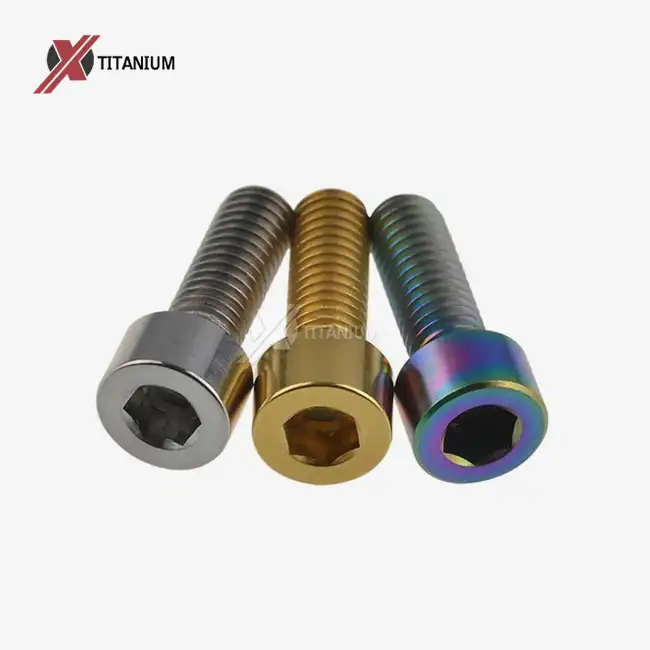
Understanding Titanium Bolt Grades for Bicycle Assembly
Titanium bicycle bolts used to put together bikes are divided into grades that describe their chemical make-up, mechanical properties, and how they react to corrosion. In the bicycle business, Grade 2 (commercially pure titanium), Grade 5 (Ti-6Al-4V), and sometimes Grade 9 (Ti-3Al-2.5V) are the most popular grades. Tensile strength, flexibility, and weldability are all different for each grade.
What Defines Each Grade?
Grade 2 titanium is commercially pure, with at least 99% titanium and very few other elements that mix with it. It is very resistant to corrosion and not too strong, so it's great for non-structural uses like bottle cage bolts and fender mounts. Its yield strength is about 275 MPa, which is enough for light parts but not enough for joints that are under a lot of stress.
The alloy name for Grade 5 titanium is Ti-6Al-4V, and it is made up of 90% titanium, 6% aluminium, and 4% vanadium. This metal is the standard for load-bearing uses because it has a tensile strength of 900 MPa and a yield strength of about 830 MPa. Grade 5 is often used for stem bolts, brake rotor fasteners, and suspension linkage bolts because it is very resistant to fatigue and can handle cyclic loading.
Titanium Grade 9 (Ti-3Al-2.5V) is in the middle, between Grades 2 and 5. A tensile strength of about 620 MPa means that it can be shaped better than Grade 5 while still being stronger than Grade 2. This grade works well for tasks that need to be cold worked or shaped in a complicated way, but it's not used very often in normal bicycle parts.
Common Misconceptions About "Strongest" and "Lightest" Grades
A lot of buyers think wrongly that the "strongest" grade is always the best choice for every job. Although Grade 5 has a higher tensile strength than Grade 2, that doesn't mean it should always be used instead of Grade 2. Overengineering titanium bicycle bolts that aren't necessary raises costs without making them work better. On the other hand, using Grade 2 bolts in high-stress places like brake mounts or stem clamps is very dangerous because they can't handle the load. The important thing is to make sure that the grade qualities are right for the mechanical needs of each fixing point.
Another false belief has to do with losing weight. It doesn't make a difference between Grade 2 (4.51 g/cm³) and Grade 5 (4.43 g/cm³) in terms of density; all of them are lighter than steel. Titanium's high strength-to-weight ratio lets smaller bolt diameters be used in some situations, which is what gives it its weight advantage. But cutting down on the size of the bolts should never mean sacrificing the clamping force or shear strength that is needed.
Key Technical Specifications to Consider When Choosing Titanium Bolts
Besides the grade, there are a number of technical factors that affect how well titanium bicycle bolts will work when putting together a bicycle. During the seller qualification and product validation stages, procurement teams should look over these specs.
Tensile Strength and Yield Strength Requirements
Tensile strength is the most force that a bolt can take before it breaks, and yield strength is the point at which it starts to change shape permanently. High clamping loads are needed for stem assemblies, brake calipers, and disc rotor mounts. Grade 5 bolts with a tensile strength of 900 MPa can handle these loads. For these uses, stress cycles happen over and over, so the materials need to be able to keep their shape over thousands of loading events.
Lower pressures are felt by parts like bike hangers or cable clamps, so Grade 2 bolts can work well with them. When strength requirements are matched to actual load conditions, both over-specification and failure are avoided. When engineers check supplier certifications, they should look at the ASTM B348 material standards.
Thread Type and Torque Specifications
The way threads are made has a big impact on how well and how long a bolt lasts. When compared to cut threads, rolled threads have a 30% longer wear life because they keep the material's grain structure. This is very important for safety-related fasteners that are loaded over and over again. When looking at different suppliers, make sure to check if the threads are rolled instead of machined. This is a manufacturing detail that doesn't usually show up in basic product specifications.
When specifying torque, titanium's unique friction properties must be taken into account. Titanium has a higher coefficient of friction than steel, especially when it comes into contact with other titanium. This causes a problem called galling, in which threads get stuck when they are being tightened. Using anti-seize products and following the manufacturer's torque values—which are usually 20–30% lower than comparable steel bolts—will keep the threads from getting damaged and keep the clamping force constant.
Corrosion Resistance and Environmental Factors
Titanium makes a passive oxide layer that protects it very well from corrosion in air, salt water, and acidic conditions. Titanium bicycle bolts are great for bikes that are ridden near the coast or in winter areas with a lot of road salt because they don't rust like steel bolts do. Galvanic corrosion, on the other hand, can happen when titanium touches carbon fibre or aluminium without being properly separated. Using titanium spacers that don't conduct electricity stops electrochemical processes that break down materials nearby.
Surface treatments improve efficiency even more. Anodizing gives things bright colours and makes the surface harder. Nitriding can make bolts that are put together and taken apart a lot more resistant to wear. These treatments don't change the mechanical properties of the base material; instead, they make it more useful and nice to look at.
Titanium Bolt Grades Comparison: Which Grade Fits Your Application?
When you compare different types of titanium bicycle bolts to other materials and to each other, it makes the trade-offs that come up when choosing fasteners clearer. The analysis below helps OEMs and distributors figure out which options are best for each type of bike and component.
Grade 2 vs. Grade 5: Strength and Weight Trade-offs
Grade 2 titanium is stronger than Grade 5 titanium and costs less. It can be used for decorations and low-stress tasks. It's easier to shape into specific shapes because it's very flexible, but this doesn't usually affect how bolts are made. The 275 MPa yield strength is enough for decorative hardware, reflector mounts, and bottle cage bolts where clamping loads are low.
Grade 5 titanium is now needed for fixings that are important for safety and structure. The nearly threefold rise in yield strength allows for higher torque values and keeps the joint from coming loose when it vibrates. Linkages for mountain bikes, stem clamps for road bikes, and brake rotor bolts all need Grade 5's mechanical properties. Even though the materials are about 30–40% more expensive than in Grade 2, the improvements in performance and lack of failures make the extra money worth it in key areas.
There aren't many changes in weight between grades. For example, a full set of bolts from Grade 2 to Grade 5 might weigh 3–5 grams more or less. The real benefit is using Grade 5's strength to use smaller bolt diameters when geometry allows. This saves weight without lowering safety margins.
Titanium vs. Steel and Aluminum Alternatives
Steel bolts are still the most popular type of fastener because they are cheap and easy to find. High-quality steel fasteners (Grade 8.8 or 10.9) have tensile strengths of more than 900 MPa, which is the same as or higher than Grade 5 titanium. But because steel has a mass of 7.85 g/cm³, bolts made of steel are about 45% heavier than bolts made of titanium. When it comes to high-end road bikes and competitive mountain bikes, this extra weight adds up over dozens of fasteners.
Corrosion is easy for steel to form, which makes upkeep difficult and could cause safety problems. In salty environments, even high-quality stainless steel can rust and turn into aluminium or carbon fibre parts over time. Because corroded steel bolts are hard to remove, threads in expensive frame parts are often damaged.
Like titanium bicycle bolts, aluminium bolts are lighter, but they aren't strong enough for most uses. Even in aircraft alloys, aluminum's yield strength rarely goes above 400 MPa, which means it can only be used for non-critical ornamental purposes. Aluminium is also not good at resisting fatigue, which means it can't be used in repeated stress situations.
Application Suitability by Bike Type
Titanium bicycle bolts are perfect for cabin parts, brake mounts, and derailleur clips because they don't rust and don't add much weight. Cutting down on the weight of the bike's handlebars, seat post, and wheels improves its performance in both climbing and speeding up. Grade 5 bolts are good for building areas, while Grade 2 bolts can be used instead of steel gear in places that aren't stressed.
Mountain bikes are more likely to be damaged by impacts and dirt, water and other things that fall off the path. Grade 5 titanium bolts work great in places where dependability in hard conditions is very important, like on suspension pivots, brake calipers, and rotor mounts. The resistance to corrosion keeps bolts from seizing up during regular upkeep, which lowers the long-term costs of ownership even though the original price is higher.
E-bikes are heavier and create more power at the mounting points for the brakes and motor. Grade 5 titanium gives the system the necessary strength while also reducing its overall weight. But the heavier loads might mean that the bolts need to be bigger, which would make the weight advantages less useful compared to lighter bike categories.
Procurement Considerations for Titanium Bicycle Bolts
Finding titanium bicycle bolts means finding a balance between performance needs, cost limits, and the dependability of the supply chain. To make sure uniform quality and service, B2B buyers need to look at more than just unit price.
Evaluating Price-Quality Balance
Titanium material prices change depending on how the world supply changes. This is especially true since most of the production of titanium sponge is concentrated in a few places. Grade 5 bolts usually cost 4 to 6 times more than similar steel fasteners, but this price difference goes down as more bolts are ordered. Buyers should ask for specific certifications of the material that meet ASTM B348 standards. These should include mill test results that confirm the material's chemical composition and mechanical qualities.
When you compare prices, you need to look at more than just the initial purchase price. Titanium doesn't rust, so it doesn't need to be replaced as often. Its low weight may also explain higher prices for performance-oriented product lines. It is more accurate to figure out the value by dividing the cost per unit by the expected service life than by just pricing each item individually.
Supplier Certification and Manufacturing Capabilities
Titanium bicycle bolts makers with a good reputation have quality management systems that are at least ISO 9001 certified. AS9100 or ISO 13485 standards show that a supplier works with the aerospace or medical industries and has strict process controls and tracking systems in place. These certifications lower the risk of buying things by making sure that the properties of the materials are the same across production batches. This is very important for safety-related fasteners.
The skills needed to make things go beyond simple machining. CNC machines allow for very precise measurements, which are needed for thread contact and pressure behaviour that is always the same. Surface treatment facilities for anodizing or nitriding add usefulness by letting you change the appearance, hardness, and resistance to corrosion. Suppliers who give thread rolling instead of thread cutting make better fatigue resistance, but you have to buy special tools to do this.
Bulk Ordering and Customization Options
Different suppliers have very different minimum order amounts based on how much they make and who their main customers are. Large manufacturers may need thousands of pieces of each SKU, but smaller batches can be handled by fastener suppliers who can make the threading or head styles fit the needs of the batch. Buyers should weigh the costs of keeping goods against savings for buying in bulk.
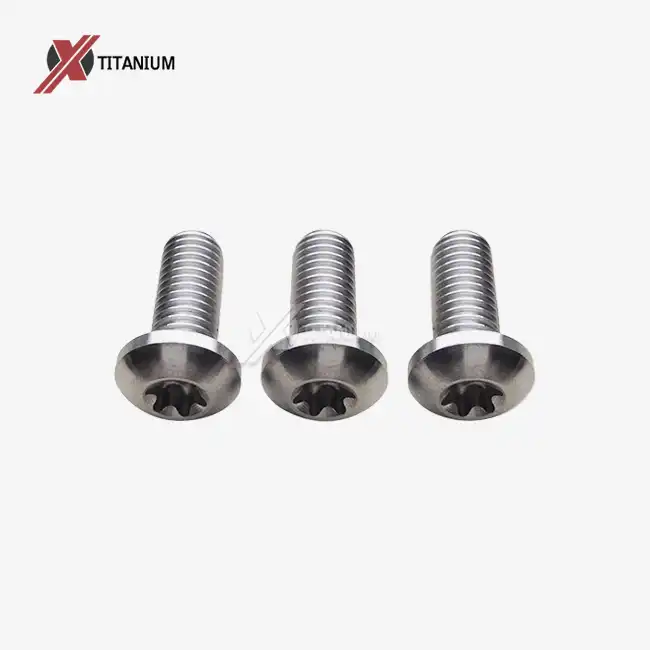
Thread pitch, head style (socket cap, button head, countersunk), drive type (hex, Torx), and surface treatments are all things that can be changed. Most bicycle applications can be met by standard metric sizes from M3 to M12. However, some part designs may need custom lengths or diameters. Product development timelines are helped by working with suppliers who can do fast prototyping and small-batch custom runs.
Total arrival costs are affected by things like shipping and packaging. Titanium is cheap to ship abroad because it has a high value-to-weight ratio. However, thread damage during shipping can be avoided with proper packing. Suppliers who offer organised kits that are sorted by size and use make it easier to manage inventory and cut down on the time it takes to put together.
Installation and Maintenance: Maximizing the Lifecycle of Titanium Bicycle Bolts
Making sure that titanium bicycle bolts are installed and maintained correctly is important so that they work at their best for a long time. These methods can be used on production lines in factories and for servicing by end users.
Best Practices for Torque Application
Due to its tendency to gall when tightened, titanium needs to be put together in a certain way. Putting titanium-safe oils or anti-seize substance on threads lowers friction and stops seizure. Copper-based anti-seize shouldn't be used at the point where titanium meets carbon, because it could lead to galvanic corrosion. Specialised titanium assembly pastes keep the friction coefficients the same even after many cycles of assembly.
Because titanium has a higher friction coefficient than steel, its torque requirements are usually 20–30% lower than those for steel nuts of the same size. Companies that make bolts should make torque tables that are specific to the bolt types and surface processes they use. When you use calibrated torque wrenches, you can avoid under-tightening (which causes loosening) and over-tightening (which damages the threads or causes the material to give way). Digital torque wrenches that can log data show how well an assembly was put together for requirements of traceability.
Preventing Common Installation Failures
Galling is the most common way for titanium bicycle bolts to break. It happens when the oxide layer gets damaged, allowing metals to stick together. This is most likely to happen when two pieces of titanium touch each other under high pressure and slow spinning speeds. Using nuts, keeping the threads clean, and using the right lubricant can lower the risk of galling. If resistance suddenly rises while the bolt is being tightened, stopping right away and pulling back on the bolt will protect the threads from permanent damage.
In most bicycle parts with thin walls, cross-threading damages the threads in a way that can't be fixed. To make sure the bolts are properly engaged before using tools, start the first few threads by hand. When working at odd angles where cross-threading is more likely, magnetic or holding tools can help.
Routine Inspection and Lifespan Extension
Titanium bicycle bolts used in important situations should be inspected on a regular basis, at the times suggested by the maker. A visual inspection can show damage to the surface, corrosion (which is rare but can happen in harsh environments), or signs of loosening. No matter how long they are supposed to last, bolts that show thread damage or deformation need to be replaced right away.
Schedules for torqueing depend on how bad the application is. Areas with a lot of shaking, like suspension pivots, may need to be checked every three months, but areas that don't move, like bottle cage bolts, will stay stable forever. By writing down torque values during checks, you can see which bolts are slowly coming free, which could mean that the original torque wasn't enough or that the threads are damaged.
Mild soap and water are all you need to clean titanium bicycle bolts. Don't use strong chemicals or rough cleaning methods on the protected oxide layer. Keeping spare bolts in dry places with thread protectors on them keeps them from getting damaged during handling and protects the surface treatments.
Conclusion
In conclusion, when putting together a bicycle, choosing the right titanium bicycle bolts grade means balancing mechanical needs, environmental conditions, and cost concerns for a wide range of uses. Grade 5 titanium (Ti-6Al-4V) is the standard for structural and safety-critical screws because it has a tensile strength of 900 MPa and a high tolerance to fatigue. Grade 2 is good for non-structural uses where resistance to rust is more important than ultimate strength.
To make sure quality is always the same, procurement teams have to check the certifications of suppliers, the ways things are made (like rolling threads), and the finishes on the outside. Using measured torque values and the right oils during installation keeps things from galling and extends their useful life. Titanium bicycle bolts pay for themselves in the form of lower weight, no corrosion, and longer component life. These benefits are especially useful in the high-performance and expensive bicycle markets.
FAQ
How do I determine if Grade 2 or Grade 5 titanium bolts suit my application?
Look at the mechanical loads and how important safety is at each bolt position. Grade 5 must have a tensile strength of 900 MPa for structural joints like stem clamps, brake mounts, and suspension pivots. With a yield strength of 275 MPa, Grade 2 is good for non-structural parts like bottle cages, fender brackets, and decorative hardware. Consulting engineering load calculations and looking at what the component manufacturer says makes sure that the right grade is chosen.
What weight savings can I expect compared to steel and aluminum bolts?
Titanium bicycle bolts are about 45% lighter than steel bolts of the same size and strength. They weigh about the same as aluminium bolts. A full titanium bolt set for a road bike (40 to 50 screws) usually weighs 80 to 120 grams less than steel gear. The weight loss is mostly at the bike's edges, where it affects handling and acceleration the most.
Which certifications should I require from titanium bolt suppliers?
Ask for material certifications that meet ASTM B348 standards along with mill test records that show the materials' chemical make-up and mechanical features. ISO 9001 quality management certification shows that a supplier meets basic requirements, while AS9100 certification shows that a supplier can control and trace processes at an aerospace-grade level. To get the best fatigue resistance, make sure that rolling instead of cutting is used to make the thread.
Partner with Chuanglian for Premium Titanium Bicycle Bolts
Baoji Chuanglian New Metal Material Co., Ltd. specializes in manufacturing Grade 5 (Ti-6Al-4V) titanium bicycle bolts that meet the stringent demands of global OEMs and high-performance cycling markets. Our CNC-machined fasteners feature rolled threads for superior fatigue life, with customizable surface treatments including anodizing in multiple colors and nitriding for enhanced wear resistance. Located in Baoji City—China's renowned "City of Titanium"—we maintain complete traceability from raw material sourcing through final inspection, ensuring batch consistency critical for safety applications. Whether you require standard M3-M12 sizes or custom specifications, our engineering team provides technical consultation throughout the selection process.
Contact our procurement specialists at info@cltifastener.com or djy6580@aliyun.com to discuss your titanium bicycle bolts supplier requirements, request material certifications, or arrange sample evaluation. Discover detailed specifications at cl-titanium.com.
References
1. Boyer, R., Welsch, G., & Collings, E.W. (1994). Materials Properties Handbook: Titanium Alloys. ASM International, Materials Park, Ohio.
2. Donachie, M.J. (2000). Titanium: A Technical Guide, 2nd Edition. ASM International, Materials Park, Ohio.
3. Schutz, R.W. & Watkins, H.B. (1998). Recent developments in titanium alloy application in the energy industry. Materials Science and Engineering A, 243(1-2), 305-315.
4. Veeck, S. & Faulkner, R. (2010). Metallurgical considerations in the design and manufacturing of lightweight bicycle components. Journal of Materials Engineering and Performance, 19(5), 673-681.
5. ASTM International (2020). ASTM B348-13: Standard Specification for Titanium and Titanium Alloy Bars and Billets. West Conshohocken, Pennsylvania.
6. Lutjering, G. & Williams, J.C. (2007). Titanium, 2nd Edition: Engineering Materials and Processes. Springer-Verlag, Berlin Heidelberg.
Learn about our latest products and discounts through SMS or email