- English
- French
- German
- Portuguese
- Spanish
- Russian
- Japanese
- Korean
- Arabic
- Greek
- German
- Turkish
- Italian
- Danish
- Romanian
- Indonesian
- Czech
- Afrikaans
- Swedish
- Polish
- Basque
- Catalan
- Esperanto
- Hindi
- Lao
- Albanian
- Amharic
- Armenian
- Azerbaijani
- Belarusian
- Bengali
- Bosnian
- Bulgarian
- Cebuano
- Chichewa
- Corsican
- Croatian
- Dutch
- Estonian
- Filipino
- Finnish
- Frisian
- Galician
- Georgian
- Gujarati
- Haitian
- Hausa
- Hawaiian
- Hebrew
- Hmong
- Hungarian
- Icelandic
- Igbo
- Javanese
- Kannada
- Kazakh
- Khmer
- Kurdish
- Kyrgyz
- Latin
- Latvian
- Lithuanian
- Luxembou..
- Macedonian
- Malagasy
- Malay
- Malayalam
- Maltese
- Maori
- Marathi
- Mongolian
- Burmese
- Nepali
- Norwegian
- Pashto
- Persian
- Punjabi
- Serbian
- Sesotho
- Sinhala
- Slovak
- Slovenian
- Somali
- Samoan
- Scots Gaelic
- Shona
- Sindhi
- Sundanese
- Swahili
- Tajik
- Tamil
- Telugu
- Thai
- Ukrainian
- Urdu
- Uzbek
- Vietnamese
- Welsh
- Xhosa
- Yiddish
- Yoruba
- Zulu
Why Custom Titanium Bicycle Parts Improve Long-Term Bike Value
Custom titanium bicycle parts increase the value of a bike over time because they don't rust, remain strong even after years of heavy use, and fit the frame perfectly. Grade 5 Ti-6Al-4V has a tensile strength of 930 MPa at 4.43 g/cm³. This means that even though it is lighter than steel, it is still strong. Replacements, warranty claims, and service visits are all cut down because it lasts longer. This is a clear premium story. The buyer's point of view is used to talk about each step. It shows how important it is to pick the right alloy, use precise CNC machining, and keep good records of the inspections.

Understanding Titanium Components and Long-Term Value
Why Long-Term Value Matters in B2B Procurement?
How much does each bike cost? That's the first thing I always ask bike brands. It's better to ask how much the service costs each year. It might cost less in the long run if you don't have to fix, replace, or file a warranty claim for a part that costs more at first. P&D managers, product directors, and engineers also look at things like batch consistency, documentation, and supply continuity. This is because a part that is different for each lot adds extra costs. Five things are used to compare titanium to aluminum, carbon fiber, and stainless steel: how well it works, how free you are to design it, how well it's made, how much it costs to own everything, and how reliable your supplier is. I talk about the times when titanium doesn't pass.
What Are Custom Titanium Bicycle Parts?
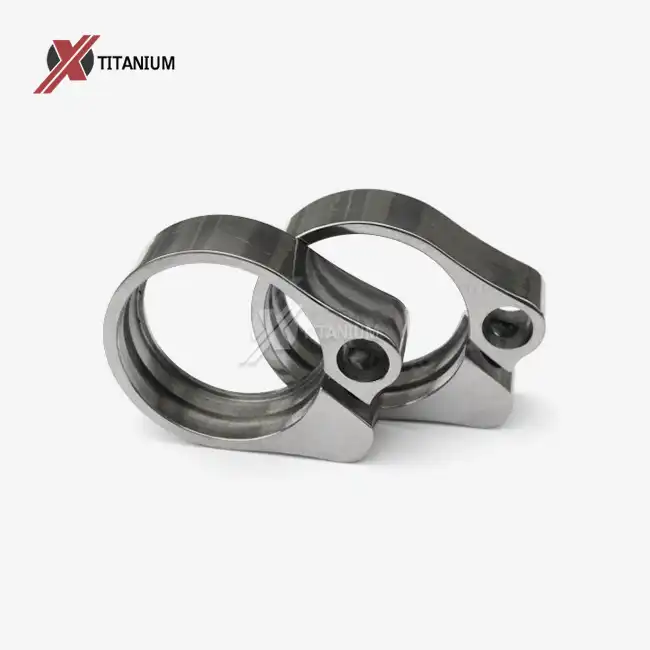
Custom titanium bicycle parts are made-to-order components based on the customer's drawings, measurements, load cases, and interfaces, as opposed to standard parts from a catalog. Most of the time, this means frame parts like axles, dropouts, bottle cage mounts, cable guides, pedals, and seatpost clamps. OEM and ODM projects often have logos, special finishes, or shapes that are made just for them. There are three main alloys that buyers look at: Grade 2 (commercially pure) is good for shaping and doesn't rust; Grade 5 (Ti-6Al-4V) is good for heavy-duty machined parts; and Grade 9 (Ti-3Al-2.5V) is good for tubing. A custom part is made when a stock part doesn't work with a frame, meet performance goals, or match the look of a brand.
Chuanglian Gr5 CNC Machined Product Details
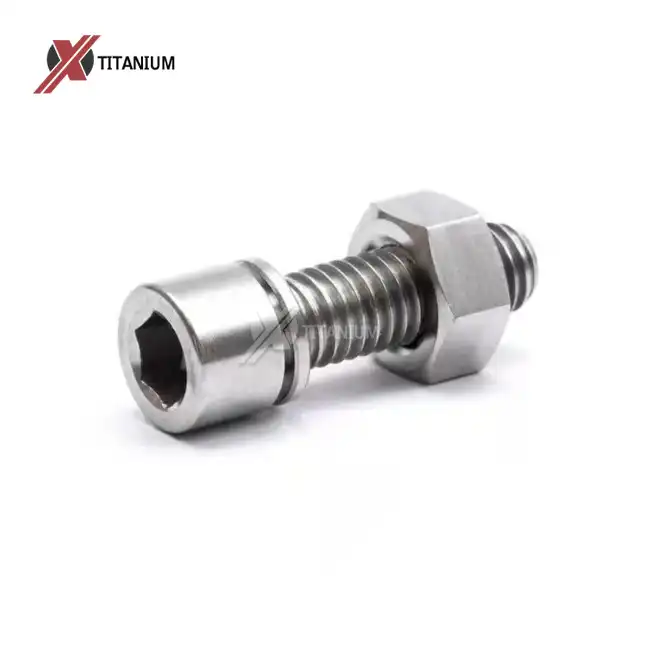
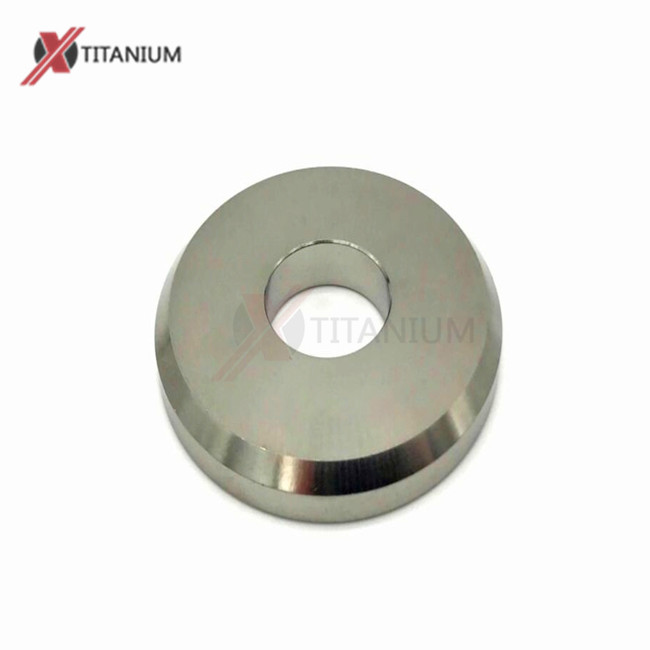
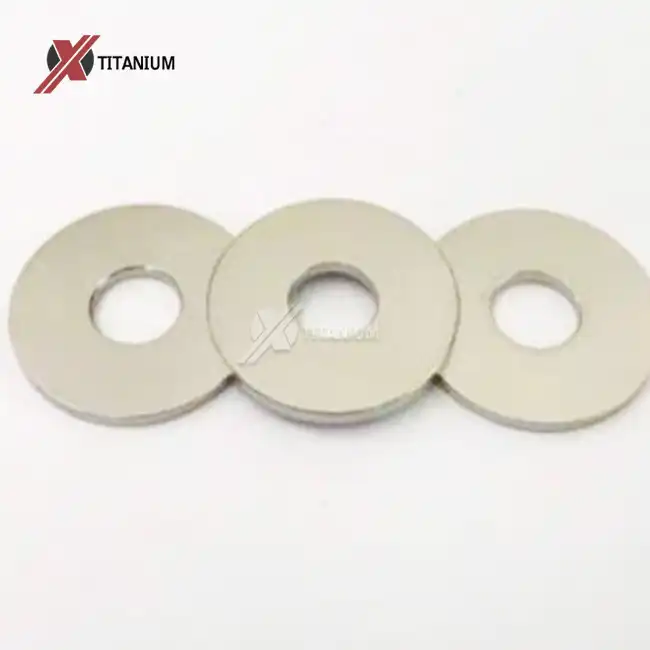
You can find it at Baoji Chuanglian New Metal Material Co., Ltd. We use CNC machines to make custom titanium bicycle parts from Grade 5 in Baoji, which is known as the "City of Titanium," where Chuanglian is located. It has a density of 4.43 g/cm³, a tensile strength of 930 MPa, a yield strength of 880 MPa, and a service temperature of up to 500°C (932°F). You can polish, anodize, or nitride the surface, and it comes in gold, blue, green, purple, black, rainbow, and natural titanium. If you want an OEM order, we can make something in any size, shape, or finish. We have ASTM, ISO, and AMS certifications. Every step of the process is checked in our shop, from the raw materials to the finished goods. We have twelve CNC machines.
How Custom Titanium Bicycle Parts Improve Long-Term Bike Value
Corrosion Resistance That Lasts for Years
For custom titanium bicycle parts, titanium dioxide forms a thin, stable layer when it comes into contact with air. After being scratched, this layer grows back on its own. Titanium can stand up to sweat, rain, road salt, and the humidity along the coast because of this film. This is also why the Chuanglian Gr5 specification says titanium can stand up to saltwater, acids, and bases. For a brand, this means axles, clamps, and bolts that look good and work well even after winters on salty roads, where aluminum can get pits and steel hardware rusts. Not as many service calls and unhappy owners will happen because fasteners won't corrode as much. Just because something doesn't rust won't make it better; you also need to pay attention to the alloy and the shape.
Fatigue Life and Strength-to-Weight Performance
Part of the bike bends a thousand times every time you ride it. Most titanium alloys have a fatigue endurance limit. This is the lowest level of stress below which they can be cycled for a very long time. One thing that aluminum doesn't have is a real limit. It cracks when it is loaded over and over again. With a density of 4.43 g/cm³, Ti-6Al-4V is about 44% less dense than steel, which has a density of 7.85 g/cm³. It has about 110 GPa of elasticity, which is half of what steel has. It means that a titanium part will bend more than a steel part of the same shape. This can be used to make things more comfortable. Ti is very picky about notches, so make sure the threads are rolled and the edges and surfaces are clean. If you want something to last a long time, the shape is just as important as the alloy.
Custom Titanium vs. Aluminum, Carbon Fiber, and Stainless Steel
Everything has a place. Al really does weigh about 2.7 g/cm³. It is better for mass production and cheaper, but it doesn't have a limit on how much it can be used. While carbon fiber is very light and easy to shape for frames and bars, it is also easy to damage when it is hit or stretched. Most types of stainless steel are less expensive and don't rust, but they are heavy—about 7.9 g/cm³. Tin is denser than aluminum, so it only saves weight when the designer can take away things because it is stronger. When it is wet and salty, galvanic corrosion of the aluminum can happen faster where titanium bolts meet aluminum. Isolating compounds or coatings are used to stop this from happening. Don't just compare the price per unit; also look at how much it costs over the life of the product.
Design and Manufacturing Steps from CAD File to Finished Part
From CAD Files to CNC Machined Parts
To make a project reliable, you need to start with things that can be measured, like CAD files, tolerances, load conditions, alloy grade, interfaces, finish, quantity, and inspection standards. The surface quality and tool life of titanium depend on the cutting parameters, the tool choice, and how well the titanium is cooled. Shielding gas keeps dirt and other things from getting into welded parts, which is important because dirt and other things make them work less well.
Before making a lot of them, you should make a prototype, check the fit, inspect the first ones, get a material certificate, and make a dimensional report. Wear and tear or mechanical tests should also be done on parts that carry rider loads. Changes to these steps are still cheap, so you can find problems with them. They also give your engineers a record to compare each new set to.
Surface Treatment: Polishing, Anodizing, and Nitriding
For custom titanium bicycle parts, it changes how it looks and how it wears when work is done on the surface. If you polish, you can get a smooth, shiny surface. You can also choose a matte finish. The oxide layer gets thicker when it is anodized. Light interacting with that thin film gives it its color, not dye. To get gold, blue, green, purple, and rainbow tones, you need to take extra steps during processing. There is also natural titanium and black on our list. Nitriding adds a hard layer to the surface that protects parts that slide, like axles, pivots, and threads, from ending up worn out. It is best to test finished parts when they are under a lot of stress because surface hardening can change how fatigue works. On small parts like bolts and clamps, color also makes the brand's mark stand out.
Matching Parts to Applications
Priorities are set by what they will be used for. For touring and bikepacking, parts need to be able to stand up to corrosion, connect to racks and bags safely, and be simple to keep up. When it comes to gravel and mountain parts, they get hit, shake, get muddy, and are loaded over and over again. This makes fatigue margin and measurement accuracy very important. Even though every gram is important in road racing, things are more dangerous when walls aren't reinforced in certain places. Make sure safety measures are still in place. It is best to use Grade 5 for machined axles and threaded fittings because it can handle more torque in an e-bike's engine. Make sure you know the best balance between cost, weight, durability, comfort, and usability before you ask suppliers for quotes. If the goal is clear, a quote based on guesses is not possible.
Choosing a Supplier and Controlling Procurement Risk
How to Evaluate a Custom Titanium Bicycle Parts Manufacturer
When you check a supplier, you should look at both tech skills and price. Check with the manufacturer to see if they offer CAD support, prototyping, OEM or ODM production, small batches, and repeat orders. Ask for material certificates, inspection records, the ability to track items, and an example of the approval process. These will show you if the lots are consistent. Look at suppliers' response times, capacity, lead times, export paperwork, Incoterms, and support after the sale. Then, use a weighted scorecard to rank them. Chuanglian has been researching and machining titanium for more than ten years. They make sure the quality of all of their products, from the raw materials to the finished ones, and they have sold titanium products to well-known companies all over the world.
Common Procurement Risks and How to Avoid Them
Most problems start with a weak specification. You might have to do extra work, wait longer, or end up with rejected lots if you pick an alloy without checking the loads or accept the lowest quote without checking its assumptions. When it comes to parts that carry rider loads, the visual sample check might not be enough. They might also need fit, load, and environmental tests. Ti threads can get stuck together if they touch, so use a compound that stops seizing when you put them together. Also, remember to take care of your designs. You should use an agreement to keep things secret, controlled drawings, revision control, and samples that have been approved. Along with that, you should ask every supplier, including us, to write down who can see your files. If you use clear technical and business language, you can avoid most risks.
Balancing Cost and Performance
Custom titanium bicycle parts are a good investment that will pay off. A part of the total cost is the unit price, fixtures or tools, prototypes, packaging, freight, duties, inspection, and the risk of the warranty. Titanium doesn't work well on every part. It works best on parts that get rusty or worn down every day, like fasteners, clamps, axles, and mounts. If you use the same size fasteners on more than one model, you can save money on setup. Find out how much the tools will cost on their own for first runs of 50 to 200 pieces. You can see that as more pieces are made, the cost per unit goes down. It's okay to look at more than just the price. You should also look at the claims and replacements you don't make.
Buying Guide and Brand Value
A Practical Buying Guide and RFQ Checklist
To begin, give your situation a name. For example, it could be a small-scale prototype run, an OEM production run, a distributor program, or engineering for replacement parts. Then, make a full RFQ package that includes drawings or 3D files, the grade of the alloy, the amount that is needed, the expected demand, the tolerances, the finish, the packaging, the inspection standards, the destination, and the target schedule. You should write down the business terms right away. These include the minimum order quantity (MOQ), tooling, payment, lead time, shipping method, Incoterms, sample approval, warranty, and what to do if the product doesn't meet the needs. A full RFQ cuts down on the back-and-forth that often slows things down and helps the supplier get a better idea of the project's viability, cost, and lead time.
Brand Positioning and Resale Value
Custom titanium bicycle parts are distinguished by their longevity, resistance to corrosion, and excellent engineering. Many brands use this story to make their touring, gravel, mountain, and limited-edition bikes stand out. The anodized color also helps small parts stand out. Repairs, replacements, and bad experiences with ownership are also less likely to happen when parts last a long time. To be clear, titanium by itself does not mean that the item will sell for more or faster. What the market wants, how good the design is, how well the bike works, and its service history are all important factors. With parts that are made to order, a brand can also go after specific groups without having to use designs that are made for everyone.
Building a Long-Term Supply Relationship
When you place an order more than once, it helps with communication, planning for capacity, process stability, and making prices clear. Also, each new batch looks more like the sample that was approved. We keep adding new tools and training technicians at Chuanglian so that we can meet the needs of more people who need our machining services. On your end of the project, keep a controlled drawing package and inspection records so that everyone can see what went on. To work together in the long term, both sides must share their predictions early on and agree on how to deal with changes. When people act in that way, it helps the business make sure that parts get to them on time for its launch.
Conclusion
When they meet a real need for a product, custom titanium bicycle parts will always be valuable. This material, Ti-6Al-4V, can be stretched 930 MPa, weighs 4.43 g/cm³, has an oxide layer that can heal itself, and can only take so much wear and tear before it breaks. This means that parts can handle being loaded and corroded over and over again for years. Titanium doesn't take up less space than carbon fiber or aluminum, but it costs more at first. But it pays for itself with fewer replacements and warranty claims and a clear position at the top of the list. Picking the right alloy, CNC machining with care, the right surface treatment, an inspection that is recorded, and a full RFQ are all things that affect the results. Buyers should compare suppliers based on more than just price per unit. They should also look at their quality records, engineering support, consistency, and the total cost of ownership. The whole bike is still what makes it worth the money.
FAQ
Q1: Is Grade 5 or Grade 9 titanium better for bike parts?
A: Grade 5 (Ti-6Al-4V) is harder and stronger, so it's good for CNC-machined parts like axles, clamps, and bolts. Grade 9 (Ti-3Al-2.5V), which is easier to shape, is often used to make tubes.
Q2: Is titanium always lighter than aluminum?
A: No, aluminum is denser than titanium (about 2.7 g/cm³), so titanium only wins when it can make thinner pieces because it is stronger. No, not the densities of the materials, but the weights of the finished parts.
Q3: Do titanium parts need a surface treatment?
A: Tin doesn't rust when it's in its natural state, no. There are several processes that can be used to change the color, improve the look, or toughen up a part. You can pick gold, blue, green, purple, or rainbow.
Q4: What should I send for a quote?
A: Send drawings or CAD files along with the grade of alloy, the number of pieces, the tolerances, the finish, and the date of delivery. You can tell if the project will work, how much it will cost, and how long it will take by getting a full RFQ.
Q5: How long does a titanium part last?
A: For many years, parts made of an alloy that isn't stretched too far can last. Things can go wrong even with notches, too much weight, and bad threads, so it's important to design and check.
Start Your Custom Titanium Bicycle Parts Project with Chuanglian
As of 2018, Chuanglian has twelve CNC machines and has been in business for more than ten years in Baoji. Email info@cltifastener.com or djy6580@aliyun.com your drawings, quantity, and finish needs if you need a company to make custom titanium bicycle parts. We'll take a look at your Gr5 CNC project and let you know what to do next.
References
1. Materials Properties Handbook: Titanium Alloys, ASM International, 1994
2. Titanium: A Technical Guide, ASM International, 2000
3. Titanium and Titanium Alloys: Fundamentals and Applications, Wiley-VCH, 2003
4. Bicycling Science, MIT Press, 2020
5. ASTM B348/B348M, Standard Specification for Titanium and Titanium Alloy Bars and Billets, ASTM International, 2019
6. Titanium Alloys for Biomedical Applications, Materials Science and Engineering: C, 2006
Learn about our latest products and discounts through SMS or email