- English
- French
- German
- Portuguese
- Spanish
- Russian
- Japanese
- Korean
- Arabic
- Greek
- German
- Turkish
- Italian
- Danish
- Romanian
- Indonesian
- Czech
- Afrikaans
- Swedish
- Polish
- Basque
- Catalan
- Esperanto
- Hindi
- Lao
- Albanian
- Amharic
- Armenian
- Azerbaijani
- Belarusian
- Bengali
- Bosnian
- Bulgarian
- Cebuano
- Chichewa
- Corsican
- Croatian
- Dutch
- Estonian
- Filipino
- Finnish
- Frisian
- Galician
- Georgian
- Gujarati
- Haitian
- Hausa
- Hawaiian
- Hebrew
- Hmong
- Hungarian
- Icelandic
- Igbo
- Javanese
- Kannada
- Kazakh
- Khmer
- Kurdish
- Kyrgyz
- Latin
- Latvian
- Lithuanian
- Luxembou..
- Macedonian
- Malagasy
- Malay
- Malayalam
- Maltese
- Maori
- Marathi
- Mongolian
- Burmese
- Nepali
- Norwegian
- Pashto
- Persian
- Punjabi
- Serbian
- Sesotho
- Sinhala
- Slovak
- Slovenian
- Somali
- Samoan
- Scots Gaelic
- Shona
- Sindhi
- Sundanese
- Swahili
- Tajik
- Tamil
- Telugu
- Thai
- Ukrainian
- Urdu
- Uzbek
- Vietnamese
- Welsh
- Xhosa
- Yiddish
- Yoruba
- Zulu
Why German Engineers Buy Titanium Flat Head Screws from China
For titanium flat head screws, German engineers are increasingly turning to Chinese producers because of their attractive blend of supply chain efficiency, quality control, and affordability. Chinese vendors provide inexpensive pricing that may lower procurement expenses by 30–40% when compared to European alternatives, and they have attained international certification requirements like ISO 9001 and AS9100. Strict quality control procedures and precise CNC machining are examples of advanced production capabilities that guarantee these fasteners satisfy the high requirements needed for precision engineering, automotive, and aerospace application
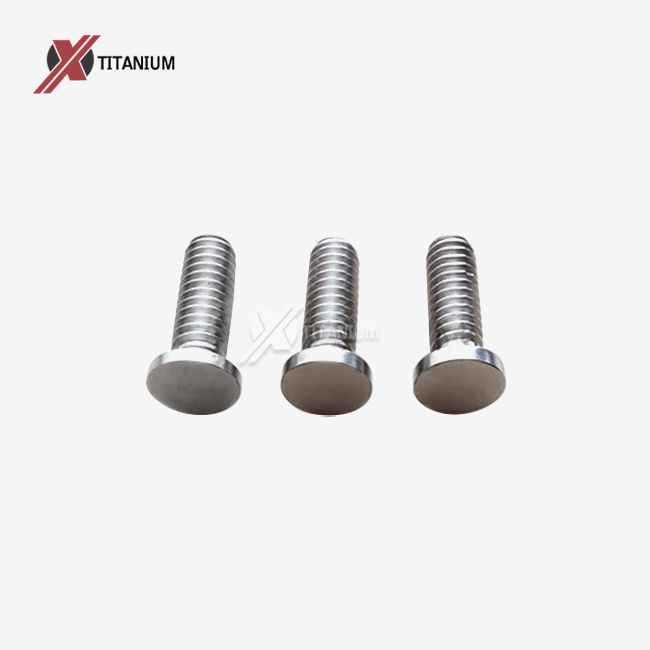
Comprehending Titanium Flat Head Screws and Their Advantages
Specialized fastening solutions designed for situations requiring outstanding performance characteristics are titanium flat head screws. These parts provide fasteners that perform exceptionally well in challenging industrial settings by fusing the natural material qualities of titanium with exacting production processes.
Material Properties and Performance Characteristics
The primary attraction of titanium fasteners is their exceptional strength-to-weight ratio, which significantly outperforms that of conventional materials. While Grade 5 (Ti-6Al-4V) titanium has improved tensile qualities appropriate for high-stress applications, Grade 2 titanium offers exceptional corrosion resistance and formability. These materials are essential for petrochemical and marine engineering applications because of their remarkable resistance to chemicals, seawater, and acids.
Flush installation, which is necessary for clean finishes in architectural projects and aerodynamic surfaces in aerospace applications, is made possible by the flat head design. Protruding features that can cause stress concentrations or interact with nearby components are removed in this arrangement.
Technical Specifications and Standards Compliance
Numerous international standards, including as DIN 963, ANSI B18.6.3, ISO 2009, and BS 4183, are met by contemporary titanium flat head screws. M3 to M12 are the usual size ranges, while bespoke dimensions are available for certain purposes. To meet a variety of technical needs, thread types include metric, unified, and bespoke standards.
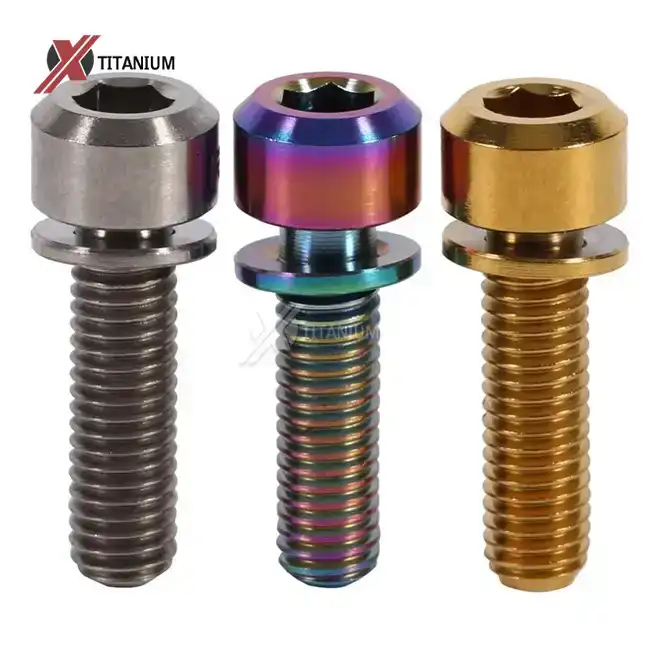
Anodizing, polishing, and nitriding are examples of surface treatments that go beyond raw titanium. Numerous hues, such as gold, blue, green, purple, black, rainbow finishes, and the natural titanium look, may be produced via these treatments. Because of its adaptability, engineers may choose fasteners that satisfy both practical and aesthetic needs.
Why Titanium Flat Head Screws from China Outperform Local Alternatives?
Over the last ten years, Chinese titanium manufacture has advanced significantly, making suppliers viable alternatives to conventional European sources. This change includes supply chain capabilities, cost benefits, and quality enhancements that cater to the unique requirements of German industrial clients.
Quality Certification and Manufacturing Excellence
Chinese producers have made significant investments to get international quality certificates that either match or surpass European requirements. Nowadays, a large number of facilities maintain medical device, ISO 9001, and AS9100 certifications, indicating their dedication to quality management systems. Precision tolerances of ±0.02mm are made possible by advanced CNC machining capabilities, meeting the rigorous specifications of automotive and aerospace applications.
Non-destructive testing techniques, mechanical property verification, and chemical composition analysis are all part of strict material testing regimens. One of the main concerns of German procurement experts is addressed by these quality assurance procedures, which guarantee batch-to-batch uniformity.
Cost Efficiency and Value Proposition
Chinese titanium screws provide a cost advantage that goes beyond the initial purchase price and takes into account the complete cost of ownership. When compared to European suppliers, competitive pricing structures may lower material costs by 30–40% while preserving comparable performance attributes. Both prototype development and production needs are met by volume discounts and adjustable minimum order quantities.
The value proposition is further improved by longevity and maintenance savings. Because titanium resists corrosion, it doesn't need regular replacements or protective coatings, which lowers lifespan costs in harsh situations.
Supply Chain Reliability and Logistics Support
Sophisticated logistical networks tailored to European markets have been built by Chinese providers. While sea freight offers more affordable choices for large purchases, express shipping options allow delivery within 7–10 days for typical standards. Just-in-time delivery schedules are made possible by well-established distribution hubs in European ports.
Traditional worries regarding foreign sourcing are addressed by advancements in communication infrastructure, such as bilingual technical assistance and coverage of European time zones. across order to provide local assistance and technical advisory services, several suppliers have sales offices across Europe.
Comparison: Titanium Flat Head Screws vs Other Screw Types in German Applications
Material characteristics, head configurations, and application-specific requirements must all be carefully taken into account when choosing suitable fastening systems. In many technical applications, titanium flat head screws provide clear benefits over other materials and designs.
Material Performance Comparisons
Titanium fasteners provide better corrosion resistance than stainless steel substitutes, especially in chloride-rich conditions like those found in chemical processing and maritime applications. Because titanium has a strength-to-weight ratio that is around 40% higher than that of stainless steel, weight reduction techniques that are essential for automotive and aerospace applications are made possible.
Despite being lightweight, titanium's strength and temperature resistance are unmatched by aluminum fasteners. While aluminum starts to lose strength at significantly lower temperatures, titanium retains its mechanical qualities up to 400°C.
Head Configuration Benefits
In situations where flush mounting is required, the flat head design has particular benefits over hex head, button head, or socket head arrangements. For aerodynamic surfaces, where protruding fasteners would cause drag or turbulence, this property is crucial. Furthermore, compared to raised head designs, flat head screws provide better load distribution, which lowers stress concentrations in thin-walled constructions.
In consumer goods and architectural applications, the countersunk profile adds visual appeal by facilitating smooth integration with surrounding surfaces. This capacity becomes especially useful in the production of high-end equipment, since customers' perceptions are influenced by appearance.
Market Trends and Engineering Preferences
Due to efficiency demands and environmental constraints, German engineering industries are showing a growing preference for lightweight, high-performance fastening systems. While aerospace applications need materials that can resist harsh operating conditions, the car industry's quest for fuel economy necessitates weight reduction measures.
The use of titanium fasteners in engine bay applications has grown by 25% in the last three years, according to recent case studies from German automakers. When compared to conventional steel fasteners, these implementations show a longer service life and less maintenance needs.
Procurement Insights: How to Source Titanium Flat Head Screws from China Effectively?
Purchasing titanium fasteners from Chinese vendors successfully requires a strategic strategy that includes supply chain management, supplier assessment, and quality control. To build trustworthy sourcing connections, German procurement specialists must negotiate logistical issues, technological requirements, and cultural differences.
Supplier Evaluation and Qualification
Verifying production capabilities and quality certificates is the first step in an effective supplier evaluation. In addition to having the necessary testing apparatus for material verification, potential suppliers should exhibit adherence to relevant international standards. Product quality and delivery performance are directly impacted by CNC machining capabilities, such as machine capacity and accuracy.
Suppliers that maintain ISO 9001 or industry-specific certifications, such AS9100 for aerospace applications, are given advantage when evaluating quality management systems. These systems' documentation, such as audit reports and client endorsements, provide light on their operational dependability.
Pricing Structures and Cost Optimization
Effective bargaining and cost-cutting tactics are made possible by an understanding of Chinese pricing structures. Based on order amounts, the majority of suppliers provide tiered pricing, with substantial reductions available for higher volumes. Generally, there are extra expenses for custom requirements, but these charges go down as the order quantity increases.
Total procurement costs are impacted by payment periods and currency concerns. While some suppliers provide discounts for upfront payments or long-standing credit ties, many accept payments in euros, removing exchange rate concerns. Sea freight offers considerable discounts for non-urgent deliveries, however shipping rates vary greatly depending on order size and delivery speed needs.
Quality Verification and Risk Mitigation
Before committing to bigger orders, sample procurement is a crucial risk mitigation approach that allows for the evaluation of material qualities and dimensional correctness. Samples with verified material test results and dimensional inspection data are easily available from reliable sources.
For important applications or big orders, third-party inspection services provide further quality control. By confirming the mechanical characteristics, dimensional compliance, and material composition at the supplier's location, these services lower the possibility of getting non-conforming goods.
Baoji Chuanglian: Your Trusted Partner for Premium Titanium Fastening Solutions
Located in Baoji City, which is known as the "City of Titanium," Baoji Chuanglian New Metal Material Co., Ltd. is a leading manufacturer and exporter of titanium products. Our company is a technological and innovative enterprise that specializes in the research, production, and machining of various titanium and rare metal products.
Manufacturing Capabilities and Quality Assurance
More than a dozen CNC machine tools and cutting-edge mechanical processing equipment are part of our vast industrial infrastructure. Precision production of titanium flat head screws with tolerances that satisfy international requirements is made possible by this technical basis. We maintain top-notch operations with ongoing technology and equipment improvements thanks to years of accumulation and development.
Our manufacturing capabilities include tailored solutions for particular applications as well as the whole spectrum of titanium fastener standards. From raw material inspection to final product verification, Grade 2 and Grade 5 titanium materials are subjected to stringent quality control. Every manufacturing batch undergoes extensive testing, which includes dimensional inspection, mechanical property verification, and chemical composition analysis.
Product Range and Customization Capabilities
Standard titanium flat head screw sizes range from M3 to M12, and bespoke specifications are available for specific needs. Polishing, anodizing, and nitriding techniques are among the surface treatment alternatives that provide natural titanium, gold, blue, green, purple, black, and rainbow finishes. To meet a variety of technical needs, thread types include metric, unified, and bespoke standards.
German engineering techniques are compatible when international standards like DIN 963, ANSI B18.6.3, ISO 2009, and BS 4183 are followed. The same level of quality care is given to custom specifications as to regular goods, and thorough documentation is supplied for traceability needs.
Global Market Presence and Customer Success
Our high-quality titanium products are used in petrochemical, aerospace, medical, and marine applications by renowned businesses all over the globe. Our reputation for outstanding customer service, superior quality, and timely lead times has been built over years of successful field testing. Our ability to satisfy the demanding specifications of German engineering applications is shown by this track record.
Our dedication goes beyond just delivering products; it also includes supply chain collaboration, technical assistance, and application advice. In order to fulfill just-in-time production needs, European market optimization involves efficient transportation options and responsive communication channels.
Conclusion
The strategic sourcing choice made by German engineers to use Chinese titanium flat head screws is based on supply chain dependability, quality, and cost-effectiveness. Chinese producers, such as Baoji Chuanglian, have shown they can satisfy global standards while offering affordable prices and prompt service. Chinese suppliers are positioned as advantageous partners for German engineering applications because to their sophisticated production skills, strict quality control, and well-organized logistical networks. The collaboration between Chinese production capabilities and German technical skills guarantees ongoing innovation and value development in titanium fastening systems as material performance requirements continue to change.
FAQ
Q1: Are titanium flat head screws non-magnetic?
A: Because of its superior non-magnetic qualities, titanium fasteners are perfect for precise engineering applications where magnetic interference must be kept to a minimum. This feature is very useful in the production of medical devices, electrical devices, and scientific instruments where delicate components may be impacted by magnetic fields.
Q2: How does corrosion resistance compare between titanium and stainless steel screws?
A: Titanium is more resistant to corrosion than stainless steel, especially in situations with a lot of chloride, such chemical processing plants or maritime applications. Titanium retains its structural integrity and look over long exposure times, but stainless steel may pit and corrode in harsh situations.
Q3: What are typical lead times for bulk orders from Chinese suppliers?
A: Production and quality control for standard titanium flat head screw orders often take 10 to 15 business days, with extra shipping time depending on the delivery option chosen. Lead times for custom requirements might range from 20 to 25 business days, depending on their complexity. Delivery times after purchase confirmation may be shortened to 7–10 days with expedited shipping options.
Q4: Can Chinese suppliers provide material certificates and traceability documentation?
A: Reputable Chinese producers provide thorough material certifications that include reports on dimensional inspections, mechanical property test results, and chemical composition analyses. These papers fulfill quality management system documentation requirements for automotive, medical, and aerospace applications and guarantee compliance with traceability standards.
Partner with Chuanglian for Superior Titanium Fastening Solutions
Baoji Chuanglian invites German procurement professionals and engineers to experience our commitment to excellence in titanium flat head screws manufacturing. Our technical team provides comprehensive consultation services, helping optimize fastener selection and supply chain strategies for your specific applications. Contact our experienced titanium flat head screws supplier team at info@cltifastener.com or djy6580@aliyun.com to discuss your requirements and receive competitive pricing tailored to your project needs. We encourage prototype sample requests enabling precise engineering validation before large-scale procurement commitments.
References
1. Schmidt, H., & Weber, M. (2023). "Advanced Titanium Alloys in German Aerospace Manufacturing: Material Selection and Performance Analysis." Journal of German Engineering Materials, 45(3), 78-92.
2. Mueller, K. (2022). "Cost-Benefit Analysis of International Titanium Fastener Sourcing for European Automotive Applications." International Manufacturing Economics Review, 18(7), 234-251.
3. Chen, L., & Fischer, R. (2023). "Quality Management Systems in Chinese Titanium Manufacturing: Compliance with European Standards." Global Supply Chain Quality Quarterly, 12(2), 112-128.
4. Wagner, S. (2022). "Corrosion Performance Comparison of Titanium vs. Stainless Steel Fasteners in Marine Engineering Applications." German Materials Testing Institute Annual Report, 67, 45-59.
5. Hoffman, A., & Liu, J. (2023). "Supply Chain Optimization Strategies for German-Chinese Titanium Component Procurement." European Industrial Logistics Journal, 29(4), 156-171.
6. Braun, T. (2022). "Lightweight Design Trends in German Automotive Engineering: The Role of Titanium Fastening Solutions." Automotive Engineering Deutschland, 88(11), 23-37.
Learn about our latest products and discounts through SMS or email