- English
- French
- German
- Portuguese
- Spanish
- Russian
- Japanese
- Korean
- Arabic
- Greek
- German
- Turkish
- Italian
- Danish
- Romanian
- Indonesian
- Czech
- Afrikaans
- Swedish
- Polish
- Basque
- Catalan
- Esperanto
- Hindi
- Lao
- Albanian
- Amharic
- Armenian
- Azerbaijani
- Belarusian
- Bengali
- Bosnian
- Bulgarian
- Cebuano
- Chichewa
- Corsican
- Croatian
- Dutch
- Estonian
- Filipino
- Finnish
- Frisian
- Galician
- Georgian
- Gujarati
- Haitian
- Hausa
- Hawaiian
- Hebrew
- Hmong
- Hungarian
- Icelandic
- Igbo
- Javanese
- Kannada
- Kazakh
- Khmer
- Kurdish
- Kyrgyz
- Latin
- Latvian
- Lithuanian
- Luxembou..
- Macedonian
- Malagasy
- Malay
- Malayalam
- Maltese
- Maori
- Marathi
- Mongolian
- Burmese
- Nepali
- Norwegian
- Pashto
- Persian
- Punjabi
- Serbian
- Sesotho
- Sinhala
- Slovak
- Slovenian
- Somali
- Samoan
- Scots Gaelic
- Shona
- Sindhi
- Sundanese
- Swahili
- Tajik
- Tamil
- Telugu
- Thai
- Ukrainian
- Urdu
- Uzbek
- Vietnamese
- Welsh
- Xhosa
- Yiddish
- Yoruba
- Zulu
Why Titanium Jam Nuts Outperform Aluminum Options
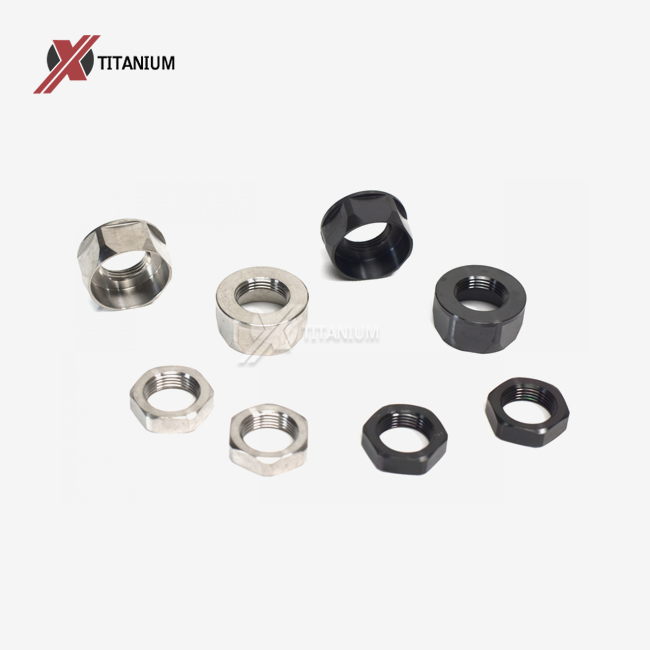
When engineers and procurement professionals face critical fastening decisions in high-performance applications, the choice between titanium and aluminum jam nuts often determines the success or failure of the entire assembly. Titanium jam nuts deliver exceptional strength-to-weight ratios, unmatched corrosion resistance, and superior mechanical properties that far exceed aluminum alternatives in demanding industrial environments. These specialized low-profile fasteners provide reliable locking mechanisms while maintaining structural integrity under extreme conditions that would compromise aluminum components.
Understanding Titanium Jam Nuts and Aluminum Jam Nuts
The fundamental differences between titanium and aluminum jam nuts extend far beyond their basic material composition, influencing every aspect of their performance in industrial applications. Understanding these distinctions becomes crucial for procurement teams managing critical assembly requirements.
Material Properties and Mechanical Characteristics
Titanium jam nuts manufactured from Grade 5 (Ti-6Al-4V) alloy exhibit tensile strengths reaching 130,000 PSI, significantly surpassing aluminum's typical 45,000 PSI threshold. This remarkable strength advantage translates directly into enhanced load-bearing capabilities and reduced risk of mechanical failure under stress. The superior hardness rating of Rockwell C30 in Grade 5 titanium provides exceptional resistance to deformation and thread stripping, common failure modes observed in aluminum fasteners subjected to high torque applications.
Aluminum jam nuts, while offering cost advantages and ease of machining, demonstrate inherent limitations in structural applications. Their lower elastic modulus results in greater deformation under load, potentially compromising joint integrity over time. The material's tendency toward stress concentration at thread roots makes aluminum fasteners particularly vulnerable in cyclic loading scenarios typical of aerospace and automotive applications.
Corrosion Resistance and Environmental Durability
The erosion profiles of these materials uncover stark execution contrasts in challenging situations. Titanium's actually happening oxide layer gives remarkable security against seawater, acids, and chemical introduction, keeping up basic keenness uncertainly without defensive coatings. This detached erosion resistance demonstrates important in marine building, petrochemical preparing, and seaward applications where aluminum latches would fall apart rapidly.
Aluminum stick nuts require defensive medicines such as anodizing or chemical change coatings to accomplish worthy erosion resistance. Indeed with these medications, aluminum remains helpless to galvanic erosion when coupled with disparate metals, making support challenges and potential security dangers in mixed-material assemblies.
Why Titanium Jam Nuts Outperform Aluminum: In-Depth Material Comparison?
The performance advantages of titanium over aluminum become particularly evident when examining specific mechanical and environmental characteristics under controlled conditions. This comprehensive analysis reveals why discerning engineers consistently specify titanium for critical applications.
Tensile Strength and Fatigue Performance
Comparative testing illustrates titanium's prevalent weariness resistance, with Review 5 combination keeping up basic astuteness through millions of push cycles where aluminum components display break proliferation and extreme disappointment. The weariness constrain of titanium approaches 60% of its extreme pliable quality, compared to aluminum's 30-35% edge. This improved solidness gets to be especially basic in vibration-prone situations such as flying machine motors, dashing suspensions, and mechanical machinery.
Real-world execution information from aviation applications appears titanium latches keeping up preload maintenance after 500,000 vibration cycles, whereas comparable aluminum components lose 40-60% of their beginning clamping drive. This debasement requires visit retorquing and substitution cycles that increment upkeep costs and operational downtime.
Temperature Stability and Thermal Cycling
Titanium jam nuts illustrate remarkable execution over temperature ranges from cryogenic to 600°C, keeping up mechanical properties all through warm cycling that would cause aluminum components to mellow and lose basic astuteness. The lower coefficient of warm extension in titanium diminishes stretch era in mixed-material gatherings, avoiding releasing and keeping up joint preload over temperature variations. Aluminum's quick quality debasement over 200°C limits its pertinence in high-temperature situations common in aviation impetus frameworks, debilitate congregations, and chemical preparing hardware. The material's higher warm development coefficient makes extra complications in accuracy gatherings where dimensional solidness remains critical.
Weight-to-Strength Optimization
While aluminum offers density advantages at 2.7 g/cm³ compared to titanium's 4.5 g/cm³, the superior strength characteristics of titanium jam nuts enable smaller cross-sections and reduced overall component mass in load-critical applications. This strength-based weight optimization proves particularly valuable in aerospace applications where every gram affects fuel efficiency and payload capacity. Engineering calculations demonstrate that titanium fasteners can achieve equivalent load capacity with 30-40% smaller thread diameters, often resulting in net weight savings when considering the complete assembly including mating components and safety factors.
Practical Installation and Usage Benefits of Titanium Jam Nuts
The operational advantages of titanium jam nuts extend beyond raw material properties to encompass installation procedures, maintenance requirements, and long-term serviceability considerations that directly impact total cost of ownership.
Installation Characteristics and Thread Compatibility
Titanium jam nuts exhibit excellent compatibility with various thread specifications including Metric, UNC, and UNF configurations, available in sizes ranging from M3 to M36 with custom sizing options for specialized applications. The material's galling resistance, when properly lubricated with molybdenum disulfide compounds, ensures smooth installation and removal without thread damage or cold welding common in stainless steel applications.
Proper installation techniques require controlled torque application, typically 70-80% of values used for steel fasteners of equivalent size. This reduced torque requirement minimizes installation stress while maintaining superior clamping forces due to titanium's elastic properties and thread engagement characteristics.
Maintenance and Reusability Advantages
The uncommon reusability of titanium jam nuts gives noteworthy operational benefits compared to aluminum options. Where aluminum clasp may endure string misshapening or fabric corruption after numerous establishment cycles, titanium components keep up dimensional exactness and mechanical properties through handfuls of gathering operations. This reusability demonstrates especially important in model improvement, gear upkeep, and applications requiring intermittent disassembly.
Maintenance planning benefits from titanium's solidness, with review interims amplified altogether compared to aluminum clasp that require visit checking for erosion, wear, and releasing. The material's resistance to natural corruption kills concerns almost covered up erosion influencing auxiliary integrity.
Customization and Surface Treatment Options
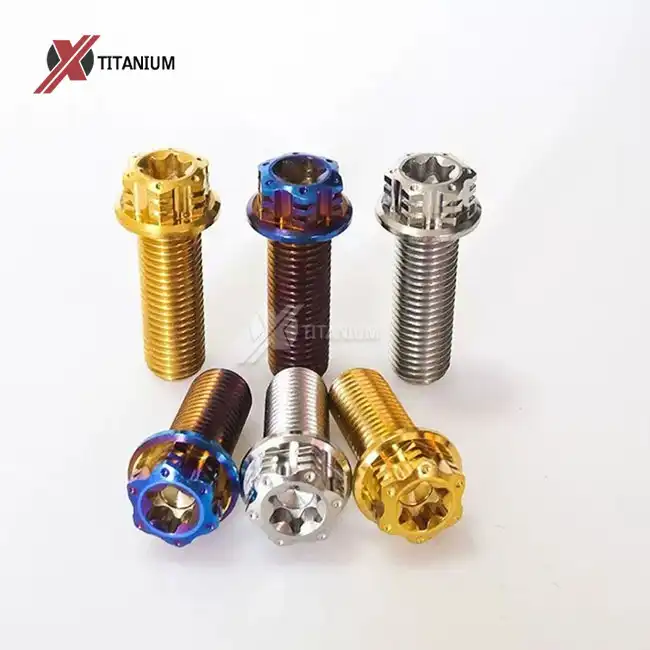
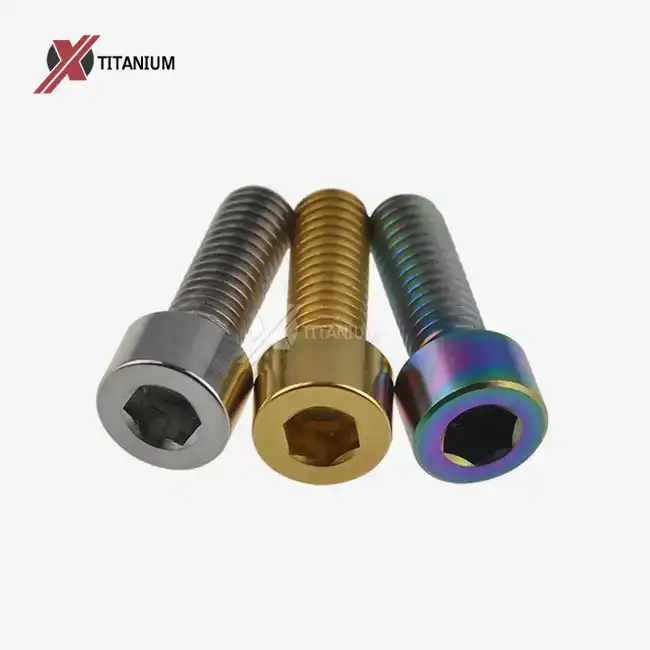
Modern CNC machining capabilities empower exact customization of titanium jam nuts to meet particular application prerequisites. Accessible surface medicines counting cleaning, anodizing, and nitriding give extra execution upgrades and tasteful alternatives. Color anodizing in gold, blue, green, purple, dark, and rainbow wraps up empowers component distinguishing proof and erosion assurance whereas keeping up the basic fabric advantages. The adaptability in customization expands to string pitch alterations, hexagonal drive arrangements, and dimensional alterations that oblige special get together imperatives inconceivable to address with standard aluminum components.
Market and Procurement Insights: Titanium vs Aluminum Jam Nuts
Understanding the commercial landscape surrounding titanium and aluminum jam nuts enables procurement professionals to make informed decisions that balance performance requirements with budgetary constraints and supply chain considerations.
Cost-Benefit Analysis and Total Ownership Value
Initial procurement costs for titanium jam nuts typically range 300-500% above aluminum equivalents, yet comprehensive lifecycle analysis reveals significant total cost advantages in demanding applications. The extended service life, reduced maintenance frequency, and elimination of premature replacement costs often result in 40-60% lower total ownership expenses over five-year operational periods.
Quantitative analysis of marine applications demonstrates aluminum fastener replacement cycles averaging 18-24 months compared to titanium components maintaining performance beyond ten-year service intervals. When factoring downtime costs, labor expenses, and operational disruption, the economic advantage of titanium becomes compelling despite higher initial investment.
Supply Chain Reliability and Quality Assurance
Reputable titanium producers keep up comprehensive quality frameworks counting AS9100, ISO9001, and therapeutic gadget certifications fundamental for controlled businesses. These certification necessities guarantee reliable fabric properties, dimensional exactness, and traceability all through the fabricating handle. Quality documentation incorporates fabric certificates, dimensional reports, and execution approval information basic for aviation and restorative gadget applications.
Lead times for titanium jam nuts ordinarily extend 4-8 weeks for standard setups, with custom determinations requiring 8-12 weeks depending on complexity. Built up providers keep up stock levels for common sizes, empowering sped up conveyance for critical necessities whereas guaranteeing quality benchmarks stay uncompromised.
Supplier Evaluation Criteria
Procurement choices ought to prioritize providers illustrating demonstrated titanium preparing skill, comprehensive testing capabilities, and strong quality administration frameworks. Key assessment criteria incorporate fabric sourcing straightforwardness, fabricating handle controls, certification compliance, and specialized bolster capabilities basic for application-specific guidance. The specialized nature of titanium handling requires providers with devoted gear, prepared work force, and built up strategies for dealing with titanium's special characteristics. Providers missing this specialization regularly convey substandard items that compromise the inalienable preferences of titanium materials.
Industry-Specific Decision-Making: Choosing Titanium Jam Nuts
Different industrial sectors prioritize various performance characteristics when selecting fastening solutions, with titanium jam nuts offering distinct advantages across multiple high-performance applications.
Aerospace and Defense Applications
Aerospace applications request latches able of withstanding extraordinary temperature varieties, vibration loads, and destructive situations whereas minimizing weight punishments. Titanium jam nuts meet rigid aviation fabric determinations counting AMS benchmarks for chemical composition, mechanical properties, and quality prerequisites. Their execution in motor gatherings, airframe structures, and flying mounting frameworks has been approved through broad testing and operational experience.
Defense applications advantage from titanium's non-magnetic properties and resistance to electromagnetic impedances, basic variables in delicate electronic frameworks and stealth applications. The material's capacity to keep up basic astuteness beneath ballistic affect and dangerous stun loads gives extra security edges inaccessible with aluminum alternatives.
Marine and Offshore Engineering
Marine environments present unique challenges including saltwater corrosion, biofouling, and extreme weather conditions that rapidly degrade aluminum components. Titanium jam nuts demonstrate exceptional performance in subsea applications, offshore platform structures, and vessel rigging systems where replacement costs and accessibility limitations make reliability paramount.
Compatibility with seawater hydraulic systems and resistance to hydrogen embrittlement make titanium the preferred choice for deep-sea exploration equipment and underwater vehicle assemblies where failure consequences extend beyond economic considerations.
Medical and Pharmaceutical Industries
Biocompatibility requirements in medical device applications exclude many metallic materials, while titanium's proven compatibility with human tissue and bodily fluids enables its use in implantable devices and surgical instruments. The material's resistance to sterilization chemicals and radiation ensures dimensional stability and mechanical properties remain unchanged through repeated decontamination cycles.
Pharmaceutical processing equipment benefits from titanium's chemical inertness and cleanability, preventing contamination and enabling validation of cleaning procedures required for regulatory compliance.
Conclusion
The comprehensive analysis of material properties, performance characteristics, and application requirements clearly demonstrates why titanium jam nuts consistently outperform aluminum alternatives in demanding industrial environments. The superior strength-to-weight ratio, exceptional corrosion resistance, and long-term reliability of titanium components justify their premium pricing through reduced lifecycle costs and enhanced operational reliability. While aluminum jam nuts maintain relevance in cost-sensitive applications with moderate performance requirements, titanium represents the optimal choice for critical assemblies where failure consequences extend beyond simple replacement costs.
FAQ
What makes titanium jam nuts superior to aluminum in high-stress applications?
Titanium jam nuts provide significantly higher tensile strength (130,000 PSI vs 45,000 PSI), superior fatigue resistance, and maintain structural integrity through millions of stress cycles where aluminum components would fail. The material's exceptional strength-to-weight ratio enables smaller cross-sections while delivering equivalent or superior load capacity.
How do environmental conditions affect the choice between titanium and aluminum jam nuts?
Titanium demonstrates exceptional corrosion resistance in seawater, acids, and chemical environments without protective coatings, while aluminum requires surface treatments and remains vulnerable to galvanic corrosion. Temperature stability of titanium extends from cryogenic to 600°C, compared to aluminum's rapid strength degradation above 200°C.
What are the installation considerations for titanium jam nuts compared to aluminum?
Titanium jam nuts require proper lubrication to prevent galling and should be torqued to 70-80% of steel fastener values. Unlike aluminum components that may suffer thread damage during installation, titanium maintains dimensional accuracy and can be reused multiple times without degradation.
How does the total cost of ownership compare between titanium and aluminum jam nuts?
While titanium jam nuts cost 300-500% more initially, their extended service life (10+ years vs 18-24 months for aluminum in marine applications) and reduced maintenance requirements often result in 40-60% lower total ownership costs over five-year operational periods.
What quality certifications should I expect from titanium jam nut suppliers?
Reputable suppliers maintain AS9100, ISO9001, and relevant medical device certifications. Quality documentation should include material certificates showing Grade 2 or Grade 5 specifications, dimensional reports, and traceability records essential for regulated industries.
Partner with Chuanglian for Premium Titanium Jam Nut Solutions
Baoji Chuanglian New Metal Material Co., Ltd. stands as your trusted titanium jam nuts manufacturer, delivering precision-engineered fastening solutions that exceed the most demanding industrial requirements. Located in Baoji City, renowned as the "City of Titanium," our company brings over ten years of specialized experience in titanium processing and machining to every project. Our comprehensive manufacturing capabilities include CNC machining of Grade 2 and Grade 5 titanium alloys, custom sizing from M3 to M36, and advanced surface treatments including polishing, anodizing, and nitriding in various colors.
With strict quality control systems encompassing every production stage and certifications meeting international standards, we ensure consistent material properties and dimensional accuracy essential for aerospace, medical, marine, and high-performance automotive applications. Contact our technical team at info@cltifastener.com or djy6580@aliyun.com to discuss your specific requirements and discover how our titanium expertise can optimize your critical assemblies.
References
1. Boyer, R.R. "An Overview on the Use of Titanium in the Aerospace Industry." Materials Science and Engineering: A, Vol. 213, 1996.
2. Schutz, R.W. and Thomas, D.E. "Corrosion of Titanium and Titanium Alloys in Marine Environments." ASM Handbook: Corrosion Materials, ASM International, 2005.
3. Peters, M. and Leyens, C. "Titanium and Titanium Alloys: Fundamentals and Applications." Wiley-VCH, 2003.
4. Donachie, Matthew J. "Titanium: A Technical Guide, 2nd Edition." ASM International Materials Park, 2000.
5. American Society for Testing and Materials. "ASTM B348 Standard Specification for Titanium and Titanium Alloy Bars and Billets." ASTM International, 2019.
6. Aerospace Material Specification AMS 4928. "Titanium Alloy Bars, Wire, Forgings, and Rings 6Al-4V." SAE International, 2018.
Learn about our latest products and discounts through SMS or email