- English
- French
- German
- Portuguese
- Spanish
- Russian
- Japanese
- Korean
- Arabic
- Greek
- German
- Turkish
- Italian
- Danish
- Romanian
- Indonesian
- Czech
- Afrikaans
- Swedish
- Polish
- Basque
- Catalan
- Esperanto
- Hindi
- Lao
- Albanian
- Amharic
- Armenian
- Azerbaijani
- Belarusian
- Bengali
- Bosnian
- Bulgarian
- Cebuano
- Chichewa
- Corsican
- Croatian
- Dutch
- Estonian
- Filipino
- Finnish
- Frisian
- Galician
- Georgian
- Gujarati
- Haitian
- Hausa
- Hawaiian
- Hebrew
- Hmong
- Hungarian
- Icelandic
- Igbo
- Javanese
- Kannada
- Kazakh
- Khmer
- Kurdish
- Kyrgyz
- Latin
- Latvian
- Lithuanian
- Luxembou..
- Macedonian
- Malagasy
- Malay
- Malayalam
- Maltese
- Maori
- Marathi
- Mongolian
- Burmese
- Nepali
- Norwegian
- Pashto
- Persian
- Punjabi
- Serbian
- Sesotho
- Sinhala
- Slovak
- Slovenian
- Somali
- Samoan
- Scots Gaelic
- Shona
- Sindhi
- Sundanese
- Swahili
- Tajik
- Tamil
- Telugu
- Thai
- Ukrainian
- Urdu
- Uzbek
- Vietnamese
- Welsh
- Xhosa
- Yiddish
- Yoruba
- Zulu
Why Titanium Seamless Tubes Are Ideal for Heat Exchangers
Titanium Seamless Tube technology is a big step forward in the creation of heat exchangers, especially for businesses that work in harsh environments. These tubes are made without longitudinal weld lines using modern extrusion and cold-rolling techniques. They are more reliable than other materials when other materials fail. Their uniform microstructure gets rid of the weak spots that come with welded options, giving them better pressure ratings and stable rust resistance across the whole cross-section. Because of this, they are necessary for petroleum plants, desalination plants, and power generation systems where machine failure could cause huge costs and safety risks.
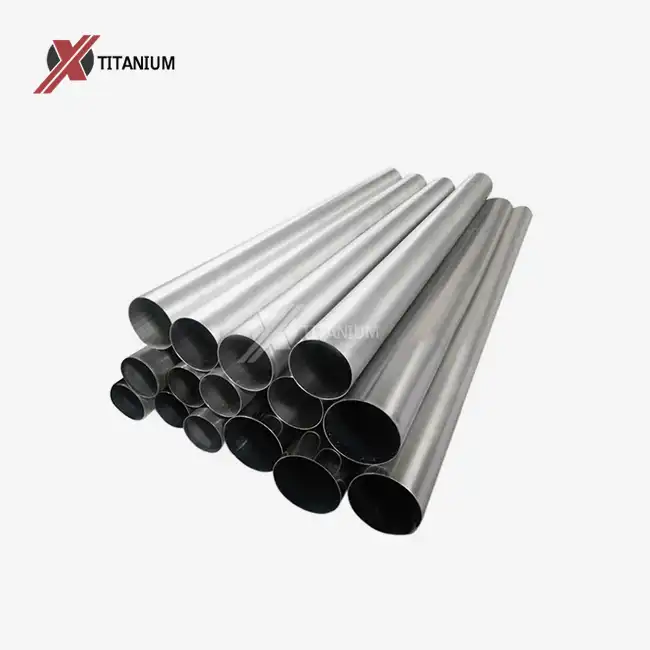
Understanding Titanium Seamless Tubes and Their Importance in Heat Exchangers
What Makes Seamless Tubes Different from Welded Alternatives?
The main difference is in how well the product is made. Welded tubes have a Heat Affected Zone that makes them more likely to crack from stress corrosion, but Titanium Seamless Tube variants have a consistent grain structure all the way through. This structural consistency means that the pressure values are about 20% higher, and there is no longer any chance of longitudinal failures that happen a lot in high-cycle uses. From our experience at Chuanglian, we know that when clients switch from welded copper-nickel metals to seamless titanium, their system uptime improves right away. This is especially true for seaside power plants that used to have problems with seawater impingement attacks that caused early failures.
Core Material Characteristics That Affect Performance
Titanium is better for metalworking because it has a density of 4.51 g/cm³, which is about 60% that of steel, and tensile strengths that range from 345 MPa for Grade 2 (commercially pure) to over 825 MPa for Grade 5 alloys. More importantly, titanium makes a passive film of regenerative titanium dioxide when it is exposed to air. This protects it from chloride-induced pitting, which kills stainless steel in marine settings within months. This covering layer stays steady in temperatures up to 315°C and pH levels from 1 to 14. This is why desalination plants choose titanium for Multi-Stage Flash evaporators instead of other materials that need to be replaced every 3 to 5 years.
How things are made also affects how long they last. Our main finishing method, cold pilgering, gets dimensions to within ±0.05mm while improving the crystalline structure. This radial grain direction stops hydride precipitation patterns that weaken mechanical integrity during thermal cycles. This is an important thing to think about for heat exchangers used in chemical processing that have changing loads.
Comparison of This Material to Other Similar Materials
Even though stainless steel 316L is cheap, it corrodes in crevices when chloride solutions stay still and loses its power above 425°C. Nickel alloys, such as Inconel 625, are resistant to high temperatures, but they are three times as expensive as titanium and have a much higher density, which makes them less useful for aircraft uses that need to keep weight down. Even though aluminum is a great heat conductor, it can't handle acidic media or high-pressure steam condensers. Because of these problems with materials, engineers have to use titanium to make heat exchangers that can work in places with high salt levels, acidic condensates, and changes in pressure. These are situations that happen at the same time in offshore platform operations and geothermal power systems.
The Superior Properties of Titanium Seamless Tubes for Heat Exchangers
Unmatched Resistance to Corrosion in Harsh Media
Field data from desalination plants in the Arabian Gulf shows that Titanium Seamless Tube units keep their original wall thickness after being exposed to saltwater at speeds of more than 3 m/s for 15 years or more. This is in contrast to brass and cupronickel, which erode in just 24 months. The substance is very strong against wet chlorine gas, concentrated nitric acid, and the organic acids that are used to make Purified Terephthalic Acid. When making PTA, temps can hit 280°C and acetic acid levels change a lot. Seamless tubes don't have the catastrophic control breaks we've seen in welded alternatives that have crevice rust along seam lines.
A chemical company in Louisiana saved $2.3 million in downtime costs by replacing shell-and-tube exchangers with Grade 2 seamless tubes. This meant that inspections would happen every five years instead of once a year. The tubes are nonmagnetic, so ferromagnetic particles can't build up in cooling water systems. This means that they don't need to be cleaned as often as steel tubes.
Strength in terms of mechanics that meets aerospace standards
Grade 9 titanium metal seamless tubes are used in airplane hydraulic systems. They can handle changing pressures of 3,000 to 5,000 psi and temperatures ranging from -54°C to 315°C. This resistance to fatigue is very important in heat recovery steam turbines, where thermal shock during starting cycles would break other materials. The alloy's yield strength of 620 MPa lets wall thickness be cut by up to 30% compared to designs made of stainless steel. This improves heat transfer coefficients by making thermal conductivity per unit mass better.
At Chuanglian, we use eddy current inspection and hydraulic pressure verification to find flaws below the surface that are bigger than 0.25 mm. These quality standards go beyond what ASTM B338 requires for heat exchanger service. These steps make sure that every tube meets the strict metallurgical standards that AS9100-certified aircraft makers expect.
Meeting Standards and Choosing a Grade
According to the titanium industry, grade 2 is still the best choice for general chemical and naval uses because it is very flexible for cold bends and doesn't rust. It is made up of 99.2% pure titanium and a small amount of oxygen to make it stronger. This combination makes it easy to shape and strong, so it can be used for complicated tube bundle designs. Grade 5, an alpha-beta alloy with 6% aluminum and 4% vanadium, is twice as strong for high-pressure uses, but it needs to be treated with controlled heat to keep brittle alpha-cases from forming during welding.
Following the rules set by ASTM B338, ASTM B861, and ASME SB338 makes sure that materials can be tracked and their mechanical properties can be checked. This is very important for industries like nuclear power and pharmaceuticals. At our plant, each output lot goes through chemical composition analysis using optical emission spectrometry and mechanical tests according to ASTM E8. Every shipment comes with a certificate that can be used for regulatory audit trails.
Procurement Considerations for Titanium Seamless Tubes in Heat Exchanger Projects
Identifying Qualified Manufacturing Partners
When buying Titanium Seamless Tube products, you need to do a lot more than just compare prices when choosing a seller. Certification files should show ISO 9001 quality systems along with credentials specific to the industry, like AS9100 for aircraft or ASME U-stamp permission for pressure tank parts. In order to make things, factories need to have vacuum annealing ovens to keep the alpha-case clean during heat treatment, cold pilger mills to get very accurate measurements, and nondestructive testing tools for checking the thickness of the walls with ultrasound.
Geography affects how resilient the production chain is. Even though Chinese companies make most of the titanium sponges in the world, Western processing skills are useful in some important situations. Baoji is called the "City of Titanium" because it is where China's aircraft and nuclear businesses have learned how to make specialized parts over many years. Because we are located there, we can get raw materials more easily and hire expert staff with advanced metallurgy skills. This lets us serve demanding foreign markets with short lead times.
Customization to Meet Specific Engineering Needs
Standard tube sizes don't always work with heat exchanger designs that are optimized. Outside widths can be anywhere from 6mm to 1020mm, wall thicknesses from 0.5mm to 12mm, and lengths up to 6000mm, based on how they can be transported. Surface treatments have effects on performance in addition to customizing dimensions. For example, electropolished finishes lower pressure drop in laminar flow regimes, and light cleaning gets rid of oxide scale without lowering rust resistance. We can use CNC to make integrated fins, U-bends, and threaded links straight from seamless stock, so we don't have to use welded parts that weaken the system.
Order minimums are based on how much materials cost and how much it costs to set up a production line. While standard stainless steel tube is moved in truckloads, smaller amounts are often needed for titanium projects because of how important the performance is rather than the price per unit. We base our MOQs on the needs of each individual project, knowing that an order for 50 tubes to clear up a chemical plant is worth the same as an order for 500 tubes for a power plant building project.
Cost Analysis and a Case for Long-Term Value
The initial cost of buying seamless titanium tubes is three to five times higher than the same-sized stainless steel tubes. This makes it hard to figure out the total cost of ownership. The economic case is based on avoiding maintenance costs: not replacing tubes every two years over the course of a 20-year facility's life saves money on both materials and the $150,000 to $300,000 per shutdown that is usually spent on retubing the condenser. Less fouling keeps heat transfer efficient, which in turn keeps turbine backpressure goals that directly affect power production capacity—a 2% improvement in efficiency in a 500MW plant would save $8 million a year at current power prices.
Mobile apps that save space by not using as much data create secondary value. Grade 9 continuous tubes used in aerospace heat exchangers lower the empty weight of airplanes, which saves about $50,000 per kilogram of fuel over a 25-year service life. These lifetime economics make it okay to choose more expensive materials, even if you have to cut costs right away.
Practical Applications and Case Studies: Titanium Seamless Tubes in Heat Exchangers
Chemical Processing Industry Success Stories
A European company that makes PTA had problems with acetic acid heaters that worked at 270°C and changing pressures all the time. Within 18 months, stress corrosion cracking along the weld lines of 316L steel tubes caused through-wall cracks to appear. When the tubes were changed to Grade 2 Titanium Seamless Tube variants, breakdowns stopped completely, and they stayed in use for more than seven years without any noticeable wall loss. The smooth design stopped crevice rust from starting, and titanium's resistance to chloride stress cracking let it handle small contaminants that used to cause catastrophic failures.
In chlor-alkali plants, wet chlorine gas at 60°C breaks down copper alloys, which is another use. Seamless titanium tubes in brine heaters keep the structure strong forever, which lowers the risk of hazmat incidents and lets the heaters keep running between planned repair breaks, which are now every five years instead of once a year.
Power Generation and Desalination Implementations
The biggest market for titanium heat exchangers is in coastal natural gas combined-cycle plants, which use surface condensers. A site in the Middle East that uses saltwater from the Arabian Gulf at a temperature of 35°C reported that none of the 12,000 installed seamless tubes broke over the course of nine years. This is in contrast to the 3% annual failure rate for older copper-nickel bundles. It was possible to meet guaranteed availability rates of more than 95%, which is very important for keeping power purchase agreements in areas with high demand.
In high-pressure heat recovery devices used by reverse osmosis desalination plants, titanium is used because saltwater at 1000 psi and high salinity levels eats away at stainless steel through pitting corrosion. Seamless construction gets rid of the problem of attacks being stronger at welded gaps that existed in older designs. This makes parts last longer so they can match the 25-year design base for the building instead of needing to be replaced in the middle of their lives.
Systems for Managing Heat in Space
Military and commercial aircraft hydraulic oil coolers need to be very reliable during battle movements or emergencies. Grade 9 seamless tubes are 40% lighter than steel versions and lower the weight of the aircraft. They can also handle hydraulic fluid temperatures up to 200°C and pressure spikes up to 5,000 psi. According to MIL-DTL-6878, the Defense Logistics Agency approves tubes by testing them for bursts, vibration cycling, and salt spray exposure. Our production processes always go above and beyond these standards by inspecting arriving materials carefully and controlling the process.
Engine bleed air heat exchangers cool the air that comes out of the compressor from 425°C to about 20°C, which is the temperature that the passenger needs. The titanium tubes don't break when the flight profile changes, which can happen with brazed aluminum designs. This helps commercial airline fleets meet their reliability goals of over 99.5%.
Making the Right Choice: Why Titanium Seamless Tubes Are the Preferred Solution?
Material Performance Comparison in Critical Applications
Titanium's special mix of qualities makes it the clear choice when looking at materials for use in acidic, high-pressure heat exchangers. Stainless steel is cheaper, but it doesn't work well in salt conditions above 60°C and isn't strong enough for thin-wall designs. Nickel metals are also resistant to rust, but they are too heavy and expensive to use for most uses, and they can only be used in high-temperature situations above 315°C. Copper-nickel metals are good at moving heat, but they wear down quickly in fast-moving seawater and can't handle acidic condensates.
The main weakness of soldered tubes is the heat-affected zone that is more likely to rust and break mechanically. The Titanium Seamless Tube manufacturing process gets rid of this problem. This structural benefit is especially useful in services that are subject to wear, where changes in temperature and pressure put a lot of stress on the weld gaps and start cracks that spread until the whole thing breaks.
How to Choose a Supplier for Mission-Critical Projects
Reputable makers show what they can do by providing clear quality paperwork and getting certified by a third party. Key evaluation factors include being able to track the material from the titanium sponge to the finished tube, keeping records of the heat treatment process with controls for the furnace atmosphere, and performing full mechanical tests according to ASTM standards. Manufacturers should keep records of both harmful and nondestructive tests, such as ultrasound, eddy current, and hydrostatic pressure proof, to show that they have statistical process control.
When it comes to global supply lines, logistical skills are just as important. For defense-related uses, suppliers must make sure that export rules are followed, provide the right packaging to keep the surface from getting damaged during foreign shipping, and keep enough inventory on hand in case of an emergency. Our long-term partnerships with freight forwarders who specialize in dangerous products and over-sized goods guarantee on-time delivery to project sites around the world. Full insurance coverage protects client investments.
Future Trends That Will Help Titanium Adoption
Copper-nickel alloys are getting more and more in trouble with environmental laws because they leak dangerous chemicals into marine environments. This is making environmental laws prefer inert materials like titanium for seaside installations. Laws that require lowering carbon emissions support light materials that use less energy because they are easier to move and better at transferring heat. In the meantime, improvements in additive manufacturing have made it possible to make tubes with complex shapes that weren't possible with traditional making. This has led to new design options for small heat exchangers that need to fit in tight spaces.
Diversifying the supply of titanium sponge around the world makes it less reliant on a single source, which makes prices more stable and supplies more available for commercial users. Because of these changes in the market, seamless tubes are now the obvious choice for engineers who are making the next generation of durable and efficient heat exchange equipment.
Conclusion
Titanium Seamless Tube solutions have been used in the toughest heat exchanger jobs because they are more resistant to rust, have better mechanical properties, and are made in a way that gets rid of the problems that come with welding tubes. Adopting them has measured benefits, such as longer equipment life, lower upkeep costs, better system efficiency, and operating dependability that protects both safety records and capital investments. These benefits have been proven over many years in fields ranging from desalination to flight, where they regularly outperform other materials.
To do strategic procurement, you need to work with makers who have both the metalworking knowledge and quality systems that can handle mission-critical uses. Seamless titanium tubes are the best choice for engineers who care more about long-term performance than short-term cost savings because they have benefits in total cost of ownership that far outweigh any differences in starting price.
FAQ
Q1: What advantages do seamless tubes provide over welded titanium tubes in heat exchangers?
A: When you use seamless construction, there is no heat-affected zone like there is in welded tubes. This means that the pressure values are about 20% higher and the corrosion protection is the same across the whole tube. This strong structure stops the kind of attack that happens along weld gaps and leads to early breakdowns in chloride conditions and high-cycle fatigue situations. The even grain structure also makes quality control easier, since inspections can focus on the uniform features of the base material instead of the changing weld metallurgy.
Q2: Which titanium grade suits general industrial heat exchanger applications?
A: Grade 2 economically pure titanium is the best mix for most heat exchangers used in chemical processing, desalination, and power generation. While its high flexibility makes cold bending easier, its high rust resistance stays the same across a pH range from acidic to alkaline. Grade 5 is needed when higher strength lets the wall thickness be lowered for better thermal performance. This is often needed in aircraft and high-pressure steam uses that need better resistance to fatigue.
Q3: Can titanium seamless tubes be formed into U-bends for shell-and-tube exchangers?
A: Titanium tubes can be bent as long as the right tools and methods are used to keep the walls from getting thinner or wrinkled. Minimum bend radii are usually between 2x and 3x the width of the tube, but this depends on the wall thickness and grade. For best results, cold bend with a mandrel. As part of our production services, we can make precise U-bends that keep the dimensions within the ranges needed for tube bundles to fit inside exchanger shells.
Q4: How does lifecycle cost compare between titanium and stainless steel heat exchanger tubes?
A: Titanium has a 3–5 times higher starting cost, but it has lower total ownership costs in acidic services because it doesn't need to be replaced as often and needs fewer maintenance shutdowns. A normal industrial heat exchanger that works with seawater or acidic media needs to have its steel tubes replaced every three to five years. This costs a lot of money in both materials and shut-down costs of $150,000 to $300,000. Titanium tubes often last longer than 20 years, and their high cost is recouped by the lack of downtime and improved heat performance that keeps processes running smoothly.
Partner with Chuanglian for Your Titanium Seamless Tube Requirements
Baoji Chuanglian New Metal Material Co., Ltd. has been processing titanium for more than ten years and can do a wide range of production tasks, from processing raw materials to precise CNC cutting. Our factory in Baoji, China—which is known as the titanium production hub—takes advantage of the area's wealth of technical knowledge and closeness to the supply chain to offer unbeatable value to customers around the world who need approved, high-performance seamless tubes.
During the whole production process, from inspecting the arriving sponge to final checking the dimensions and mechanical testing, we keep a close eye on quality. Our approvals include ISO 9001 and material test results that meet ASTM B338 standards. This gives aircraft, petrochemical, and medical device makers the tracking documents they need. Our engineering team can help you choose the best materials and sizes for your project, whether it needs standard Grade 2 tubes for chemical processing or special Grade 9 specs for aerospace uses. Get in touch with us at info@cltifastener.com or djy6580@aliyun.com to talk to expert Titanium Seamless Tube suppliers about your heat exchanger project needs.
References
1. ASM International. (2015). Titanium: Physical Metallurgy, Processing, and Applications. Materials Park, OH: ASM International.
2. Boyer, R., Welsch, G., & Collings, E.W. (2019). Materials Properties Handbook: Titanium Alloys. ASM International.
3. ASTM International. (2021). ASTM B338-21: Standard Specification for Seamless and Welded Titanium and Titanium Alloy Tubes for Condensers and Heat Exchangers. West Conshohocken, PA.
4. Schutz, R.W., & Watkins, H.B. (2017). "Recent Developments in Titanium Alloy Application in the Energy Industry." Materials Science and Engineering: A, 243(1-2), 305-315.
5. Donachie, M.J. (2016). Titanium: A Technical Guide (2nd Edition). Materials Park, OH: ASM International.
6. Peters, M., Kumpfert, J., Ward, C.H., & Leyens, C. (2018). "Titanium Alloys for Aerospace Applications." Advanced Engineering Materials, 5(6), 419-427.
Learn about our latest products and discounts through SMS or email