- English
- French
- German
- Portuguese
- Spanish
- Russian
- Japanese
- Korean
- Arabic
- Greek
- German
- Turkish
- Italian
- Danish
- Romanian
- Indonesian
- Czech
- Afrikaans
- Swedish
- Polish
- Basque
- Catalan
- Esperanto
- Hindi
- Lao
- Albanian
- Amharic
- Armenian
- Azerbaijani
- Belarusian
- Bengali
- Bosnian
- Bulgarian
- Cebuano
- Chichewa
- Corsican
- Croatian
- Dutch
- Estonian
- Filipino
- Finnish
- Frisian
- Galician
- Georgian
- Gujarati
- Haitian
- Hausa
- Hawaiian
- Hebrew
- Hmong
- Hungarian
- Icelandic
- Igbo
- Javanese
- Kannada
- Kazakh
- Khmer
- Kurdish
- Kyrgyz
- Latin
- Latvian
- Lithuanian
- Luxembou..
- Macedonian
- Malagasy
- Malay
- Malayalam
- Maltese
- Maori
- Marathi
- Mongolian
- Burmese
- Nepali
- Norwegian
- Pashto
- Persian
- Punjabi
- Serbian
- Sesotho
- Sinhala
- Slovak
- Slovenian
- Somali
- Samoan
- Scots Gaelic
- Shona
- Sindhi
- Sundanese
- Swahili
- Tajik
- Tamil
- Telugu
- Thai
- Ukrainian
- Urdu
- Uzbek
- Vietnamese
- Welsh
- Xhosa
- Yiddish
- Yoruba
- Zulu
Best M6 Titanium Countersunk Washers for Carbon Fiber Frames
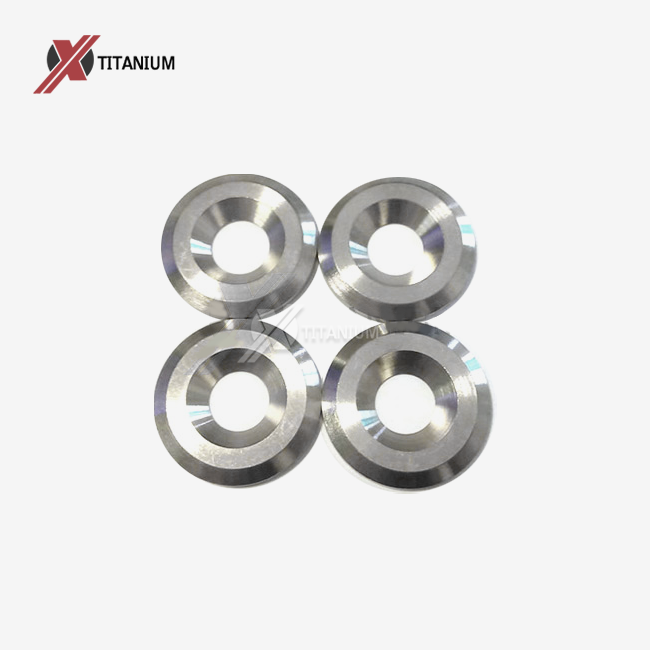
Choosing the right tools is very important when attaching carbon fiber parts in tough conditions. It determines whether the structure will last or break, which can be very expensive. Titanium Countersunk Washers specifically engineered for M6 applications represent the gold standard for industries where weight, corrosion resistance, and mechanical integrity cannot be compromised. These precisely machined parts have a conical bearing surface that sits flush with countersunk bolt heads. This spreads loads evenly across composite surfaces and gets rid of any protrusions that get in the way of airflow or look bad. The M6 designation refers to the metric thread size, which is widely used in aircraft, racing, and advanced manufacturing because it is the best combination of strength and compactness for putting together carbon fiber frames.
Understanding Titanium Countersunk Washers for Carbon Fiber Frames
Carbon fiber materials have changed the way structures are made in many fields, but they need special ways to be attached because of their unique qualities. When traditional metal washers are combined with carbon fiber, they increase the risk of galvanic corrosion, which speeds up decline in chemical or marine settings. Titanium Countersunk Washers get rid of this electrochemical mismatch. They offer noble metal compatibility that protects both the composite material and the hardware next to it over long periods of time.
Core Design Characteristics
The unique thing about these washers is their perfectly made angular shape. Standard aircraft countersink angles are either 90° or 100°. They match the shape of the screw heads to avoid point stress, which can break weak composite laminates. The conical seat makes sure that the bearing surface touches the base evenly across the whole thing. This is very important for making sure that the screws are tight enough without causing stress concentrations. M6 measurements of the Titanium Countersunk Washer have an inner diameter that can fit 6mm bolt shafts and an outer diameter that is usually between 12mm and 16mm, based on how the load needs to be distributed.
Material Grade Selection
Two types of titanium are used to make most Titanium Countersunk Washers. Grade 2 commercially pure titanium is the most resistant to rust and is very easy to shape. It is best for non-structural uses in harsh chemical conditions. Grade 5 titanium alloy (Ti-6Al-4V) has tensile strengths close to 1000 MPa and a density of only 4.43 g/cm³. This makes it essential for load-bearing assemblies in aircraft and high-performance car settings. The high strength-to-weight ratio of the metal lowers frame mass without losing structural margins. This directly leads to better fuel economy in aircraft or faster lap times in racing.
The manufacturing method has a big effect on how well the product works. CNC cutting from bar stock makes washers that are more consistent in size than pressed ones, keeping the tight angular tolerances that are needed for proper fitting. Type II or Type III anodizing and other surface treatments make things more resistant to wear and make them easier to identify by using interference color patterns. These coats are still thin enough to keep important measurements.
Technical Performance and Mechanical Properties
When choosing hardware for carbon fiber structures, engineering teams that are looking at fastening solutions look at a number of performance factors. Titanium's natural qualities make it resistant to several types of failure at the same time. This is why Titanium Countersunk Washers are used so often in high-end uses, even though they cost more.
Corrosion Resistance in Service Environments
Titanium's passive oxide layer instantly heals itself after being scratched, protecting it from ongoing rusting in air, water, and factories. Comparative studies show that Titanium Countersunk Washers keep their shape in 3.5% sodium chloride solutions at high temperatures, while 316 stainless steel starts to pit and corrode within months. This benefit is very important for marine gear, offshore platform parts, and coastal aircraft facilities where salt spray speeds up the breakdown of regular fasteners.
Another important benefit is that Titanium Countersunk Washers and carbon fiber are compatible with galvanic current. It is known that carbon fiber composites behave negatively in electrochemical cells. When they are mixed with negatively charged metals like aluminum or steel, rust cells are created that damage bolts and separate composites. Titanium is close to carbon on the galvanic series, which means that potential differences are low and rust doesn't speed up even when water gets into joints.
Strength and Weight Optimization
When making weight-critical structures, structural engineers love the amazing strength-to-weight ratio of the Titanium Countersunk Washer. It is possible for a Grade 5 Titanium Countersunk Washer to hold the same amount of weight as a 316 stainless steel washer while still being 45% lighter. This decrease in mass is very important for things like satellite structures, where every gram adds to the cost of launch, and racing bikes, where spinning mass has a direct effect on how fast they can go.
The material's elastic stiffness of about 114 GPa works well with carbon fiber composites, which means that stress doesn't build up at the surfaces as much. Harder metals, like steel, tend to concentrate loads at contact points, which could crush composite fibers. On the other hand, lighter metals, like aluminum, may bend under pressure and lose their preload. Titanium's medium stiffness makes pressure transfer systems work best.
Installation Considerations
When titanium gear is installed correctly, its efficiency benefits are at their highest. The main problem is galling, which happens during cold welding when two titanium surfaces touch and move together. Titanium Countersunk Washer fastener pairs need anti-seize compounds with molybdenum disulfide or special coats like Diamond-Like Carbon to change the way surfaces rub against each other. Titanium has frictional properties that must be taken into account when setting torques. If you over-tighten, the thread could seize, but if you under-torque, it could come free when the machine shakes.
For the countersunk shape to work, the holes in composite surfaces must be precisely prepared. To make sure full-surface fitting, the slopes of the countersink and washers must match within a 1° range. When angles aren't right, they make line contact instead of area contact, which concentrates loads that can crush the layers of a composite laminate. When cutting composites, you need to use sharp tools and modest speeds to keep the matrix from burning or delaminating. This is very different from metal machining, where you choose the drill bit and the speed.
Making the Right Procurement Decisions for Titanium Countersunk Washers
When looking for Titanium Countersunk Washers, there are more detailed checks that need to be done than just comparing prices. In aerospace, medical, and defense buying, multi-stakeholder evaluations are common. These require a full evaluation of the supplier's quality systems, traceability standards, and expert support capabilities.
Material Verification and Quality Certifications
Material certifications from reputable sources show the chemical makeup (using spectroscopic analysis) and mechanical properties (using tensile tests). The certifications also show how the Titanium Countersunk Washer can be tracked back to its original mill heat lots. Positive Material Identification with X-Ray Fluorescence Analyzers confirms the grade's authenticity, which stops Grade 2 alloy from being mistakenly used in place of Grade 5 alloy in structure uses. This step of proof keeps things from breaking down completely because the strength gaps aren't big enough.
Quality management badges show that a provider is committed to controlling processes in a planned way. AS9100 approval shows aerospace-grade quality systems with strict paper control, and ISO 9001 guarantees basic consistency in manufacturing. When buying parts for implantable devices or surgery tools, companies that make medical devices look for sources that are ISO 13485 certified. These qualifications point to mature quality cultures instead of operations that are focused on transactions.
Comparative Analysis Against Alternative Materials
When purchasing managers are looking at different materials, it's helpful for them to know how the different fastener materials compare in terms of performance. Even though stainless steel Titanium Countersunk Washers are much cheaper, they add 45% more mass and increase the risk of galvanic rusting when used with carbon fiber. Aluminum washers are almost as light as titanium, but they aren't as strong, so they can't handle as much power and need bigger sizes to spread the load out evenly. Copper and bronze metals are great at conducting electricity, but they rust quickly in salt water. While nylon and polymer washers get rid of galvanic issues, they don't have the compression strength or temperature protection needed for structural uses.
Even though Titanium Countersunk Washers cost more per unit, the total cost of ownership formula often favors it. Longer service intervals lower the cost of maintenance work, and preventing breakdowns caused by corrosion saves money by avoiding expensive part replacements. Racing teams say that switching from stainless steel to titanium fasteners cuts lifetime costs by more than 40% because they last longer and don't need to be maintained as often.
Supply Chain Considerations
Precision-machined Titanium Countersunk Washers usually have lead times of four to eight weeks, but this depends on how many are ordered and what customizations are needed. The abundance of raw materials changes with the production cycles of aircraft products. To protect customers from supply chain disruptions, experienced providers keep strategic inventories. Different manufacturers have different minimum order numbers, but for normal M6 configurations, they usually start at 100 to 500 pieces. For custom specs, higher minimums are needed to support the cost of making the tools.
When planning logistics, it's important to think about how titanium is classified as an export in some places. Regulatory controls mean that high-strength aerospace metals need export licenses to be sent internationally, especially to places that aren't allowed them. While domestic buying may make compliance easier, it may also raise costs. Procurement teams balance regulatory efficiency against price optimization based on how sensitive the application is.
Application Case Studies and Industry Insights
Titanium Countersunk Washers have been tested and proven to work well in harsh operating settings. Looking at specific use cases sheds light on the practical benefits that are driving acceptance in situations where weight is important and corrosion is a risk.
Aerospace Structural Assembly
Manufacturers of airplanes use M6 Titanium Countersunk Washers in the control surface systems and composite fuselage panels. The Boeing 787 Dreamliner is mostly made of carbon fiber composites, and it relies on titanium fastening systems to keep the structure's weight within acceptable limits and avoid galvanic rusting. When gear is flush-mounted, it gets rid of protrusions that cause drag. This makes the airplane use less fuel over its entire life. Commercial owners' maintenance records show that fasteners need to be replaced less often due to rust than on older airframes made of aluminum, which proves that titanium is more durable.
Manufacturers of satellites have to deal with even tougher weight limits and extreme temperature changes between being in the sun and being in circular shadow. Titanium Countersunk Washers have a low rate of thermal expansion, which means that when temperatures change by more than 200°C, there isn't much movement between washers, screws, and composite structures. Because the material isn't magnetic, it doesn't interfere with sensitive instruments and communications gear, which is another condition for space uses.
High-Performance Automotive and Motorsport
Formula racing teams were the first to use titanium fasteners many years ago because they knew that lowering unsprung mass directly improved the response of the suspension and the ability to turn. M6 Titanium Countersunk Washers are used on carbon fiber suspension parts, brake cooling ducts, and aerodynamic elements to get clean surface finishes that improve airflow management. In motorsports, where bolt loss can lead to catastrophic failures, vibration resistance is very important. The right preload and anti-seize treatment keep joints intact even when they are accelerated very quickly and heated and cooled many times.
New design trends for electric vehicles are calling for more and more Titanium Countersunk Washers for battery enclosure kits and structural battery integration ideas. The material's resistance to corrosion keeps electrolytes from being exposed during thermal runaway events, and its nonconductivity makes it better at isolating electricity than metal options.
Marine and Offshore Applications
Carbon fiber boats and rigging systems are used a lot in the building of racing yachts because they are lighter and faster. M6 Titanium Countersunk Washers that hold deck gear, winch bolts, and keel attachments in place don't rust in saltwater, which eats away at stainless steel fasteners in just a few seasons. The flush fitting keeps the lines from getting caught and improves the flow of water, which leads to measured performance gains in competitive sailing.
Manufacturers of offshore wind turbines use Titanium Countersunk Washers for the links between the blade roots and the nacelle parts that are in marine environments. Corrosion resistance and fatigue strength under cyclic loading work together to make repair gaps longer. This cuts down on expensive remote service operations and increases turbine uptime.
Conclusion
Choosing M6 Titanium Countersunk Washers for carbon fiber frame parts is an investment in the long-term strength of the structure and better performance. The material's special mix of resistance to corrosion, high strength-to-weight ratio, and ability to work with galvanic currents solves important failure modes in aircraft, motorsport, marine, and advanced manufacturing settings. Procurement pros should work with suppliers who have strong quality systems, full technical support, and the ability to track materials in a way that meets the needs of multiple stakeholders involved in the review process. Titanium is more expensive than other materials at first, but lifetime value analysis shows that it is more cost-effective in the long run because it needs less upkeep and service.
FAQ
Q1: What titanium grade suits my application best?
A: Grade 5 titanium alloy (Ti-6Al-4V) is used for load-bearing structures in the car and aerospace industries, where great tensile strength is very important. Its mechanical qualities allow for high torque requirements without lasting distortion. Grade 2 commercially pure titanium works best in places where corrosion resistance is very high, like chemical processing equipment or naval gear, where loads are modest but the environment is very harsh.
Q2: How do I prevent galling during installation?
A: Titanium tends to cold-weld when the areas that touch are under pressure and moving relative to each other. Using anti-seize chemicals with molybdenum disulfide or nickel-based formulas changes the way surfaces rub against each other. To make a tribological shield, you could also ask for Titanium Countersunk Washers with Diamond-Like Carbon coats or Type III hard anodizing. Using precise tools to apply controlled torque stops the buildup of too much surface pressure that causes galling.
Q3: Can titanium washers pair with stainless steel fasteners?
A: Even though these materials work well together physically, when electrolytes are added, they form galvanic cells. Titanium's cathodic state compared to stainless steel speeds up the rusting of the steel fastener, especially in environments like naval or industrial ones. Titanium Countersunk Washers and fasteners are the best way to make sure that there are no electrochemical potential differences and that the part has the same level of rust resistance.
Q4: What measurements determine the size of a countersunk washer?
A: In addition to standard sizes like M6, other important specs include matching the inner diameter to the bolt shaft clearance, the outer diameter to the bearing area, the material thickness to the load distribution, and the countersink angle and depth to the fastener head geometry. Standard angles in aircraft are 90° or 100°. Make sure the Titanium Countersunk Washer shape and screw head are compatible to make sure they sit evenly across the whole surface without any point loads.
Partner with Chuanglian for Premium Titanium Countersunk Washer Solutions
Baoji Chuanglian New Metal Material Co., Ltd. is an expert in making precision-engineered Titanium Countersunk Washers that are perfect for tough industrial uses. We are located in China's famous "City of Titanium," and our CNC machining centers make M6 Titanium Countersunk Washers that meet flight standards for material and size limits. Positive Material Identification, optical measurement tools for checking dimensions, and full material tracking paperwork that meets AS9100 and ISO 9001 standards are all part of our quality control procedures. Technical support teams help with choosing the right grade, surface treatment choices, and fitting instructions that are specific to the needs of the carbon fiber assembly. Get in touch with our technical experts at info@cltifastener.com or djy6580@aliyun.com to talk about your needs for a Titanium Countersunk Washer supplier and get full quotes with confirmed lead times.
References
1. Donachie, M.J. (2000). Titanium: A Technical Guide, 2nd Edition. ASM International, Materials Park, Ohio.
2. Peters, M., Kumpfert, J., Ward, C.H., and Leyens, C. (2003). "Titanium Alloys for Aerospace Applications." Advanced Engineering Materials, Volume 5, Issue 6, pp. 419-427.
3. Mallick, P.K. (2007). Fiber-Reinforced Composites: Materials, Manufacturing, and Design, Third Edition. CRC Press, Boca Raton, Florida.
4. ASM Handbook Committee (1990). ASM Handbook Volume 2: Properties and Selection - Nonferrous Alloys and Special-Purpose Materials. ASM International, Materials Park, Ohio.
5. Bickford, J.H. (2007). Introduction to the Design and Behavior of Bolted Joints: Non-Gasketed Joints, Fourth Edition. CRC Press, Boca Raton, Florida.
6. Schutz, R.W. and Watkins, H.B. (1998). "Recent Developments in Titanium Alloy Application in the Energy Industry." Materials Science and Engineering A, Volume 243, Issues 1-2, pp. 305-315.
Learn about our latest products and discounts through SMS or email