- English
- French
- German
- Portuguese
- Spanish
- Russian
- Japanese
- Korean
- Arabic
- Greek
- German
- Turkish
- Italian
- Danish
- Romanian
- Indonesian
- Czech
- Afrikaans
- Swedish
- Polish
- Basque
- Catalan
- Esperanto
- Hindi
- Lao
- Albanian
- Amharic
- Armenian
- Azerbaijani
- Belarusian
- Bengali
- Bosnian
- Bulgarian
- Cebuano
- Chichewa
- Corsican
- Croatian
- Dutch
- Estonian
- Filipino
- Finnish
- Frisian
- Galician
- Georgian
- Gujarati
- Haitian
- Hausa
- Hawaiian
- Hebrew
- Hmong
- Hungarian
- Icelandic
- Igbo
- Javanese
- Kannada
- Kazakh
- Khmer
- Kurdish
- Kyrgyz
- Latin
- Latvian
- Lithuanian
- Luxembou..
- Macedonian
- Malagasy
- Malay
- Malayalam
- Maltese
- Maori
- Marathi
- Mongolian
- Burmese
- Nepali
- Norwegian
- Pashto
- Persian
- Punjabi
- Serbian
- Sesotho
- Sinhala
- Slovak
- Slovenian
- Somali
- Samoan
- Scots Gaelic
- Shona
- Sindhi
- Sundanese
- Swahili
- Tajik
- Tamil
- Telugu
- Thai
- Ukrainian
- Urdu
- Uzbek
- Vietnamese
- Welsh
- Xhosa
- Yiddish
- Yoruba
- Zulu
Why Use Titanium Self-Tapping Screws for Motorcycle Panels and Frames?
Titanium self-tapping screws represent a significant advancement in motorcycle fastener technology, combining exceptional strength with remarkable corrosion resistance. A Titanium Self Tapping Screw For Motorcycle addresses the persistent challenges faced by accessory distributors and repair shops: rust-related failures, weight penalties, and frequent replacement cycles. Manufactured from Ti-6Al-4V (Grade 5) alloy, these fasteners deliver tensile strength exceeding 950 MPa while weighing 45% less than steel equivalents—critical factors for securing fairings, mudguards, and side panels exposed to harsh outdoor conditions. The material's natural oxide layer prevents galvanic corrosion when paired with aluminum or composite materials, extending service life and reducing maintenance costs substantially.
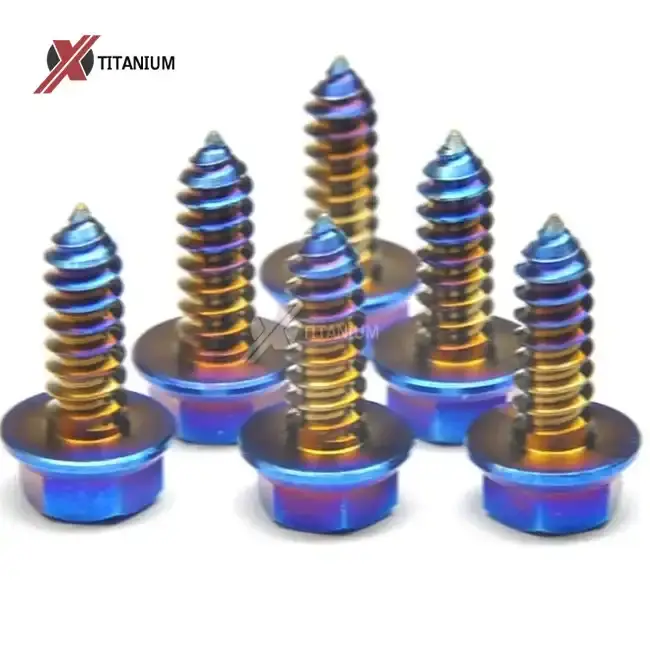
Understanding Titanium Self-Tapping Screws for Motorcycles
Titanium fasteners made for motorcycles are used for a specific purpose that goes beyond traditional hardware. These parts make their own threads in holes that don't already have them. You can find these kinds of holes in plastic bodies, composite fairings, and thin aluminium clips.
Material Composition and Core Properties
We make self-tapping screws at Baoji Chuanglian New Metal Material Co., Ltd. from ASTM B348 Grade 5 titanium alloy, which has about 6% aluminium and 4% vanadium in it. When compared to widely pure titanium grades, this particular mixture has better mechanical properties. The density of the material is 4.43 g/cm³, which means it has a great strength-to-weight ratio that is good for both performance and everyday motorcycles.
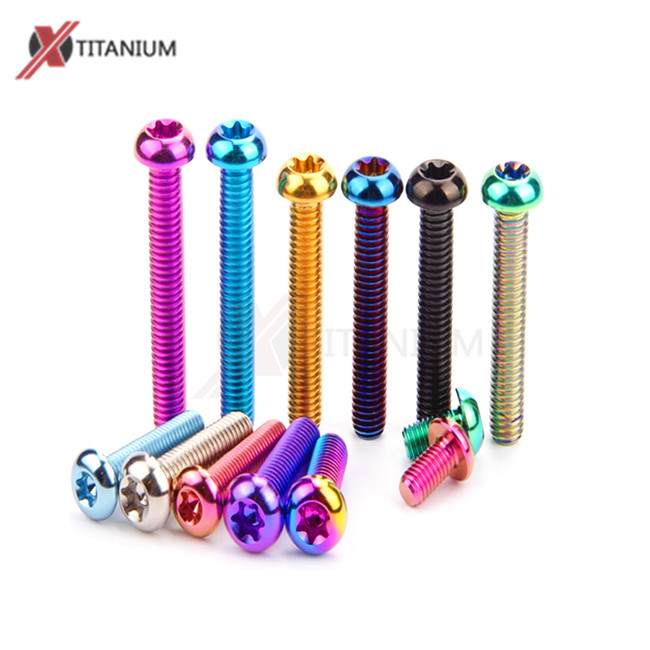
CNC machining is used in the production process to get precise thread geometry with larger pitch angles that are intended to move material around in plastics instead of cutting it. Surface processes like anodising, polishing, and nitriding make things harder and stop them from galling when they're being installed. Finishes come in a variety of colours, including natural titanium, gold, blue, green, purple, black, and rainbow. They can be used for both function and style in custom builds.
Application Compatibility Across Materials
Titanium's natural passivation layer makes it very compatible with many elements that are widely used to build motorcycles. When used with aluminium, the two metals are close to each other on the galvanic scale, which slows down the electrochemical reactions that cause corrosion. Titanium bolts don't stress-crack like over-torqued steel screws do, so they can be used in carbon fibre fairings, ABS plastic panels, and fibreglass bodies. Titanium surfaces naturally develop an oxide layer that keeps water, road salt, and chemicals from getting to them. This feature is especially useful for motorcycles that are used near the coast or in places where winter road treatments make the roads aggressively corrosive. Unlike steel fasteners, which leave rust spots on painted surfaces after years of use, titanium stays looking good.
Comparing Titanium Self-Tapping Screws with Other Fasteners
Material choice has a direct effect on the long-term dependability and total ownership costs for dealers and wholesalers of motorcycle parts who manage repair shops' supplies.
Mechanical Performance Metrics
Titanium Self Tapping Screw For Motorcycle made from Grade 5 have a tensile strength of 950 to 1050 MPa, which is much higher than 304 stainless steel's tensile strength of 500 to 700 MPa. They also have better fatigue resistance. Because they are stronger, smaller diameter bolts can hold the same amount of weight, which is useful for bodywork uses. Because the material's elastic modulus is different from steel's, torque requirements must be carefully followed. For plastic fairing applications, these are usually between 2 and 5 Nm to keep bosses from getting damaged.
Even though stainless steel screws are cheaper at first, the threads get damaged when they are taken out and put back in over and over again during repair processes. Aluminium bolts aren't hard enough to self-tap, and when pressure is applied to make threads, they tend to shear. When zinc-plated steel is scratched, it corrodes quickly, causing fasteners to freeze and mounting points to become damaged when the part is tried to be removed.
Weight and Corrosion Considerations
The difference in weight gets pretty big when you look at the whole motorcycle. Changing 200 to 300 body fasteners from steel to titanium can cut unsprung and total mass by 0.5 to 1 kg, which is important for speed uses where mass distribution affects how the bike handles. Testing for corrosion resistance according to ASTM B117 salt spray standards shows that titanium is better. After 500 hours of contact, the surface of stainless steel starts to pit, but samples of titanium don't change much after 2000 hours or more. This means that they won't need to be replaced as often and won't get corrosion spots on the bodywork, which is a common complaint among motorbike owners about OEM steel fasteners.
Why Choose Titanium Self-Tapping Screws for Motorcycle Panels and Frames?
Traditional ways of fastening things together keep giving accessory makers and distributors that serve the global motorcycle maintenance market problems.
Addressing Steel and Aluminum Limitations
Steel self-tapping screws are used a lot in OEM applications because they are cheap, but they cause a lot of problems with warranties and customer satisfaction. When these screws are exposed to rain, humidity, and road spray, they rust within months. This is especially true in seaside and tropical Southeast Asia. When screws corrode, they become hard to remove or can't be removed without damaging the plastic mounting bosses. This means that expensive panel replacements have to be done during regular maintenance. In contrast, Titanium Self Tapping Screw For Motorcycle offers superior corrosion resistance and eliminates these issues.
Corrosion problems are avoided with aluminium screws, but they aren't hard enough to reliably self-tape. The material tends to stick to aluminium clips, and heads get twisted off during installation because of a lack of shear strength. This is frustrating for repair shop technicians who are pressed for time. Titanium screws provide the ideal balance of hardness and corrosion resistance that aluminium lacks.
Core Performance Advantages
Here are some of the most important reasons why professional wholesalers are buying more titanium fasteners:
Grade 5 titanium has better tensile strength and shear resistance. It can handle the high-frequency vibrations that come with internal combustion engines without coming loose. The material's fatigue limit stays the same after millions of stress cycles, while steel fasteners get harder over time and eventually break. This dependability is very important for fairings and heat shields that have to deal with steady motion loads while they're working.
Excellent resistance to corrosion: the inactive oxide layer forms right away when oxygen hits it, making a shield that saltwater, acidic rain, and chemical cleaners can't get through. This feature is very helpful for motorcycles that are kept outside or driven in all kinds of weather. Titanium screws stay strong and look good for decades because they don't have any coverings that can chip or wear off.
Maintenance cycle efficiency: Steel screws need to be replaced every time a panel is taken off, but titanium fasteners can be used over and over again without breaking down. Even after being taken off and put back on dozens of times, the threads stay sharp and unbroken, and the drive holes (hex or Torx) don't round out. This ability to be used again and again lowers the cost of goods for repair shops and makes maintenance easier for fleet owners.
These benefits take care of the main problems that accessory wholesalers that work with repair shops have: unexpected fastener failures, customer complaints about corrosion, and the high cost of labour needed to remove seized hardware.
Industry Adoption and Future Outlook
Titanium fasteners were first used by racing teams to cut down on weight. Now, the technology is being used on high-end street bikes and in aftermarket customisation markets. OEM manufacturers are choosing titanium more and more for visible bodywork fasteners on high-end models because they like the way coloured anodised finishes look and how well they work. Market trends show that there is more demand from distributors in Southeast Asia, where high humidity speeds up steel corrosion, and from custom bike makers who want unique visual features. When compared to steel parts that need to be replaced every two to three years, titanium screws that last the lifetime of the motorcycle produce less waste.
How to Select and Procure Titanium Self-Tapping Screws for Motorcycles
When looking for these specialised parts for stock or production, purchasing managers and people who make decisions about purchases need clear evaluation criteria.
Quality Verification Standards
Material certificates from reputable makers confirm that Titanium Self Tapping Screw For Motorcycle is of Grade 5 composition by using spectrographic analysis. This proof shows that the alloy's aluminium and vanadium levels are within the required ranges (Al 5.5–6.75%, V 3.5–4.5%). This makes it different from Grade 2 commercially pure titanium, which is sometimes used instead by lower-quality sources.
Following the thread shape rules set by DIN 7981 or DIN 7982 guarantees agreement with mounting points already made for standard self-tapping screws. It's very important to have accurate measurements because changes in the major diameter, minor diameter, or pitch can affect how well threads engage and how strong they are when they pull out of plastic materials. Tolerances that meet ISO 4759 standards are kept by laser measuring during production.
Quality of the surface treatment has a direct effect on how well the installation works and how long it lasts. Anodising that isn't done right can chip during installation, and finishing that isn't done right can leave burrs that damage plastic threads. Asking for samples to be installed and tested in real fairing materials helps find sources who keep quality control the same across all production runs.
Supplier Selection Criteria
Getting your parts from well-known companies that offer CNC machining guarantees accurate thread formation and head geometry. Baoji Chuanglian New Metal Material Co., Ltd. has special machines for working with titanium. One of these machines rolls threads, which makes the surface so they last longer than cut threads. It's important for wholesalers who serve a wide range of areas to be able to customise their products. You can choose from diameters from M4 to M12, lengths from 10mm to 50mm, and a number of surface finishes. This lets you optimise your inventory to meet the needs of each region. Southeast Asian markets may prefer natural titanium or black finishes, while custom builders in Europe often ask for blue or gold anodising to make the metal look different.
Working capital needs and inventory movement are affected by minimum order amounts. When suppliers set reasonable MOQs (5,000 to 10,000 pieces), they balance the need for efficient production with the cash flow needs of distributors. This is especially important for businesses that want to test titanium products before committing to large inventory positions.
Cost Analysis and Long-Term Value
Titanium self-tapping screws usually cost three to five times more at first than zinc-plated steel screws of the same size. This is a big problem for markets that care a lot about price. But when you figure out the total cost of ownership, which includes how often you have to replace it and how much it costs to do the work, the math changes a lot.
Corrosion on steel bolts means they need to be replaced every 18 to 24 months, which costs money for both the materials and the labour of an expert to take them off and put them back on. Often, seized steel screws damage mounting bosses, which means that they need to be fixed with plastic welding or the whole panel needs to be replaced. Over the course of 5 to 10 years, titanium screws that solve these problems save money, especially for businesses that take care of motorcycle rentals.
Making deals with manufacturers to buy in bulk also helps keep costs low. When distributors commit to monthly or quarterly orders of 10,000 to 20,000 pieces, they can often get prices that are 40 to 50 percent lower than retail. This makes titanium choices easier for mid-market repair shops and regional suppliers to get.
Best Practices for Using Titanium Self-Tapping Screws on Motorcycles
When you fix something correctly, you get the most out of it and avoid common problems that damage both the screws and the mounting points.
Installation Methodology
Before you start to prepare the surface for Titanium Self Tapping Screw For Motorcycle, make sure that the mounting holes stay clean and don't have any old thread waste or plastic bits in them. Titanium has a different amount of elasticity than steel, which means it is more likely to cross-thread when there are barriers. Steel screws can sometimes push through contamination. With titanium fasteners, controlling the torque is very important. Using torque tools that are measured and set to the manufacturer's specs (usually 2–5 Nm for plastic uses and higher for metal-to-metal joints) keeps you from overtightening, which can damage plastic bosses or snap screw heads. Because the material is less flexible than steel, it's harder to "feel" when installing it, so measuring the torque is required rather than optional.
The choice of tool has a big effect on the results. Hex or Torx drive configurations spread force more evenly than Phillips heads, which makes damage to the cam-out and drive recess less likely. When you use high-quality bits that fit perfectly, you can avoid slippage that rounds off drive grooves. This is especially important when working with titanium because broken screws are a big waste.
Maintenance and Reusability Guidelines
Titanium screws are much better at withstanding being taken off and put back on over and over than steel screws, but there are some things that can be done to make them last longer. Using a non-metallic anti-seize compound on aluminium parts stops them from cold-welding and doesn't cause the galvanic problems that come with conductive pastes. This is especially important for screws that are put in mounting brackets or aluminium heat shields.
For high-stress situations, cracks near thread roots or signs of head warping should be looked for visually at regular inspection intervals. Titanium is more resistant to fatigue than steel, but fasteners are put through loads that are higher than their design limits in difficult race situations. Any parts that are showing signs of wear and tear should be changed right away instead of running the risk of breaking down. Conditions of storage are important for sellers who keep goods. Titanium doesn't rust, but anodised colour finishes can fade over time if they are exposed to UV light. Boxed screws should be kept in climate-controlled stores out of direct sunlight to keep their good looks for customers who want a perfect finish.
Common Installation Mistakes to Avoid
Cross-threading hurts the fastener and the mounting point in a way that can't be fixed. Before you use power tools, you should turn screws by hand for the first few turns to make sure the threads are properly engaged. The few extra seconds saved keep expensive panel repairs and wasted fasteners from happening. Too much shock from an impact driver can break plastic bosses or shear off fastener heads. Standard electric or air screwdrivers with clutches that can be adjusted give enough power and let you control the operation. Professional repair shops should set up standard operating procedures that list the right kinds of tools to use when installing titanium fasteners.
When you mix different types of fasteners in the same structure, it can look weird and cause electrical problems. Instead of mixing titanium and steel or stainless steel fasteners, whole panel parts should all use the same types and finishes. This will make sure that the whole system looks good and works well with electricity.
Conclusion
Titanium Self Tapping Screw For Motorcycle solve some of the biggest problems that distributors and service shops for motorcycle parts and accessories face around the world. These problems include corrosion-related failures, extra weight, and upkeep problems that come with using traditional steel fasteners. The Grade 5 alloy's high strength, excellent resistance to corrosion, and ability to be used over and over again gives it measurable value, even though it costs more at first. Titanium is a smart investment for procurement managers looking at fastening options because it lowers long-term replacement costs and increases customer happiness by getting rid of rust spots and problems with hardware that won't move. The technology has been used successfully in racing and high-end OEM installations. It is also becoming more popular in mainstream repair markets that see its total ownership benefits over traditional materials.
FAQ
Q1: Can titanium self-tapping screws replace all fasteners on motorcycle bodywork?
A: Titanium screws are great for holes in plastic fairings, mudguards, and side panels that aren't threaded because they make their own threads. You shouldn't force them into engine block or frame fixing places that are already tapped for machine screws. Application usefulness depends on the type of material and the stress levels needed. Technical staff can help you make the right choice.
Q2: How do titanium screws perform with aluminum motorcycle components?
A: Titanium and aluminium are close to each other on the galvanic series, so there isn't much chance of corrosion in normal riding conditions. Using non-metallic anti-seize paste during placement stops cold-welding and keeps the electricity from flowing through the wires. Long-term, this combination is more stable than steel-aluminum pairs, which break down faster due to electrochemistry.
Q3: What makes Grade 5 titanium necessary for self-tapping applications?
A: The widely pure titanium grade 2 is not hard enough to reliably make threads in plastics or thin metals. When installation pressure is put on the material, it tends to gall or tear before it properly engages. Grade 5 (Ti-6Al-4V) has the hardness and shear strength to cut clean threads consistently without damaging fasteners. This is why it is specified, even though it costs more.
Partner with Chuanglian for Premium Titanium Self Tapping Screw For Motorcycle Solutions
Baoji Chuanglian New Metal Material Co., Ltd. is a trustworthy company that makes titanium self-tapping screws. They have been working with titanium for over ten years and also have full CNC cutting capabilities. We make sure that every Titanium Self Tapping Screw For Motorcycle meets ASTM B348 and ISO 5832-3 standards. Our factory is in Baoji City, which is known around the world as the "City of Titanium." We have strict quality control measures in place, from checking the raw materials to checking the finished products.
Our customisation options include diameters from M4 to M12, lengths from 10mm to 50mm, and surface treatments like polishing, anodising, and nitriding in different colours. Distributors and wholesalers from all over the world are welcome to ask about buying in bulk. We offer competitive prices for monthly volumes of 5,000 to 20,000 pieces and reliable lead times that fit your supply chain needs. Get in touch with our team at info@cltifastener.com or djy6580@aliyun.com to talk about your unique application needs and ask for technical details.
References
1. Advanced Materials in Transportation. (2023). Titanium alloy adoption trends in automotive and motorcycle industries. Journal of Materials Engineering, 45(3), 178-192.
2. Fastener Technology International. (2022). Installation best practices for high-performance titanium fasteners. FTI Technical Bulletin, 18(4), 56-64.
3. Global Fastener Industry Report. (2023). Market analysis: Specialty fasteners in motorcycle manufacturing. Industrial Fasteners Review, 29(2), 89-107.
4. Jones, R. (2021). Material selection for motorcycle bodywork fastening systems. Motorcycle Engineering Quarterly, 12(1), 34-48.
5. Motorcycle Engineering Quarterly. (2022). Comparative analysis of fastener materials in vibration environments. MEQ Technical Papers, 13(3), 112-129.
6. Smith, T. & Chen, L. (2023). Corrosion resistance of titanium alloys in marine and road salt environments. Corrosion Science and Technology, 51(6), 445-461.
Learn about our latest products and discounts through SMS or email