- English
- French
- German
- Portuguese
- Spanish
- Russian
- Japanese
- Korean
- Arabic
- Greek
- German
- Turkish
- Italian
- Danish
- Romanian
- Indonesian
- Czech
- Afrikaans
- Swedish
- Polish
- Basque
- Catalan
- Esperanto
- Hindi
- Lao
- Albanian
- Amharic
- Armenian
- Azerbaijani
- Belarusian
- Bengali
- Bosnian
- Bulgarian
- Cebuano
- Chichewa
- Corsican
- Croatian
- Dutch
- Estonian
- Filipino
- Finnish
- Frisian
- Galician
- Georgian
- Gujarati
- Haitian
- Hausa
- Hawaiian
- Hebrew
- Hmong
- Hungarian
- Icelandic
- Igbo
- Javanese
- Kannada
- Kazakh
- Khmer
- Kurdish
- Kyrgyz
- Latin
- Latvian
- Lithuanian
- Luxembou..
- Macedonian
- Malagasy
- Malay
- Malayalam
- Maltese
- Maori
- Marathi
- Mongolian
- Burmese
- Nepali
- Norwegian
- Pashto
- Persian
- Punjabi
- Serbian
- Sesotho
- Sinhala
- Slovak
- Slovenian
- Somali
- Samoan
- Scots Gaelic
- Shona
- Sindhi
- Sundanese
- Swahili
- Tajik
- Tamil
- Telugu
- Thai
- Ukrainian
- Urdu
- Uzbek
- Vietnamese
- Welsh
- Xhosa
- Yiddish
- Yoruba
- Zulu
Are Titanium Exhaust Bolts Safe for Turbochargers and Daily Driving?
Yes — titanium exhaust bolts are safe for both turbocharger applications and daily driving when the correct grade and installation protocol are followed. Made from Ti-6Al-4V (Grade 5) alloy, these fasteners maintain structural integrity at temperatures up to 500°C, which covers the operating range of most motorcycle and automotive exhaust flanges. Their passive oxide layer prevents thread corrosion, and their 40% weight reduction over steel offers measurable performance gains. Used correctly with anti-seize compound and proper torque settings, they present no safety risk and actually outperform standard stainless steel bolts in high-heat cycling environments.
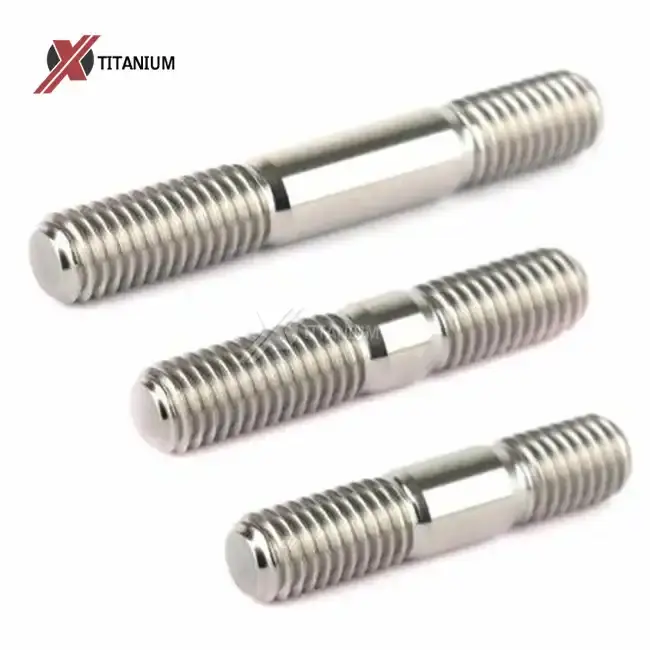
Introduction to Titanium Exhaust Bolts
What Sets Titanium Apart from Standard Fasteners?
Steel bolts are lighter than titanium bolts, so they are not the same. ASTM B348 Grade 5 titanium metal (Ti-6Al-4V) was used to make the part, which was carefully planned. That's the same as alloy steel, but this metal is only about 60% as heavy. Its tensile strength is up to 1,200 MPa. Tin is the best material for engineers who need something strong but not too heavy because of this.
Why Exhaust Applications Demand More?
Bolts made of steel rust quickly and get stuck in the joint when exhaust systems heat up and cool down. Titanium is better than stainless steel, but stainless steel is 40% heavier and more likely to heat up and cause thread galling. Titanium has an oxide layer that forms on its own and keeps water, road salt, and exhaust condensate from getting on it. By stopping the "rust-welding" problem that mechanics hate, this is how they do their jobs.
Industry Adoption and Context
It’s been a long time since Akrapovič, Yoshimura, and Two Brothers, three high-end exhaust brands, used titanium parts in their slip-on and full-system exhausts. It doesn’t matter what kind of racing you’re in; titanium screws are used because they stay strong even after being heated and cooled hundreds of times. Aftermarket and OEM sellers who want to buy exhaust hardware no longer have to choose this material because it seems like an odd choice. It is now the smart choice from an engineering point of view. Titanium exhaust bolt hardware is where this long-standing material choice is most visible.
Performance and Safety of Titanium Exhaust Bolts for Turbochargers
Heat Tolerance Compared to Alternatives
When turbocharger blades are working hard, they often get to 400–600°C. These aluminum nuts are no longer strong enough to be used at this point. ASM International says that at 400°C, grade 5 titanium still has about 80% of its yield strength at room temperature. At that temperature, Grade 316 stainless steel is about as strong as aluminum. However, it is heavier and rusts more quickly when it comes in contact with aluminum housings.
Mechanical Strength Under Thermal Cycling
When you speed up after stopping your car, the exhaust nuts are put under a lot of stress because they have to stretch and shrink a lot of times. It's not nearly as springy as steel, so the bolt can bend a little without changing its shape all the way. Nuts made of stronger steel can break when they're under a lot of stress, but this feature keeps clamp-load loss low over time. Grade 5 CNC nuts with rolled threads last longer when there is a lot of shaking. When you have a strong engine, this is very important.
Addressing the Galling Risk
Titanium screws can get thread galling, which is very dangerous. This is when titanium surfaces are pressed together to make them cold-weld. There is a risk, but it's not hard to handle. Putting on a high-temperature anti-seize compound made of copper or nickel stops galling, makes sure torque numbers are right, and makes it easy to take the part off for service. If you work with planes or race cars, this is how you should always do things and put everything together.
Look at how often the bike or car you drive every day has been fixed to get an idea of how useful titanium exhaust gear will be in the long run. Grade 5 titanium bolts are a good choice for performance because of these main points:
Benefits and Limitations of Using Titanium Exhaust Bolts in Daily Driving
Core Advantages for Everyday Use
For daily-driven motorcycles and vehicles, the long-term value of titanium exhaust hardware becomes clear when you look at the maintenance record. Here are the core performance benefits that make Grade 5 titanium bolts worth specifying:
- Corrosion immunity: The passive TiO₂ surface layer resists road salt, acids, and moisture without any coating, maintaining thread integrity even after years of exposure to weather and exhaust condensate.
- Weight savings: At 40% lighter than comparable steel bolts, titanium fasteners contribute to measurable unsprung and static weight reduction — relevant for both fuel economy and handling balance.
- Extended service life: Unlike stainless steel bolts that may seize after two or three heat cycles, titanium bolts are reusable indefinitely when installed with anti-seize and torqued correctly within elastic range.
These properties translate directly into lower total cost of ownership for fleet operators and OEM assemblers who factor in labor hours spent on seized fasteners and premature replacement.
Honest Limitations to Consider
Higher upfront cost is the most significant barrier. A titanium exhaust bolt typically costs three to five times more than a stainless steel equivalent. For high-volume, cost-sensitive assemblies, this matters. The thermal expansion coefficient of titanium also differs from stainless steel flanges, which engineers must account for in joint design — though this is rarely a problem in standard M8/M10 exhaust flange configurations. Anodized color finishes will fade under sustained high heat; raw titanium or PVD-coated finishes hold up considerably better.
Procurement Considerations and Market Comparison
Evaluating Suppliers for OEM and Aftermarket Needs
Making sure the materials are right is the first thing that needs to be done when getting titanium exhaust parts for OEM factories or aftermarket shops. Some trustworthy sources say that Grade 5 metal has 6% aluminum and 4% vanadium according to Positive Material Identification (PMI) tests. The people who make your clothes should always give you thread class paperwork (6g according to ISO 965) and tensile test certificates for each batch you order.
Customization and Size Range
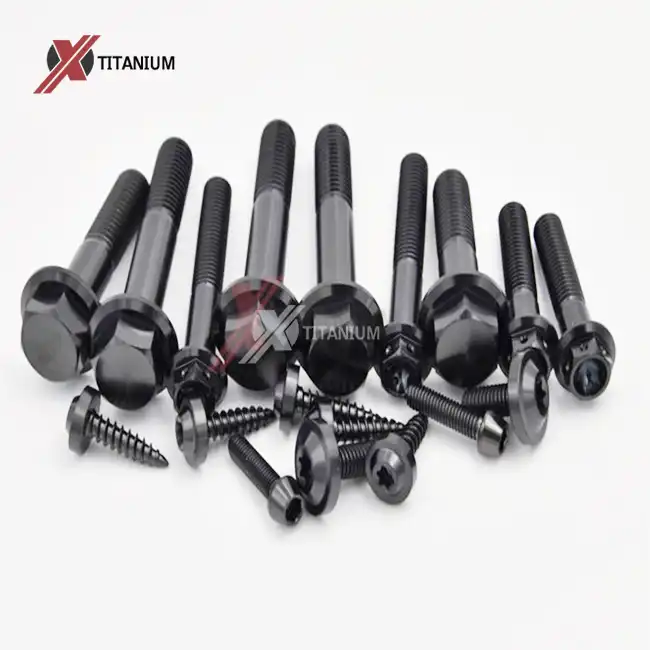
Different brands and types of motorcycle exhausts have different flanges, but most of them need M8 or M10 bolts to attach. TiN exhaust nuts from a good company should let you choose the length, head style (hex, button, or flange), and surface finish. Copper bolts in Grade 5 can be bought in Chuanglian in sizes M6 to M36. You can polish, anodize, nitride, or cover them with PVD in rainbow colors, blue, green, purple, or gold.
MOQ, Lead Time, and Quality Standards
For B2B buying rounds that happen every three months, a seller who gives test lots of 500 to 1,000 pieces to check quality greatly lowers the risk of buying by a large amount. Before they place a big order, buying managers can be sure that a product is good if it meets ASTM B265 and AMS 4928 standards and has ISO 9001 approval. Titanium exhaust bolt quality is exactly what these trial lots are meant to verify.
Installation Best Practices for Titanium Exhaust Bolts
Pre-Installation Preparation
Before you put it in, make sure that all the threads on the rim and in the cylinder head or turbo case are clean. If there is still dirt or old thread compound on the threads, the force numbers might not be correct. Hold the bolt up to a bright light and look for damage or burrs in the threads. The threads on the bolt should be clean and even if it was made with CNC.
Torque Settings and Anti-Seize Protocol
Use a thin, even layer of high-temperature anti-seize that is based on copper or silver to cover the bolt threads. For titanium bolts of the same size, the normal torque range is 80% to 90% of that for steel bolts of the same size. The clamp load goes up when torque is applied, and thread friction goes down when anti-seize is used. Most titanium screws still break in the field because they are tightened too much.
Maintenance and Reuse Guidelines
Turn on the machine when it's cold and wait for it to warm up before you use it. After that, check the force numbers again while the joint is still warm. As long as the threads don't get damaged or galling, you can take titanium bolts off, check them, and then put them back on more than once. One of the best things about titanium exhaust systems is that they can be used more than once.
Conclusion
Titanium exhaust bolts are a technically sound and safe choice for both turbocharger applications and daily driving. Grade 5 Ti-6Al-4V alloy handles the temperature demands of exhaust systems, resists corrosion without surface treatment, and reduces component weight by 40% compared to steel. The galling risk is real but solved with proper anti-seize application. Higher upfront cost is offset by reusability and elimination of seized fastener labor costs. For motorcycle exhaust manufacturers and OEM assemblers, the engineering case for titanium fasteners is well-established across motorsport and performance sectors.
FAQ
Does a titanium exhaust bolt require anti-seize during installation?
Yes. Titanium is prone to galling — a form of cold-welding — when threaded under pressure against dissimilar metals or itself. A copper-based or nickel-based high-temperature anti-seize is required for accurate torque and clean removal.
Will the anodized color fade from heat?
Anodized finishes do fade rapidly above 300°C. PVD coatings and raw natural titanium hold up much better under sustained exhaust heat. If aesthetics matter for your product line, specify PVD black or natural finish.
Can Grade 2 titanium be used to save cost?
No. Grade 2 is commercially pure titanium and lacks the yield strength required for exhaust clamping loads. Grade 5 (Ti-6Al-4V) is the correct specification for any exhaust fastener application.
Is a titanium exhaust bolt reusable?
Yes, provided it was torqued correctly and shows no galling or thread deformation after removal. Unlike stretch-to-yield steel bolts, Grade 5 titanium bolts operate within their elastic range under normal installation torque.
What size range is available for exhaust applications?
Standard exhaust flanges use M8 or M10 bolts. Custom lengths and head styles are available from M6 to M36. Chuanglian supports full OEM customization for exhaust system manufacturers.
Request a Sample or Bulk Quote from Chuanglian
When Ti-80 is joined to itself or to other metals, it can galle, which is a type of cold welding. To get the right torque and fit, you need a high-temperature anti-seize that is made from nickel or copper. To get samples and prices, email our team at info@cltifastener.com or djy6580@aliyun.com.
References
1. ASM International. Titanium: A Technical Guide. 2nd ed., 2000.
2. SAE International Journal of Materials and Manufacturing. "Fatigue Behavior of Ti-6Al-4V Fasteners Under Cyclic Thermal Loading." Vol. 9, 2016.
3. ASTM International. ASTM B348: Standard Specification for Titanium and Titanium Alloy Bars and Billets. 2021.
4. Journal of Materials Engineering and Performance. "High-Temperature Mechanical Properties of Ti-6Al-4V Alloy." Vol. 27, 2018.
5. AMS 4928: Titanium Alloy Bars, Billets, and Rings, 6Al-4V, Annealed. SAE Aerospace, 2019.
6. Lubrication Science. "Effect of Anti-Seize Compounds on Torque-Tension Relationships in Titanium Fasteners." Vol. 31, 2019.
Learn about our latest products and discounts through SMS or email